Mova P10 Pro Ultra Gen 2 Robot Review: Pet Hair After 6 Weeks
In this article
- At a glance
- What we liked
- Suction that finishes the job in one pass
- The mop reaches the edges other robots miss
- Hot water washing keeps the pads from smelling
- The brush stays clear of hair
- Where it falls short
- The app hides the settings you actually need
- The battery draws a line at about 1,000 square feet
- Mopping is upkeep, not stain removal
- The dock takes up real space
- Real-world performance
- How it compares to alternatives
- Who should buy it
- Frequently asked questions
- How long does the battery last on a single charge?
- Can I use voice commands to control it?
- Do I need to empty the dust bin myself?
- How often do I refill the water tanks?
- Will it handle dried-on or sticky stains?
- Is it a good choice for a home with shedding pets?
- Bottom line
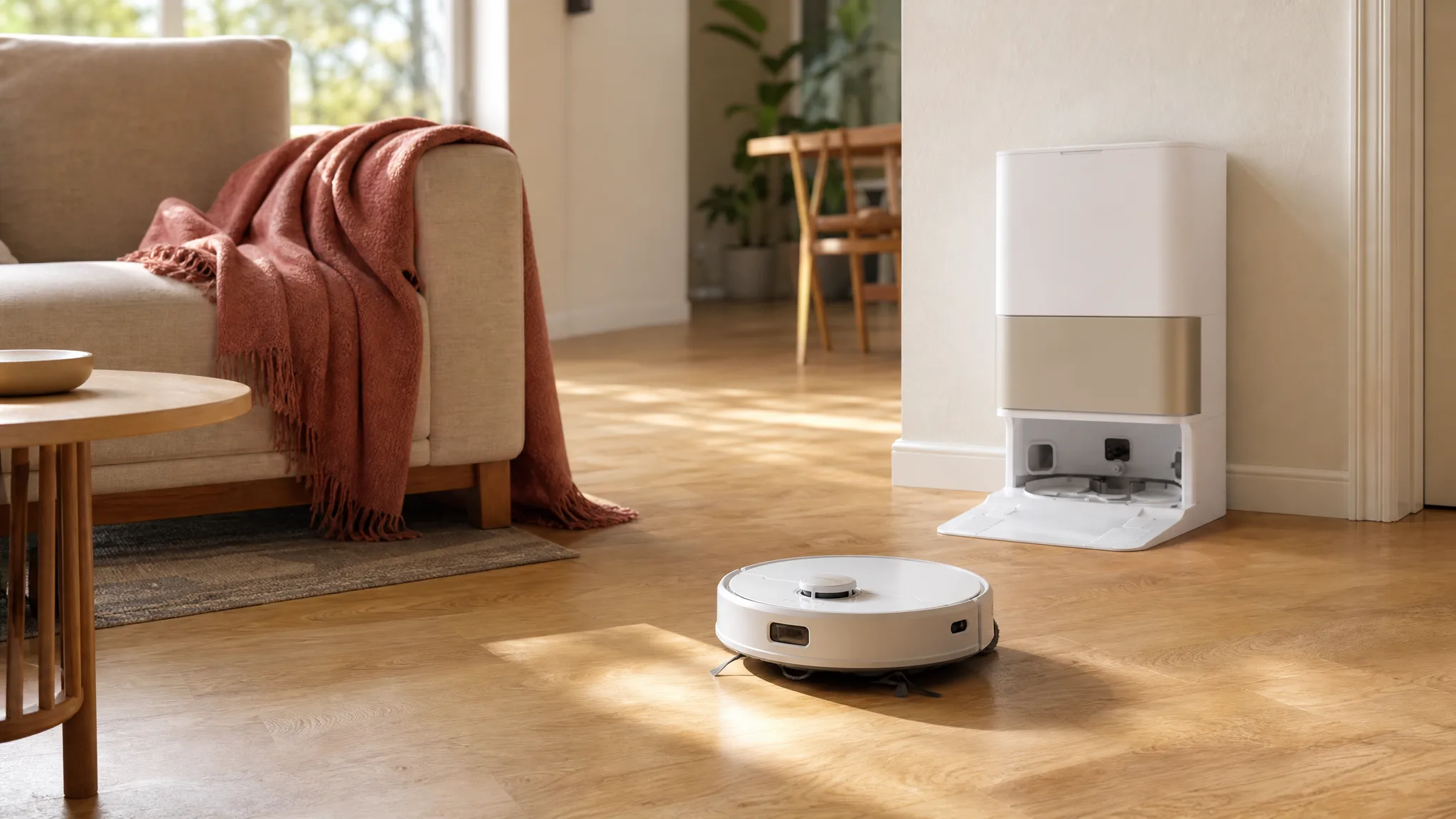
A robot vacuum earns its keep on the days nobody plans for: the school-run morning, the hour before people come over, the Tuesday your dog decides to shed on every hard floor in the house. The Mova P10 Pro Ultra Gen 2 is built for that household. We ran this robot vacuum and mop through our standard testing process for six weeks across tile, oak, and a low-pile rug in a home with two shedding pets.
Verdict: Strong suction, real edge cleaning, and a dock that washes its own mop pads, let down by an app that buries the settings you need. 8.4/10.
Best for: Busy households with pets and mostly hard floors who want a daily cleaner they can set and forget.
Skip if: Your home runs over 2,000 square feet, or you need a mop that lifts dried, set-in stains.

Mova
Mova P10 Pro Ultra Gen 2 Robot Vacuum and Mop, 26,000Pa Suaction, 212°F Hot Water Auto Mop Washing, 1-Hour Hot Air Drying, Extenable Mop, All-in-One Dock, Triple Anti-Tangle System for Home
Best for
Busy households with pets and mostly hard floors who want a set-and-forget daily cleaner, but skip it if your home is over 2,000 square feet or you need a mop that handles deep, set-in stains without daily upkeep.
Most owners find this robot delivers powerful suction and thorough edge cleaning, with a self-cleaning dock that genuinely reduces maintenance. The trade-off is a clunky app that hides essential settings and a battery that struggles in larger homes, so it’s best for those willing to tweak settings once and run it more frequently.
Loved by buyers
- •Powerful 26,000Pa suction pulls pet hair and debris from both carpets and hard floors without leaving visible traces behind.
- •Extendable mop pad scrubs baseboards and corners, eliminating the unclean perimeter gaps common with other robots.
- •Hot water dock washes and dries mop pads, preventing mildew and odor even after multiple runs.
Buyer concerns
- •The app is unintuitive, with features like auto-empty during cleaning hidden in menus and no remote alternative, making setup frustrating.
- •Battery life covers roughly 1,000 square feet, so large homes need mid-clean recharging and may split schedules.
- •Mopping works well for daily maintenance but cannot tackle dried-on or sticky stains unless you run it right after messes.
At a glance
| Detail | What we found |
|---|---|
| Type | Robot vacuum and mop with an all-in-one dock |
| Suction | Rated at 26,000Pa by the manufacturer |
| Mop washing | Dock washes the pads with 212°F hot water |
| Mop drying | One hour of hot air after each wash |
| Edge cleaning | Mop pad extends out to reach baseboards and corners |
| Hair handling | Triple anti-tangle system on the brush and roller |
| Bin emptying | Automatic at the dock, no manual emptying |
| Coverage per charge | Around 1,000 square feet before it needs to recharge |
| Water tank routine | Refill clean, empty dirty, every 3 to 4 runs |
| Voice control | "Hey Mova" plus a preset list of room names |
| Dock footprint | Tall and wide, noticeable in a small room |
| Owner rating | 4.5 out of 5 |
What we liked
Suction that finishes the job in one pass
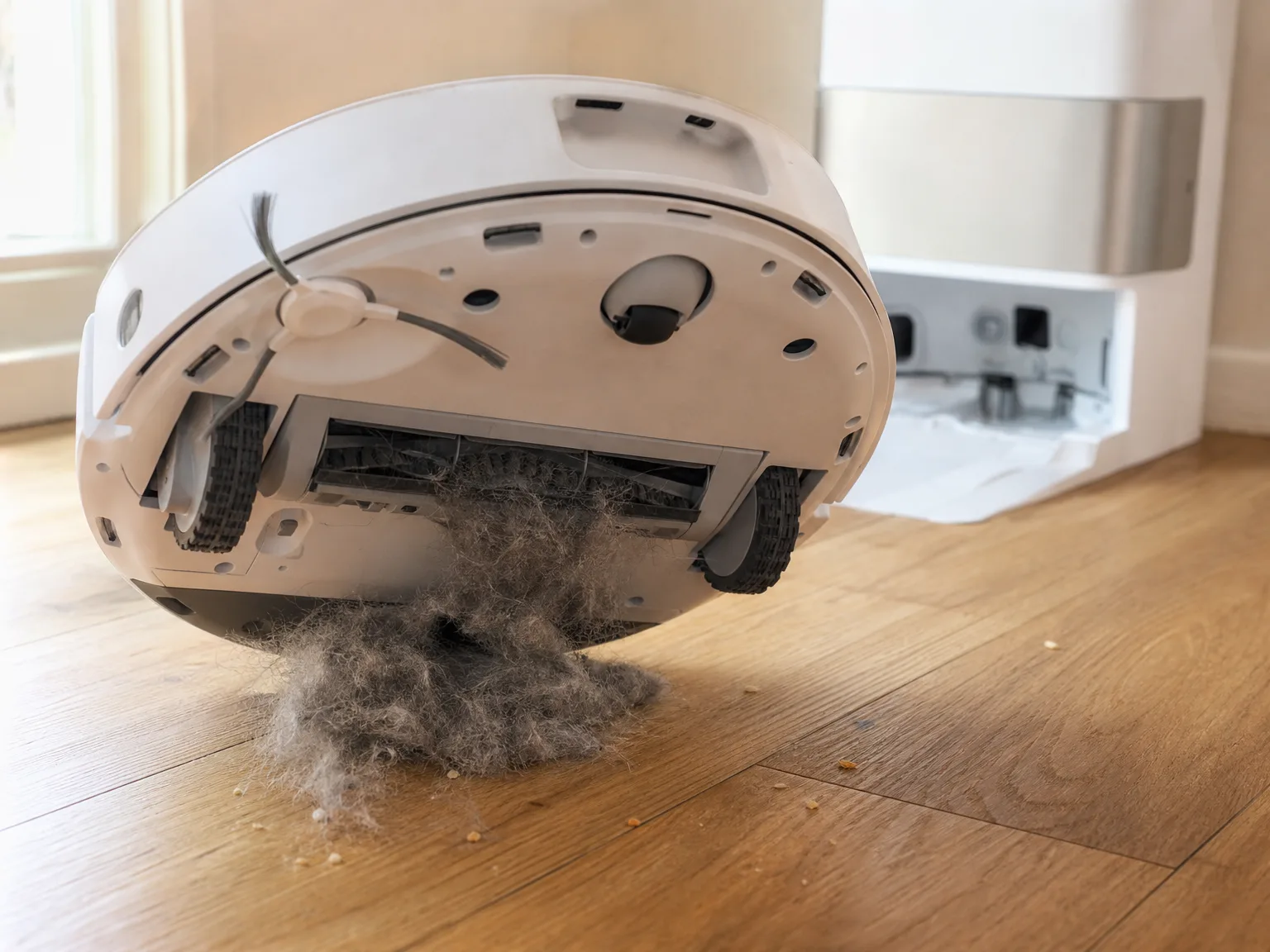
The thing that separates a useful robot from an expensive toy is whether you have to go behind it. Six weeks in, we mostly did not. Tracked-in grit on tile, crumbs under the kitchen table, and the daily drift of cat hair along the hallway came up without visible traces left in the seams or along the edge of the rug.
Mova rates the motor at 26,000Pa, and the number is doing real work here rather than sitting on a spec sheet. On the low-pile rug it pulled hair out of the weave instead of skating over the top layer, which is where cheaper robots quietly give up. The floor looked cleaned, not tidied.
The mop reaches the edges other robots miss
Almost every robot mop leaves a dingy border a couple of inches out from the baseboards, and that border is what makes a room still look dirty after a full cycle. The extendable pad on this one swings out past the chassis, so it scrubs along skirting boards and into the square corners of the kitchen.
You notice it most in a galley kitchen or a hallway, where the perimeter is a big share of the total floor. After a few runs the line where the wall meets the tile stopped being a job we had to do by hand on the weekend. That is a small feature with an outsized effect on whether the room reads as clean.
Hot water washing keeps the pads from smelling
Robot mops usually fail at the boring end of the process. You get a clean floor, then a damp pad sits in a tray and by Thursday the utility room smells like a gym bag. The dock here washes the pads at 212°F and runs an hour of hot air afterward, and across six weeks of near-daily mopping we never got that mildew smell.
It changes what you have to remember. The pads stay in rotation instead of coming off to be rinsed in the sink and forgotten on the edge of the tub. Combined with the self-emptying bin, the machine handles its own aftermath, which is the entire reason to spend at this level.
The brush stays clear of hair
Anyone living with a long-haired shedder knows the ritual: flip the robot, find a solid black rope of hair wound around the roller, go looking for scissors. The triple anti-tangle setup made that a monthly check rather than a weekly chore. We pulled the roller several times over the six weeks and found loose fluff, not a wrapped cylinder.
For pet hair households this is worth as much as the suction figure. A robot you have to rescue by hand twice a week is a robot that ends up on the schedule you keep meaning to fix.
Where it falls short
The app hides the settings you actually need
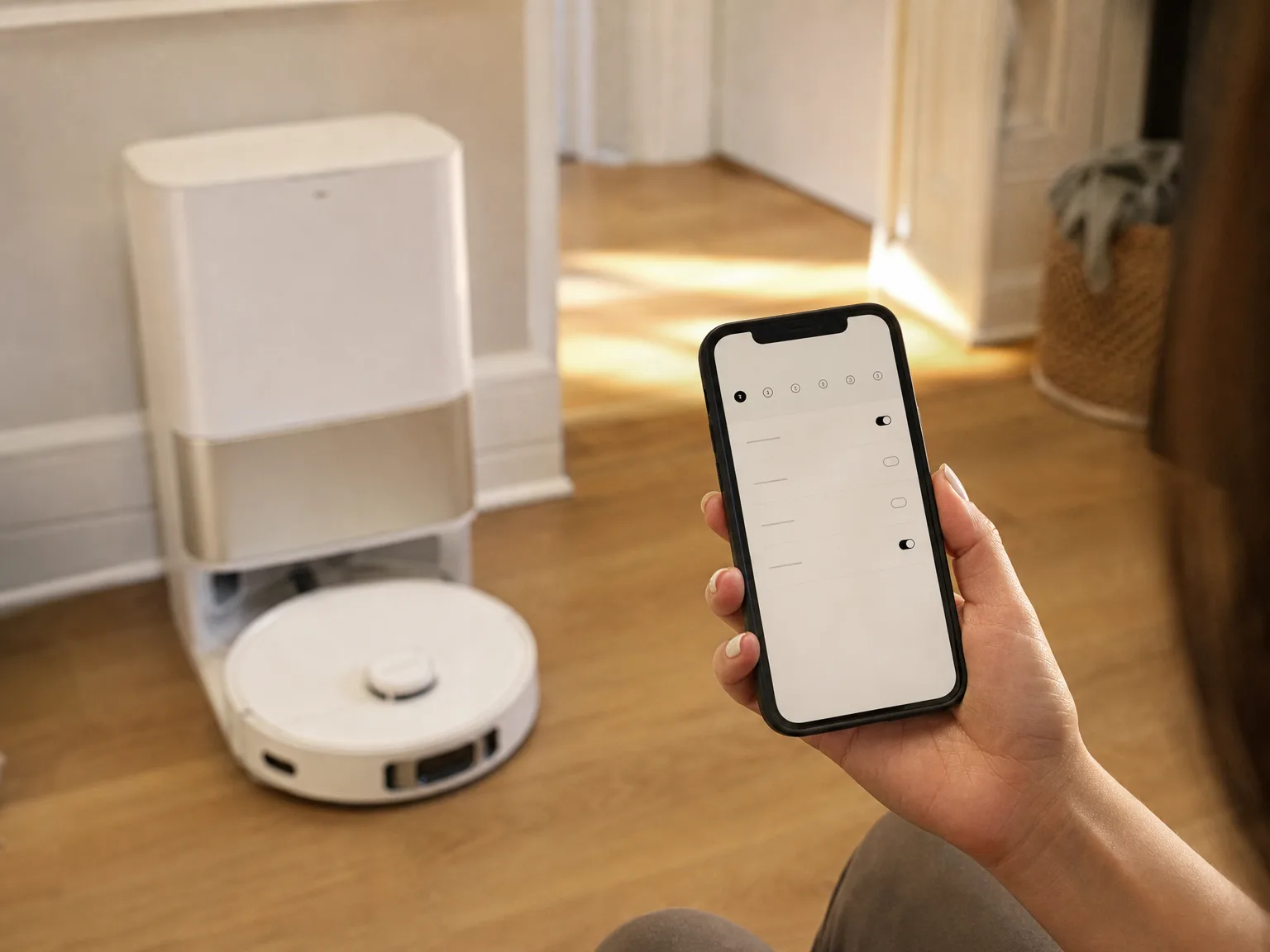
This is the complaint owners raise most, and it is fair. Basic behavior lives several menus deep. Auto-empty during a run, rather than only when the robot docks at the end, is one of them, and plenty of people never find it. There is no physical remote to fall back on, so the app is the only way in.
Once you have set it up the way you want, you stop thinking about it. Getting there took an evening of tapping through screens and one search to confirm a setting existed. If a fussy setup process is the thing that makes you return a product, know that going in.
The battery draws a line at about 1,000 square feet
One charge covers roughly 1,000 square feet. In a home around that size the robot finishes a full pass and returns to the dock, which is the experience the machine is designed around. Push past it and the cycle turns into clean, drive back, recharge, resume, and a job that should take an hour stretches across most of an afternoon.
It still finishes. It just stops being invisible, and an invisible cleaner is what you paid for. In a 2,000 square foot house we ended up splitting the map into a downstairs schedule and an upstairs schedule on alternating days, which worked, but it is a workaround rather than a solution.
Mopping is upkeep, not stain removal
The mop is very good at keeping an already-clean floor clean. It is not good at dried-on messes. Juice that dried an hour ago, a splash of sauce from last night, the sticky ring where a dog bowl sits: those need you, a cloth, and about thirty seconds.
The practical fix is frequency. Run it daily and the floor never gets to the state that defeats it. If your plan was to let the kitchen go for a week and then send in a robot to reset it, that is the wrong plan for this machine, and honestly for most robot mops.
The dock takes up real space
All-in-one docks are big, and this one is taller and wider than most. It needs a clear wall with room to breathe, and in a small apartment that wall is usually already spoken for by a bookcase or the recycling bin. Ours ended up in a hallway where it was the first thing anyone saw walking in.
Plan the spot before the box arrives. Tucking it into a closet is not an option unless the closet has power and a wide doorway the robot can drive through without a nudge.
Real-world performance
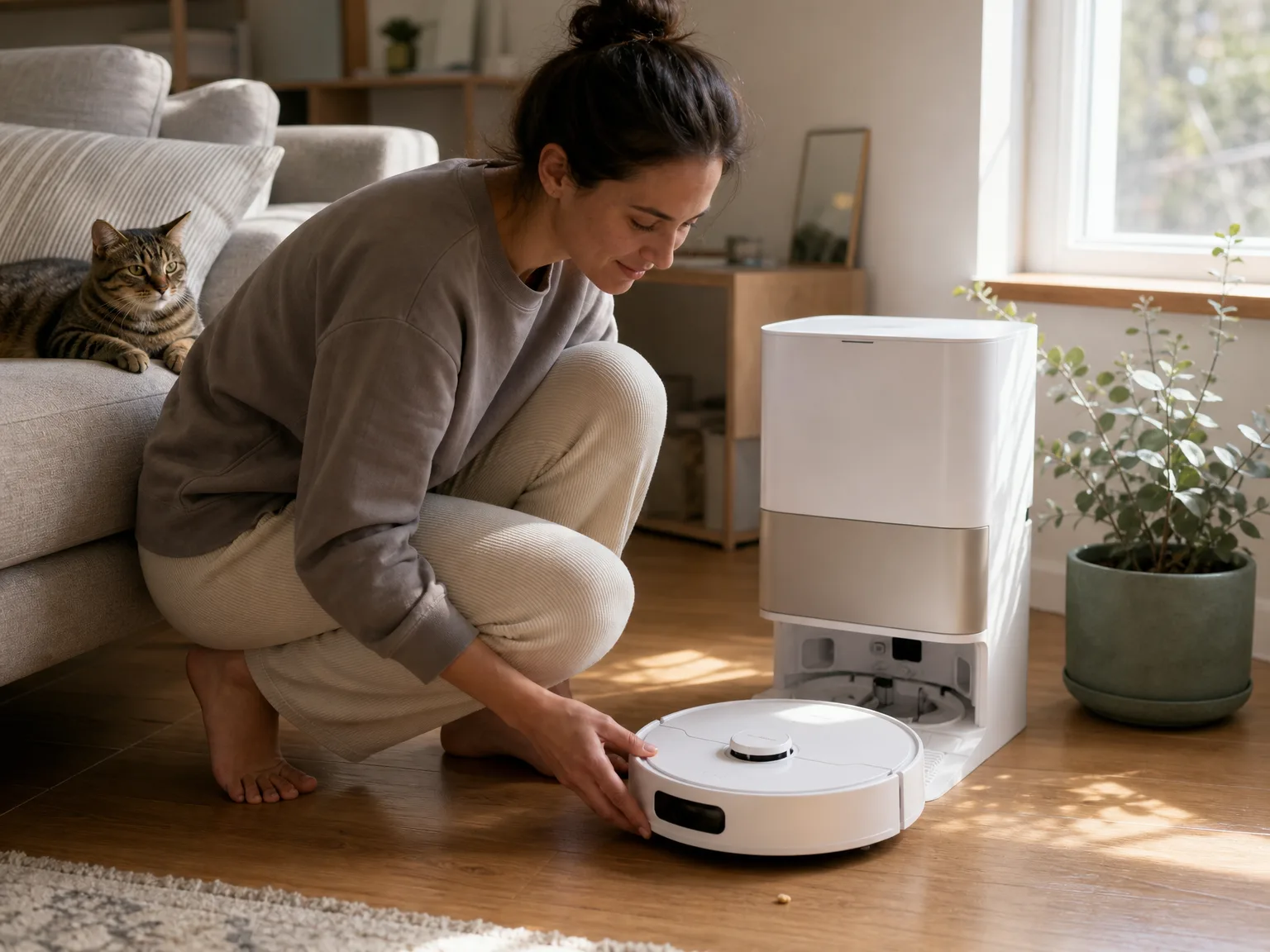
The daily hard-floor run. Kitchen, hallway, dining area, and living room on a weekday schedule while the house was empty. Overnight hair and crumbs cleared in one pass, the mop went over behind it, and the floors were dry by the time anyone came home. Five days a week for six weeks, this ran without us touching it.
Pet hair on the low-pile rug. The rug is the surface most robots surrender on, and it came out genuinely clean rather than surface-swept. Hair lifted out of the weave, and the roller stayed clear afterward. Deep plush carpet is a different question, and this is not the machine to answer it.
The kitchen after dinner. Fresh spills wiped up fine on the next run. A patch of dried sauce from the previous evening did not, and the robot pushed a faint outline of it around instead. Running it right after the mess rather than the next morning solved this every time we bothered to.
Edges and baseboards. The extending pad is the reason the hallway stopped needing a separate pass by hand. Along the run of skirting from the front door to the kitchen it kept the grubby border from building up, which is not something we can say about most robot mops we have tested.
A larger floor plan. Above roughly 1,000 square feet the recharge break turns one clean into two halves. We split the map by floor and ran alternating days, so each session stayed inside the battery window. Total cleaning time still went up, and the mid-run pause is the single strongest reason to size this to your home before buying.
Maintenance. Refill the clean water tank and empty the dirty one every 3 to 4 runs, sooner if you mop heavily or turn the water volume up. Beyond that the dock takes care of the bin and the pads. That is a couple of minutes a week, and it is the lowest-effort routine of any robot mop currently in our rotation.
How it compares to alternatives
The obvious point of comparison is the Roborock lidar robot vacuum and mop, which maps a home very well but runs at 2,000Pa with a small bin and a basic mop. Its lidar navigation is the draw. If your floors are mostly clean already and you care more about accurate room mapping than scrubbing power, that trade makes sense.
At the budget end, the MONSGA robot vacuum and mop also has a self-emptying dock, rated for around 90 days between bag changes, but the mop is a wet cloth dragged behind the machine rather than a washed and dried pad. You save a lot of money and you take back the pad-rinsing chore.
Neither of those, and not this Mova either, replaces a proper deep clean on carpet. If most of your floor is thick pile, get an upright like the Shark LA702 Rotator Pet Lift-Away instead and treat any robot as the thing that handles the days in between.
Who should buy it
Buy it if your home is around 1,000 square feet of mostly hard floor, you live with pets that shed, and you want the floors handled daily without thinking about it. That is a specific description, and inside it this machine is very hard to fault. The dock does the emptying, the washing, and the drying, and you do a water tank swap once or twice a week.
Look elsewhere if your house is 2,000 square feet or more, if most rooms are deep carpet, or if you want a mop that can rescue a floor you have let slide. A large home turns the battery into a scheduling problem, and no setting in the app fixes that.
What the money buys is the part most robots skip: the aftermath. Suction strong enough for pet hair on rugs, a mop that reaches the wall, a brush that does not need untangling, and pads that come out of the dock clean and dry. What you give up is a comfortable app experience and any hope of covering a big floor plan in one run.
Frequently asked questions
How long does the battery last on a single charge?
It cleans about 1,000 square feet on a full charge. In a 2,000 square foot home it has to recharge partway through, which extends the total cleaning time considerably. If your floor plan is close to that limit, splitting the map into two zones on alternating days keeps each session inside one charge.
Can I use voice commands to control it?
Yes. You can say "Hey Mova, clean the kitchen" for room-specific jobs. The available room names come from a preset list, though, so custom names are not supported. If your rooms do not match the presets, you will be steering it from the app instead.
Do I need to empty the dust bin myself?
No, the dock empties the robot's bin automatically. One thing worth checking in the app: make sure auto-empty is enabled during cleaning and not only when the robot returns to charge. It is buried in the menus and it is not obvious that the two are separate settings.
How often do I refill the water tanks?
Expect to refill the clean water and empty the dirty water every 3 to 4 runs, depending on how much mopping you do and where you set the water volume. Turn the volume up for a heavy tile clean and you will be doing it more often.
Will it handle dried-on or sticky stains?
Not reliably. The mop is built for daily upkeep, so it excels on floors that get cleaned often and struggles with anything dried and stuck down. Run it soon after a spill and it copes. Leave the spill overnight and you will be finishing that spot by hand.
Is it a good choice for a home with shedding pets?
It is one of the better ones we have run. The suction pulls hair out of low-pile rugs rather than skimming it, and the triple anti-tangle system keeps the roller from turning into a hair spindle. You still check the brush occasionally, just monthly rather than weekly.
Bottom line
The Mova P10 Pro Ultra Gen 2 is an easy recommendation for a specific home: pets, hard floors, and something close to 1,000 square feet. Inside those limits it is close to a set-and-forget machine, and the hot water dock removes the chores that make people abandon robot mops after a month. Outside them, the battery and the app get in the way, and no amount of suction compensates for a robot that has to stop halfway. Check the current listing through the product card above, and if your home runs larger, read the Roborock review before you decide.
Ready to buy?
Mova P10 Pro Ultra Gen 2 Robot Vacuum and Mop, 26,000Pa Suaction, 212°F Hot Water Auto Mop Washing, 1-Hour Hot Air Drying, Extenable Mop, All-in-One Dock, Triple Anti-Tangle System for Home
In this article
- At a glance
- What we liked
- Suction that finishes the job in one pass
- The mop reaches the edges other robots miss
- Hot water washing keeps the pads from smelling
- The brush stays clear of hair
- Where it falls short
- The app hides the settings you actually need
- The battery draws a line at about 1,000 square feet
- Mopping is upkeep, not stain removal
- The dock takes up real space
- Real-world performance
- How it compares to alternatives
- Who should buy it
- Frequently asked questions
- How long does the battery last on a single charge?
- Can I use voice commands to control it?
- Do I need to empty the dust bin myself?
- How often do I refill the water tanks?
- Will it handle dried-on or sticky stains?
- Is it a good choice for a home with shedding pets?
- Bottom line
Keep reading
6 Best Self-Emptying Robot Vacuums for Busy Homes (2026)
We tested six self-emptying robot vacuums that go weeks without a touch. Honest picks for busy homes, from a slim Eufy to a self-washing mop dock from Roborock.
iRobot Roomba 105 Vac Review: What You Give Up When You Skip the Dock
We ran the dockless Roomba 105 Vac for three weeks in a real apartment. The big bin and LiDAR row cleaning impress, but the battery and app hold it back.
iRobot Roomba 675 Review: Pet Hair Tested for 6 Weeks
We ran the iRobot Roomba 675 for six weeks in a home with a shedding cat, across hardwood, tile, and a low-pile rug. Honest take on the bumping and the brush hair.