How We Review
Our testing methodology
Every vacuum review on Vacuwiz follows the same documented framework. We test in real homes because that's where your vacuum will actually live — not in an anechoic chamber, not on a freshly-installed commercial carpet tile, not in conditions designed to make every product look good.
What follows is the full methodology. We publish it because we think you should be able to evaluate our process, not just our conclusions.
Test environment
Primary testing takes place in a 1,500 sq ft home with the following floor types: approximately 400 sq ft hardwood (older, with gaps), 200 sq ft tile (including grout lines), and 600 sq ft medium-pile carpet (a mix of area rugs and wall-to-wall). There is one medium-shedding dog and two people who track in normal amounts of dirt, crumbs, and general life debris.
For cordless models, we also conduct specific tests in a smaller apartment (650 sq ft, all hard floors) because the use case differs meaningfully from a house with carpet.
Edge cases — stairs, upholstery, car interiors, baseboards — are tested separately and noted in reviews where relevant.
What we measure
Suction consistency
Headline suction specs from manufacturers are nearly useless for real-world comparison. We care about suction behavior during a normal cleaning session, which means:
- Full-bin suction — We run each vacuum until the dustbin reaches approximately 70% capacity, then re-test on the same debris type. Suction drop-off at this point is a major differentiator — several popular cordless models lose 30–40% of effective cleaning power before the bin indicator triggers.
- Low-battery cordless suction — For cordless vacuums, we test again in the final 15% of battery life. Some models maintain suction well; others drop noticeably.
- Multi-surface transition — We run each vacuum from hardwood to carpet and back, noting whether suction adjusts automatically or requires manual mode switching.
Filtration
We are skeptical of "HEPA" marketing claims and test filtration independently. A vacuum can carry a HEPA filter and still exhaust particles if the seal between the filter and the housing is poor. Our test: we run the vacuum in a closed room with an air quality monitor (measuring PM2.5) for 15 minutes on a carpet that's been loaded with fine talc-based test dust. We check whether the room's particulate count improves, stays flat, or worsens. Vacuums that fail this test are noted clearly in reviews, regardless of what the box claims.
Maneuverability
We navigate a standardized obstacle course: under a 6-inch clearance couch, around table legs with 8-inch spacing, across a doormat with a 1-inch lip, and along a baseboard at a consistent 2-inch distance. We note where each vacuum gets stuck, loses suction contact, or requires repositioning. For robot vacuums, we run the same obstacles plus a dark floor test (some robots struggle with cliff detection on very dark carpet).
Noise
Measured in dB at arm's length (roughly 3 feet from the unit) on maximum power, using a calibrated sound level meter. Readings are taken in the same room for all models to keep conditions consistent. For reference: most upright vacuums measure 75–85 dB; some robot vacuums in quiet mode measure under 65 dB.
Maintenance and real-world ownership
We time how long it takes to empty the dustbin cleanly (without spilling), clean or replace the filter, and de-tangle the brush roll after a session that included pet hair and long hair. We also note how many separate components need cleaning and how hard they are to access. A vacuum that's annoying to maintain gets used less.
For long-term reviews (models we've owned for 6 or more months), we note any performance degradation, mechanical failures, or wear patterns that weren't apparent in initial testing.
Run time and charge time
Real-world, not manufacturer claims. We run cordless vacuums on max power on carpet until they shut off, then time the charge from flat to 80% and to 100%. Manufacturer run-time figures are typically measured at minimum suction on bare floors — a setting most people never use. We test at the power level you'd actually run on carpet.
Value
We compare each model against the best available alternative at the same price point, not against flagship models. A $200 cordless is evaluated as a $200 cordless. We adjust our value assessment when a model's price changes significantly after our initial review.
Star ratings
Ratings reflect overall value for the target buyer — not absolute performance. A 4-star rating on a $180 stick vacuum means it excels at what a $180 stick vacuum should do. It does not mean it outperforms a $600 flagship.
We use a 5-star scale in half-star increments. We do not award 5 stars to any product with a significant flaw, regardless of how good it is otherwise. Ratings below 3 stars mean we don't recommend the product. We still publish those reviews because knowing what to avoid is useful information.
Sourcing products for review
We buy the products we review at retail, borrow from people who own them, or arrange sample loans that involve no editorial conditions whatsoever. We do not accept free units in exchange for positive coverage. When a product was provided as a sample, we say so in the review. Our ratings and conclusions are unaffected either way — we've given middling scores to both products we purchased and products that were loaned.
Corrections and updates policy
When a manufacturer releases a firmware update that materially changes performance, when long-term testing contradicts our initial findings, or when a reader identifies a factual error in a review, we update the review with a dated note at the top explaining what changed and why. We do not silently edit conclusions. If our recommendation changes, the change is visible and explained.
If you've found an error or have data that contradicts a finding, please contact us. Corrections that come with verifiable sources get prioritized.
What we don't test
For transparency: we currently don't test steam mops, pressure washers, or commercial and industrial vacuums. Our robot vacuum testing does not include mopping functionality in depth — we note it exists but it's not part of our scoring framework yet.
Questions about our methodology? Get in touch. We're genuinely interested in making the process better.
Browse by category
Popular guides
All reviews →
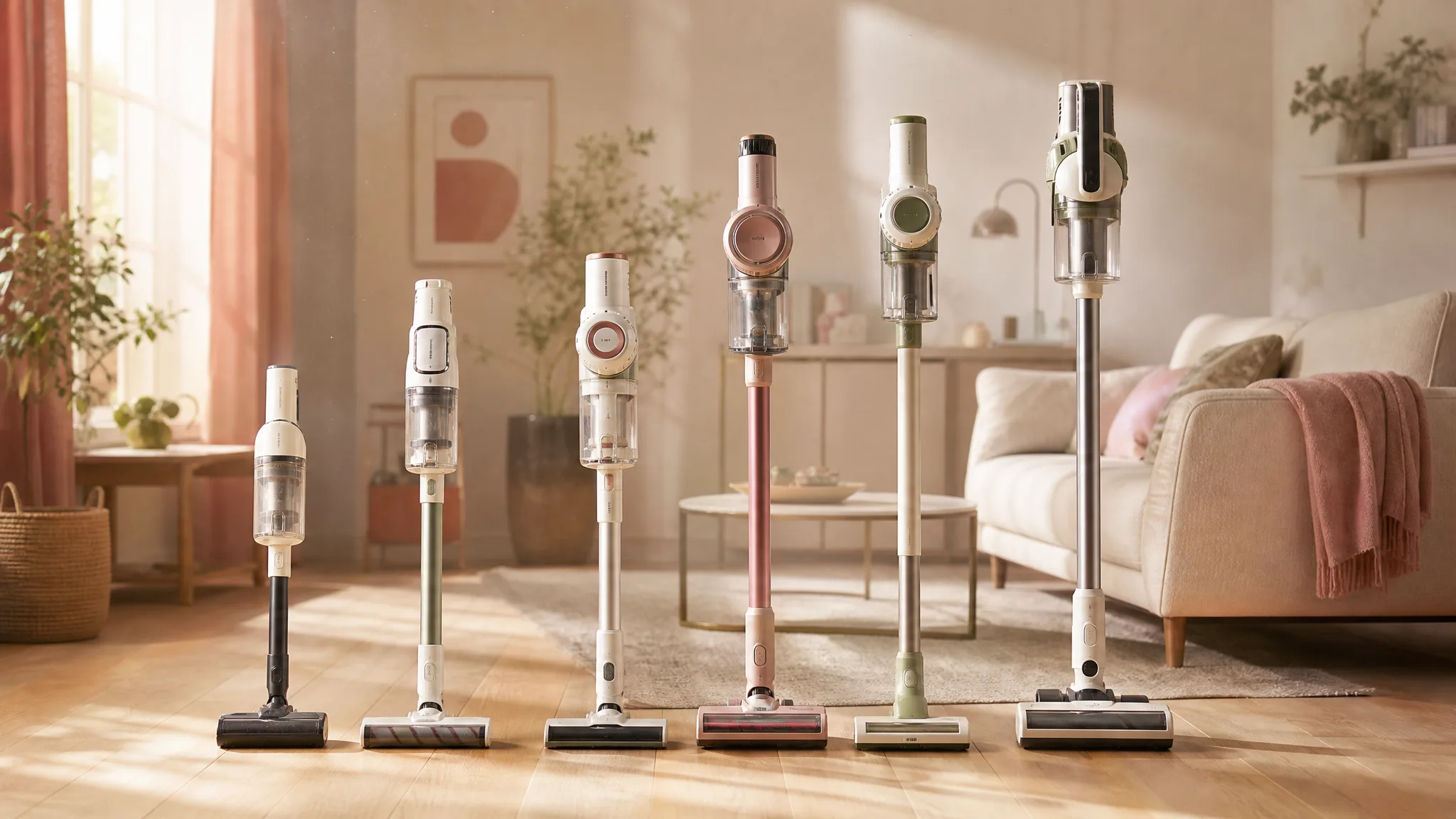
6 Best Cordless Vacuums for Busy Homes (2026): Tested From Budget to Premium
We tested 6 cordless vacuums in real homes, from a $98 budget stick to Dyson's most powerful, and ranked the honest picks for every floor, pet, and budget.
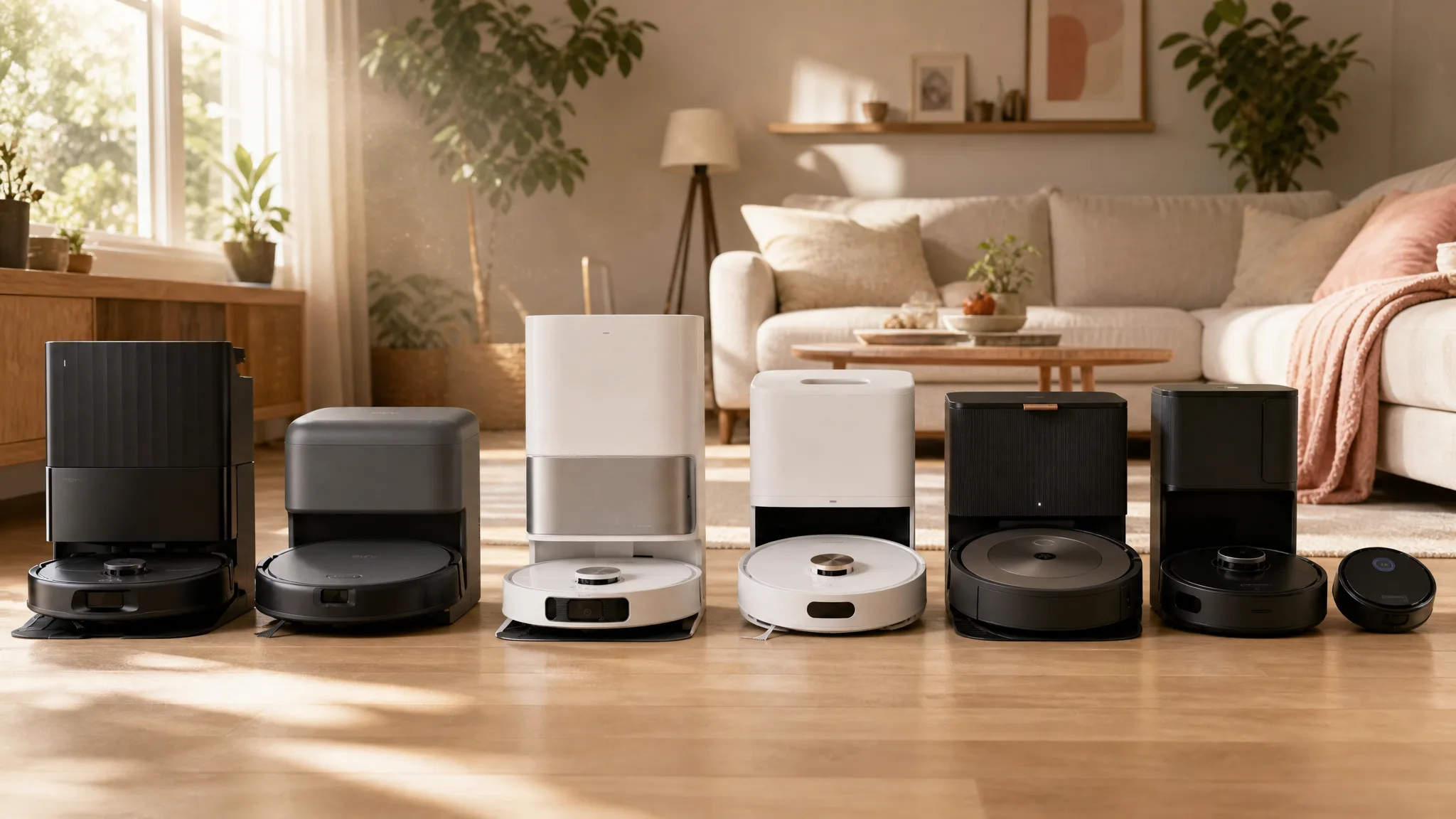
7 Best Robot Vacuums of 2026: Self-Emptying Picks for Every Budget
We tested 7 self-emptying robot vacuums in real homes. Honest picks for every budget, from a $170 no-frills cleaner to all-in-one mopping docks that handle everything.
6 Best Self-Emptying Robot Vacuums for Busy Homes (2026)
We tested six self-emptying robot vacuums that go weeks without a touch. Honest picks for busy homes, from a slim Eufy to a self-washing mop dock from Roborock.