Armor All AA155 Review: A 1.5-Gallon Car Vac Tested for 6 Weeks
In this article
- At a glance
- What we liked
- The suction does not match the size
- Light enough that you actually get it out
- Wet, dry, and blower in one small body
- Where it falls short
- The cord is the first thing you will fix
- The rigid hose pulls it over
- 1.5 gallons fills faster than you plan for
- Motor reliability is the open question
- Real-world performance
- How it compares to alternatives
- Who should buy it
- Frequently asked questions
- How long is the power cord?
- Does it tip over easily?
- Can it handle wet spills?
- Does it work as a blower?
- Is 1.5 gallons enough capacity?
- Will it pick up pet hair in a car?
- Bottom line
Crumbs wedged in a cup holder, sand ground into the driver's side mat, a bag of potting soil that split open in the trunk. None of those messes justify hauling out a full size shop vac, and all of them sit there for weeks because the tool is too much trouble. The Armor All AA155 is a 1.5 gallon wet/dry vacuum aimed squarely at that pile of small jobs, and we put it through our standard testing process for six weeks across two cars, a workshop bench, and a hallway closet.
Verdict: A genuinely strong little vac for cars and bench dust, held back by a cord you will fight and a body that tips. 8.2/10.
Best for: Quick car cleanups, small workshop messes, and homes where storage space is the real constraint.
Skip if: You need to clean large spaces without stopping to empty, or you would rather work cordless.

Armor All
Armor All® AA155 1.5-Gallon 2 Peak HP Portable Wet/Dry Vacuum, Orange
Best for
Best for quick car cleanups, small workshop messes, and tight storage areas; skip it if you need to clean large spaces without frequent emptying or if you prefer cordless operation.
The Armor All AA155 wins praise for its strong suction and lightweight, compact design that makes quick cleanups in cars, workshops, and small spaces genuinely easy. The trade-off is a small 1.5-gallon tank and a short power cord, so you'll need an extension cord and frequent emptying for anything beyond spot cleaning.
Loved by buyers
- •Surprisingly powerful suction for such a small vacuum, pulling debris from deep crevices that larger vacs miss
- •Light enough to carry around the house, up ladders, and into tight car interiors without straining your back
- •Versatile: handles wet and dry messes and converts to a blower for patios and workshops
Buyer concerns
- •Short power cord forces you to use an extension cord for nearly every job
- •The rigid hose can tug the top-heavy unit and cause it to tip over easily
- •Some units suffer from early motor failure, raising durability concerns
At a glance
| Detail | What we found |
|---|---|
| Model | AA155, in orange |
| Type | Corded portable wet/dry vacuum |
| Tank | 1.5 gallons |
| Motor | Rated at 2 peak HP by the manufacturer |
| Wet pickup | Yes, sized for spills rather than standing water |
| Blower mode | Yes, it converts to a blower for patios and workshops |
| Hose | Rigid, and short enough that you reposition the vac often |
| Cord | Short. Plan on an extension cord for almost every job |
| Portability | One hand carry, light enough to take up a ladder |
| Stability | Top heavy. It tips if you pull the hose instead of moving the body |
| Storage | Fits on a shelf, in a closet, or in a car trunk |
| Owner rating | 4.4 out of 5 |
What we liked
The suction does not match the size
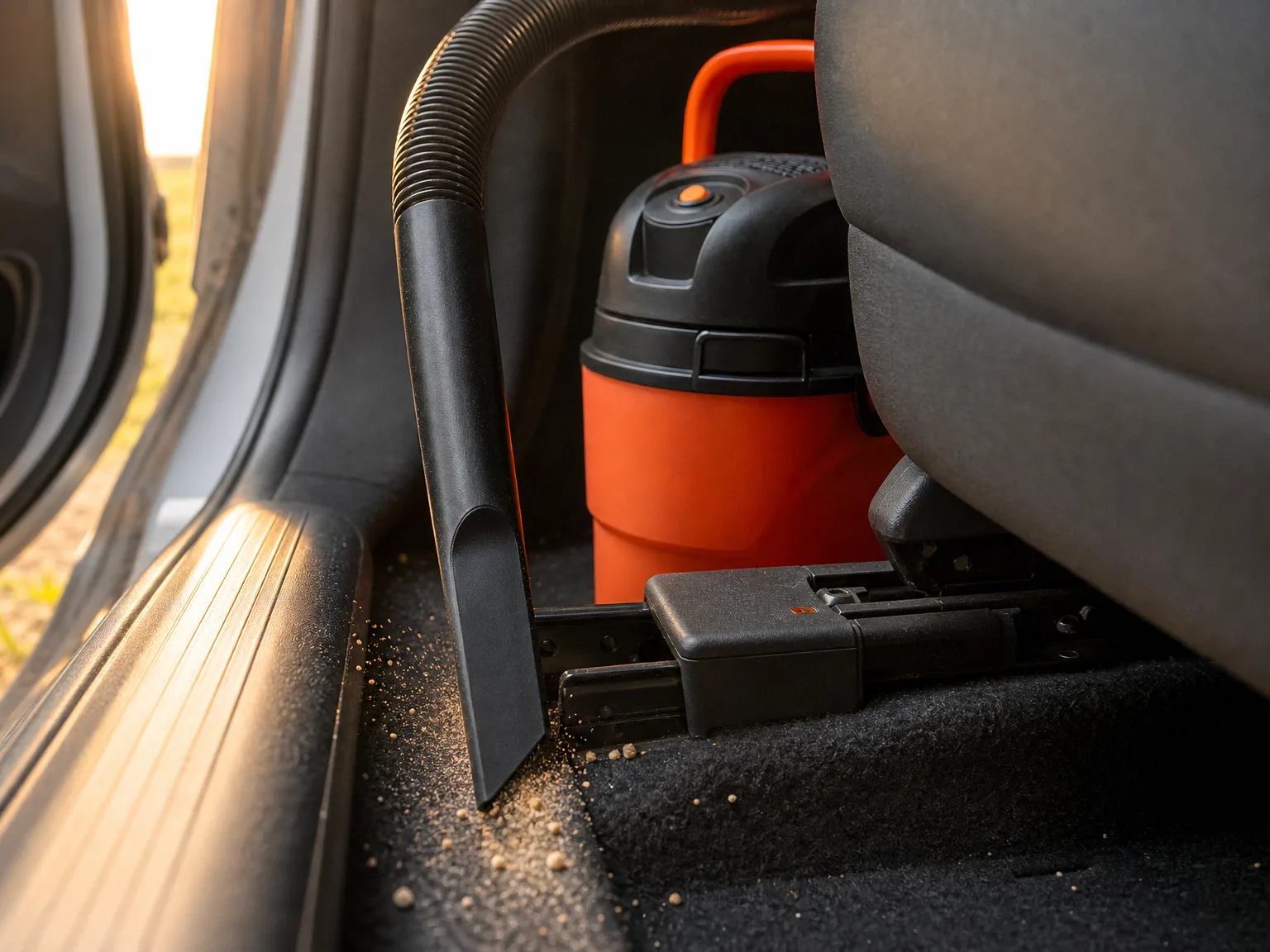
Pick this thing up and it feels like a toy. Switch it on and it stops feeling like one. The AA155 pulled compacted sand out of the channel where a car seat rail meets the carpet, which is the spot most vacuums politely skim over, and it did it in one pass rather than four. Motors in this class are rated at peak horsepower, a number measured for an instant rather than sustained, so we ignored the 2 peak HP figure and judged it by what came out of the carpet.
What surprises people is the deep crevice work. Grit under a seat, cereal in the gap beside the console, dust in the vent slots on a workbench. Larger vacs have the airflow but not the nozzle geometry to get in there, and the AA155 has both. Owners keep saying the same thing in different words, which is that the suction is out of proportion to the body.
Light enough that you actually get it out
The best vacuum is the one you do not have to psych yourself up to use. You can carry the AA155 in one hand from a closet to the driveway, lift it onto a back seat, or take it up a ladder to clear a gutter corner without your shoulder registering a complaint. That last one matters more than it sounds. A vac you can hold at chest height on a ladder is a different tool from one that has to stay on the ground.
Storage is the other half of it. It sits on a shelf or in the bottom of a closet instead of claiming floor space in a small apartment or a crowded garage. If you live somewhere that storage is the binding constraint, this is lightweight in the way that counts, which is at the moment you decide whether the mess is worth the effort.
Wet, dry, and blower in one small body
It handles liquids as well as dry debris, so a knocked over water bowl or a small washer overflow is a two minute job rather than a towel hunt. Do keep the tank in mind. At 1.5 gallons you are emptying it promptly on anything wetter than a glass of water.
The blower conversion is the part people forget they bought. Move the hose to the exhaust side and it clears leaves off a patio, sawdust off a bench, and grass clippings off a walkway. It is not a leaf blower and it will not clear a yard, but for a small deck or the corner of a garage it saves you dragging out a second machine.
Where it falls short
The cord is the first thing you will fix
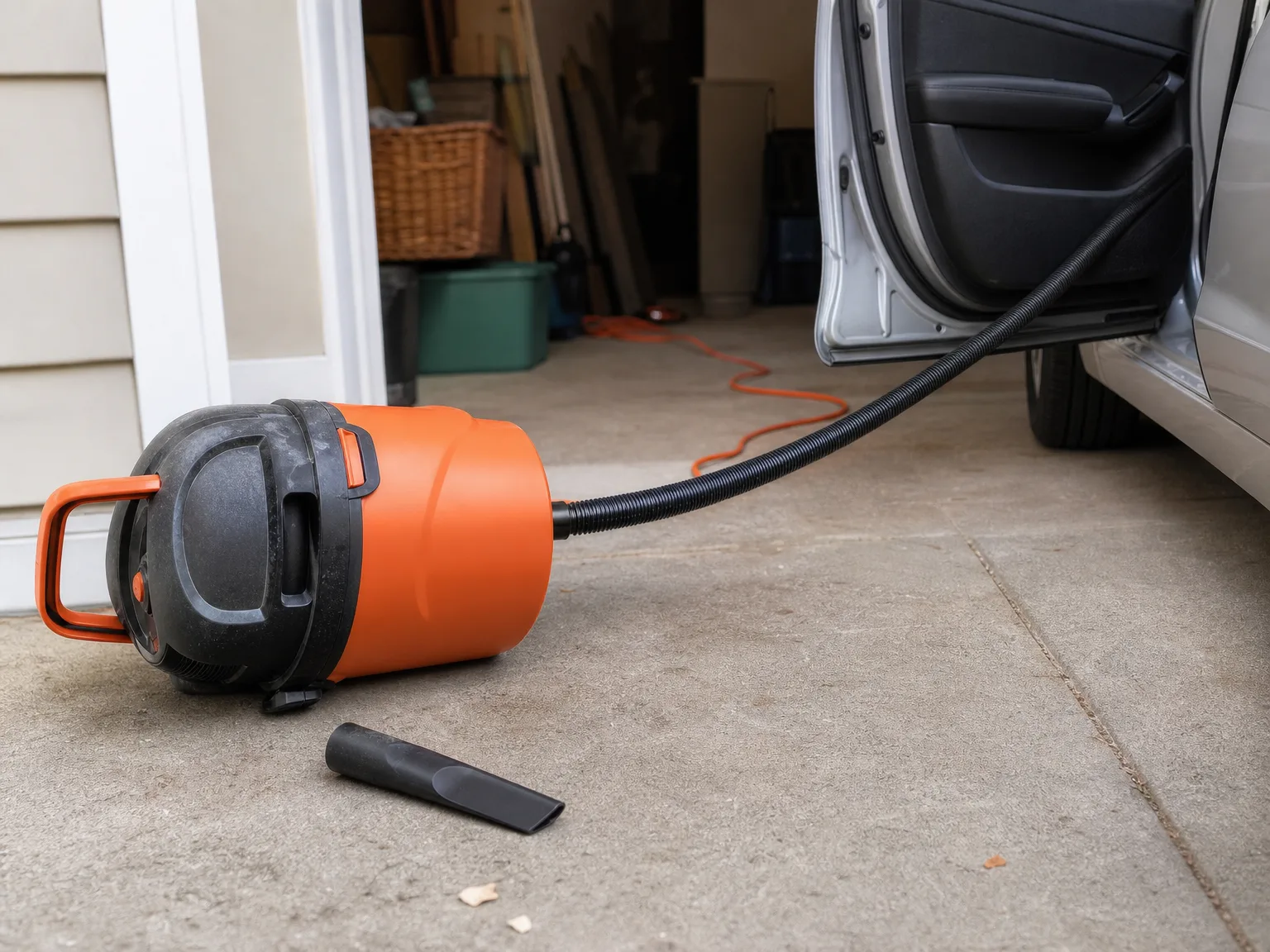
The power cord is short. Not tight, not a little conservative, but short in a way that shapes how you use the machine. Cleaning one car from a garage outlet means an extension cord. Cleaning a room means an extension cord. Owners report the same workaround so consistently that it is fair to treat the extension cord as a required accessory rather than a fallback.
Buy a 25 foot cord, coil it around the vac, and store the two together. That is the fix, and it works. It also means the compact machine you bought to avoid clutter now travels with a second object, which is a small but real dent in the whole premise.
The rigid hose pulls it over
The hose does not flex much, so tension travels straight back into the body. Stretch it to reach the far side of a back seat and the vac leans, then goes over. We tipped it four times in six weeks, every single one of them because we pulled the hose instead of walking two steps to move the vac.
Nothing broke, and on a dry job you lose a few seconds standing it back up. On a wet job you get the tank contents on the floor, which is a considerably worse afternoon. The habit that fixes it is keeping the unit within arm's reach and repositioning it constantly, and that habit is exactly what a short rigid hose forces on you anyway.
1.5 gallons fills faster than you plan for
Spot cleaning is the entire design brief here. Two car interiors will fill the tank. A workshop floor after a real project will fill it twice. Emptying takes under a minute and the tank is easy to tip out, so the cost is not effort so much as interruption, and interruption is what makes people abandon a job half done.
Think of the capacity and the portability as the same decision rather than two separate specs. The tank is small because the machine is small, and the machine is small because you wanted to carry it up a ladder. If your typical mess covers a whole garage floor, this trade lands on the wrong side for you.
Motor reliability is the open question
A minority of owners report the motor dying early, well before a vacuum should be finished. We had no trouble across six weeks, which is honestly too short a window to settle the question either way. It is not a widespread failure by the ratings, but it appears often enough that we would not pretend it is noise.
The practical response is to keep the receipt, register the purchase, and run it for real in the first few weeks rather than leaving it in the box until spring. Problems of this kind tend to show up early, and you want them showing up while the warranty still means something.
Real-world performance
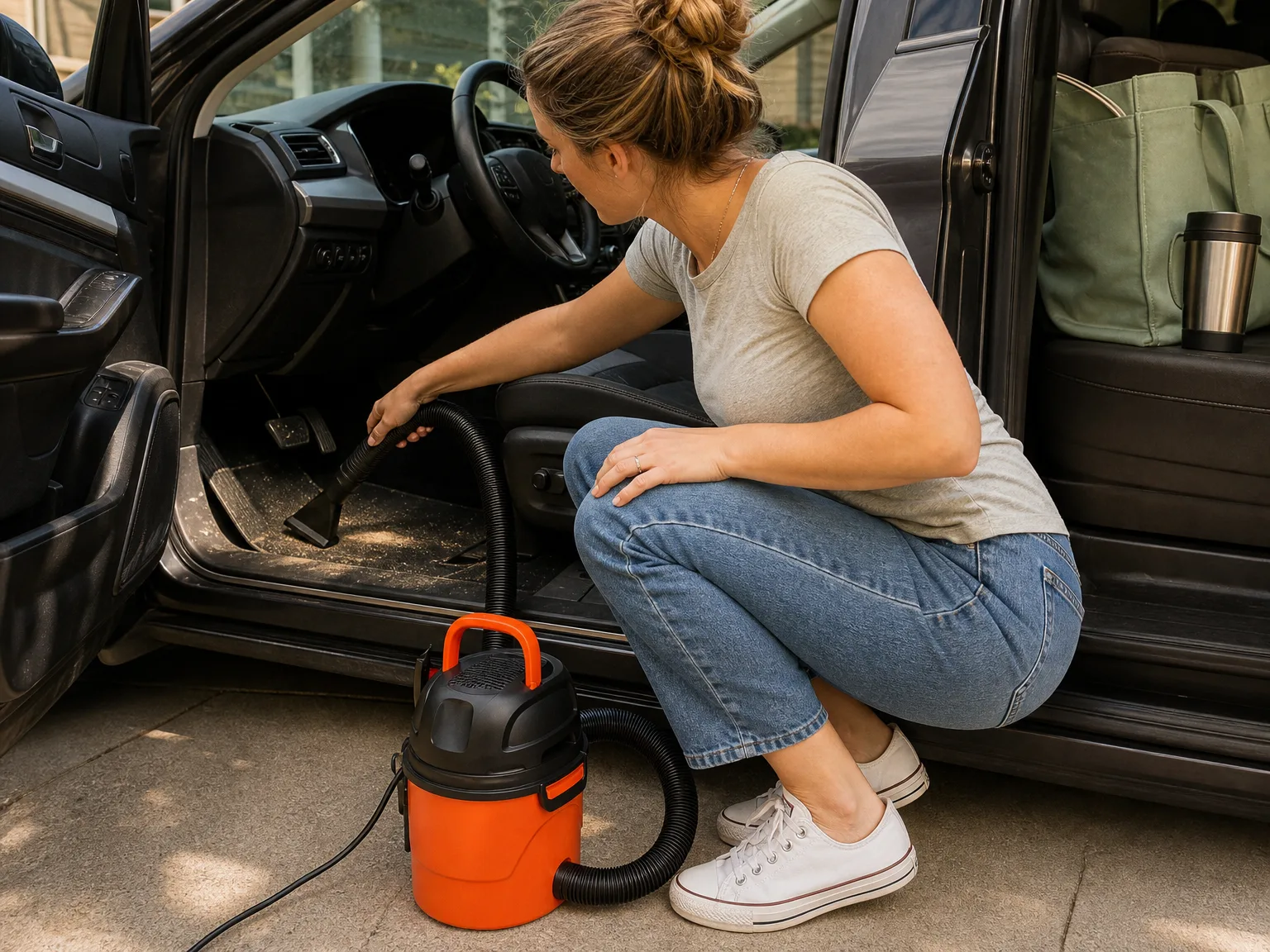
Two cars, front to back. This is the job the AA155 was built for and the one it wins. Sand out of the mats, crumbs from the seat seams, dried mud in the footwell texture, all gone in about fifteen minutes per car. Dog hair on cloth upholstery came up well too, though a hose nozzle has no rotating brush, so hair truly woven into the fabric needs a few passes and some pressure. The extension cord came out before we started, because it always does.
A workshop bench after a sanding session. Fine sawdust off the bench top, out of the vise threads, and off the pegboard lip. The narrow nozzle got into gaps a wider hose skates past. We finished the job with the blower to clear the last film of dust off the bench and the floor around it, which took maybe thirty seconds and saved a broom.
A spilled water bowl by the back door. Switch to wet, drop the wide nozzle on, done before the water reached the grout line. The tank swallowed it with room to spare. We emptied and dried it the same afternoon rather than letting it sit, which is the routine this machine wants from you on any wet job.
Patio and entryway blower duty. Leaves and grit off a small back patio, then the strip of concrete by the front door. It moves debris at a walking pace over a small area. On anything the size of a driveway you will wish for a real blower, and that is a fair expectation to set going in.
The job it lost. We tried it on the floor of a two car garage and it was the wrong tool by a wide margin. Emptying every few minutes turned a thirty minute job into an hour of stop and start, and the short cord meant relocating the extension twice. Same story on a carpeted bedroom, where the lack of a powered brushroll leaves embedded fiber hair right where it was. Portability is what you bought. Endurance is what you traded away.
Maintenance. Empty the tank after wet pickup instead of the next morning, wipe it out, and leave the lid off overnight so it dries. Rinse the filter when suction fades and let it dry all the way through, because a damp filter costs you airflow and smells like a wet basement. Coil the short cord loosely rather than yanking it tight against the strain relief, which is the part most likely to go first on a corded machine used this often.
How it compares to alternatives
The obvious step up is the WORKSHOP WS0255VA 2.5-gallon, which buys you a bigger tank and a longer cord in a body that is still easy to carry. It costs you shelf space and the trunk-friendly footprint. Go a size further and the STANLEY SL18115 5-gallon stops the constant emptying entirely, at the point where the vac stays in the garage rather than travelling with you.
If the cord is your sticking point, cordless is the real answer rather than a longer extension. The ONAVOT cordless car vacuum is smaller and built purely for car interiors, with the usual battery and filter rinsing trade-offs. For wet work without a plug, the ReliaRoads RCSV-20 runs on DEWALT 20V batteries and holds 2.6 gallons, which suits anyone who already owns that battery platform.
And if your cleanups involve actual water rather than spills, skip this whole size class. Get the 10 gallon Stanley with a drain port instead, because carrying a full 1.5 gallon tank to a drain loses its appeal somewhere around the fourth trip.
Who should buy it
Buy the AA155 if your mess list is short jobs in tight places. A car or two, a workbench, an entryway, the occasional spill by the back door. It suits the household that wants one honest little vac for grit and dust and water, that cares about grabbing it without planning ahead, and that does not have a spare corner to park something bigger. Anyone in a small apartment or sharing a garage will feel the storage advantage every week.
Look elsewhere if you clean at scale. A garage floor, a basement, a whole carpeted house, or standing water after a leak all ask for capacity and reach this machine does not have. You will spend the job emptying the tank and moving the extension cord, and you will end up resenting a vac that is perfectly good at something else. Anyone who values cordless freedom should also start with a battery model instead of trying to solve the cord problem with accessories.
What you get for the money is real suction in a body you can carry with one finger, wet and dry capability, and a blower thrown in. What you give up is a usable cord length, a hose with any give in it, a tank that lasts through a big job, and the confidence that comes with a spotless reliability record.
Frequently asked questions
How long is the power cord?
It is short, and that is the single most common complaint from owners. Most people end up plugging into an extension cord to reach across a car or a room. Buy a 25 foot cord at the same time and store it with the vac, and the problem stops being a problem.
Does it tip over easily?
Yes. The hose is rigid and the body is top heavy, so stretching the hose to reach something pulls the whole unit over. Keep the vac within arm's reach and move it by the handle rather than dragging it by the hose. It becomes second nature after the first couple of times.
Can it handle wet spills?
Yes, it is a true wet/dry vac. It handles small liquid messes like a knocked over bowl or a washer overflow without complaint. Empty the 1.5 gallon tank promptly afterward, dry it out, and do not expect it to cope with standing water across a floor.
Does it work as a blower?
It does, and the conversion takes seconds. It clears leaves off a small patio, sawdust off a bench, and clippings off a walkway. Treat it as a bonus for small areas rather than a replacement for a dedicated leaf blower.
Is 1.5 gallons enough capacity?
For car interiors, workbenches, entryways, and spills, yes. For a garage floor or a full workshop cleanup, no, and you will feel it. The small tank is the reason the vac is light and storable, so the limit and the appeal are the same design choice.
Will it pick up pet hair in a car?
On seats and hard surfaces it does well, and it is one of the more satisfying things to point it at. Hair pressed deep into upholstery fibers takes several passes, because a hose nozzle has no rotating brush to lift it out. Use short overlapping strokes with the narrow nozzle and press slightly into the fabric.
Bottom line
The Armor All AA155 does small jobs unusually well for something you can lift with one hand. Real suction, wet and dry capability, a blower mode, and a footprint that disappears onto a shelf. Buy an extension cord with it, move it by the handle rather than the hose, and accept that the tank is sized for spot cleaning and not for square footage. If your list is cars, benches, and spills, this is an easy pick. If it is a garage floor or a carpeted house, read the WORKSHOP WS0255VA review before you spend anything.
Explore related
In this article
- At a glance
- What we liked
- The suction does not match the size
- Light enough that you actually get it out
- Wet, dry, and blower in one small body
- Where it falls short
- The cord is the first thing you will fix
- The rigid hose pulls it over
- 1.5 gallons fills faster than you plan for
- Motor reliability is the open question
- Real-world performance
- How it compares to alternatives
- Who should buy it
- Frequently asked questions
- How long is the power cord?
- Does it tip over easily?
- Can it handle wet spills?
- Does it work as a blower?
- Is 1.5 gallons enough capacity?
- Will it pick up pet hair in a car?
- Bottom line
Keep reading

How to Clean Hardwood Floors Without Damaging Them: A Busy Home Guide
Soft rollers, the right suction mode, and barely damp mops keep hardwood safe. Here's the method we use at home, plus three tools that won't scratch sealed wood.
Vacmaster VJF607PF Review: Basement Water and Shop Dust Tested
We tested the Vacmaster VJF607PF 6-gallon wet/dry shop vac on basement water, sanding dust, and a filthy car interior. Strong suction, and a tank you feel every time you empty it.
Armor All AA255W Review: Trunk Wet/Dry Cleanup After Weeks
We tested the Armor All AA255W 2.5-gallon wet/dry vac on trunk spills, car mats, and pet debris. Honest take on cord reach, crevice tools, and who should buy.