STANLEY SL18115 Review: 5-Gallon Shop Vac Tested on Car Grit
In this article
- At a Glance
- What We Liked
- Suction That Takes Drywall Dust and Standing Water Equally
- Light Enough to Carry With One Hand
- It Stays Upright When You Pull the Hose
- Attachments Live on the Vac
- Quieter Than the Shop Vac It Replaces
- Where It Falls Short
- The 10-Foot Cord Is the Real Limit
- Replacement Bags Are a Special Order
- The Stock Hose Is Stiff
- Real-World Performance
- How It Compares to Alternatives
- Who Should Buy It
- FAQ
- Bottom Line
Saturday tends to arrive with three messes at once: road salt in the footwells, drywall dust from a patched basement wall, and a slow puddle under the water heater that no household vacuum will touch. The STANLEY SL18115 is a 5-gallon stainless wet/dry shop vacuum built for exactly that rotation, and it is light enough to carry in one hand from the driveway to the basement to the hallway. We ran it through our how we review process in all three places.
Verdict: Genuine shop vac suction in a body you can carry one-handed, held back by a 10-foot cord and bags you cannot buy locally. 8.5/10.
Best for: Car detailing, basement workshops, and household touch-ups where portability matters more than reach
Skip if: You clean far from an outlet, or you want replacement bags you can grab off a store shelf

STANLEY
STANLEY Wet/Dry Vacuum SL18115, Stainless Steel Tank, 5 Gallon 4HP Shop Vacuum, Portable Style Ideal for Home/Shop/Jobsite Dust Collection Job with Vacuum Attachments, Silver+Yellow
Best for
A solid pick for light to medium jobs like car detailing, basement workshops, and household touch-ups where portability wins. Skip it if you regularly need long cord reach or want easy-to-find bags.
Most owners agree this vacuum delivers strong suction in a lightweight, stable body that's easy to carry from room to room. The main compromise is a short 10-foot cord and hard-to-find proprietary bags, so you'll need an extension cord and to budget for ordering bags directly.
Loved by buyers
- •Lightweight enough to carry one-handed, making it a practical choice for quick spills and car interiors.
- •Onboard storage for attachments means you won't hunt for the crevice tool mid-job.
- •Stays upright when pulled by the hose, a design detail that prevents frustrating tip-overs.
Buyer concerns
- •The 10-foot power cord limits reach enough that an extension cord becomes essential for garage or driveway use.
- •Replacement paper bags aren't available at major retailers or Amazon, and owners report high prices ordering direct from the manufacturer.
At a Glance
| Spec | Detail |
|---|---|
| Type | Corded wet/dry shop vacuum |
| Model | SL18115 |
| Tank capacity | 5 gallons |
| Tank material | Stainless steel |
| Motor | 4 peak HP (manufacturer claims) |
| Power cord | 10 feet |
| Accessory port | Standard 1-1/4 inch |
| Dust collection | Proprietary paper bags, ordered direct from the manufacturer |
| Attachment storage | Onboard holders on the body |
| Stability | Stays upright when pulled by the hose |
| Noise | Quieter than typical shop vacs, according to owners |
| Owner rating | 4.6 out of 5 across 6,940 reviews |
What We Liked
Suction That Takes Drywall Dust and Standing Water Equally
Four peak horsepower moves the kind of debris that makes a household vacuum whine and quit. Fine drywall dust went into the tank without puffing back out around the seal, sawdust cleared in single passes, and a wet cleanup that would have cost us a stack of towels took about two minutes instead. Pet hair on hard floors and car upholstery lifts on the first pass rather than rolling ahead of the nozzle. The tank is the thing to watch, not the motor. Five gallons of water is heavy, and it sneaks up on you faster than five gallons of sawdust does.
Light Enough to Carry With One Hand
This is the reason the SL18115 gets used on a weeknight. Owners keep coming back to the same detail, that they can pick it up one-handed and walk it wherever the mess is, and it holds up in practice. We carried it out to the driveway, back down to the basement, and up a flight of stairs to a hallway without setting it down halfway or recruiting a second person. Bigger drums win on capacity and lose on this exact point. A 9-gallon vac lives in one corner of the garage all year, which means the messes in the rest of the house wait for a scheduled cleanup instead of getting handled the evening they happen.
It Stays Upright When You Pull the Hose
Small shop vacs have a habit of tipping over the moment you tug the hose from across the room, and then you are sweeping up what you just vacuumed. This one tracks along behind you instead. The stainless drum keeps the weight low and the base planted, so we could work a full car interior from one parking spot, walking around the vehicle and dragging the vac after us without a single tip. It sounds like a small thing on a spec sheet. It is the difference between finishing a job and stopping every few minutes to stand a machine back up.
Attachments Live on the Vac
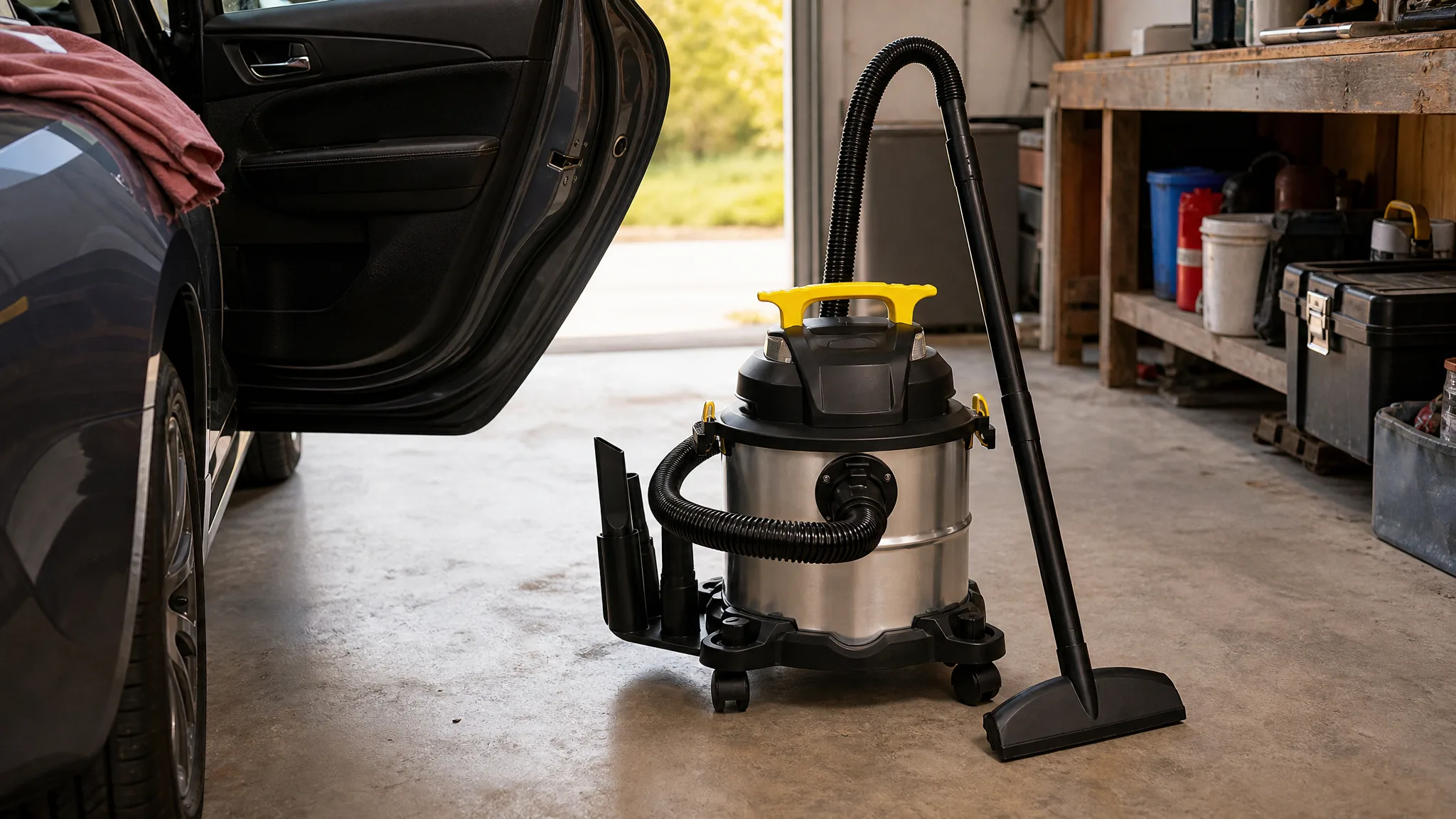
The crevice tool, the wide nozzle, and the rest of the kit clip onto the body, so the tool you need is on the machine you are already holding. Anyone who has hunted through a garage shelf for a crevice tool mid-job knows why this matters. Onboard storage also means the attachments come along automatically when you carry the vac to another room, and nothing gets left behind on the workbench. It is a small design decision that quietly removes one of the more annoying steps in a cleanup.
Quieter Than the Shop Vac It Replaces
Owners repeatedly describe it as quieter than the shop vacs they used before, and our experience matched. We could hold a conversation next to it at normal volume, which is not something we can say about most drum vacs. Calibrate your expectations, though. This is still a shop vac, so it is audible through a closed door and a bare concrete basement bounces whatever noise is left straight back at you. Tolerable is the right word, not quiet. Tolerable is also what gets a vacuum switched on at 8pm instead of parked until the weekend.
Where It Falls Short
The 10-Foot Cord Is the Real Limit
Ten feet of cord decides where this vacuum can and cannot go. Inside the house it is fine, since outlets are everywhere. In a garage or a driveway it is not, and an extension cord stops being optional the first time you try to reach the far side of a car. Owners flag this more than any other complaint, and we hit it on the first job. Plan for a heavy-gauge extension cord as part of the purchase rather than a nice-to-have accessory, and keep it coiled with the vac so you are not hunting for one mid-cleanup.
Replacement Bags Are a Special Order
The bags are proprietary, and big-box stores and Amazon do not stock them. You order direct from the manufacturer, and owners report paying a premium plus meaningful shipping on top. That turns a five-minute errand into a delivery you have to remember to schedule before you run out. Compare that with shop vacs that run on a washable cartridge filter and cost nothing to keep going. If you vacuum fine dust regularly, price out a few bags before you buy so the running cost does not surprise you later.
The Stock Hose Is Stiff
The hose in the box works, but it fights you in tight quarters like footwells and the gap behind a workbench. The port is a standard 1-1/4 inch, so this one is fixable. Owners routinely swap in a longer aftermarket hose such as a Cen-tec and report better flexibility with no loss of suction. Budget for that upgrade if most of your cleaning happens inside a vehicle, where a stiff hose costs you more time than the suction saves.
Real-World Performance
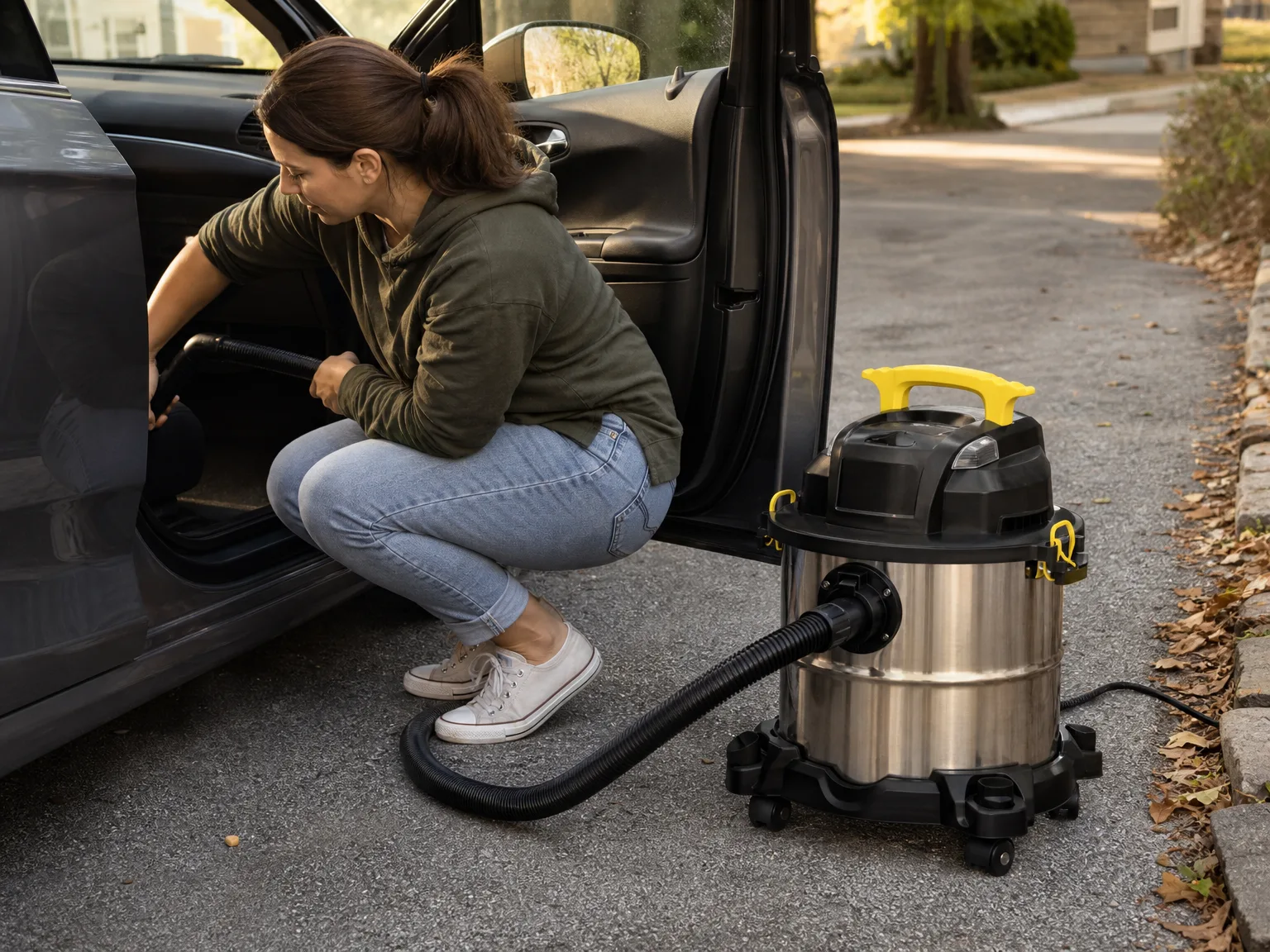
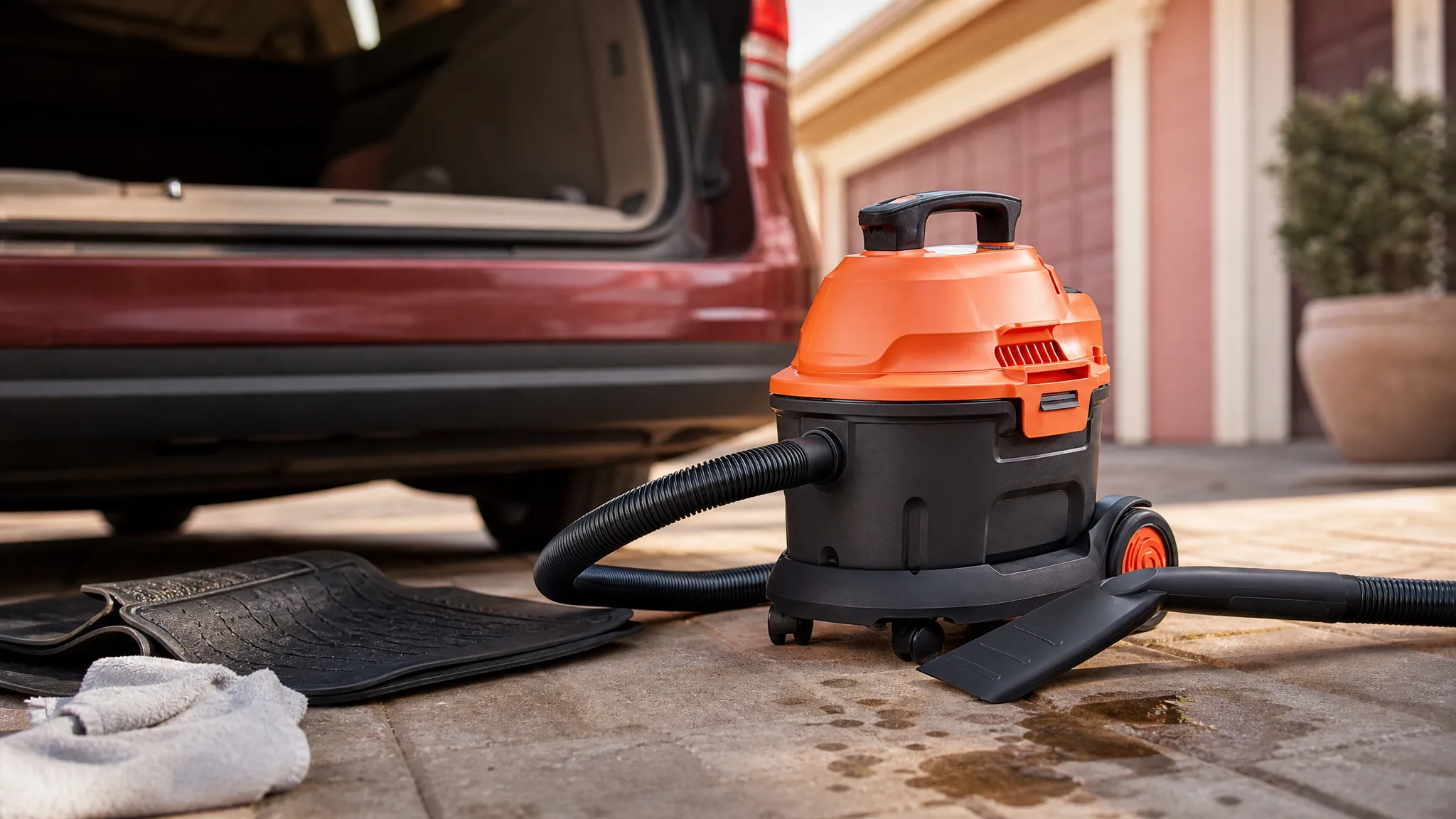
Car detailing in the driveway went well once we solved the cord. Grit under the seat rails, sand in the cargo mat, and pet hair along the upholstery seams all came up cleanly, and corded power held identical pull from the first row to the trunk with no fade partway through. That is the advantage over a cordless handheld, which usually starts weakening in the second row. The friction was reach. From an outlet inside the garage, the 10-foot cord got us to the front bumper and no further, so an extension cord came out before we finished the driver side.
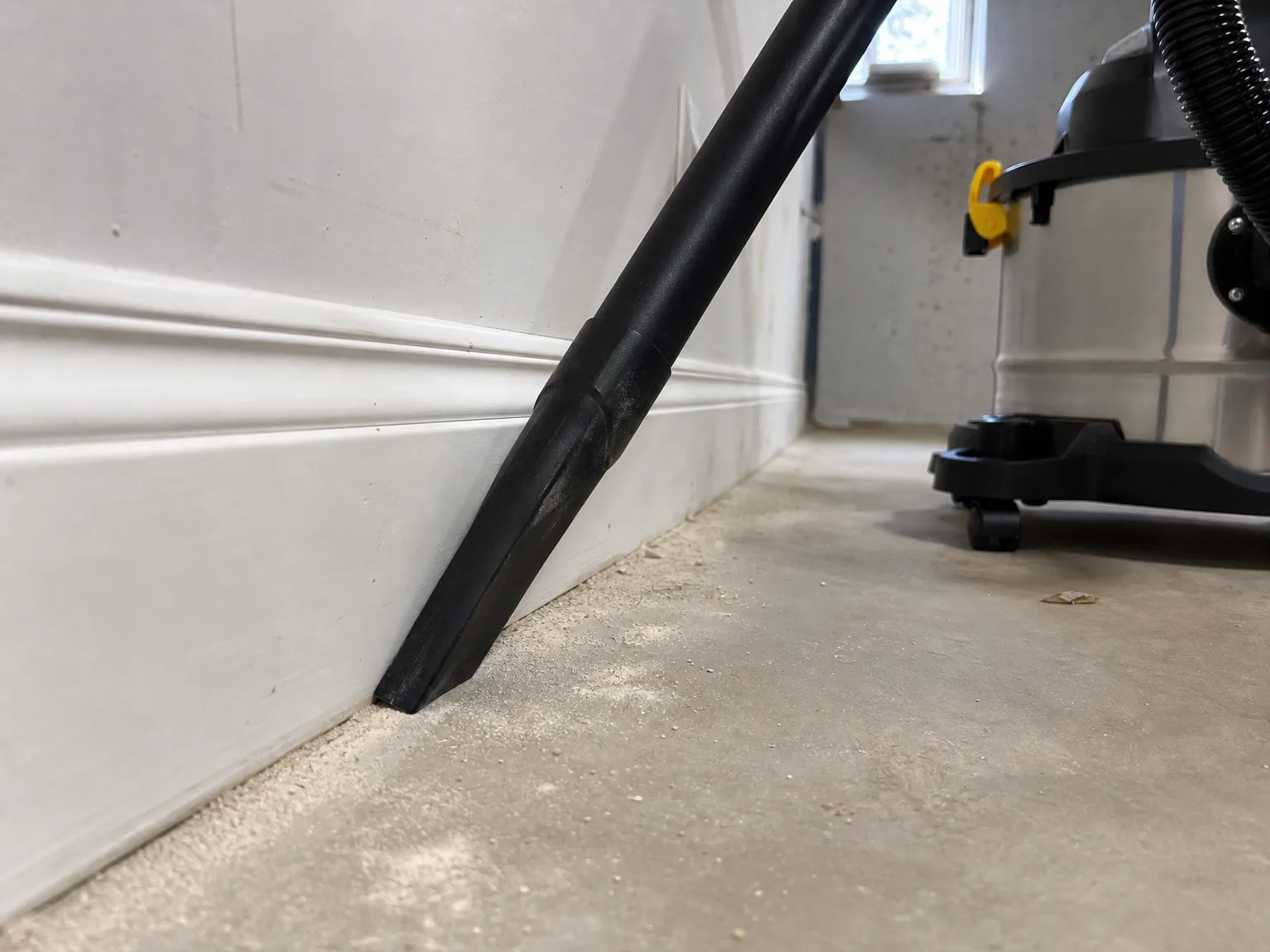
Basement workshop cleanup was the job it handled most convincingly. We patched and sanded a wall, which left fine dust across the floor and settled on every horizontal surface nearby. The vac pulled it in without blowing a cloud back into the room, and the wide nozzle cleared the open floor in overlapping passes. Down there the short cord barely registers, because a basement outlet is usually a few steps away. Take the paper bag out before any wet work, as you would with any bagged shop vac, and rinse the stainless tank the same day so nothing dries onto the walls.
Household touch-ups are where the one-handed carry pays off. Entry grit after a rainy week, the stairs a stick vacuum handles awkwardly, and the corner behind the dryer all got done in one trip because moving the machine takes a hand and a few seconds. We also used it on a bag of spilled cat litter, which is the kind of mess that ruins a filter on a regular vacuum and goes straight into a shop vac tank without complaint.
A wet cleanup under the water heater was the last test. A slow drip had left standing water across the floor pan and out onto the concrete, and the vac took it in a handful of passes. Household vacuums cannot go near standing liquid, so the alternative here is towels and an hour of your evening. Empty the tank outside rather than lifting it into a laundry sink, because five gallons of water gets awkward in a hurry.
How It Compares to Alternatives
The STANLEY 10-gallon poly model is the upgrade if reach and volume are your problem. It runs an 18-foot cord, a 6-foot hose, and two extension wands for more than 24 feet of working range, adds a real blower and a drain port with a garden hose adapter, and floats a shutoff valve so it stops on its own when the tank fills. You pay for it in noise, since owners measure it at 75-80 dB, roughly a lawn mower. It is also poly rather than stainless, and it is not a machine you casually carry upstairs.
The CRAFTSMAN CMXEVBE18690 splits the difference with a 9-gallon drum, 4.25 peak HP, onboard storage for seven attachments, and a rear blower port the SL18115 lacks. That combination suits a workshop where the vac stays in one place and renovation debris shows up by the wheelbarrow. Two warnings from owners. Boxes arrive missing the dust bag or the muffler often enough to check the packing list on arrival, and customer support is slow when they do.
Our Vacmaster 6-gallon wet/dry review covers the closest thing to a straight swap: same class, one more gallon, and a blower unit that lifts off the drum for driveways and gutters. If your cleanup routine ends with blowing the driveway clear, get the Vacmaster instead. If it ends with carrying the vacuum back inside, the Stanley is the easier machine to live with.
Who Should Buy It
Buy this one if your messes move around and your outlets are close. Someone who details their own car, keeps a basement workshop, and wants a vacuum that can also take a spilled bag of litter or a puddle by the laundry gets the most out of it. The stainless 5-gallon tank, the stable base, and a body light enough to carry in one hand add up to a shop vac that goes to the mess rather than making the mess wait for it.
Look elsewhere if you clean far from a wall socket or you would rather not track down bags. A garage that needs 20 feet of reach on a regular basis is a better fit for the 10-gallon Stanley with its 18-foot cord, and anyone who wants zero consumables should shop for a model with a washable cartridge filter. Daily floor dust inside the house still belongs to a cordless stick vacuum, and for quick crumb patrol in the car a handheld like the one in our ZARIMI portable car vacuum review is faster to grab.
What you get at this tier is a 4 peak HP corded motor, wet and dry capability, a rust-proof stainless tank that will not tip when you tug the hose, attachments that ride on the machine, and noise you can work beside. What you do not get is reach or cheap consumables, so add an extension cord and a supply of bags to your mental price before you decide.
FAQ
How long is the power cord?
Just 10 feet. Inside the house that covers most rooms, but for a garage, a driveway, or anything beyond a small radius, count on running an extension cord.
Where can I buy replacement bags, and are they expensive?
Not at big-box stores and not on Amazon. You order them direct from the manufacturer, and owners report paying a premium with high shipping costs on top. Price a few out before you buy so the running cost is not a surprise.
Can I use a longer, more flexible hose?
Yes. The port takes standard 1-1/4 inch attachments, and owners have upgraded to aftermarket hoses like the Cen-tec for better flexibility without losing suction.
Is it loud?
Several owners say it is quieter than the shop vacs they replaced, and we could talk next to it without raising our voices. It still makes typical shop vac noise, so treat it as tolerable rather than quiet.
Can it pick up water?
Yes, wet messes are part of what it is built for. Take the paper bag out first, as with any bagged shop vac, and rinse and dry the stainless tank the same day so nothing sets in.
Does it handle pet hair?
On hard floors, car seats, and cargo mats it pulls hair up on the first pass. Shop vacs have no powered brushroll, so fur worked deep into carpet or woven upholstery needs loosening with a rubber brush before the suction can take it.
Bottom Line
The SL18115 earns its place by being the shop vac you actually carry to the mess. Suction handles drywall dust, pet hair, and standing water without drama, the stainless tank stays upright when you pull the hose, and the tools ride along on the body. Two things to accept before you buy: a 10-foot cord that makes an extension cord mandatory in the garage, and bags you have to order direct. If reach and a blower matter more than portability, the 10-gallon Stanley is the smarter buy, and if you want one vacuum for daily floors inside the house, a cordless stick will serve you better than any shop vac.
Ready to buy?
STANLEY Wet/Dry Vacuum SL18115, Stainless Steel Tank, 5 Gallon 4HP Shop Vacuum, Portable Style Ideal for Home/Shop/Jobsite Dust Collection Job with Vacuum Attachments, Silver+Yellow
Explore related
In this article
- At a Glance
- What We Liked
- Suction That Takes Drywall Dust and Standing Water Equally
- Light Enough to Carry With One Hand
- It Stays Upright When You Pull the Hose
- Attachments Live on the Vac
- Quieter Than the Shop Vac It Replaces
- Where It Falls Short
- The 10-Foot Cord Is the Real Limit
- Replacement Bags Are a Special Order
- The Stock Hose Is Stiff
- Real-World Performance
- How It Compares to Alternatives
- Who Should Buy It
- FAQ
- Bottom Line
Keep reading

How to Clean Hardwood Floors Without Damaging Them: A Busy Home Guide
Soft rollers, the right suction mode, and barely damp mops keep hardwood safe. Here's the method we use at home, plus three tools that won't scratch sealed wood.
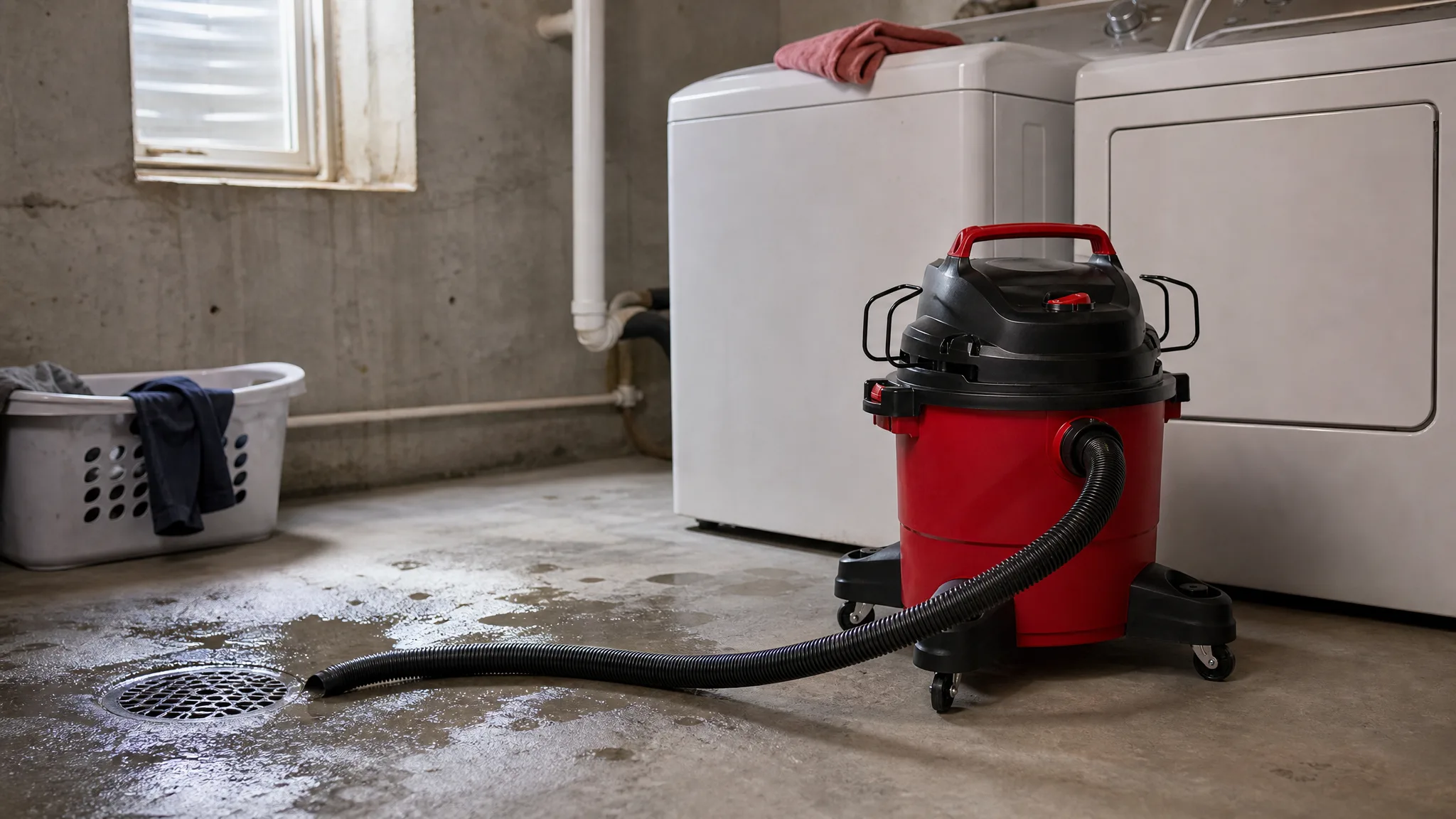
Vacmaster VJF607PF Review: Basement Water and Shop Dust Tested
We tested the Vacmaster VJF607PF 6-gallon wet/dry shop vac on basement water, sanding dust, and a filthy car interior. Strong suction, and a tank you feel every time you empty it.
Armor All AA255W Review: Trunk Wet/Dry Cleanup After Weeks
We tested the Armor All AA255W 2.5-gallon wet/dry vac on trunk spills, car mats, and pet debris. Honest take on cord reach, crevice tools, and who should buy.