STANLEY 10 Gallon Wet Dry Vacuum Review: Flooded Basement Tested
In this article
- At a Glance
- What We Liked
- Suction That Does Not Flinch at Standing Water
- Ten Gallons You Empty After the Job, Not During It
- The Drain Port Saves Your Back
- A Blower That Genuinely Works
- Where It Falls Short
- It Is Loud, and That Is Not a Small Thing
- The Floor Nozzle Does Not Pivot
- Build Quality Is Uneven Out of the Box
- Real-World Performance
- How It Compares to Alternatives
- Who Should Buy It
- FAQ
- Bottom Line
Water spreading across a basement floor at eleven at night, deepest in the low corner by the sump. Wet leaves matted into a pool cover in April. A garage floor nobody has swept since the last project. Those jobs ask for capacity and raw pull, not finesse. We ran the STANLEY 10 Gallon Wet Dry Vacuum through all three, following our how we review process, to find out where 6 peak horsepower actually lands.
Verdict: Serious wet pickup and a drain port that saves your back, packaged in a loud body with uneven build quality. 7/10.
Best for: Homeowners who face occasional heavy wet jobs like a flooded basement or opening a pool and want maximum pull for the money
Skip if: You want a quiet, grab-and-go vac for quick daily cleanups in a small home

STANLEY
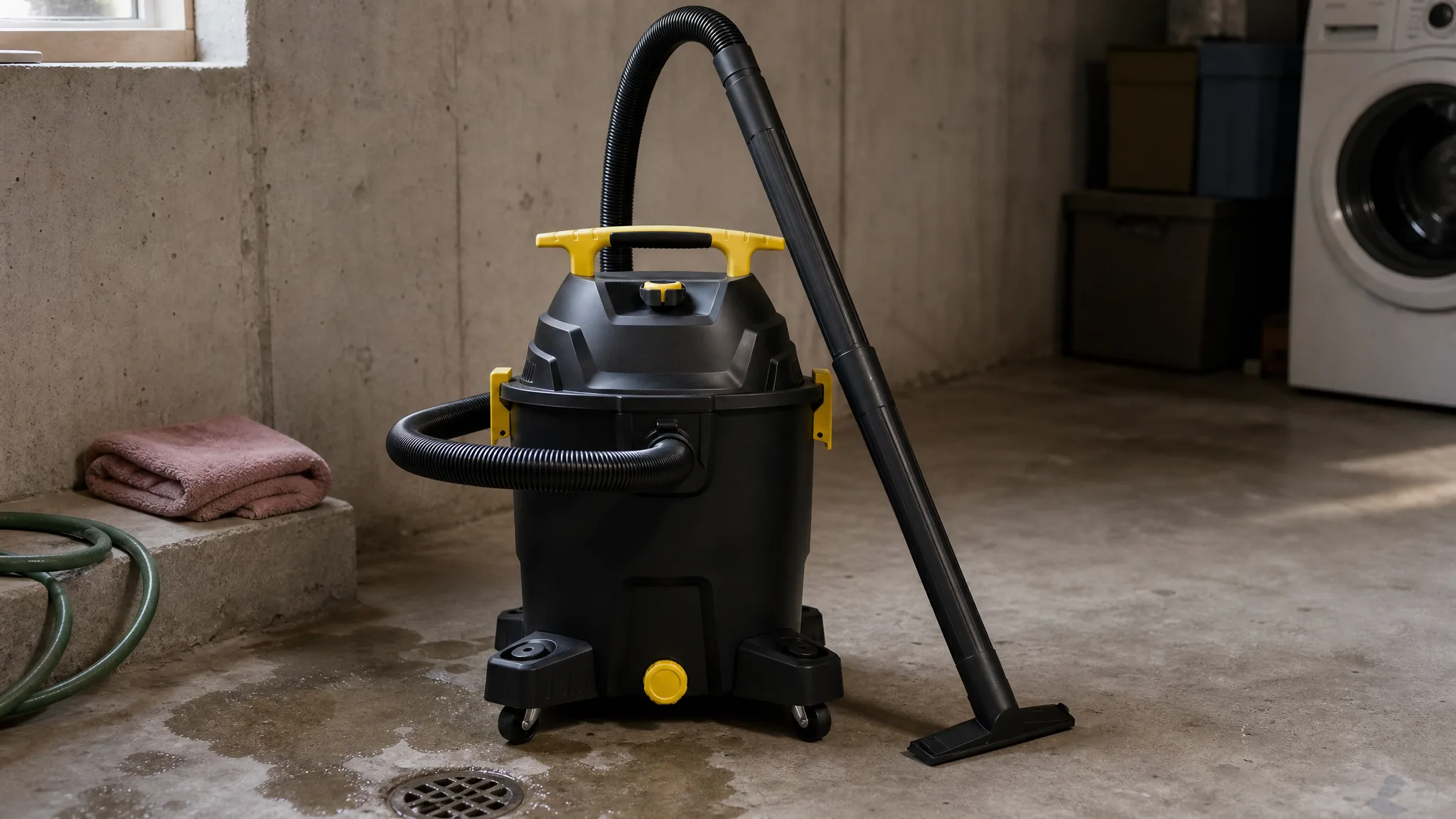
STANLEY 10 Gallon Wet Dry Vacuum, 6 Peak HP Poly Built-in Drain Shop Vac Blower with Powerful Suction, Multifunctional Shop Vacuum W/ 6 Horsepower Motor for Job Site, Garage, Basement, Van, Workshop
Best for
Homeowners who tackle occasional heavy wet jobs like basement floods or pool opening and need raw suction on a budget; skip it if you want a quiet, grab-and-go vac for quick daily cleanups in a small home.
Most owners agree this shop vac punches above its price with strong suction and a 10-gallon tank that handles wet and dry messes without constant emptying. The trade-off is loud operation and a risk of shipping damage or early motor trouble that makes it a poor fit if you need a quiet, reliable everyday machine.
Loved by buyers
- •The 6 peak HP motor pulls water and debris fast, even handling flooded basements without slowing down.
- •10-gallon capacity means you only empty after large jobs, saving time and effort.
- •The blower function genuinely works for clearing leaves and drying driveways, not just a tacked-on feature.
Buyer concerns
- •Handle arrived cracked for several buyers, suggesting weak packaging or brittle plastic.
- •It’s loud, consistently measuring 75-80 dB, comparable to a lawn mower.
- •The main floor nozzle doesn’t pivot, making it harder to clean along edges and under low furniture.
At a Glance
| Spec | Detail |
|---|---|
| Type | Corded wet/dry shop vacuum with a blower function |
| Tank capacity | 10 gallons, poly (plastic) tank |
| Motor | Rated at 6 peak horsepower, a peak figure rather than sustained output |
| Power cord | 18 feet |
| Hose and wands | 6-foot hose plus two extension wands |
| Working reach | Over 24 feet from the outlet with the cord, hose, and wands combined |
| Wet pickup | Yes, with a float valve that cuts suction as the tank fills |
| Emptying water | Built-in drain port with a garden hose adapter |
| Filtration | Cartridge filter for bagless use, plus one disposable bag for fine dust |
| Blower | Yes, reverses airflow for leaves and drying wet surfaces |
| Noise | 75 to 80 dB in normal use, per owner measurements and our testing |
| Owner rating | 4.5 out of 5 |
What We Liked
Suction That Does Not Flinch at Standing Water
Plenty of shop vacs make an alarming noise and move very little air. This one moves air. It pulled standing water, soaked drywall crumbs, driveway grit, and matted leaf litter without stalling or slowing as the tank filled, which is the whole reason to own a wet/dry vacuum rather than a second household machine. Treat the 6 peak horsepower rating as marketing arithmetic, since peak figures tell you almost nothing about sustained pull, and judge the machine by what it does. Owners who have pointed it at flooded basements report the same thing we found: the water goes, the pace stays constant, and nothing comes back out the exhaust. On the messes this vac exists for, it is the strongest part of the package.
Ten Gallons You Empty After the Job, Not During It
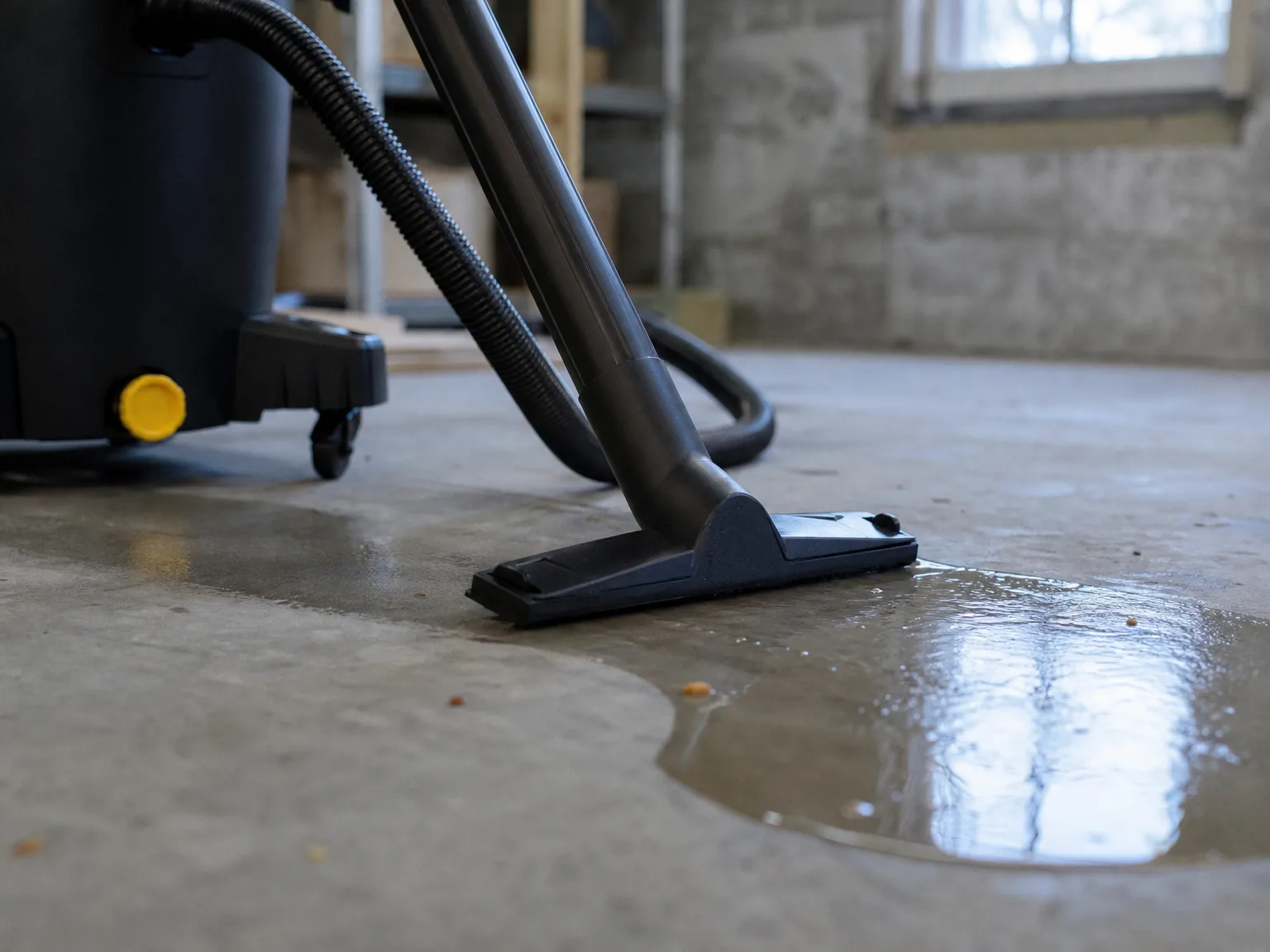
Capacity decides how a big job feels. On a 5-gallon vac, three inches of water across a utility room becomes a sequence of interruptions: suck, stop, drag, tip, walk back, restart. Ten gallons collapses that into one continuous pass, then one trip at the end. We finished a full basement cleanup on a single tank and cleared an entire afternoon of garage debris the same way. The trade is bulk. This is a machine that lives in one place and gets rolled to the mess, not one you carry upstairs one-handed. For the jobs it is built for, that is the right side of the trade.
The Drain Port Saves Your Back
Ten gallons of water weighs more than 80 pounds. Tipping that out of a tank is how people hurt themselves, and it is the reason many owners stop filling a big vac past halfway. The drain port removes the problem. Thread on a garden hose, run it to a floor drain or out a basement window, pop the cap, and the tank empties while you coil the cord. On our flood test this turned the worst part of the job into something we did with one hand. If you are weighing this vac against a cheaper 10-gallon model without a drain, that single port is worth more than any spec on the box.
A Blower That Genuinely Works
Blower modes on shop vacs are usually a checkbox. This one moves enough air to clear leaf litter off a patio and to dry a driveway or a pool deck after a liquid pickup. We used it to push standing water off a concrete pad before vacuuming what was left, which cut the job roughly in half. It will not replace a dedicated backpack blower for a yard full of autumn leaves. It does mean one less tool on the garage shelf for the small outdoor work most homeowners actually do, and it pairs naturally with the wet pickup you bought the vac for.
Where It Falls Short
It Is Loud, and That Is Not a Small Thing
Owners consistently measure this vac at 75 to 80 dB, which puts it beside a gas lawn mower rather than a household upright. We wore ear protection for anything past a few minutes and would tell you to do the same. The practical cost is scheduling. If your utility room shares a wall with a nursery, or a dog panics at loud motors, you are not running this machine while the house is settled. Some competitors have made real progress on shop-vac noise and this vac has not. Buy it knowing that heavy jobs will happen on your loudest schedule, not your most convenient one.
The Floor Nozzle Does Not Pivot
The main floor nozzle is fixed, so it will not tilt to follow a surface as you change the angle of the wand. Along an open concrete floor this hardly registers. Working an edge, a baseboard, or the gap under a low workbench, it turns into repositioning your whole body instead of your wrist, and the nozzle lifts off the floor at the exact moment you want it flat. Owners raise this often and they are right to. A pivoting head or an aftermarket squeegee nozzle solves it for a few dollars, which is a fix worth planning rather than a reason to walk away.
Build Quality Is Uneven Out of the Box
Several owners have received this vac with a cracked handle, which points at either brittle plastic or packaging that is too thin for shipping. A smaller number report motors that failed within minutes of the first run. Neither is the common outcome and our test unit gave us no trouble, but the pattern is consistent enough that you should plan for it. Unbox the vac the day it arrives, look the handle and tank over, and run the motor dry for a few minutes while you are still comfortably inside the return window. Finding a fault on day one is a replacement. Finding it during a flood is a very bad evening.
Real-World Performance
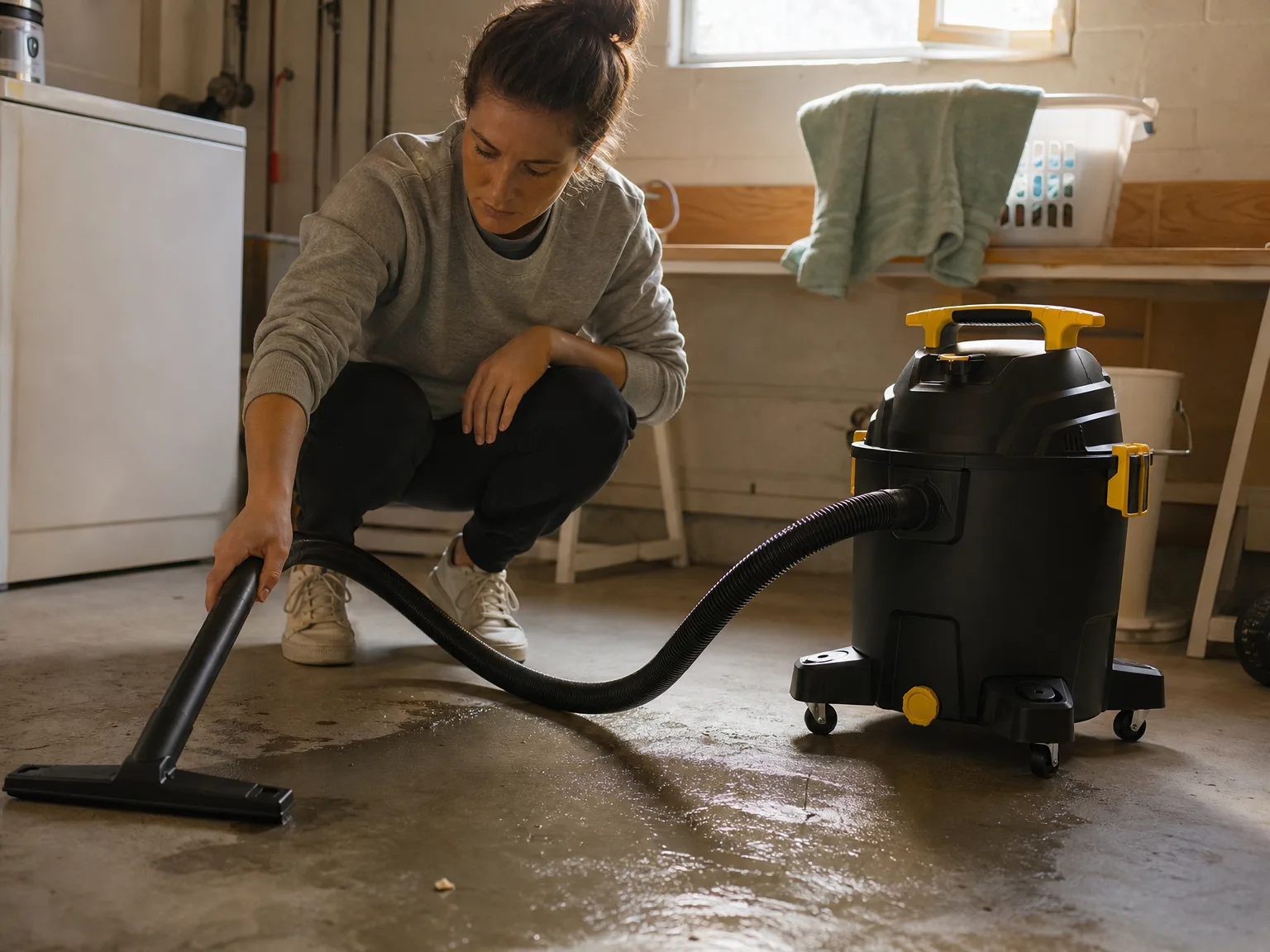
The flood is where this machine justifies itself. A washer supply line let go and left water across a utility room floor and into the carpeted edge of a finished basement. We plugged in at the far wall and the 18-foot cord plus the hose and both wands gave us over 24 feet of working reach, which covered the whole room without hunting for a second outlet. The float valve did its job as the tank filled, cutting suction rather than pushing water at the motor, and the drain port meant we never lifted a full tank. Two tanks and about twenty minutes later the floor was damp instead of flooded.
Pool opening is the other job this vac handles better than anything else in the garage. Half a winter of rainwater and rotting leaves sits on a pool cover, and the mix of heavy water and coarse debris is exactly what chokes a small vac. Here the wide tank and the strong pull kept working through it. We ran the blower afterward to clear leaf litter off the surrounding deck and to dry the concrete, then switched back to suction for the last puddles. Doing all of that with one machine and one outlet is the practical argument for this vac.
Dry work in the garage went well, with one setup decision that matters. The cartridge filter handles coarse debris, wood chips, and grit happily, so you can run it bagless for most projects and rinse the filter afterward. Fine dust is different. Sanding dust and plaster loaded the cartridge fast enough that suction dropped noticeably, and that is what the included disposable bag is for. Fit the bag for powdery work and the filter stays clean, then pull it for wet pickup and coarse debris. Getting this wrong is the most common reason people think a shop vac has lost power when the filter is the actual culprit.
Inside the house, be realistic. On hard floors it swallows tracked-in grit, cat litter, and cereal without complaint. Carpet is a different story, because there is no powered brushroll, so pet hair worked deep into a rug stays in the rug. Add the noise and this stops being a machine you reach for on a Tuesday evening. It is the tool for messes your everyday vacuum should never touch, and it works best alongside a cordless vacuum for daily cleanups rather than in place of one.
How It Compares to Alternatives
The closest same-size rival is the DEWALT 10 Gallon STEALTHSONIC, and the entire comparison is noise. Owners describe it as quiet enough to hold a conversation next to, closer to a household upright than a shop vac, and it has a drain port and a stainless tank as well. It gives up reach: a 10-foot cord and a 7-foot hose work out to roughly 17 feet, against over 24 feet here, and its hose does not swivel where it connects, which makes tight-angle work awkward. If sound is what has kept you from buying a shop vac, get the DEWALT instead and accept the extension cord.
Going bigger means the CRAFTSMAN CMXEVBE17595, a 16-gallon machine rated at 6.5 peak horsepower. It empties far less often and pulls fine dust and large debris equally well, which suits renovation work and basements that flood every spring. It also stops being anything you move casually, its hose kinks despite the marketing, and it has no cord keeper. Choose it if your cleanups are a whole gutted room. The 10-gallon Stanley is the better fit if a bad basement day is an annual event rather than a season.
Going smaller trades capacity for something you carry. Our Vacmaster 6-gallon wet/dry review covers a lighter machine whose detachable blower is easier to aim and whose fold-down handle suits car detailing and mid-size messes, though its short cord and a hose that clogs on mixed debris show up on bigger jobs. From the same brand, the STANLEY SL18115 puts 5 gallons in a stainless tank you lift one-handed, at the cost of a 10-foot cord and proprietary bags you have to order direct. If your real problem is car interiors and small spills, take one of those two and skip the drum.
Who Should Buy It
Buy this if the water is the point. The ideal owner has a basement that has flooded at least once, a pool or a patio that needs opening every spring, and a garage floor that collects project debris in between. You want the drain port, you want 10 gallons so a bad day is one tank instead of five, and you are fine with a machine that rolls to the mess and lives in a corner the rest of the year. Budget-conscious households get real value here, because this is the cheapest honest route to serious wet pickup.
Look elsewhere if quiet or convenient matters more than raw pull. Anyone cleaning while a baby naps, anyone whose garage backs onto a bedroom, and anyone who mostly wants to grab something for a two-minute spill will resent the noise and the size. If daily hard-floor cleanup is the real job, a dedicated wet dry floor cleaner like the pair in our Tineco S7 vs Bissell CrossWave comparison fits that life far better. And if embedded pet hair on carpet is your problem, no shop vac solves it without a brushroll.
What this tier buys you is a big tank, strong sustained suction on water and grit, a drain port that spares your back, a blower that earns its shelf space, and enough cord to cross a room. What it does not buy you is a quiet motor, a pivoting floor nozzle, or the assurance that the box arrives undamaged. Two of those three are livable. The third is why we tell you to unbox it early and test it while you can still send it back.
FAQ
Will it shut off automatically when the tank fills with water?
A float valve rises with the water and cuts suction before the motor is at risk, so you can step away mid-job without watching the tank. You will hear the tone of the motor change when it trips, which is your cue to drain.
How far can I reach without unplugging?
Over 24 feet, once you add the 18-foot power cord, the 6-foot hose, and the two extension wands. That covers most utility rooms and single-car garage bays from one outlet, which is unusually generous in this class.
Does it need bags, or can I run it bagless?
Either. It ships with a cartridge filter for bagless use and one disposable bag for fine dust. Run bagless for coarse debris and wet pickup, and fit the bag for sanding dust or plaster so the cartridge does not load up and strangle your suction.
Do I have to lift 10 gallons of water to empty it?
No, and you should not try. Thread a garden hose onto the built-in drain port, run it to a floor drain or out a window, and pull the cap. Ten gallons of water is over 80 pounds, so the port is the feature you will use most.
How loud is it really?
Owners put it at 75 to 80 dB, comparable to a gas lawn mower. You can work next to it for a short job, but wear ear protection for anything longer and do not plan on running it while someone is asleep in the house.
Does the blower actually do anything useful?
Yes. It moves enough air to clear leaves off a patio and to dry a driveway or pool deck after a wet pickup. It is not a substitute for a dedicated yard blower, though it handles the small outdoor jobs most homeowners have.
What should I check the day it arrives?
Inspect the handle and tank for shipping cracks, then run the motor dry for a few minutes. Cracked handles and the occasional early motor failure are the two reported faults worth catching inside the return window.
Bottom Line
The STANLEY 10 Gallon Wet Dry Vacuum is a specialist, and it is honest about what it specializes in. Suction stays strong through standing water and coarse debris, 10 gallons turns a flood into a single pass, the drain port keeps you from lifting 80 pounds of water, and the blower is more than a checkbox. You pay for that with 75 to 80 dB of noise, a floor nozzle that will not pivot, and a shipping record worth checking on arrival. If basement water or pool season is why you are shopping, this is a lot of capability for the money. If you want quiet, buy the DEWALT STEALTHSONIC instead.
Ready to buy?
STANLEY 10 Gallon Wet Dry Vacuum, 6 Peak HP Poly Built-in Drain Shop Vac Blower with Powerful Suction, Multifunctional Shop Vacuum W/ 6 Horsepower Motor for Job Site, Garage, Basement, Van, Workshop
Explore related
In this article
- At a Glance
- What We Liked
- Suction That Does Not Flinch at Standing Water
- Ten Gallons You Empty After the Job, Not During It
- The Drain Port Saves Your Back
- A Blower That Genuinely Works
- Where It Falls Short
- It Is Loud, and That Is Not a Small Thing
- The Floor Nozzle Does Not Pivot
- Build Quality Is Uneven Out of the Box
- Real-World Performance
- How It Compares to Alternatives
- Who Should Buy It
- FAQ
- Bottom Line
Keep reading

How to Clean Hardwood Floors Without Damaging Them: A Busy Home Guide
Soft rollers, the right suction mode, and barely damp mops keep hardwood safe. Here's the method we use at home, plus three tools that won't scratch sealed wood.
Vacmaster VJF607PF Review: Basement Water and Shop Dust Tested
We tested the Vacmaster VJF607PF 6-gallon wet/dry shop vac on basement water, sanding dust, and a filthy car interior. Strong suction, and a tank you feel every time you empty it.
Armor All AA255W Review: Trunk Wet/Dry Cleanup After Weeks
We tested the Armor All AA255W 2.5-gallon wet/dry vac on trunk spills, car mats, and pet debris. Honest take on cord reach, crevice tools, and who should buy.