ReliaRoads RCSV-20 Review: DEWALT-Battery Wet/Dry Vac Tested
In this article
- At a Glance
- What We Liked
- It Runs on Batteries You Already Own
- Light Enough That You Actually Grab It
- Suction That Holds Up Wet or Dry
- Quiet Enough to Bring Indoors
- Where It Falls Short
- The 6.5-Foot Hose Is the Real Limit
- Onboard Storage Does Not Fit Everything
- The Switch Sits on the Body, Not the Handle
- Runtime Is Whatever Your Battery Says It Is
- Real-World Performance
- How It Compares to Alternatives
- Who Should Buy It
- FAQ
- Bottom Line
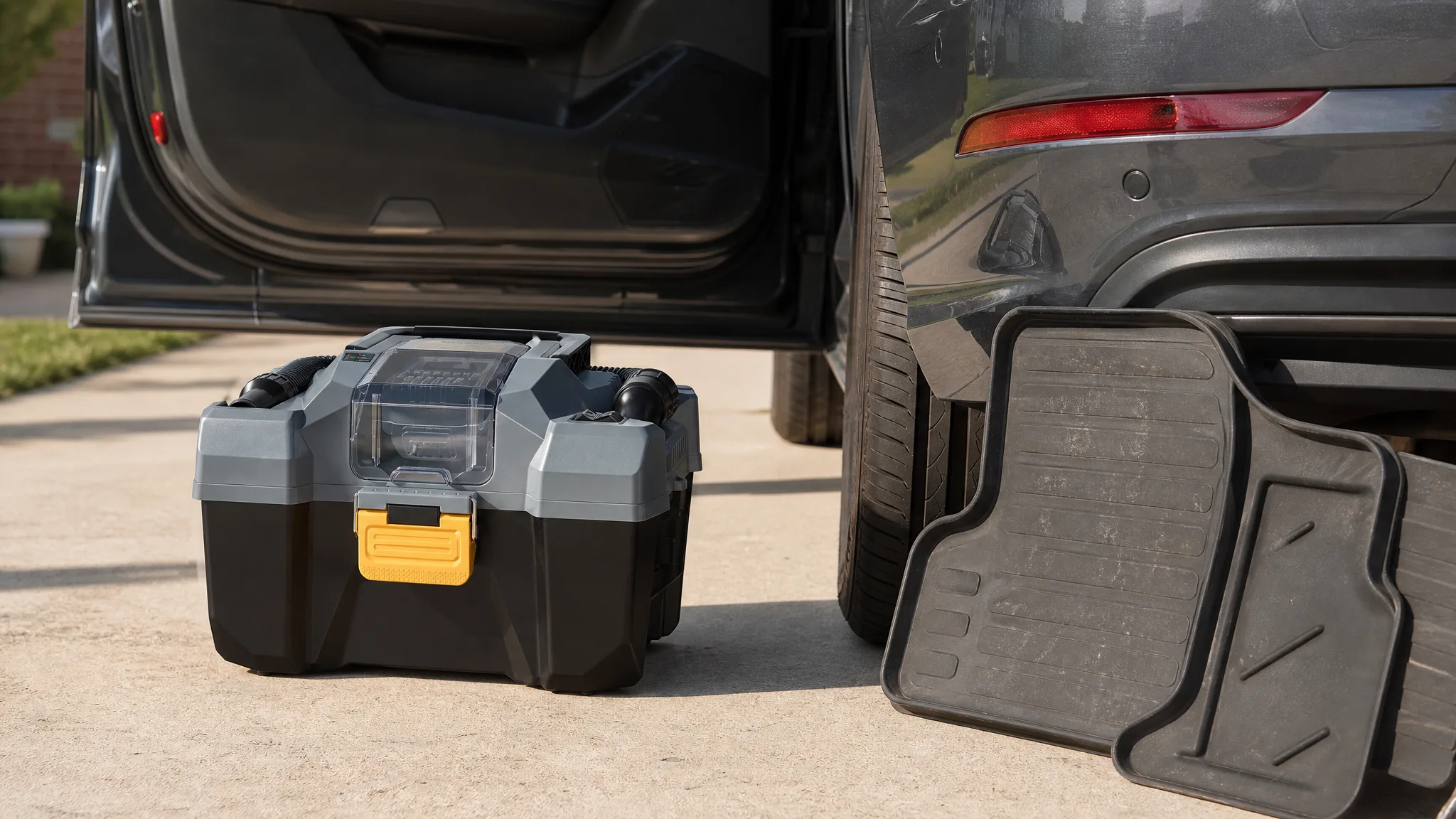
The car mats collect a week of gravel and dog hair before anyone notices, and hauling a corded shop vac out to the driveway for five minutes of work rarely feels worth the setup. The ReliaRoads RCSV-20 is a 2.6-gallon cordless wet/dry shop vac that runs on the DEWALT 20V MAX batteries already sitting on your garage shelf. We ran it through our how we review process on car interiors, workshop sawdust, and one knocked-over water bowl.
Verdict: A grab-and-go wet/dry vac that earns its keep if DEWALT 20V packs are already in the house. The short hose is what keeps it off floor duty. 8.3/10.
Best for: DEWALT battery owners who want a portable vac for car interiors, quick workshop cleanups, and small wet spills
Skip if: You need a full-size vac for heavy debris or deep carpet cleaning

ReliaRoads
20V Cordless Vacuum Cleaner-Wet/Dry Shop Vac,2.6 Gallon Capacity,Compatible with DeWALT Batteries (Bare Tool - No Battery & No Charger),Ideal for Cleaning Car,Home Spaces,and Workshops RCSV-20
Best for
Ideal for anyone with DeWALT batteries who wants a portable vac for car interiors, quick workshop cleanups, or small wet spills. Look elsewhere if you need a full-size vac for heavy debris or deep carpet cleaning.
Owners repeatedly praise this cordless wet/dry vac for its grab-and-go convenience in cars, workshops, and tight spaces, enabled by its light weight and DeWALT battery compatibility. The main trade-off is accepting less suction and shorter runtime than a full-size corded shop vac for this portable freedom.
Loved by buyers
- •Compatibility with DeWALT 20V batteries means no new battery investment if you are in that ecosystem.
- •Light and compact design makes it genuinely practical for grabbing instead of a bulky corded vac.
- •Suction power handles wet and dry debris well for a battery-powered unit.
Buyer concerns
- •The 6.5-foot hose feels short for floor cleaning and extension tubes are not included.
- •Onboard storage does not fit all attachments; the long crevice tool sticks out, so it is often stored separately.
- •The power switch is on the body, not the handle, making one-handed operation awkward.
At a Glance
| Spec | Detail |
|---|---|
| Type | Cordless wet/dry shop vac |
| Model | RCSV-20 |
| Tank capacity | 2.6 gallons |
| Power | DEWALT 20V MAX batteries |
| In the box | Bare tool. No battery, no charger |
| Hose | 6.5 feet |
| Extension tubes | Not included |
| Runtime (owner reported) | About 15 to 20 minutes on a 5Ah pack, closer to 45 minutes on a 6Ah, over an hour on a 9Ah |
| Wet pickup | Yes. The filter and canister handle small spills |
| Attachment storage | Onboard clips, though the long crevice tool does not fit |
| Power switch | On the body, not the handle |
| Owner rating | 4.6 out of 5 across 499 reviews |
What We Liked
It Runs on Batteries You Already Own
This is a bare tool, and that is the whole idea. No battery, no charger. If a DEWALT 20V MAX pack is already on your workbench for a drill or an impact driver, the vac costs you the tool alone. Anyone outside that battery system should stop reading here, because buying a pack and a charger to feed a 2.6-gallon vac changes the math entirely. For everyone else the benefit is pooling: the 5Ah pack from your drill kit runs it, and the bigger pack you bought for something else runs it longer. Nothing new to store, nothing new to remember to charge.
Light Enough That You Actually Grab It
Owners return to this point more than any other, and our weeks with it matched. The body carries in one hand out to the driveway, up a flight of stairs, or into a trunk, with no cord to unwind and no outlet to hunt for. That changes behavior. A corded shop vac gets used on Saturday because using it is a project. This one gets used the evening the mess happens, which is the difference between a clean car and a car you keep meaning to clean. The trade is capacity. At 2.6 gallons you empty it more often, and on a real renovation cleanup you empty it constantly.
Suction That Holds Up Wet or Dry
Battery vacs this small usually disappoint on one half of the wet/dry promise. This one covers both. Sand, crumbs, sawdust, and hair come off seats and floor mats on the first pass, and the canister takes a small liquid spill without any filter-swapping ritual. Owners call the pull more than adequate for car detailing, and that phrasing is the honest ceiling: adequate for interiors and bench work, not a stand-in for a corded drum vac facing a pile of drywall chunks. Judged against a handheld car vacuum it wins comfortably. Judged against a 5-gallon corded unit it loses on both pull and endurance.
Quiet Enough to Bring Indoors
Shop vacs are loud in a way that decides when you are allowed to clean. Owners describe this one as surprisingly quiet for the category, much calmer than the corded models they replaced, and that comparison held up for us. We ran it in a hallway with a kid asleep two doors down and in a kitchen while someone took a phone call. Neither caused a problem. It is still a motor moving air, so nobody should expect quiet in the household-appliance sense, but the pitch sits low enough that the vac comes inside the house without an apology attached.
Where It Falls Short
The 6.5-Foot Hose Is the Real Limit
The hose runs 6.5 feet and no extension tubes come in the box. Inside a car that is fine, because you are working within arm's reach of the machine anyway. On a garage floor it is short. You carry the vac along with you every few feet instead of parking it and reaching, so one floor pass becomes a series of small relocations. This is the complaint owners raise most often, and it is why we would not buy this as anyone's only wet/dry vac. If your messes happen on floors rather than in vehicles, hose length alone should point you at a larger corded unit with wands.
Onboard Storage Does Not Fit Everything
There are clips on the body for the attachments, which sounds tidy until the long crevice tool refuses to sit in them. It sticks out, so most owners store that piece somewhere else, and a separately stored attachment is one you eventually lose. Ours lived in a shoebox in the trunk beside the vac, which works and also defeats the purpose of onboard storage. It changes nothing about how the vac cleans. It is just the detail you notice every time you pack the thing away.
The Switch Sits on the Body, Not the Handle
Starting and stopping means reaching to the body rather than squeezing a trigger on the handle. In a car that translates to setting the hose down, leaning across the seat, pressing the switch, then getting back to it. One-handed operation is awkward as a result, and pausing to reposition something costs a step more than it should. Owners flag this consistently. Most people adapt inside a week, but it stands out on a tool otherwise designed around grabbing it fast.
Runtime Is Whatever Your Battery Says It Is
Reports vary widely, since the tool brings no battery of its own. Owners describe roughly 15 to 20 minutes on a 5Ah pack, closer to 45 minutes on a 6Ah, and over an hour on a 9Ah. Those figures do not scale cleanly against each other, so read them as owner experience rather than a specification. The practical version: one small pack covers a single car interior with little margin, and anything longer means a second battery waiting on the charger. Plan around the packs sitting in your garage, not the best number anyone quotes.
Real-World Performance
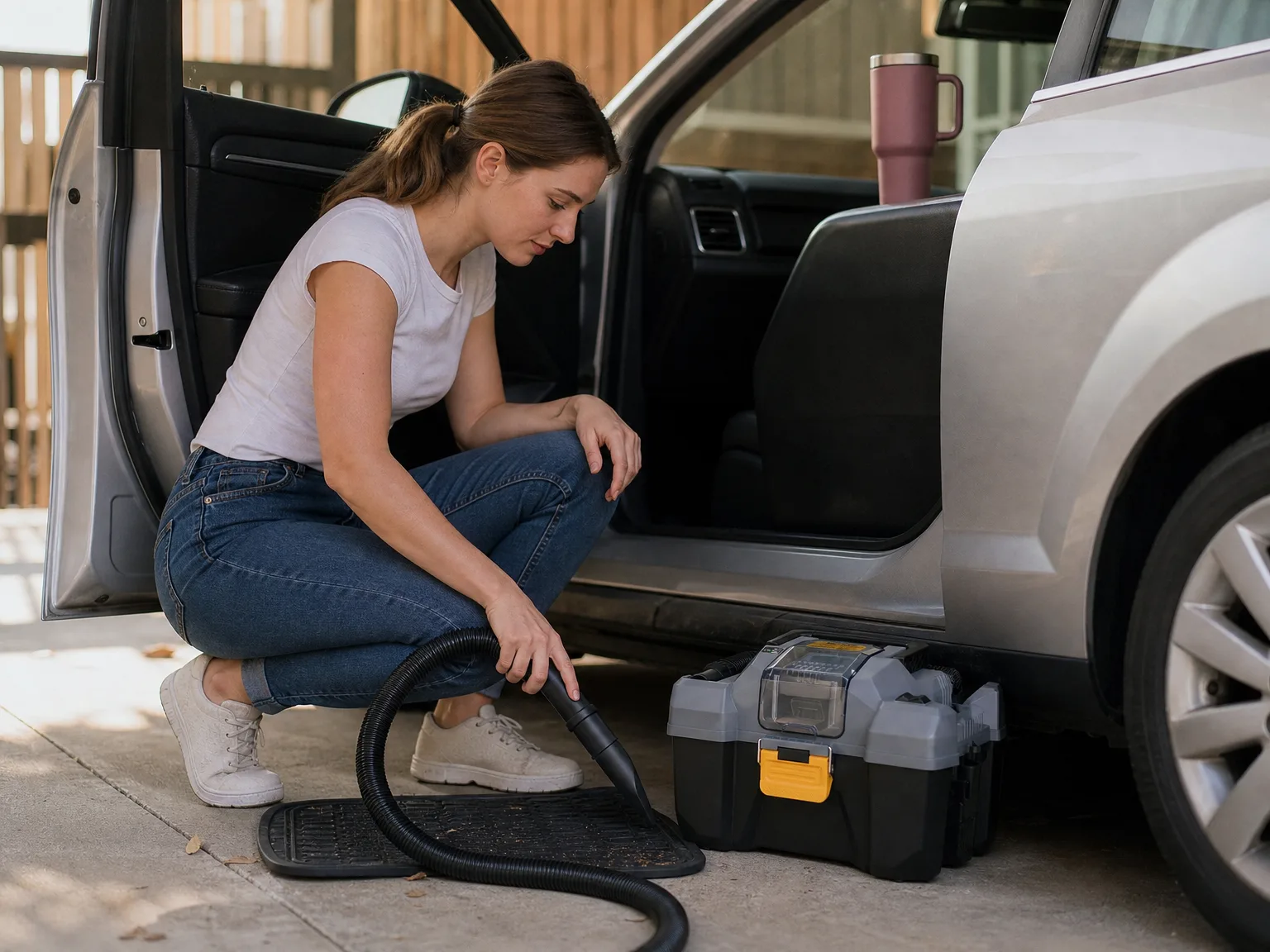
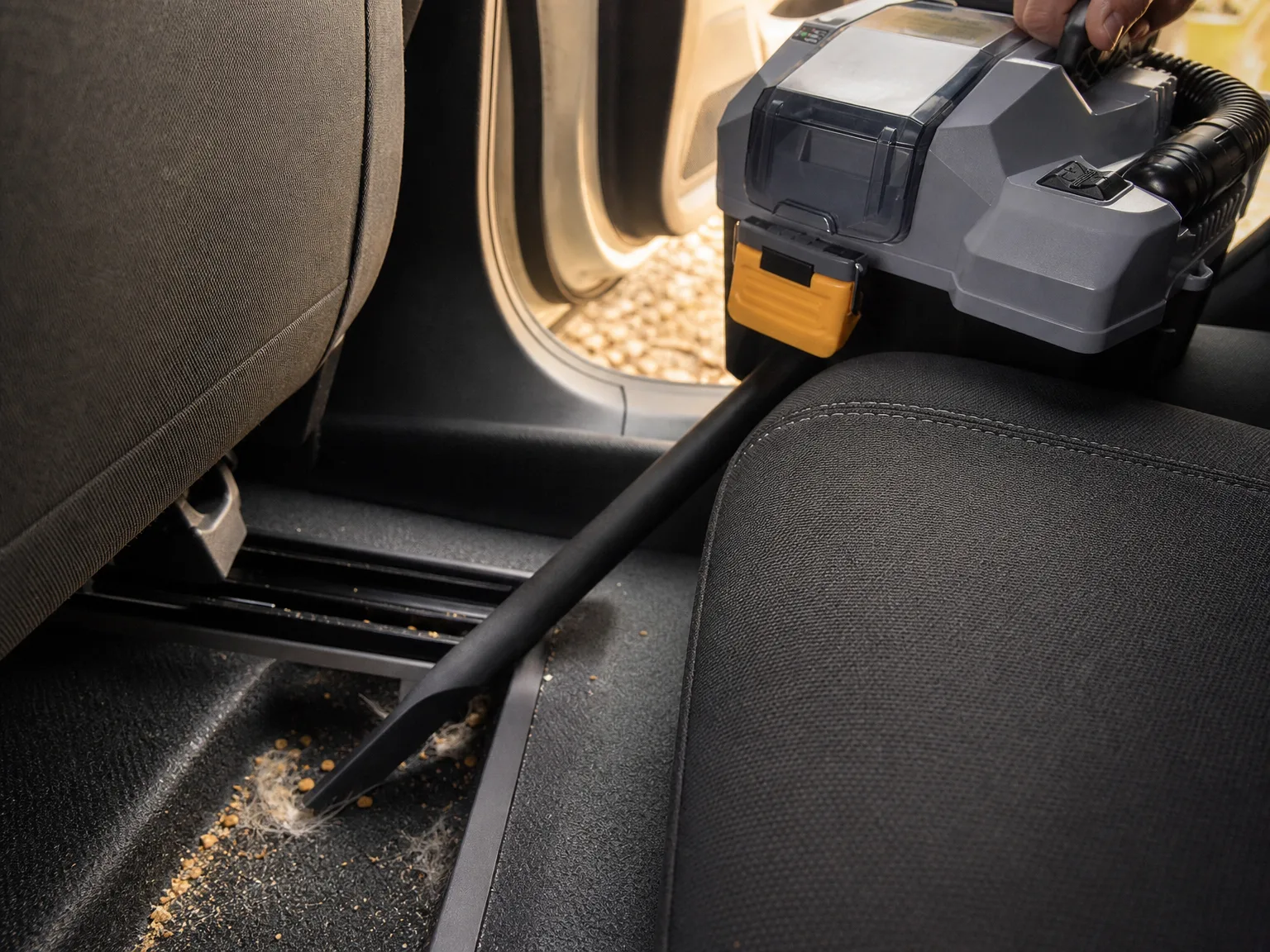
A sedan after a dog-heavy week: sand in the driver's mat, crumbs down the seat rails, and pet hair pressed into the fabric of the back bench. With a 5Ah pack fitted, the crevice tool cleared the rails and seat gaps in a pass each, and hose length never came up with the vac parked on the back seat. Hair sitting on top of the fabric lifted. Hair worked down into the weave needed a rubber brush first, which is true of every vac without a powered brushroll. Interior plus trunk finished on one battery with a margin left.
Workshop bench after cutting shelf boards: fine sawdust across the bench top, a drift of it on the floor under the saw, and a scattering of screws. The bench took a couple of minutes, which is exactly the job this thing is shaped for, since the vac sits right beside you. The floor drift is where 6.5 feet of hose showed its teeth. We relocated the machine four times to clear an area a corded unit with wands would have covered from one spot.
A tipped-over dog water bowl on kitchen tile: this is the scenario that makes wet/dry worth having in a vac this size. It pulled a bowl's worth of water off the tile and out of the grout lines in well under a minute, no towels, nothing to wring into a bucket. Empty and rinse the canister the same day, because standing water in a plastic drum overnight smells exactly the way you would guess. Actual flooding belongs to a bigger machine. A spill you can see the edges of is comfortably inside this one's range.
Storage in a small place: the whole vac fits on a closet shelf or in a car trunk, which is the quiet reason it works for apartments with nowhere to park a drum vac. Ours spent the test month in a hall closet next to the batteries. Anyone weighing this against a full-size unit purely on floor space will find this the easier machine to live with, and that is a fair basis for the decision rather than a consolation prize.
How It Compares to Alternatives
DEWALT sells its own 20V MAX cordless shop vac, a 2-gallon tool-only model that takes the same packs. The two are close enough that the choice comes down to details rather than category. The ReliaRoads holds a little more, at 2.6 gallons against 2 gallons, which is half a bucket of difference on a wet spill. The DEWALT is the first-party option, so accessory fit and service are less of a question mark. Neither fixes the short-hose problem that every vac in this size class shares, so buy on capacity and on which one your budget prefers.
If your garage runs on a different battery, look at your own platform first. Milwaukee sells an M12 FUEL 1.6-gallon wet/dry vac as a tool-only unit, and Makita has an 18V LXT version. Both make the same trade this ReliaRoads does: smaller tank, no cord, runtime tied to the pack. Buying a vac that matches the batteries you already charge beats buying a slightly better vac that needs a whole new charger and a shelf to keep it on.
The real alternative is admitting you want a corded machine. Our Vacmaster 6-gallon wet/dry review covers what that buys: more than twice the capacity, a hose and wands long enough to cover a floor from a parked position, and a blower that clears a driveway. It also needs an outlet, a place to live, and both hands to move. If your cleanups are floors and renovation debris rather than car interiors, get the Vacmaster instead.
Who Should Buy It
Buy it if you already own DEWALT 20V batteries and your messes are small, frequent, and somewhere inconvenient. Car interiors, the workbench, the entryway after a muddy walk, a spilled bowl on tile. This is a second vac by design, and it is a good one: light, quiet, wet-capable, and cheap to add when the expensive part of a cordless tool is the battery you already have. The value sits in how often you reach for it rather than in any single cleaning result.
Look elsewhere if you want one machine for the whole house. Daily floors belong to a cordless stick vacuum, which has the powered brushroll this lacks and no hose to drag. If crumbs in the car are the only job on your list, a smaller handheld like the one in our ZARIMI portable car vacuum review is lighter and cheaper. Heavy debris, deep carpet, and long floor runs all want a full-size corded vac, and no cordless 2.6-gallon unit will change that.
What you get at this tier is a bare tool that turns batteries you own into a wet/dry vac you can carry anywhere, with enough suction for interiors and bench work and a noise level you can bring indoors. What you do not get is a hose long enough for floors, storage that holds every attachment, a switch where your hand already is, or runtime that does not depend on which pack you grabbed.
FAQ
Does it include a battery and charger?
No. This is a bare tool. You supply your own DEWALT 20V MAX battery and charger, which is why it makes sense for people already in that system and makes very little sense for anyone else.
How long does it run on a single charge?
Runtime follows battery capacity. Owners report about 15 to 20 minutes on a 5Ah pack, roughly 45 minutes on a 6Ah, and over an hour on a 9Ah. A single small pack covers one car interior without much room to spare.
Is the suction strong enough for car detailing?
Yes. It pulls crumbs, sand, dirt, and pet hair off seats, rails, and floor mats without stalling. Hair embedded deep in upholstery still needs a rubber brush to loosen it first, which is true of any vac with no powered brushroll.
How loud is it?
Most owners find it surprisingly quiet for a shop vac and much less noisy than corded models. We used it indoors with someone asleep in the house. Treat it as tolerable rather than silent.
Can it handle wet messes?
Yes, it is built for wet and dry pickup, and the filter and canister take small spills without trouble. Empty and rinse the canister the same day so nothing sits in the drum overnight.
Can I use it for floors, or is the hose too short?
You can, but you will not enjoy it. The 6.5-foot hose ships without extension tubes, so covering a floor means picking the vac up and setting it down repeatedly. Vehicles and benches are where it belongs.
Bottom Line
The RCSV-20 is the vac you grab without thinking about it, and that is worth more in practice than a spec sheet suggests. It takes sand, sawdust, hair, and standing water, it stays quiet enough for indoor use, and it stores on a closet shelf, all for the price of a tool because the battery is already yours. The short hose and the body-mounted switch are real, and they are the reason this is a second vac rather than your only one. If you own DEWALT 20V packs and clean cars more often than garages, buy it. If neither of those is true, put the money toward a corded 6-gallon unit instead.
Ready to buy?
20V Cordless Vacuum Cleaner-Wet/Dry Shop Vac,2.6 Gallon Capacity,Compatible with DeWALT Batteries (Bare Tool - No Battery & No Charger),Ideal for Cleaning Car,Home Spaces,and Workshops RCSV-20
Explore related
In this article
- At a Glance
- What We Liked
- It Runs on Batteries You Already Own
- Light Enough That You Actually Grab It
- Suction That Holds Up Wet or Dry
- Quiet Enough to Bring Indoors
- Where It Falls Short
- The 6.5-Foot Hose Is the Real Limit
- Onboard Storage Does Not Fit Everything
- The Switch Sits on the Body, Not the Handle
- Runtime Is Whatever Your Battery Says It Is
- Real-World Performance
- How It Compares to Alternatives
- Who Should Buy It
- FAQ
- Bottom Line
Keep reading

How to Clean Hardwood Floors Without Damaging Them: A Busy Home Guide
Soft rollers, the right suction mode, and barely damp mops keep hardwood safe. Here's the method we use at home, plus three tools that won't scratch sealed wood.
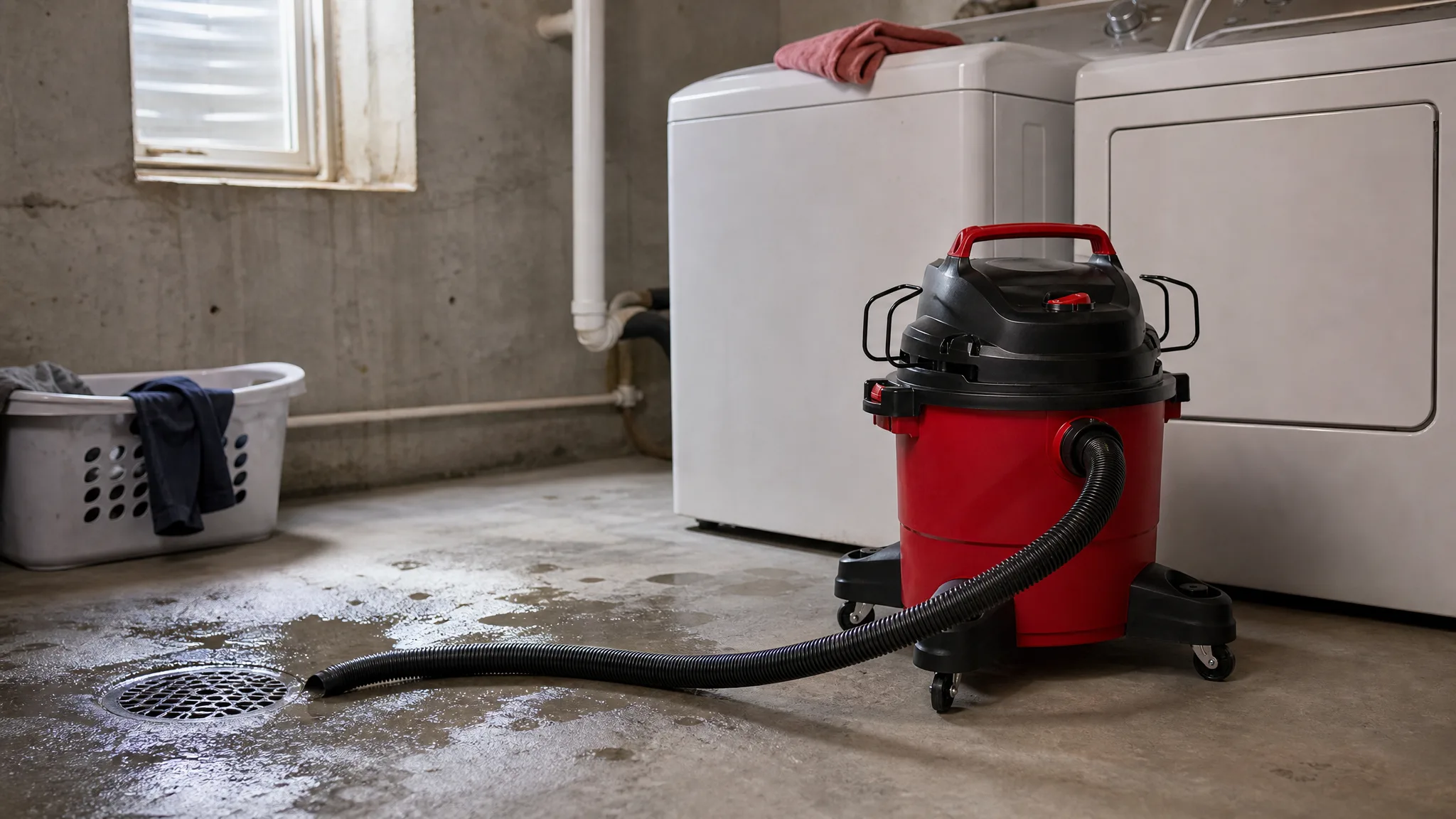
Vacmaster VJF607PF Review: Basement Water and Shop Dust Tested
We tested the Vacmaster VJF607PF 6-gallon wet/dry shop vac on basement water, sanding dust, and a filthy car interior. Strong suction, and a tank you feel every time you empty it.
Armor All AA255W Review: Trunk Wet/Dry Cleanup After Weeks
We tested the Armor All AA255W 2.5-gallon wet/dry vac on trunk spills, car mats, and pet debris. Honest take on cord reach, crevice tools, and who should buy.