Vacmaster VJF607PF Review: Basement Water and Shop Dust Tested
In this article
- At a Glance
- What We Liked
- Suction That Handles Standing Water
- Over 17 Feet of Reach from One Outlet
- It Doubles as a Shop Dust Collector
- What 6 Gallons and 3 Peak HP Buy You
- Where It Falls Short
- A Full Tank of Water Is a Real Lift
- Loud Enough to Want Earplugs
- The Legs Need Screws the Box Does Not Include
- Fine Drywall Dust Needs a Bag You Have to Buy
- Real-World Performance
- How It Compares to Alternatives
- Who Should Buy It
- FAQ
- Bottom Line
A water heater lets go in the basement at 6am, and the only thing that matters is how fast you can pull water off the floor. The Vacmaster Red Edition VJF607PF is a 6-gallon corded shop vac with a 3 peak HP motor and a 1-1/2 inch hose, built for that morning and for the sanding dust and gritty car floors that follow it. We ran it through our how we review process in a basement, at a workbench, and in a driveway.
Verdict: Real suction on standing water and shop dust, held back by a tank you have to lift and a motor loud enough to want earplugs. 8.5/10.
Best for: Homeowners handling flooded basements, woodworking dust, and heavy-duty car cleaning who have floor space to store a full-size vac
Skip if: You want a light machine for daily quick pickups, or you need to clean while someone naps

Vacmaster
Vacmaster Red Edition VJF607PF 1101 Portable Wet Dry Shop Vacuum 6 Gallon 3 Peak HP 1-1/2 inch Hose
Best for
Best for homeowners who need a workhorse wet/dry vac for flooded basements, woodworking dust, and heavy-duty car cleaning; skip it if you want a lightweight model for daily quick pickups.
Most owners agree this shop vac delivers strong suction for wet and dry messes, from workshop dust to flooded basements. The trade-off is that the 6-gallon tank fills fast when tackling big water spills, making it heavy to dump and a bit awkward to lift.
Loved by buyers
- •Strong, dependable suction for wet messes like basement floods and dry jobs like workshop dust collection.
- •Works with power tools for dust-free sanding, doubling as a shop dust collector.
- •The cord and hose together stretch over 17 feet, so you can clean the car from the garage outlet without moving the vacuum.
Buyer concerns
- •The tank is heavy to lift and pour when full, which makes dealing with large water spills a workout.
- •The legs need to be screwed in to stay put, but the manual omits this step and screws aren't included.
- •A small number of units have stopped working suddenly, a frustration given the otherwise positive track record.
At a Glance
| Spec | Detail |
|---|---|
| Type | Corded wet/dry shop vacuum |
| Model | VJF607PF 1101, Red Edition |
| Tank capacity | 6 gallons |
| Motor | 3 peak HP |
| Hose diameter | 1-1/2 inch |
| Total reach | Over 17 feet, cord plus hose |
| Wet pickup | Supported, filter comes out first |
| Power tool hookup | Yes, owners run it as dust collection off a sander |
| Fine dust bag | Not included, worth adding for drywall work |
| Emptying | Lift and tip the tank |
| Assembly | Legs screw on, screws not in the box |
| Noise | Loud, per owners and our own sessions |
| Owner rating | 4.6 out of 5 |
What We Liked
Suction That Handles Standing Water
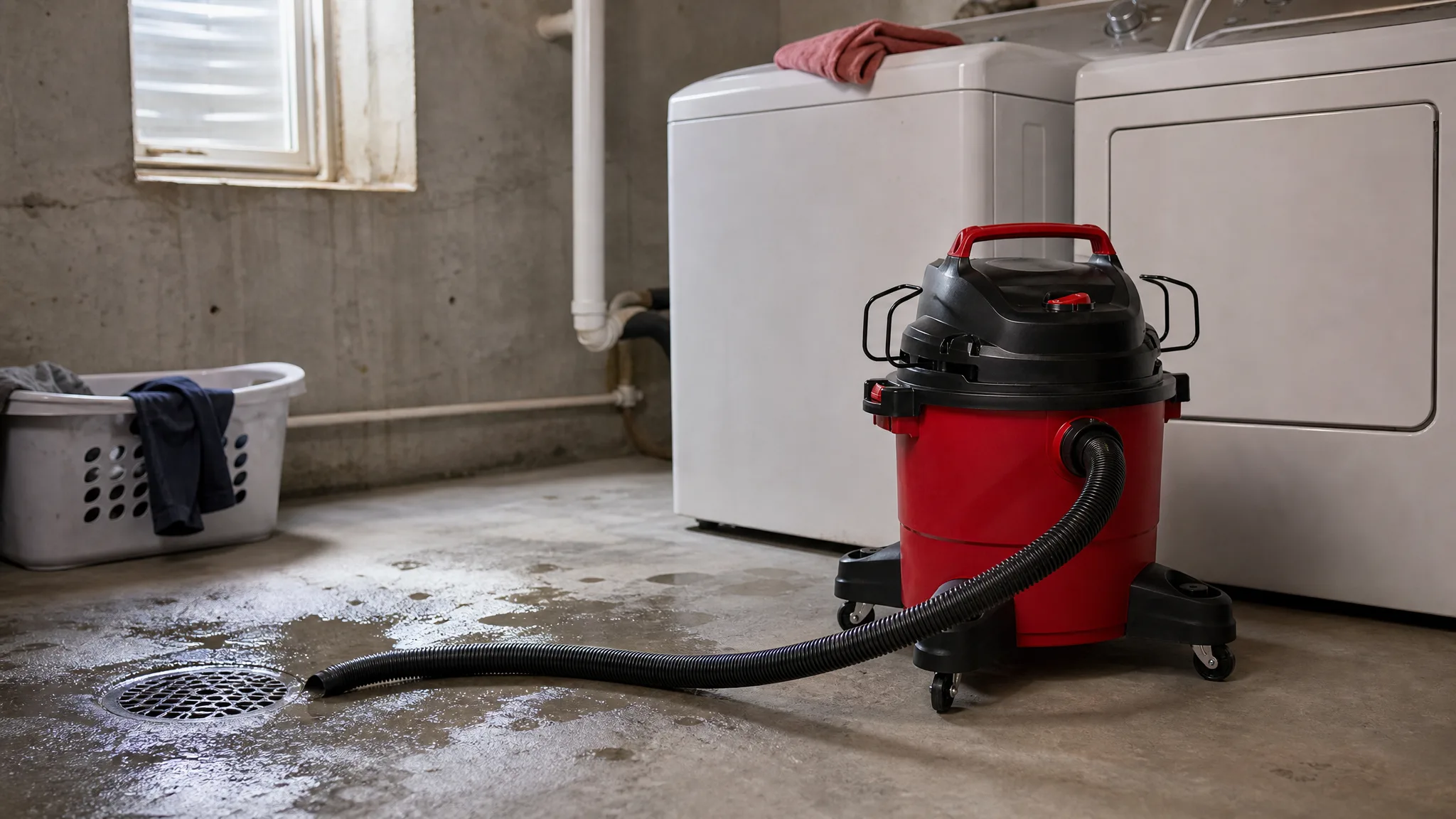
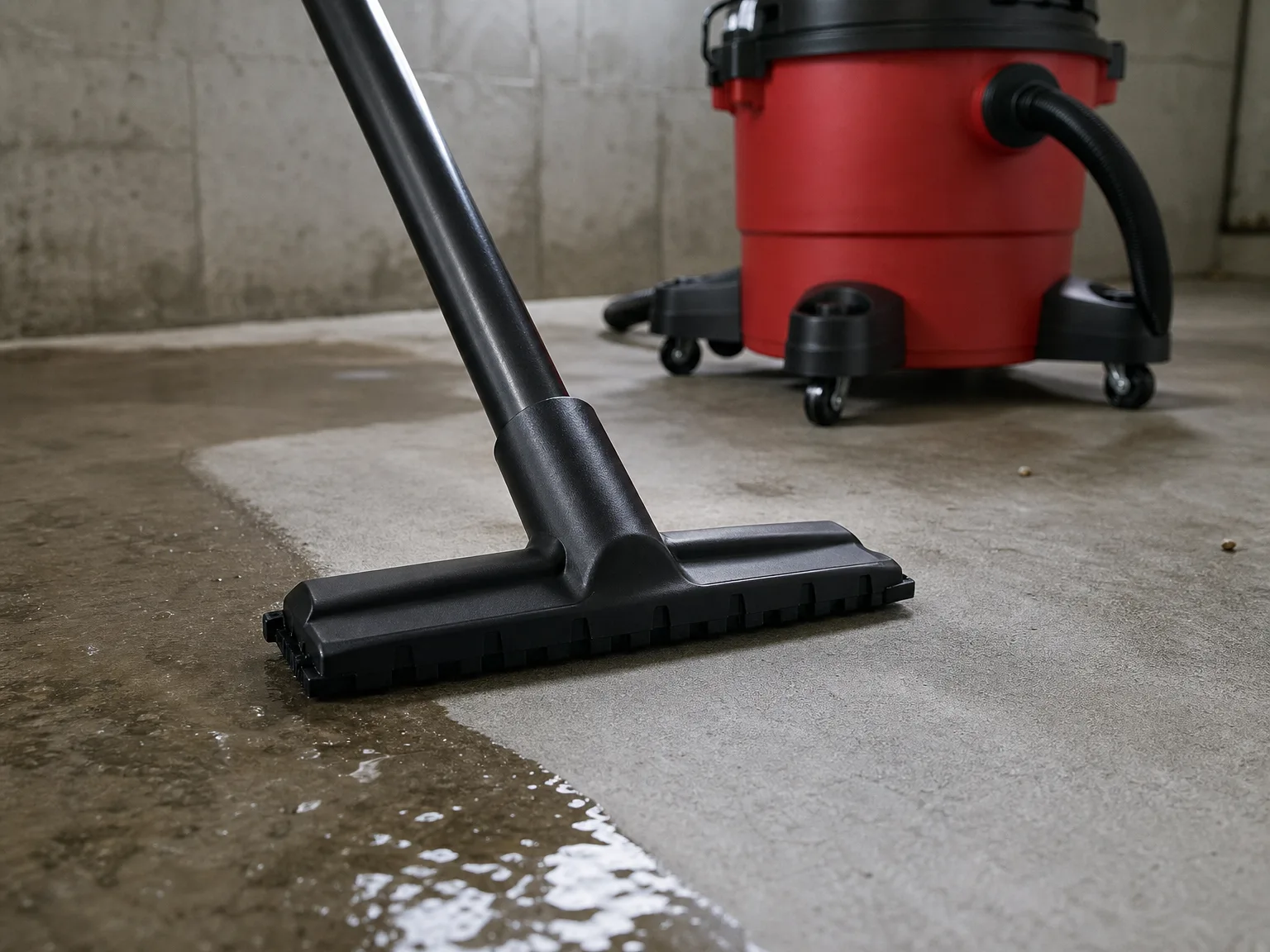
The 3 peak HP motor pulls water at a rate that changes how a flood feels. We ran a laundry room puddle and a wet basement floor with it, and the hose stayed loaded the whole time instead of gulping air and slowing down. Owners are consistent on this point, and it is the single reason to own a machine like this. Pull the filter before any wet pickup, then work the wide nozzle in overlapping passes toward the lowest part of the floor. A 1-1/2 inch hose helps here too, because a wider bore moves volume rather than fighting for it.
Over 17 Feet of Reach from One Outlet
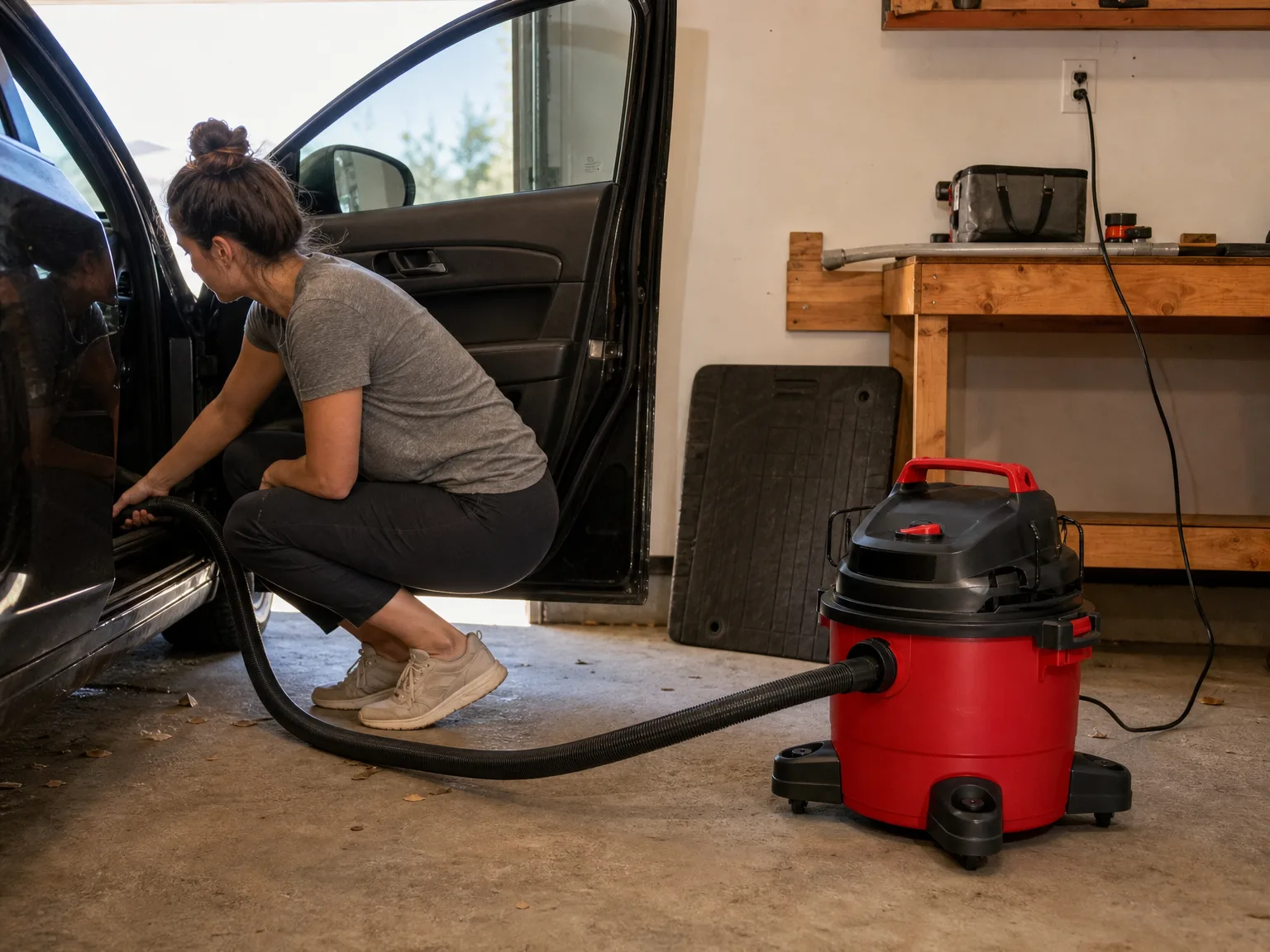
Cord plus hose gets you past 17 feet of working radius, and that number does more for daily use than any spec on the box. We parked the vac inside the garage door, plugged into the outlet above the workbench, and cleaned a whole car without moving the machine once. No extension cord, no rolling a drum across the driveway, no unplugging halfway through the back seat. Two caveats. A long driveway or the far side of a two-car garage still wants an extension cord. And reach on a 6-gallon body means you drag the hose while the vac stays put, which is the point.
It Doubles as a Shop Dust Collector
Hook the hose to a sander port and this becomes dust collection rather than cleanup, which is the difference between sanding a cabinet door in the garage and sanding it outside. Owners use it exactly this way and it worked for us on a random orbit sander: fine wood dust went into the tank instead of onto the bench, the floor, and everything else within six feet. That saves the second job nobody budgets for. For a small woodshop, a vac that follows the tool is worth more than one that waits for the mess.
What 6 Gallons and 3 Peak HP Buy You
Six gallons is the size that fits real household jobs without turning into furniture. A 16-gallon drum swallows a renovation, and then it lives in the middle of the garage forever. This one takes a soaked floor, a shop full of sawdust, or a season of car grit, and it still tucks against a wall. The body is built for a garage rather than a hallway, and there is nothing to charge before you start. For a vac that spends most of its life waiting for the next mess, corded and simple is the right trade.
Where It Falls Short
A Full Tank of Water Is a Real Lift
This is the complaint owners raise most, and it is a fair one. Six gallons of water weighs about fifty pounds, and emptying means lifting the tank and tipping it out. On a big spill you will do that several times, and by the third trip to the utility sink you will be planning your grip in advance. Two things help. Empty at half a tank rather than waiting for the float to cut suction, and set up next to a floor drain so you tip instead of carry. If your wet jobs are frequent and large, a vac with a drain port is worth the upgrade.
Loud Enough to Want Earplugs
Shop vacs trade quiet for power, and this one made that trade. It is fine for a five-minute car footwell. Run it for half an hour of sanding cleanup in a closed garage and you will wish you had put in earplugs, which is what owners recommend and what we ended up doing. Bare concrete walls make it worse by throwing the noise back at you. Practically, that means this is not the vac you grab during nap time or after the kids are down. Save it for daylight hours and keep something quieter for indoor floors.
The Legs Need Screws the Box Does Not Include
The legs attach with screws to stay put, the manual skips that step, and the screws are not in the box. Owners find out when a leg pops off mid-job. It is a five-minute fix with hardware you probably have in a jar, and short self-tapping screws are the right size, but it should not be homework. Check the legs before the first use rather than during a flood. This is the kind of small assembly gap that turns into a one-star review when it surfaces at the worst moment.
Fine Drywall Dust Needs a Bag You Have to Buy
Sanding dust off a wood project goes into the tank and stays there. Drywall powder is finer, and fine dust loads a cartridge filter fast, chokes airflow, and puts extra strain on the motor. A fine-dust bag solves it, and one is not included. Add a compatible bag to the order if a patch job or a ceiling repair is anywhere in your plans, because running drywall dust bagless is how filters die early. Owners who skip this step are the ones reporting weak suction a month later.
Real-World Performance
The basement test was the one that mattered. We put a quarter inch of water across a concrete laundry room floor and gave it a bad angle to work from, with a step down and a floor drain in the wrong corner. Filter out, wide nozzle on, and the water came up faster than a wet vac has any business doing at this size. What slowed us down was not the machine. It was the tank. Six gallons filled while there was still floor to clear, so the real workflow became suck, stop, lift, tip, repeat. Plan your emptying spot before you plug in.
Woodworking dust went better than expected because we never let it become a mess. Hooked to a sander, the vac caught the fine stuff at the source, and the bench, the floor, and the toolbox stayed clean enough to skip the follow-up sweep. Unhooked, it cleared chips, offcuts, and the drift of dust along the baseboards without clogging. The hose diameter earns its keep on chunky debris, where narrower hoses jam. Running it for an extended session is when the noise stops being background and starts being the thing you notice.
Car cleaning is where the reach paid off, and where this vac beats every cordless handheld we have tested. Plugged in at the garage wall, we did both footwells, under the seats, the seat rails, the cargo area, and the rubber mats without repositioning the machine or losing power partway through. Ground-in dirt on mats gave way with a few passes, and sand along the rails came out cleanly. Loose pet hair on hard surfaces lifted fine. Fur worked deep into seat fabric needed a rubber brush first, because no wet/dry vac has a powered brushroll to agitate fibers.
Timing turned out to be the practical constraint in a house with people in it. This vac is loud, so it does not fit into the ten minutes between dinner and bedtime the way a stick vacuum does. Our sessions moved to weekend mornings and the garage with the door open. That suits the jobs it is for, since a flooded basement and a sanding cleanup are not quiet-hours tasks anyway. Store it against a wall with the hose on, keep the fine-dust bag with the machine, and it is ready the next time something goes wrong.
How It Compares to Alternatives
The DEWALT STEALTHSONIC DXV06P is the same 6-gallon size with a quieter motor, and owners report they can hold a conversation next to it without ear protection. It also ships with a matching attachment set, a washable cartridge filter, a foam filter for wet work, and a dust bag in the box, which covers the drywall gap you have to shop for here. The trade is price and a 1-7/8 inch hose that feels bulky in smaller hands. If you clean indoors often, or your garage shares a wall with a bedroom, the quieter motor is worth paying for.
The STANLEY 10-gallon with a built-in drain solves the exact problem that costs this Vacmaster points. A drain port with a garden hose adapter sends water out at floor level, so a flooded basement never involves lifting fifty pounds, and a float valve cuts suction when the tank fills. You pay for that with volume: owners measure it at 75 to 80 dB, roughly a lawn mower, and the main floor nozzle does not pivot for edges. If you deal with standing water more than once a year, get the Stanley instead.
Staying in the family, the Vacmaster VOC812SF is an 8-gallon stainless version with a tougher tank and a blower port, and it takes garage abuse better than plastic. It has the same emptying problem, though, with more water to lift and no drain, plus stiff lid latches and hose storage that bulges out of a tight closet. For a Vacmaster with a blower that lifts off, our Vacmaster detachable blower review covers that route.
Who Should Buy It
Buy this if your messes are heavy, occasional, and near an outlet. A homeowner with a basement that has flooded once, a garage workbench that produces sawdust, and a car that carries kids, dogs, and beach sand gets full value from a 6-gallon corded vac with this much suction. Add the reach and it becomes the machine you keep by the garage door for the jobs a household vacuum cannot touch and should not try.
Look elsewhere if you wanted one vacuum for everything. Daily crumb patrol, indoor floors, and quick pickups belong to a light cordless vacuum you can carry in one hand, and something like our Timitrek cordless vacuum review covers that end better than any shop vac will. Hard floors that need washing rather than vacuuming are a different tool again, which our Tineco S7 vs Bissell CrossWave comparison works through. And frequent water cleanups deserve a drain port.
What you get at this tier is strong wet and dry suction, a 1-1/2 inch hose that resists clogging, over 17 feet of reach, and a tank sized for real jobs without dominating the garage. What you do not get is quiet, an easy way to dump water, a fine-dust bag, or the screws for the legs. Owner feedback is strong overall, with a small number of units failing early, so buy where returns are easy and keep the receipt.
FAQ
Is this shop vac as loud as people say?
Yes. Shop vacs put power ahead of quiet, and this one is loud enough that you will want earplugs for anything longer than a few minutes. It is a garage-with-the-door-open machine, not a nap-time machine.
How much reach do I get without an extension cord?
The cord and hose together give you over 17 feet, which covers most rooms, a single-car garage, or a full car cleanout from a garage outlet. A long driveway or a large yard still needs an extension cord.
Can it handle fine dust from drywall or sanding?
Wood sanding dust, yes, and it works well hooked directly to a sander. For drywall dust, add a fine-dust bag, which is not included, to protect the filter and the motor.
Does it need assembly out of the box?
The legs screw on, but the manual leaves that step out and the screws are not included. Fit short self-tapping screws before the first job so a leg does not come loose while you are working.
How do you empty the water?
You lift the tank and tip it out. Six gallons of water is around fifty pounds, so empty at the halfway mark and work next to a floor drain or utility sink. If you pick up water often, a model with a drain port will save your back.
Will it get pet hair out of car seats?
Loose hair on mats, rails, and hard surfaces comes up easily. Hair worked deep into seat fabric needs a rubber brush to loosen it first, because no wet/dry vac has a powered brushroll to agitate the fibers.
Is it reliable?
Owner sentiment is strong, and most report years of hard use without trouble. A small number of units have stopped suddenly, so register the purchase, keep the receipt, and buy somewhere with a simple return process.
Bottom Line
The VJF607PF earns its place for one reason: it moves water and shop dust at a rate a household vacuum cannot approach, and it does it from one outlet across a whole car or a whole basement floor. The costs are honest and easy to check against your own life. It is loud, the full tank is a fifty-pound lift, drywall work needs a bag you buy separately, and the legs need screws before the first job. If you have a basement that floods, a bench that makes sawdust, or a car that gets genuinely dirty, this is a straightforward yes. If your wet cleanups are regular, spend more for a drain port; if you want quiet, look at the DEWALT STEALTHSONIC instead.
Ready to buy?
Vacmaster Red Edition VJF607PF 1101 Portable Wet Dry Shop Vacuum 6 Gallon 3 Peak HP 1-1/2 inch Hose
Explore related
In this article
- At a Glance
- What We Liked
- Suction That Handles Standing Water
- Over 17 Feet of Reach from One Outlet
- It Doubles as a Shop Dust Collector
- What 6 Gallons and 3 Peak HP Buy You
- Where It Falls Short
- A Full Tank of Water Is a Real Lift
- Loud Enough to Want Earplugs
- The Legs Need Screws the Box Does Not Include
- Fine Drywall Dust Needs a Bag You Have to Buy
- Real-World Performance
- How It Compares to Alternatives
- Who Should Buy It
- FAQ
- Bottom Line
Keep reading
How to Clean Hardwood Floors Without Damaging Them: A Busy Home Guide
Soft rollers, the right suction mode, and barely damp mops keep hardwood safe. Here's the method we use at home, plus three tools that won't scratch sealed wood.
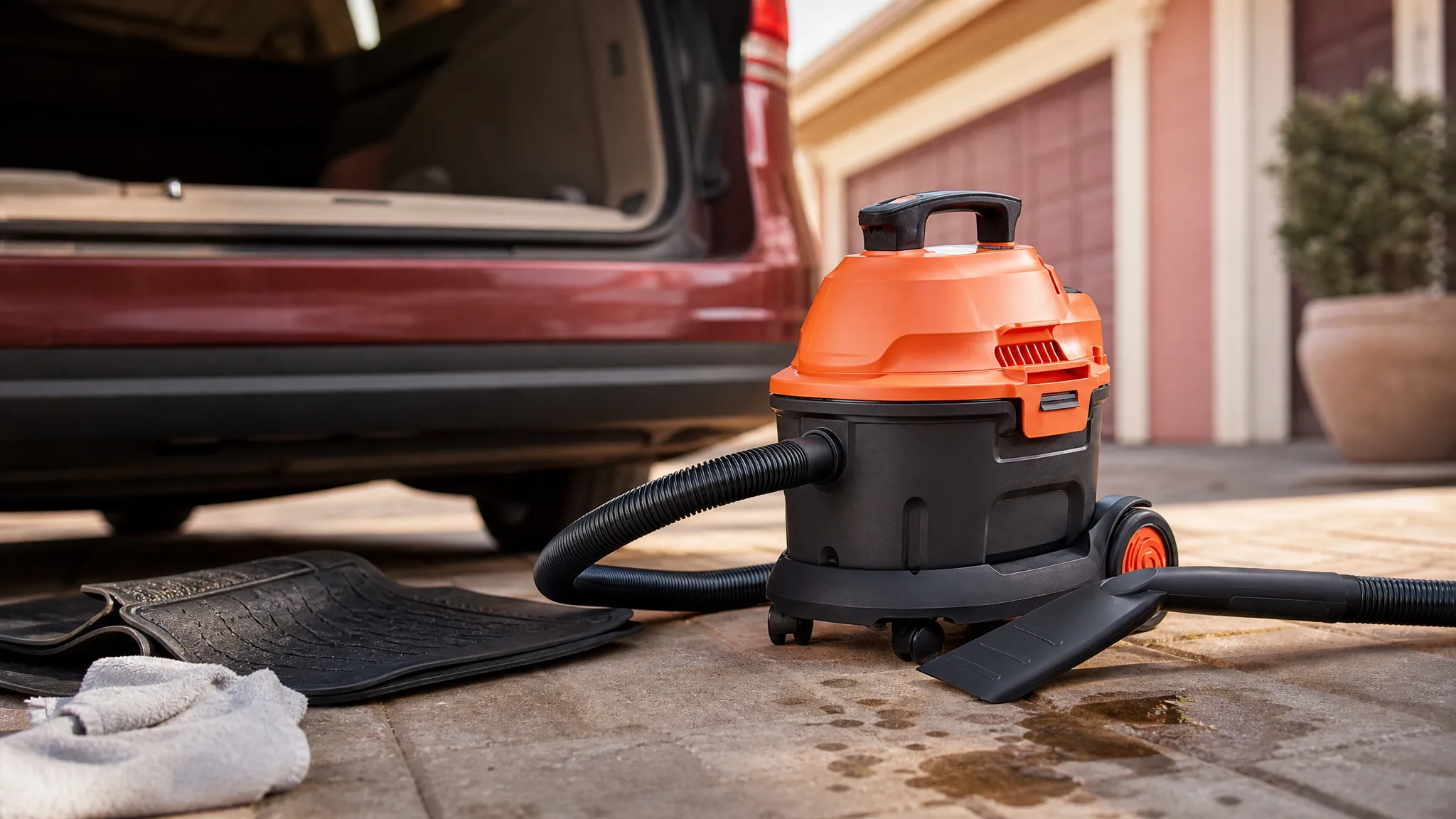
Armor All AA255W Review: Trunk Wet/Dry Cleanup After Weeks
We tested the Armor All AA255W 2.5-gallon wet/dry vac on trunk spills, car mats, and pet debris. Honest take on cord reach, crevice tools, and who should buy.
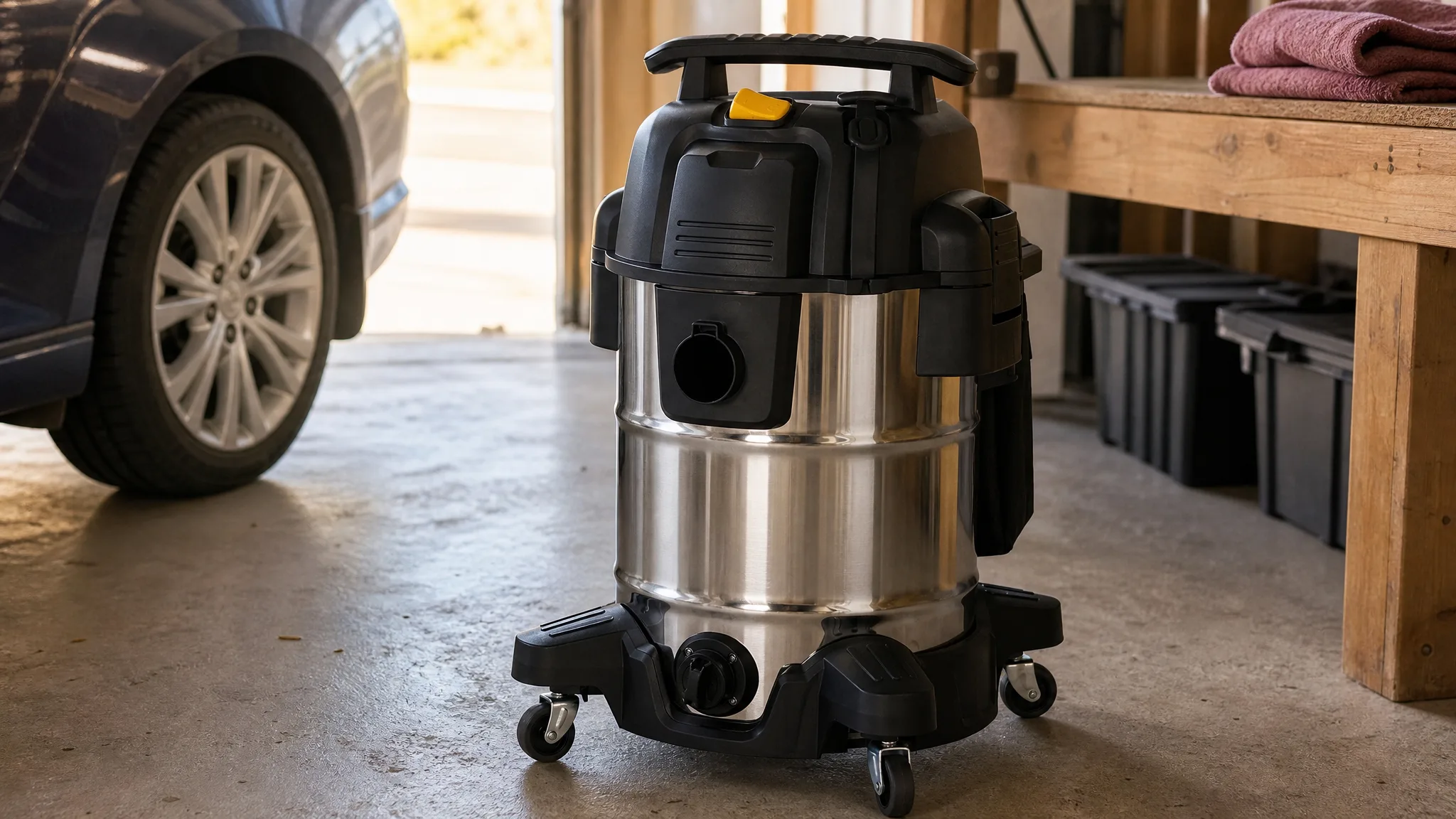
DEWALT STEALTHSONIC 10-Gallon Review: Quiet Shop Vac, 5 Weeks Tested
We tested the DEWALT STEALTHSONIC 10-gallon shop vac for five weeks in a garage, a car, and a basement. Honest take on the quiet motor and the stiff, non-swiveling hose.