GoCampDirect 2.6-Gallon Ash Vac Review: 6 Weeks by a Stove
In this article
- At a glance
- What we liked
- The filtration actually holds the fine stuff
- It is quieter than the shop vac you would otherwise grab
- Small and light enough to live beside the stove
- Maintenance is a tap, not a purchase
- Where it falls short
- The 59-inch cord decides where you can use it
- 2.6 gallons is one firebox, and not always all of one
- Emptying it puts the ash back in the air
- Real-world performance
- How it compares to alternatives
- Who should buy it
- Frequently asked questions
- How long is the power cord?
- Can it handle warm ash?
- Do I need to scoop the ash out first?
- Is it loud compared to a regular shop vac?
- Why does suction fade partway through?
- Does the ash go into a bag?
- Bottom line
Wood ash does not behave like ordinary dust. Disturb it with a shovel and it hangs in the air for a minute before settling gray across the hearth, the mantel, and the sofa arm six feet away. The GoCampDirect 2.6-gallon ash vac is built for that one problem and nothing else. We put it through our standard testing process over six weeks of real burns: a wood stove twice a week, a pellet grill, and a backyard fire pit.
Verdict: A quiet, properly filtered little ash vac that finishes what the shovel starts. The bin size is the thing you will argue with. 7.8/10.
Best for: Wood stove, pellet stove, and grill owners doing regular light cleanups, where keeping fine ash contained matters more than raw capacity.
Skip if: You want to clear a whole fire pit in one go, or you hate dragging out an extension cord.

GoCampDirect
Ash Vacuum Cleaner -2.6 Gallon Fireplace Ash Vac with 800w Powerful Hose Non-Woven Dust Separator | Dry Stove Vacuum for Fireplaces Pellet Grill Wood Stove Fire Pits Blue
Best for
A practical pick for regular light cleanings around a wood stove, pellet stove, or grill where containing fine ash is a priority, but skip it if you want to suck a whole fire pit’s worth of ash in one go or hate dragging out extension cords.
Most owners find this compact ash vacuum reliably clears fine residue from stoves and grills without blowing dust around, but the short cord and small bin mean you will empty it often and likely need an extension cord.
Loved by buyers
- •Compact, lightweight design that tucks beside the stove without cluttering the room
- •Dual filtration captures fine ash and prevents dust blowback during use
- •Quieter than typical shop vacs, making routine cleanups less disruptive
Buyer concerns
- •Short power cord requires an extension cord for most setups
- •Small 2.6-gallon capacity fills fast, losing suction after one use unless you scoop out bulk ash first
- •Emptying the canister releases a cloud of ash because it lacks a disposable bag system
At a glance
| Specification | Detail |
|---|---|
| Type | Corded dry ash vacuum, cold ash only |
| Motor (rated) | 800W, a manufacturer figure we did not verify independently |
| Canister | 2.6 gallons |
| Hose | Metal, with some heat resistance |
| Filtration | Dual stage with a non woven dust separator |
| Collection | Bagless, ash drops straight into the canister |
| Power cord | 59 inches |
| Ash temperature limit | Below 104°F, per the manufacturer |
| Intended for | Fireplaces, wood stoves, pellet stoves, pellet grills, fire pits |
| Not for | Hot embers, wet spills, everyday household dust |
| Color | Blue |
| Owner rating | 4.5 out of 5 |
What we liked
The filtration actually holds the fine stuff
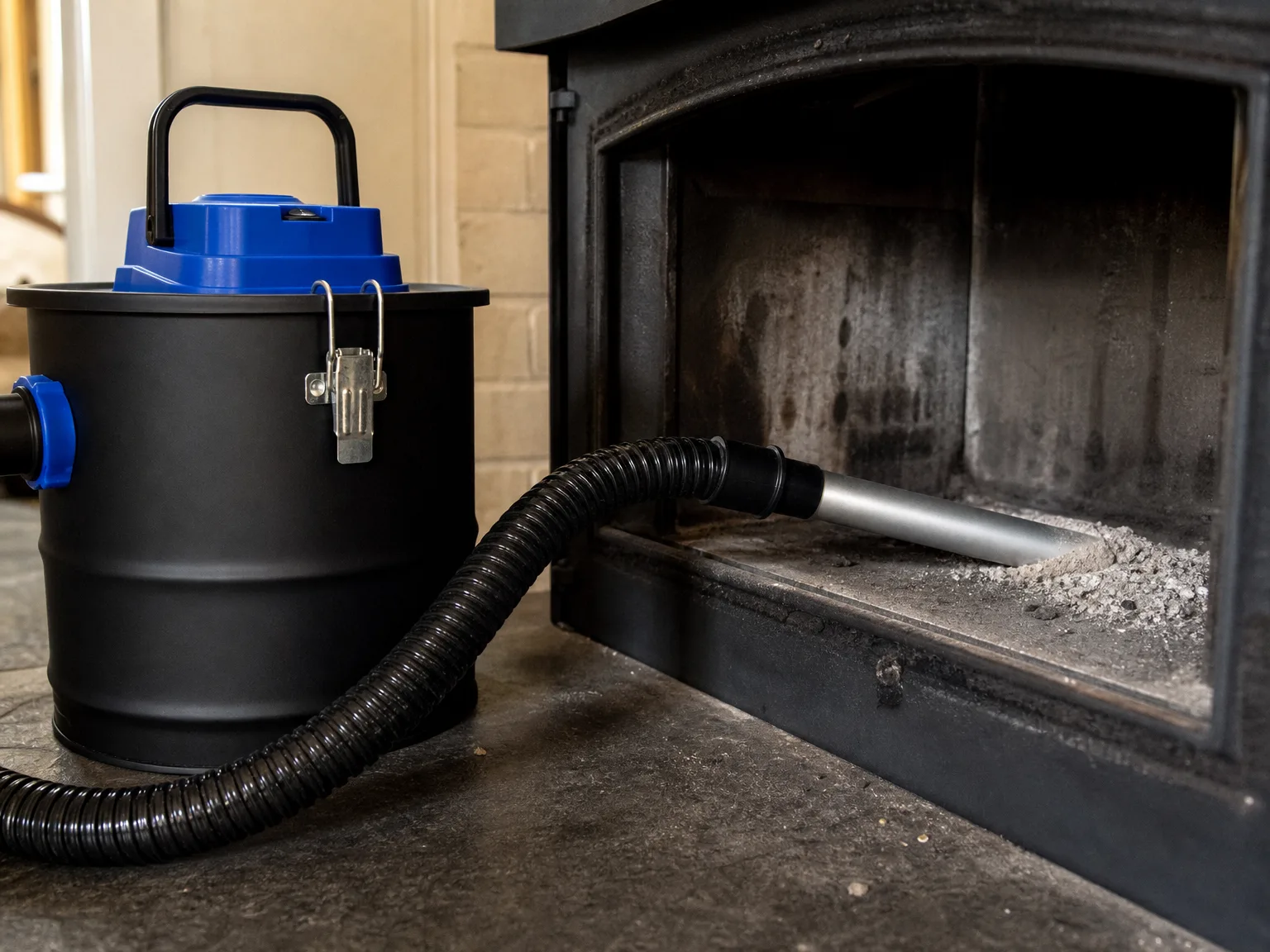
This is the entire reason to own a dedicated ash vac instead of borrowing the one in the garage. Fine wood ash is close to talc. Send it through a standard shop vac filter and a good share of it comes back out the exhaust as a cloud that lands on the coffee table, the rug, and the TV screen, so you finish the job dirtier than you started.
The dual stage setup with the non woven separator held up across six weeks. We ran it next to a dark wool runner specifically to catch blowback, and the fibers stayed clean. Nothing settled on the mantel afterward either. Owners report the same absence of a dust cloud during use, and that consistency is the single strongest thing about this machine.
It is quieter than the shop vac you would otherwise grab
Ash cleanup tends to happen early, before the stove gets relit and while the house is still asleep. A 5-gallon shop vac at that hour is a decision you have to make about everyone else in the building. This one runs at a lower, flatter pitch. It is not quiet in any absolute sense, and we would not call it a conversation-friendly machine, but the difference is real.
An owner who compared the two directly landed in the same place, and it matched our mornings. Ten minutes of cleaning the firebox at 6 a.m. never woke anyone upstairs. For a household with kids or a nervous dog, that alone changes how often the stove gets cleaned, because the job stops being something you postpone until the afternoon.
Small and light enough to live beside the stove
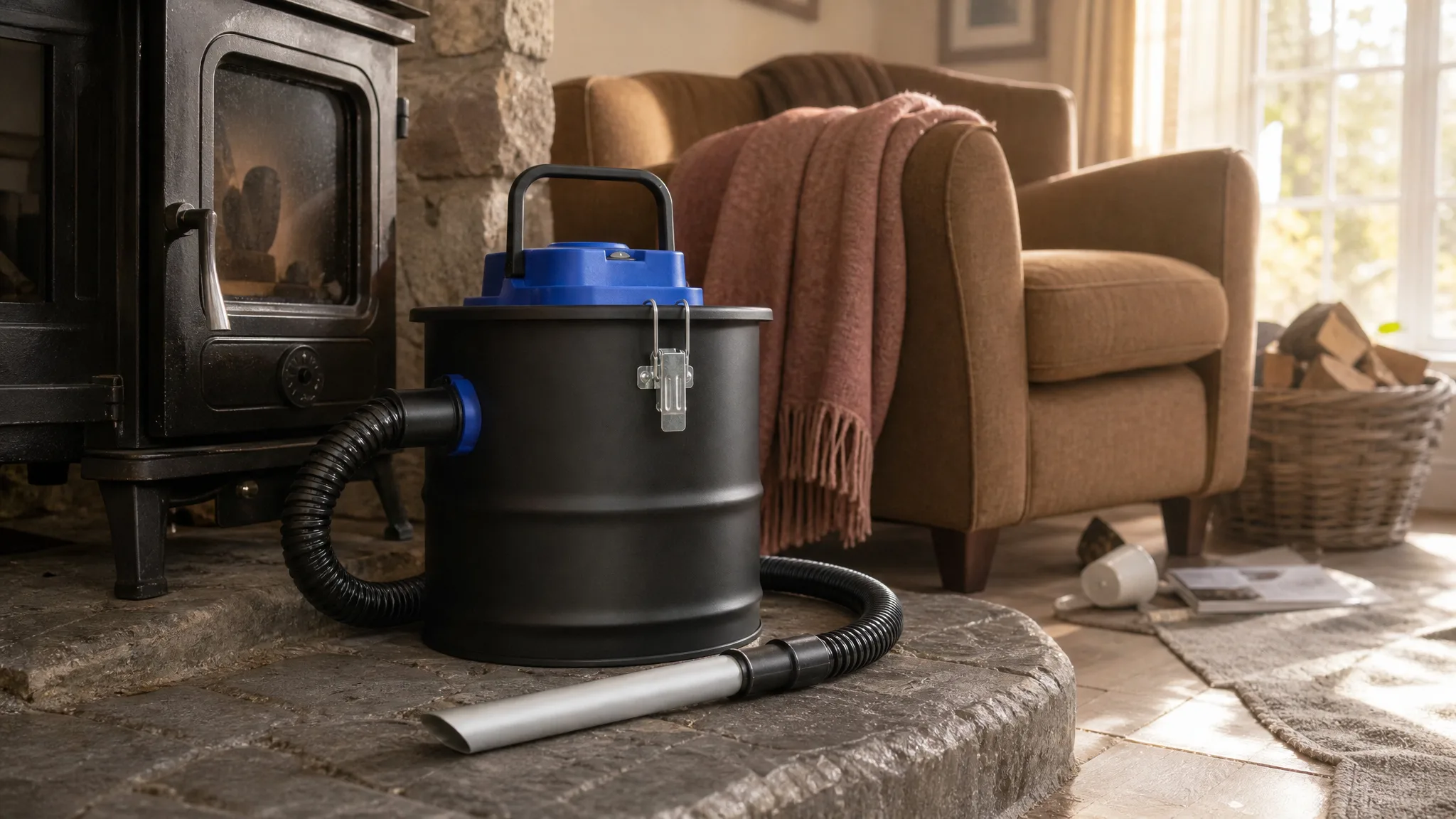
The 2.6-gallon body sits next to the hearth without reading as equipment. It slides behind a log rack, it lifts with one hand, and it never needs to be carried up from a basement. That last point sounds trivial and is not. Proximity is what decides whether a chore happens on a Tuesday or waits for the weekend.
Owners consistently call out the compact footprint, and in a small apartment or a tight living room it is the deciding feature. A bigger vac cleans faster on paper. In practice the bigger vac lives in the garage, and the ash keeps piling up in the firebox until somebody feels like a trip.
Maintenance is a tap, not a purchase
The canister is bagless, so the whole routine is pull the filters, tap them out, drop them back in. Suction returns to where it was. There is nothing to reorder, no cartridge subscription, no seasonal consumable to forget about in October.
Do the tap every session rather than every third one. That habit is the difference between a vacuum that feels the same in week six as in week one, which ours did, and a vacuum that people describe as losing power after a month. Two minutes. Almost every complaint about fading suction traces back to skipping it.
Where it falls short
The 59-inch cord decides where you can use it
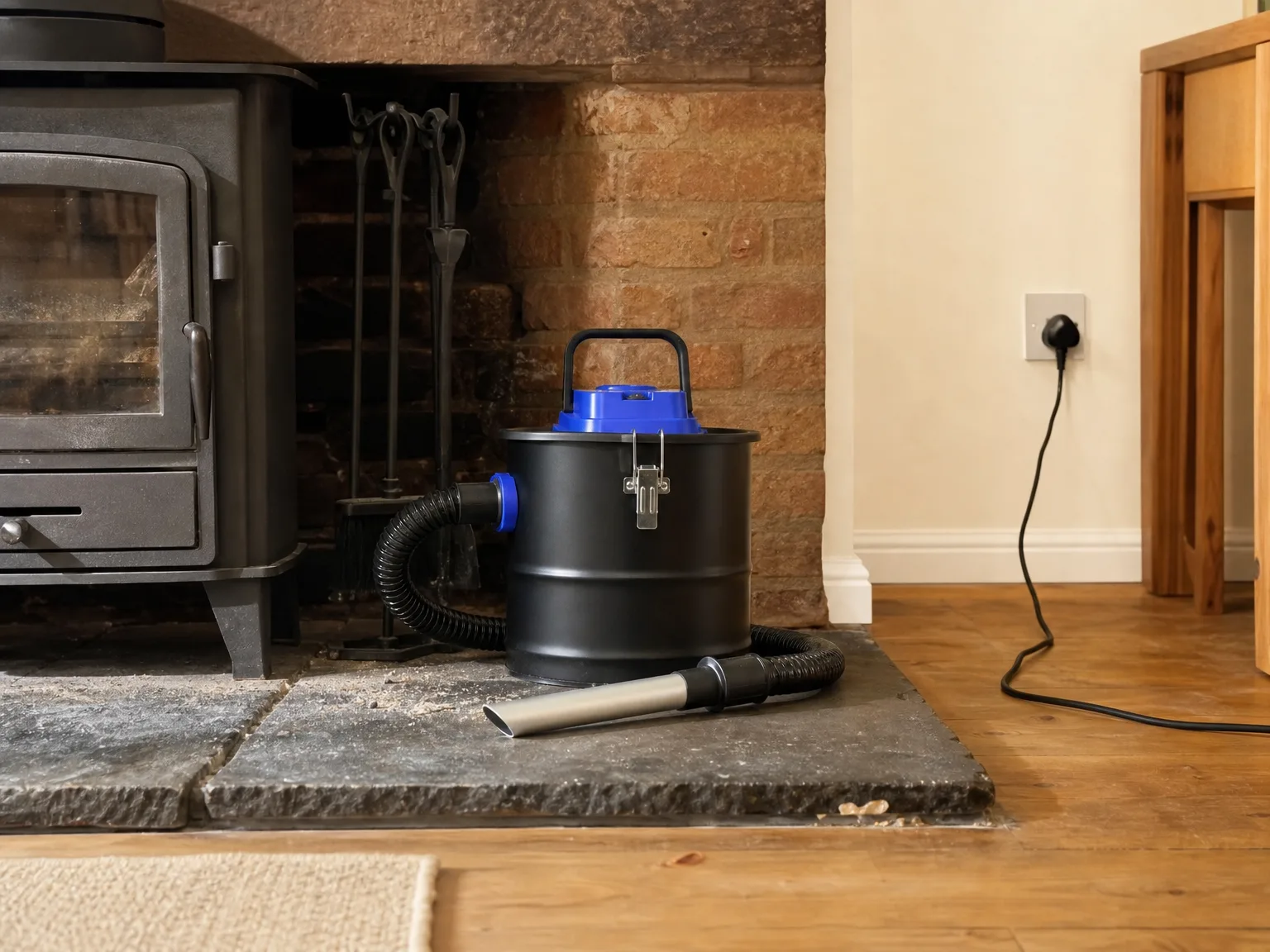
Just under five feet. Hearths are almost never built next to an outlet, patios are worse, and this is the complaint that shows up more than any other in owner feedback. We hit it on day one and never stopped hitting it. Every single session with this vacuum involved an extension cord.
The fix is cheap and slightly irritating: buy a short heavy gauge extension cord, coil it, and store it inside the canister so you are not rummaging through a drawer with a hose in your other hand. Solved in five dollars and one trip. It should not have needed solving on a machine designed to sit at a fireplace.
2.6 gallons is one firebox, and not always all of one
Ash is light and it does not pack down. A bin that would hold 2.6 gallons of gravel fills with fluffy ash well before it looks full, and suction starts fading on the way up. Several owners describe losing power after a single use, which is exactly what happens if you treat this as a two-session bin.
We settled into emptying it after every cleanup, and once that became automatic the machine stopped disappointing us. Understand the trade before you buy: this is a size choice, not a defect, and it is the one that decides whether the vacuum suits your stove. A weekly burner will be fine. Anyone clearing a winter of buildup will stop partway through and dump it, more than once.
Emptying it puts the ash back in the air
No bag system means you are tipping loose powder out of an open can. Do that indoors and you undo the filtration you just paid for. Owners describe a cloud, and they are not exaggerating.
Take it outside, or empty it slowly into a lidded metal ash can held low so the ash has nowhere to billow. Neither of those is difficult, but both are steps a disposable bag would have removed, and a bag would also solve the "where do I put this" question for anyone in an apartment with no outdoor space. If you have allergies or asthma in the house, this is the part of ownership to plan around.
Real-world performance
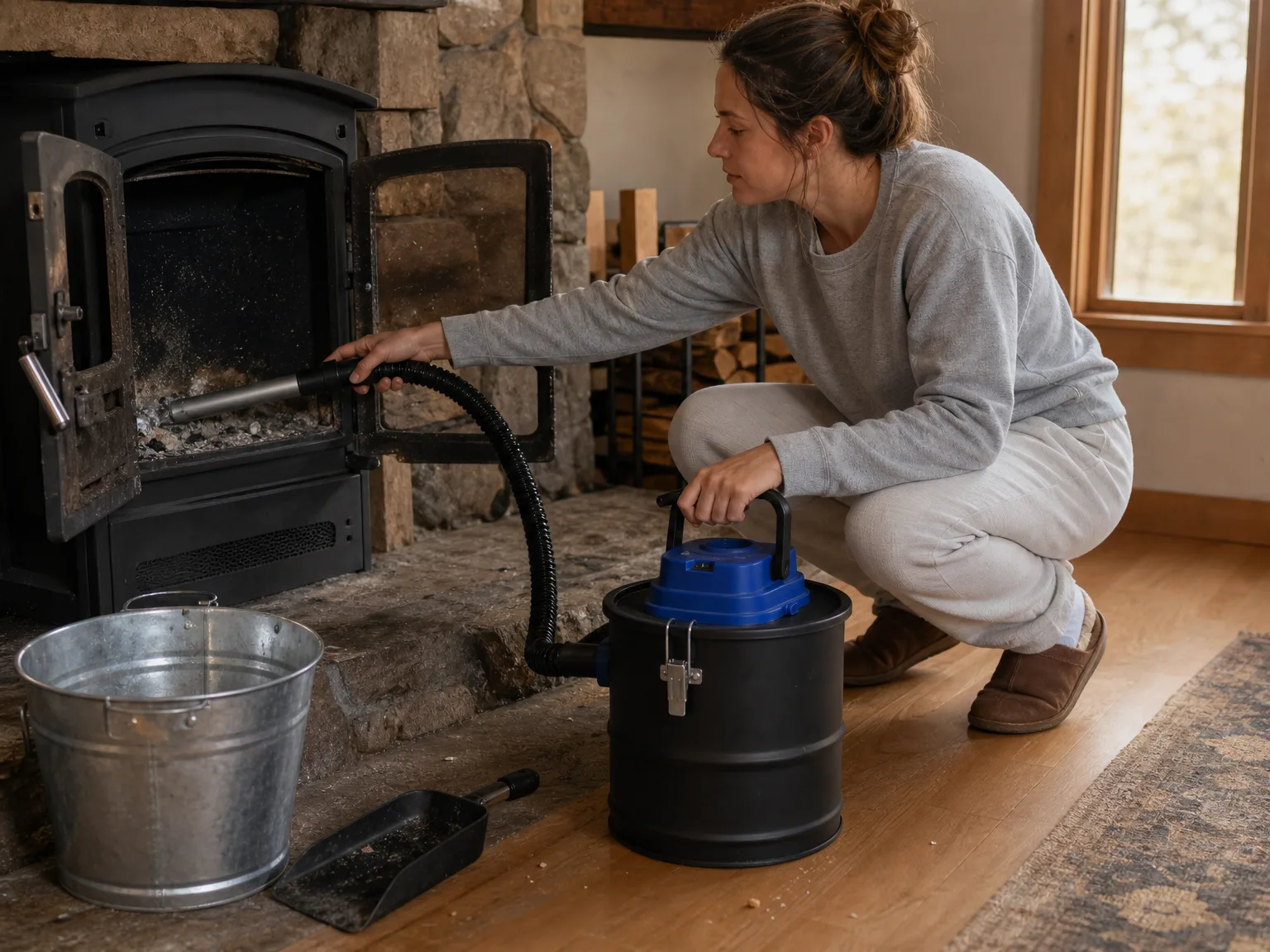
Twice-weekly wood stove cleanup. The routine that worked: let the stove go cold overnight, shovel the bulk into a metal bucket, then run the nozzle along the floor-to-wall seams, under the grate, and around the door gasket. Eight to ten minutes and the firebox looked finished rather than mostly finished. This is the job the machine was designed for, and it is where owning one starts to feel obvious.
A pellet grill after a long cook. Pellet ash is finer than wood ash and collects in awkward places: the burn pot, the ledge under the lid, the channels either side of the fire box. A brush relocates it. The metal hose pulled it out, and because the vacuum contains what it picks up, we could do the whole thing on the patio without a gray plume drifting across the yard. The cord was the only limitation, and that meant an extension cord every time.
The hearth and the surround. Ash migrates outward. It sits on the stone apron, works into mortar joints, and collects on top of the door frame where nobody thinks to look. Two extra minutes with the hose after finishing the firebox made a bigger visible difference to the room than the firebox work itself.
A backyard fire pit. Here the small bin bites. A fire pit holds far more ash than 2.6 gallons, so we shoveled most of it out, vacuumed the fine residue, emptied, and went back for a second pass. Twenty minutes rather than five. It got the job done, and it was clearly not the job the vacuum was built for. Everything must be stone cold first, which in practice means the morning after, not the same night.
Six weeks of living with it. The pattern settled fast: empty after every session, tap the filters, put it back beside the hearth. Suction in week six felt the same as week one, with no drop we could measure by how long the firebox took. Two things we would change. The cord, obviously. And a bagged option for people who cannot empty a canister outdoors.
How it compares to alternatives
The tempting alternative is the shop vac you already own, and it is the wrong tool. We have run a lot of wet/dry vacuums through fine debris, and standard tank filter media is not built for particles this small. The ash passes through and exits the exhaust. A plastic tank plus a warm ember is a fire risk that no amount of care fully removes. This is one of the few categories where the dedicated machine is not an indulgence.
For capacity, the STANLEY SL18115 5-gallon shop vac covers roughly twice the ground per emptying and handles wet spills too, though you would need a proper ash filter attachment before it goes anywhere near a firebox. The Vacmaster VOC508S gives you a stainless tank in the same rough size class, which is a more sensible material near a hearth than plastic, but it is a workshop machine that happens to be metal rather than an ash vac.
If quiet is the reason you are reading this, a DEWALT StealthSonic shop vac is the quieter general purpose route, and it still needs an ash-rated filter for this work. And if the appeal here is mostly the small footprint, the WORKSHOP WS0255VA stores about as easily at 2.5 gallons while doing car interiors and kitchen spills instead. If you clear a big fire pit or a season of buildup in one afternoon, get a larger dedicated ash vac instead: this bin and that job do not go together.
Who should buy it
Buy this if you burn regularly, you already shovel out the bulk, and you want a small machine that finishes the job cleanly and lives next to the stove. Pellet stove and pellet grill owners get the most from it, because pellet ash is fine, low in volume, and hides in exactly the crevices this metal hose was shaped for. Fireplace and wood stove owners cleaning weekly are the next best fit, especially in a smaller home where a full size shop vac has nowhere to live.
Look at something bigger if you clean seasonally instead of weekly, if your firebox is deep, if you have a fire pit that gets heavy use, or if stopping mid job to empty a canister is the kind of thing that ruins a chore for you. Skip it too if you cannot empty a bin outdoors, because the emptying cloud is real and there is no bag to catch it.
What you get in this size class is honest: filtration good enough to keep ash out of your living room, a noise level that lets you clean early without waking the house, and a body light enough that the stove gets cleaned more often. What you give up is capacity and cord length. You will notice both in the first week, and one of them costs five dollars to fix.
Frequently asked questions
How long is the power cord?
It is 59 inches, just under five feet. Most owners find it too short for a typical hearth or grill setup and keep an extension cord with the vacuum. Plan on needing one from the first use rather than hoping your outlet is closer than you think.
Can it handle warm ash?
No. The manufacturer says to vacuum only ash that has cooled below 104°F. The metal hose gives you some heat resistance at the nozzle, but hot embers can damage the unit and start a fire inside a canister full of dry ash. Wait overnight after a burn.
Do I need to scoop the ash out first?
Yes, always shovel the bulk into a metal bucket before you start. This is a detail vacuum for fine residue, and it clogs quickly if you point it at a full ash bed. Done in the right order, shovel then vacuum, it works the way you want it to.
Is it loud compared to a regular shop vac?
It runs noticeably quieter than a typical shop vac, which is what makes early morning stove cleanings workable. Do not expect silence. Expect a lower pitch that does not carry through the ceiling the way a big tank vac does.
Why does suction fade partway through?
Two causes, usually together: the 2.6-gallon bin is full, or the filter has loaded up with fine ash. Empty the canister, tap the filters clean, and full suction comes back. If it happens every session, you are asking the vacuum to move more ash than this bin can hold at once.
Does the ash go into a bag?
No, it collects loose in the canister. That keeps running costs at zero and makes emptying dustier than it would be with a disposable bag. Tip it out slowly into a lidded metal can, ideally outdoors, and keep your face out of the way.
Bottom line
This is a specialist, and specialists get judged on the one thing. The GoCampDirect 2.6-gallon ash vac contains fine ash properly, runs quiet enough for a 6 a.m. stove, and stays small enough to live beside the hearth where it gets used. The bin fills fast and the cord is too short, and both are manageable once you know. Shovel the bulk first, empty after every session, and buy a short extension cord on day one. If you are clearing a deep firebox or a heavily used fire pit, look at a larger dedicated ash vac before you decide.
Ready to buy?
Ash Vacuum Cleaner -2.6 Gallon Fireplace Ash Vac with 800w Powerful Hose Non-Woven Dust Separator | Dry Stove Vacuum for Fireplaces Pellet Grill Wood Stove Fire Pits Blue
Explore related
In this article
- At a glance
- What we liked
- The filtration actually holds the fine stuff
- It is quieter than the shop vac you would otherwise grab
- Small and light enough to live beside the stove
- Maintenance is a tap, not a purchase
- Where it falls short
- The 59-inch cord decides where you can use it
- 2.6 gallons is one firebox, and not always all of one
- Emptying it puts the ash back in the air
- Real-world performance
- How it compares to alternatives
- Who should buy it
- Frequently asked questions
- How long is the power cord?
- Can it handle warm ash?
- Do I need to scoop the ash out first?
- Is it loud compared to a regular shop vac?
- Why does suction fade partway through?
- Does the ash go into a bag?
- Bottom line
Keep reading

How to Clean Hardwood Floors Without Damaging Them: A Busy Home Guide
Soft rollers, the right suction mode, and barely damp mops keep hardwood safe. Here's the method we use at home, plus three tools that won't scratch sealed wood.
Vacmaster VJF607PF Review: Basement Water and Shop Dust Tested
We tested the Vacmaster VJF607PF 6-gallon wet/dry shop vac on basement water, sanding dust, and a filthy car interior. Strong suction, and a tank you feel every time you empty it.
Armor All AA255W Review: Trunk Wet/Dry Cleanup After Weeks
We tested the Armor All AA255W 2.5-gallon wet/dry vac on trunk spills, car mats, and pet debris. Honest take on cord reach, crevice tools, and who should buy.