Vacmaster VOC508S Review: 5-Gallon Stainless Tested for 6 Weeks
In this article
- At a Glance
- What We Liked
- Suction That Holds Through a Whole Job
- A Stainless Tank in a Size You Can Store
- Quiet Enough to Run Indoors
- Wide Wheels and a Tall, Narrow Body
- Where It Falls Short
- No Drain Port Means Tipping the Tank
- The 9-Foot Cord Is the Real Limit
- The Hose Will Not Coil Neatly
- Stiff Latch Tabs
- Real-World Performance
- How It Compares to Alternatives
- Who Should Buy It
- FAQ
- Bottom Line
A hobby workshop sharing a wall with the laundry room. A back seat holding two kids' worth of crushed crackers. A patio that collects pine needles all week and a shallow puddle by the door after every storm. Those three jobs are what the Vacmaster VOC508S is built around, so we spent six weeks on them, following our how we review process, to see whether 5 gallons of stainless steel is the size worth living with.
Verdict: Steady, unfussy suction in a stainless tank small enough to store upright, held back by a short cord and no drain port. 8/10.
Best for: Hobby workshops, car interiors, and patios where you want a durable wet/dry vac that fits in a corner
Skip if: You vacuum large volumes of water regularly, or you work far from an outlet and hate dragging an extension cord

Vacmaster
Vacmaster 5-Gallon* 4 Peak HP Stainless Steel Wet/Dry Vacuum – VOC508S 1101
Best for
Great for hobby workshops, car interiors, and patios where you need a durable, easy-to-store vac for both wet and dry messes; skip it if you expect to drain large water volumes frequently or need a long cord without extensions.
Owners consistently praise this vac's strong suction, sturdy stainless steel body, and great value for the price. The main trade-off is accepting that emptying a 5-gallon tank of liquid means lifting and pouring without a drain port.
Loved by buyers
- •Stainless steel tank adds durability and resists dents better than cheaper plastic models.
- •Powerful motor tackles fine dust, spilled water, and chunky debris with equal ease.
- •Quieter than many shop vacs, making indoor use more bearable.
Buyer concerns
- •Wet debris requires tipping the heavy canister to empty, as this model lacks a drain port.
- •The power cord stretches roughly 9 feet, often needing an extension cord for larger areas.
- •The hose fights coiling around the body and ends up bulking outward when stored.
At a Glance
| Spec | Detail |
|---|---|
| Type | Corded wet/dry shop vacuum with a stainless steel tank |
| Tank capacity | 5 gallons |
| Motor | Rated at 4 peak HP by Vacmaster |
| Hose | 7 feet |
| Cord | About 9 feet, which works out to roughly 16 feet of reach with the hose attached |
| Wet pickup | Yes, with the foam sleeve fitted in place of the cartridge filter |
| Draining | No drain port, so you lift the tank and pour |
| Filtration | Reusable cartridge filter for dry debris, foam sleeve for wet |
| Dust bags | Sold separately, worth buying for fine dust |
| Footprint | Tall and narrow, on wide wheels that resist tipping |
| Noise | Quieter than most shop vacs, per owners and our testing |
| Owner rating | 4.5 out of 5 across roughly 3,250 reviews, with 78 percent at five stars |
What We Liked
Suction That Holds Through a Whole Job
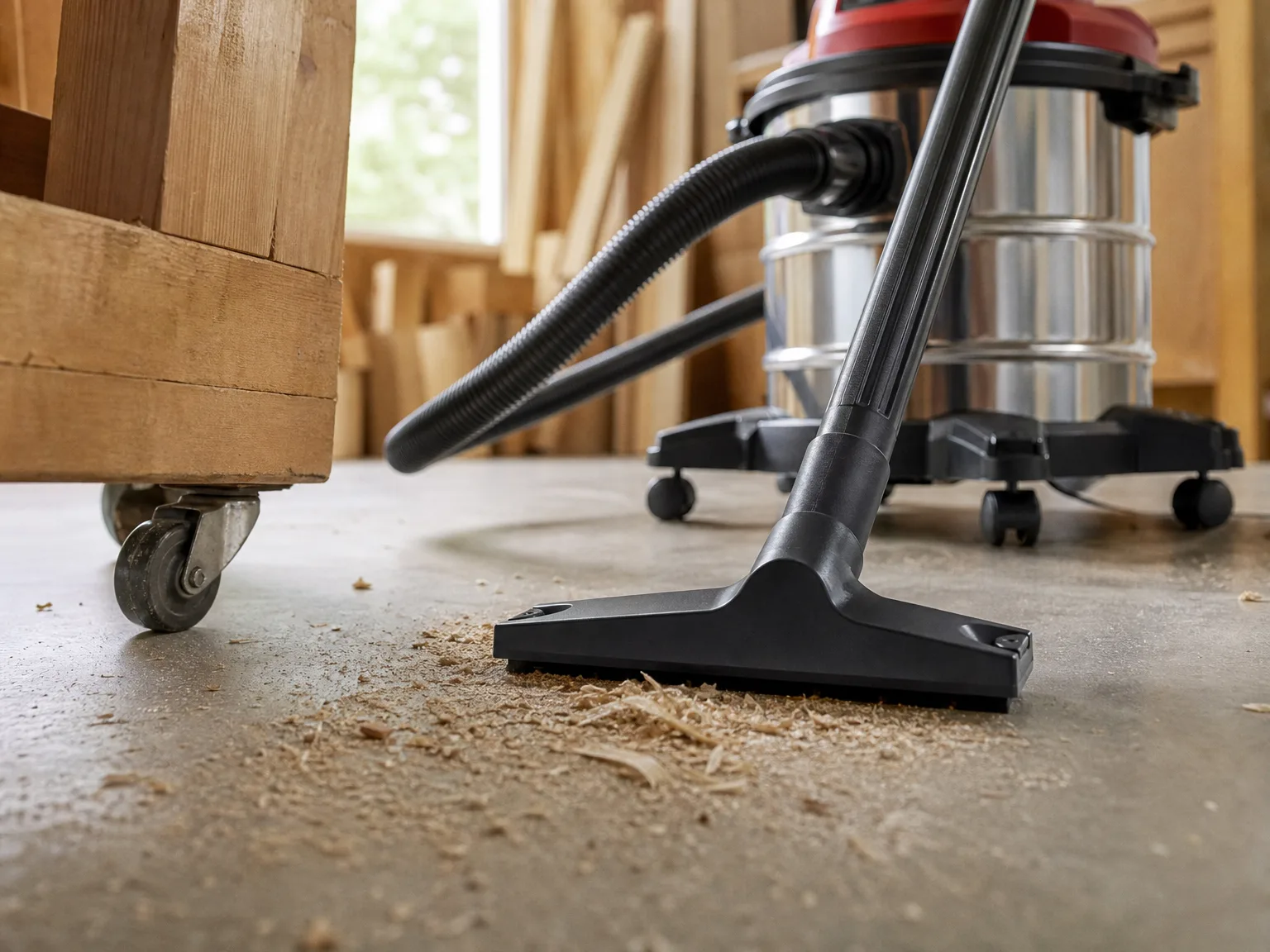
Small shop vacs often start strong and fade once the filter loads up. This one kept pulling. Sanding dust, wood curls, driveway grit, dry leaves, cat litter, and spilled water all went up on a single pass, and the motor never bogged down or spat debris back out. What mattered more over six weeks was consistency: the pull at the end of a Saturday in the workshop felt like the pull at the start. Owners describe the same thing across thousands of reviews, and it tracks with what a 4 peak HP rating is supposed to buy you at this tank size.
A Stainless Tank in a Size You Can Store
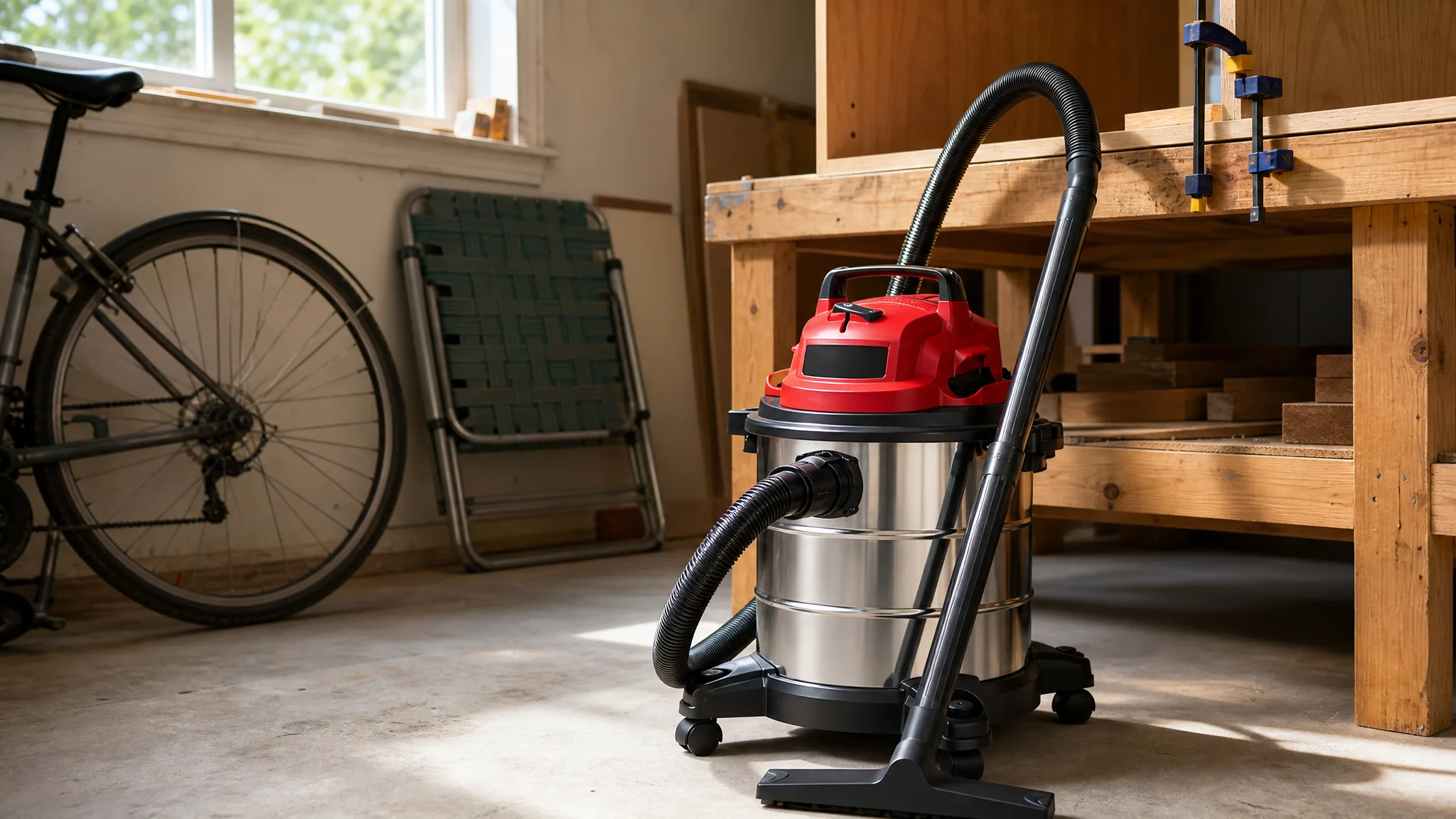
Plastic shop vac tanks crack at the rim, scuff permanently gray, and dent when you drag them past a bike pedal. Stainless does none of that, and it shrugs off the damp air of a garage that regularly holds water overnight. The useful part here is the pairing: you get that durability in a 5-gallon body rather than an 8 or 12-gallon drum. Ours lived in the corner of a one-car garage between a shelf unit and the wall, and it never had to be shuffled out of the way to open a car door. If your last shop vac died because the tank gave up before the motor did, this is the specific fix.
Quiet Enough to Run Indoors
Shop vacs are usually the loudest thing you own. This one is noticeably calmer than the ones we are used to, and owners say the same. We ran it in a laundry room mid-morning and in a hallway while somebody worked at a kitchen table, and neither was the ordeal we expected. Be clear about the comparison, though. Quieter than a screaming shop vac is still louder than a household vacuum, so an afternoon nap is not going to survive it. For a workshop that shares a wall with the rest of the house, the difference is real.
Wide Wheels and a Tall, Narrow Body
The vertical shape earns its keep twice. It takes up less floor space when parked, and the wide wheels underneath make it hard to tip while you tug the hose from across a room. That second part is what separates a good small shop vac from an irritating one. Tall, skinny vacs on tiny casters go over the moment you pull at an angle, and picking a vac up off its side while it holds water is a bad way to spend a minute. Ours got yanked around a car, a patio, and a workbench for six weeks and stayed upright.
Where It Falls Short
No Drain Port Means Tipping the Tank
There is no drain plug, so emptying water means lifting the tank and pouring it out. Five gallons of water is heavy, and being honest about the arithmetic helps: a full tank is well over 40 pounds once you add the machine. Our habit by week two was to stop at roughly half a tank, carry it to the driveway, and pour. That works fine for a puddle by the patio door. If you pump out a flooding basement every spring or you drain a water heater, get a model with a drain hose and skip the lifting entirely.
The 9-Foot Cord Is the Real Limit
Nine feet of cord is short. With the 7-foot hose you get about 16 feet of working radius, which covers a car in a driveway or a workbench and the floor around it, and then stops. Anything beyond that means an extension cord, which owners bring up constantly. It is not a dealbreaker so much as a permanent accessory: we kept a 25-foot cord looped on a hook next to the vac and stopped thinking about it. Still, if your patio outlet is nowhere near your patio, plan for the extra cord before your first cleanup.
The Hose Will Not Coil Neatly
The hose fights being wrapped around the body. It springs back, bulges outward, and catches on things as you walk the vac past them, which undoes some of the tidiness the narrow footprint gives you. There is no onboard solution to this. A cheap hook on the wall above the vac fixed it for us and took the problem from a daily annoyance to a non-issue. If your only storage is a packed closet with a door that has to shut, know that the hose is the part that will fight you, not the tank.
Stiff Latch Tabs
The tabs holding the motor head to the tank need firm pressure. That stiffness is why the seal holds under suction, and it is also why opening the vac for a filter swap or a tank dump takes two thumbs and some force. You learn the angle after a week. Cold hands in an unheated garage make it worse, and anyone with limited grip strength should know this before buying, because a wet/dry vac gets opened after every messy job. Nothing on ours loosened or broke, and we would take a stubborn latch over one that pops mid-job.
Real-World Performance
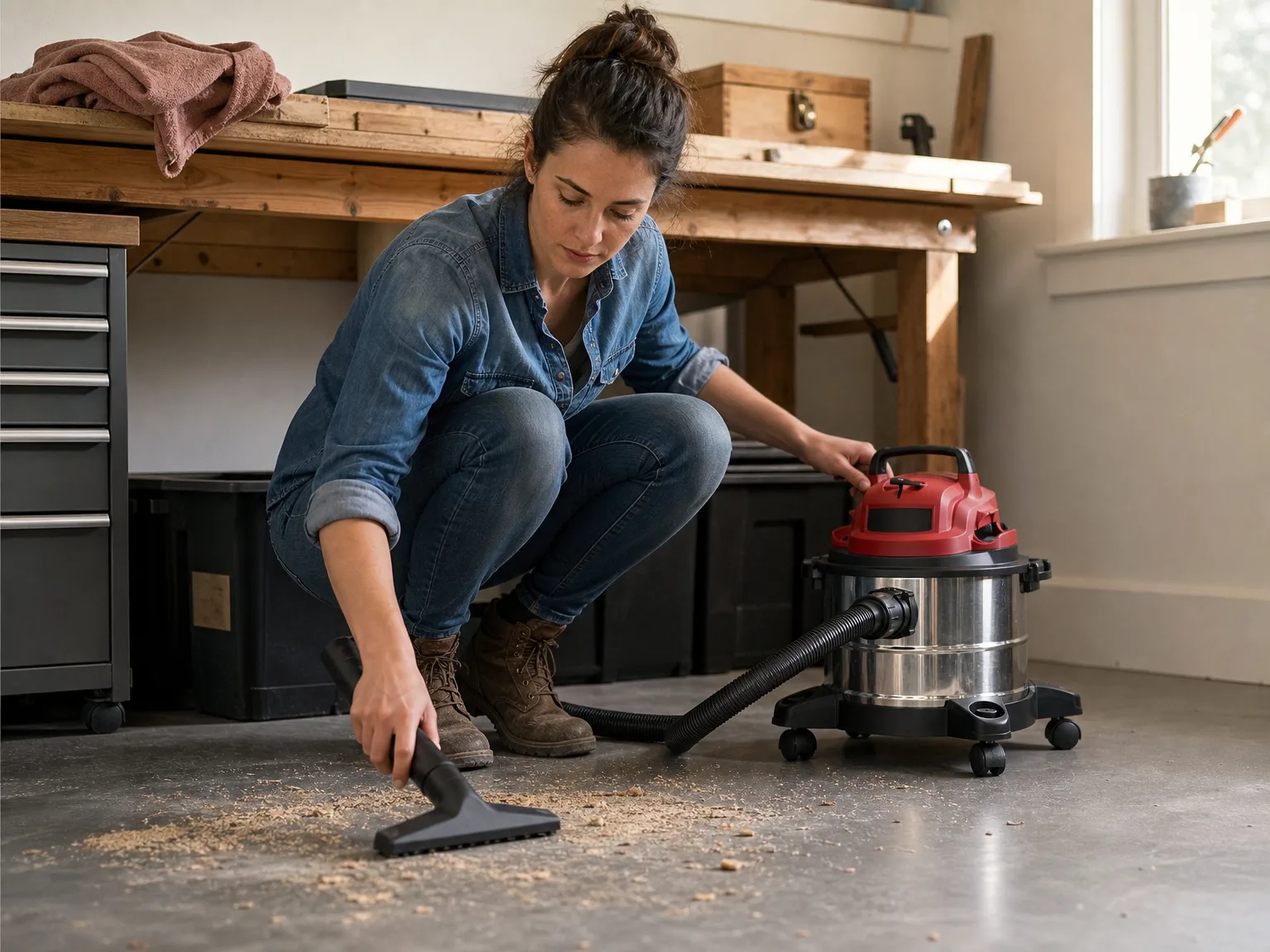
The hobby workshop is where this vac fits best. A weekend of cutting and sanding a bookcase produced the usual chips, curls, and fine dust on every flat surface, and single passes cleared it. Five gallons filled up faster than a bigger drum would, so we emptied once mid-project instead of never, which is the trade you accept for a vac that stores in a corner. One caution about fine dust: it runs bagless out of the box, and drywall dust or fireplace ash will clog a bare cartridge filter quickly. Order a pack of bags with the vac and treat them as a consumable.
Cars are the second strong case, with a caveat about geography. Sand in the seat rails, dried mud on a floor mat, pine needles in the trunk, and the crumb layer down the side of a console all lifted without repeated passes, and the 16 feet of reach was enough to finish an entire midsize SUV from one garage outlet. Park in a driveway instead and you will need the extension cord. If a car interior is the only mess you ever deal with, something like the handheld in our ZARIMI portable car vacuum review is quicker to grab, though it will not touch water or a workshop floor.
The patio test ran the whole six weeks and included one unplanned wet job. Pine needles, dry soil from repotting, and a layer of grit off the concrete came up easily. Then a storm pushed a shallow puddle under the door, and the vac cleared it in a few minutes once we swapped the cartridge filter for the foam sleeve. Check your manual before any wet pickup, since these vacs want the bag out and the correct filter fitted. The cleanup was quick. Carrying the tank out to pour it was the slow part, and that never got better.
Indoor household use is the weakest case and worth being direct about. On hard floors it is excellent: scattered litter, tracked-in grit by a back door, and cereal under a high chair vanish. Carpet is a different story, because there is no powered brushroll, so pet hair worked deep into a rug stays in the rug. It pulls loose hair off hard floors and low-pile carpet without complaint, and for upholstery we switched to the brush tool to avoid snagging. This is a garage tool that helps inside, not a substitute for a cordless vacuum you grab every day.
How It Compares to Alternatives
The closest comparison is the Vacmaster VOC507PF, the same 5-gallon size with a 3 peak HP motor and a plastic tank. It costs less and cleans up the same messes. What you give up is the rust resistance and the dent resistance, which matters if the vac lives in an unheated garage and holds water often. If yours will sit in a dry basement and see mostly dry debris, the plastic model is the sensible saving. If it will live outside a conditioned space, the stainless tank is the reason to spend more.
Moving up in the same family, our Vacmaster 6-gallon detachable blower review covers a machine that adds a gallon and a blower that lifts off as its own unit, which is genuinely useful for clearing sawdust out of a table saw or leaves off a driveway. The VOC508S has no blower function. There is also an 8-gallon stainless VOC812SF if you want the same tank material with fewer trips to the trash, at the cost of a body you will not fit on a shelf. Both are heavier to carry when wet.
If storage is your entire problem, Vacmaster makes a 5-gallon wall-mount version with remote control operation, which gets the vac off the floor completely. And if you regularly deal with standing water, none of these is the right answer: buy something with a drain hose, because tipping a tank is the one part of this design that never improves. Our other wet/dry vacuum reviews sort out the capacity question if that is what you are stuck on.
Who Should Buy It
Buy this if your messes are rough, your storage is tight, and your outlets are close by. The ideal owner has a hobby workshop or a single garage bay, a project going most weekends, a car that collects grit, and a patio or driveway that needs clearing. The 5-gallon size is the point, not a compromise: you get a tank that survives damp air and abuse in a body that parks in a corner and can still be carried to a driveway with water in it.
Look elsewhere if water or distance is your main problem. Anyone vacuuming real volumes of liquid needs a drain port, and anyone working a large yard or a detached shed will get tired of the 9-foot cord no matter how good the suction is. If embedded pet hair on carpet is the mess you actually want solved, a household vacuum with a brushroll does that job and this one does not, so put the money there instead.
What this tier buys you is suction that stays consistent, a stainless tank that outlives the plastic ones, quiet enough operation to use indoors, and a shape that stores without a fight. What it does not buy you is a drain, a long cord, a blower, or a hose that coils. Those are chores you meet at the end of a job rather than problems that stop you from doing it, which is why owners keep rating it 4.5 out of 5 and why we would still recommend it for the jobs it was built for.
FAQ
Does it need bags, or can I use it without?
It runs bagless out of the box, using the cartridge filter for dry debris and a foam sleeve for wet pickup. For fine dust like drywall or sanding residue, add disposable bags, which are sold separately. They keep the filter from clogging and save you from cleaning it constantly.
How long are the hose and the cord?
The hose is 7 feet and the cord is about 9 feet, so you get roughly 16 feet of total reach from one outlet. That covers a car or a workbench area. Anything larger needs an extension cord, and most owners end up keeping one nearby.
Can it handle pet hair on carpets?
On hard floors and low-pile carpet, yes. The suction pulls loose hair up easily. For upholstery, switch to the brush tool so nothing snags. Hair worked deep into a thick rug needs a powered brushroll, which this vac does not have.
Will it filter fine dust like fireplace ash?
Not well with the standard cartridge alone, because fine particles clog it fast and airflow drops with it. For ash or drywall dust, fit a disposable bag first. It protects the motor and keeps suction usable through the job.
How do you empty the water?
By lifting the tank and pouring it out, since there is no drain port. Five gallons of water is heavy, so empty at around half a tank and take the extra trip. If you vacuum water often, buy a model with a drain hose instead.
Is it quiet enough to use inside the house?
Quieter than most shop vacs, which is why we were comfortable running it in a laundry room and a hallway. It is still louder than a household vacuum, so plan around naps and wear ear protection for long sessions in a closed garage.
Bottom Line
The Vacmaster VOC508S gets the important parts right. Suction stays steady on sawdust, grit, and water, the stainless tank handles a damp garage without corroding, and the tall, narrow body on wide wheels stores in a corner instead of taking over one. The costs are a 9-foot cord you will supplement with an extension, a hose that will not coil, and a tank you lift to drain. If your cleanups happen within reach of an outlet and your wet jobs are occasional, this is a practical pick. If you fight standing water every spring, buy a model with a drain hose.
Explore related
In this article
- At a Glance
- What We Liked
- Suction That Holds Through a Whole Job
- A Stainless Tank in a Size You Can Store
- Quiet Enough to Run Indoors
- Wide Wheels and a Tall, Narrow Body
- Where It Falls Short
- No Drain Port Means Tipping the Tank
- The 9-Foot Cord Is the Real Limit
- The Hose Will Not Coil Neatly
- Stiff Latch Tabs
- Real-World Performance
- How It Compares to Alternatives
- Who Should Buy It
- FAQ
- Bottom Line
Keep reading

How to Clean Hardwood Floors Without Damaging Them: A Busy Home Guide
Soft rollers, the right suction mode, and barely damp mops keep hardwood safe. Here's the method we use at home, plus three tools that won't scratch sealed wood.
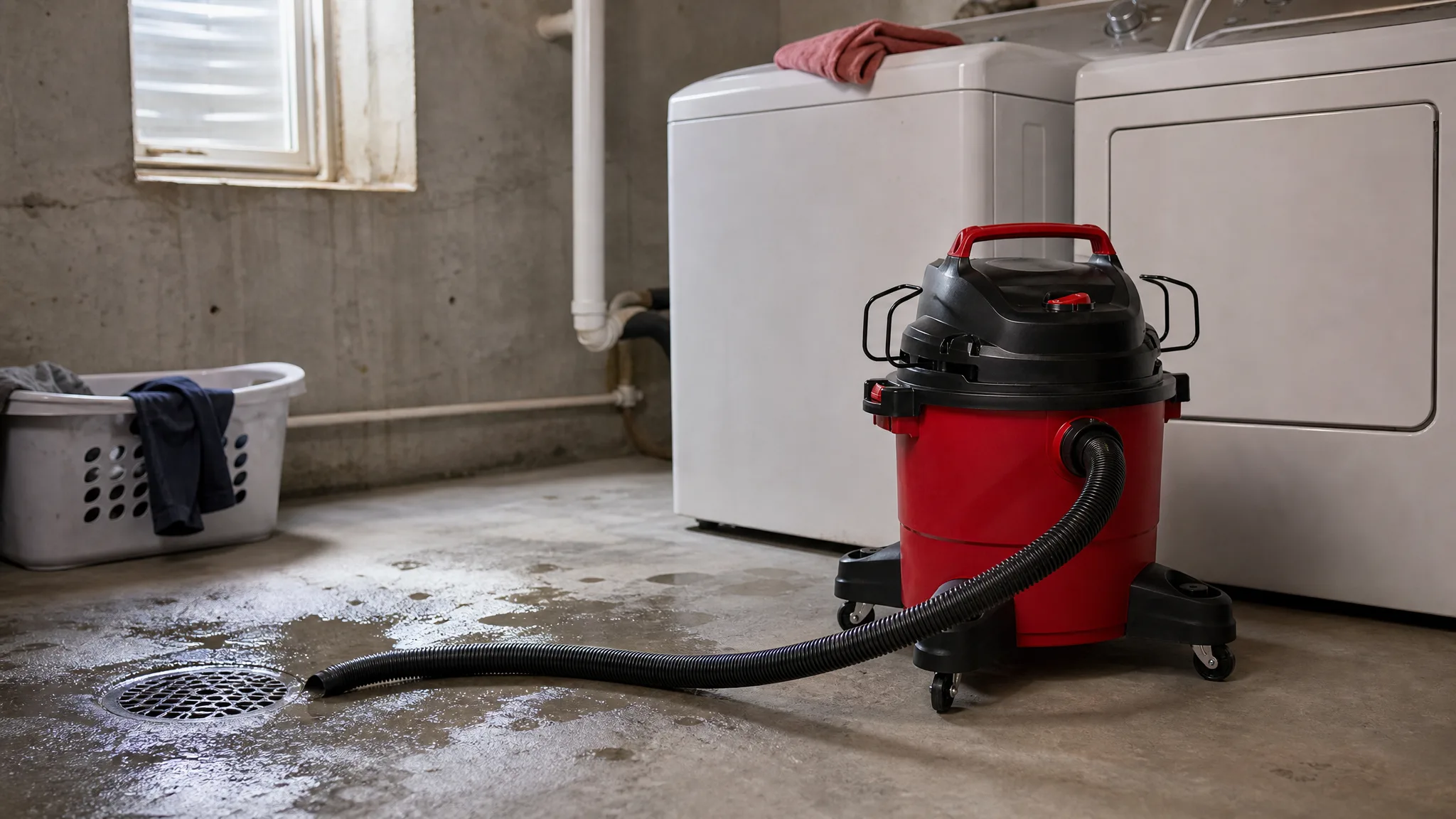
Vacmaster VJF607PF Review: Basement Water and Shop Dust Tested
We tested the Vacmaster VJF607PF 6-gallon wet/dry shop vac on basement water, sanding dust, and a filthy car interior. Strong suction, and a tank you feel every time you empty it.
Armor All AA255W Review: Trunk Wet/Dry Cleanup After Weeks
We tested the Armor All AA255W 2.5-gallon wet/dry vac on trunk spills, car mats, and pet debris. Honest take on cord reach, crevice tools, and who should buy.