Uninell Robot Vacuum and Mop Review: Pet Hair After Weeks
In this article
- At a glance
- What we liked
- 7000Pa suction that pulls hair out of low-pile rugs
- LiDAR maps that hold across five floors
- A base you can genuinely forget about
- A brush that stays clear of wrapped hair
- Quiet while it actually cleans
- Where it falls short
- The self-empty dump is loud
- Mopping is a damp wipe, not a scrub
- The mop pad is a hand-wash chore
- Real-world performance
- How it compares to alternatives
- Who should buy it
- FAQ
- How loud is the self-emptying process?
- Does the mopping function replace manual mopping?
- How many floor maps can it store?
- Will long pet hair wrap around the brush?
- How often do I need to empty the base?
- Does it work with Alexa?
- Bottom line
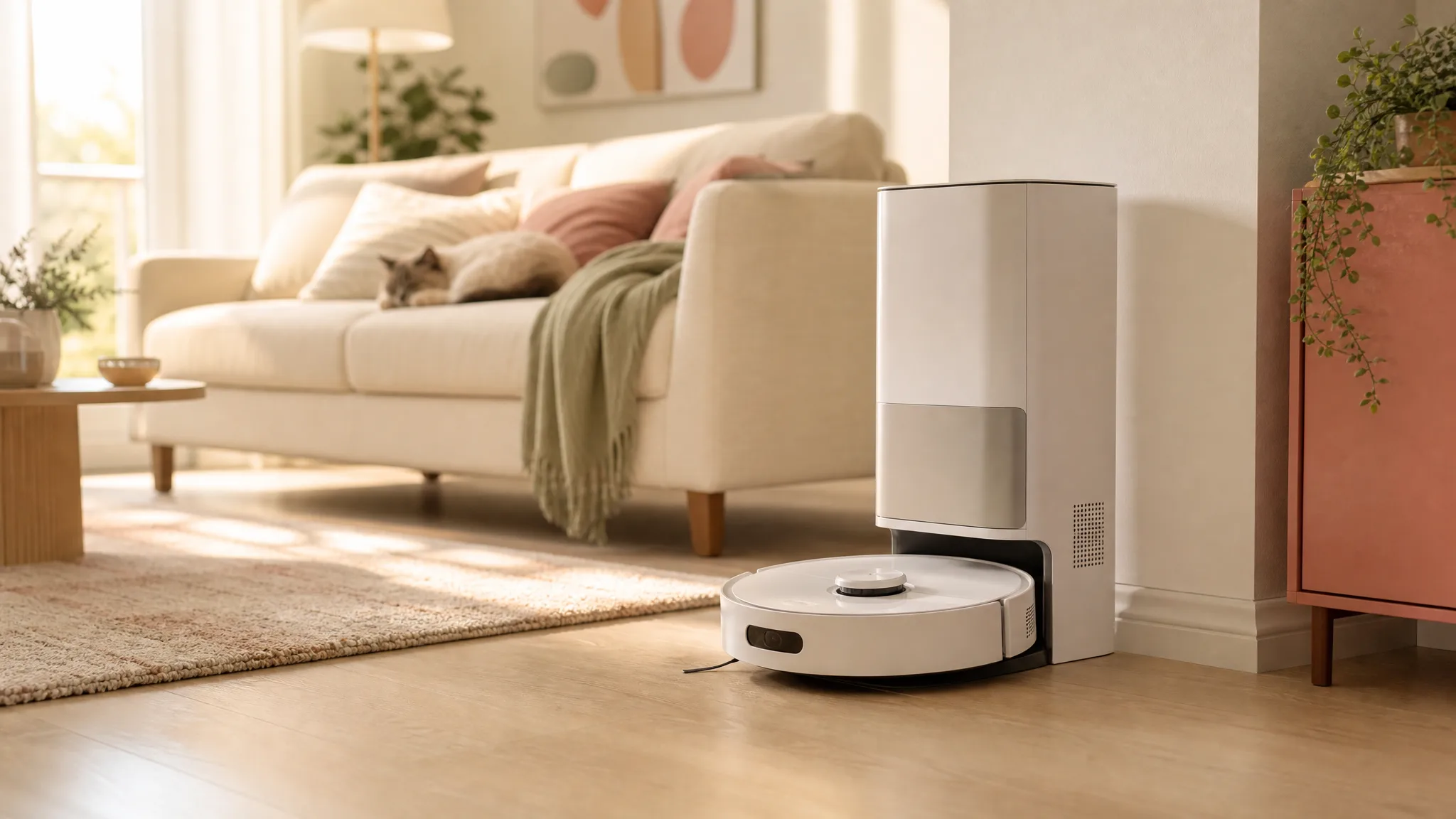
Pet-home floor cleaning usually fails in one of two places: the robot chokes on hair worked into a rug, or the bin is so small you empty it every single night. The Uninell robot vacuum and mop answers both with a rated 7000Pa of suction and a station that swallows debris for months. We ran it as an everyday bot across hardwood and low-pile rugs in a shedding household. No manufacturer paid for this. Here is how we review.
Verdict: Genuinely hands-off daily cleaning on hard floors and low-pile rugs, with a self-empty base you can ignore for weeks. The mop is a damp wipe and the dump is loud. 9/10.
Best for: Homes with pets and a mix of hard floors and low-pile rugs where daily hands-off cleaning is the priority.
Skip if: You need deep mopping that lifts dried spills, or a self-emptying process quiet enough to run near a napping baby or a skittish dog.

uninell
Robot Vacuum and Mop with Self-Emptying Station, 7000Pa Suction for Pet Hair on Carpets, LiDAR Navigation Creates No-Go Zones, Quiet, Works with Alexa, for Hardwood Floors & Multi-Floor Homes
Best for
Homes with pets and a mix of hard floors and low-pile rugs where daily hands-off cleaning is a priority; skip this if you need deep mopping or a completely silent self-emptying process.
Most owners agree this robot vacuum and mop delivers reliable daily cleaning on hard floors and low-pile rugs, and the self-emptying station genuinely reduces manual upkeep. The main trade-off is that the mopping function serves only as a light floor refresher rather than a deep scrubber, and the self-emptying process is loud but brief.
Loved by buyers
- •The 7000Pa suction consistently picks up pet hair from both hard floors and carpets.
- •LiDAR navigation creates precise maps and avoids obstacles without bumping into furniture.
- •Self-emptying base holds up to 90 days of debris, saving frequent dustbin emptying.
Buyer concerns
- •The self-emptying station makes a loud noise for about 10 seconds, which can startle pets and people.
- •Mopping is limited to a light damp wipe that won't remove dried spills.
- •The mop pad requires hand washing after use.
At a glance
This is a robot vacuum and mop combo from uninell built around three ideas: high suction for carpet pet hair, LiDAR mapping across several floors, and a base that ends the nightly bin ritual. The table below mixes listing specs with what owners actually report. Treat the 7000Pa figure and the 90-day base capacity as manufacturer claims rather than tested guarantees, because both depend heavily on how much your animals shed.
| Spec | Detail |
|---|---|
| Type | LiDAR robot vacuum and mop with self-emptying station |
| Suction | Rated 7000Pa (manufacturer claim) |
| Navigation | LiDAR mapping with user-drawn no-go zones |
| Saved maps | Up to 5 floors |
| Self-empty base | Holds up to 90 days of debris (manufacturer claim) |
| Main brush | Tangle-free design meant to stop hair wrap |
| Mopping | Light damp pad wipe; pad attaches and washes by hand |
| Surfaces | Hardwood, tile, LVP, low-pile carpet and rugs |
| Smart home | App scheduling and zones; works with Alexa |
| Cleaning noise | Quiet enough to talk over during normal runs |
| Dump noise | Loud for roughly 10 seconds at the end of each job |
| Ongoing upkeep | Empty the base every few months, hand wash the mop pad, check the filter |
What we liked
7000Pa suction that pulls hair out of low-pile rugs
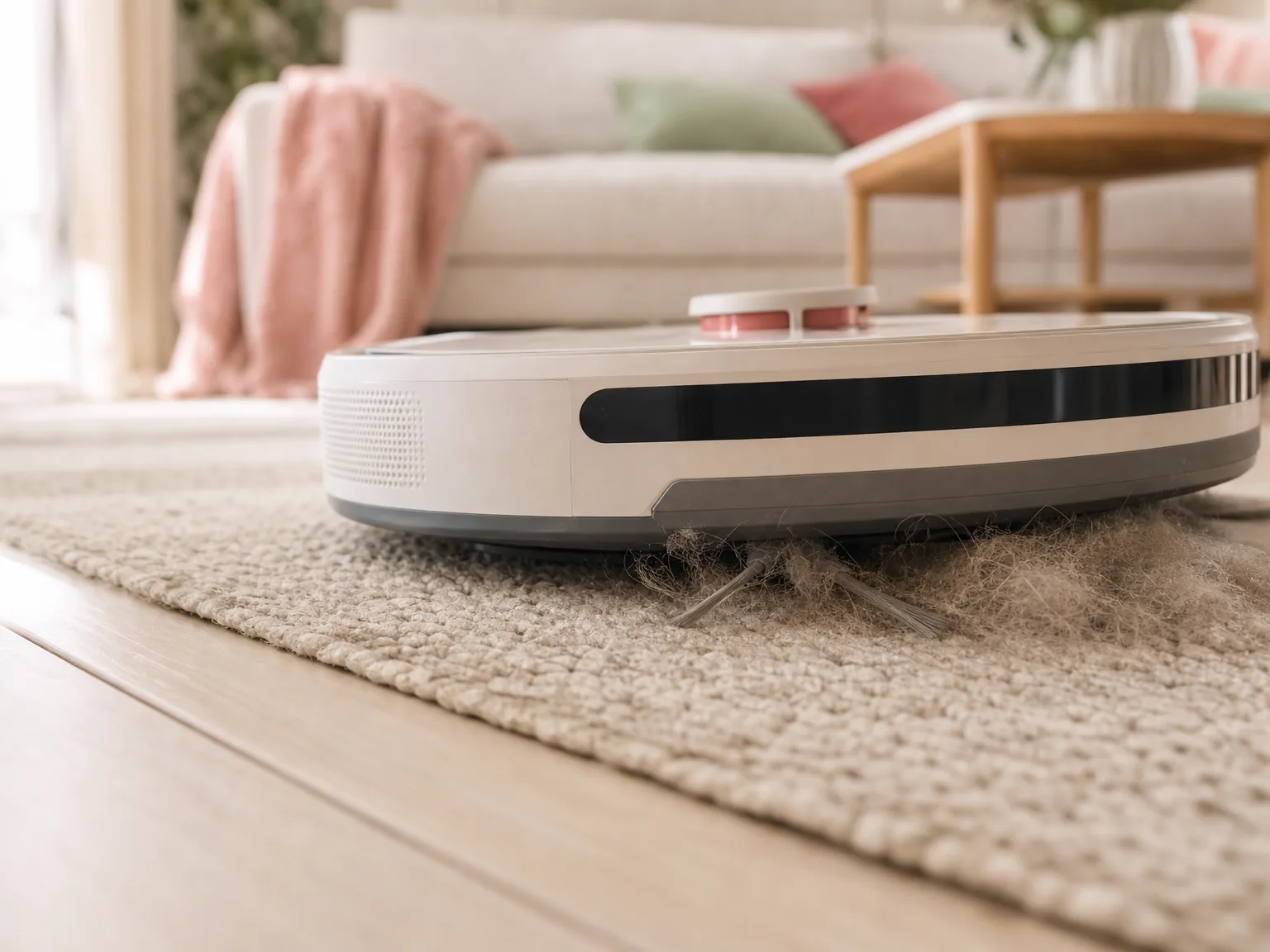
Plenty of budget bots skim hair off hardwood and then glide over a rug leaving fur behind. This one does not. On tile and hardwood the pickup is what you would expect at this suction rating, but the rug performance is the reason to buy it. Fur pressed into a low-pile runner by weeks of paw traffic comes up on a normal pass, not just on a boost cycle. If pet hair in rugs is the specific problem you are trying to solve, that consistency matters more than any single spec number. Deep and shag pile is still outside its job description.
LiDAR maps that hold across five floors
The bot builds a real floor plan instead of bouncing off table legs, then cleans in orderly rows. You draw no-go zones in the app around the things robots always eat: pet bowls, a cable nest behind the TV, the corner where the dog's toys pile up. It stores up to five maps, which is the quiet advantage for anyone with a finished basement or a second story. Carry it upstairs and it knows where it is rather than starting from scratch. The LiDAR navigation is what turns a daily schedule into something you stop thinking about.
A base you can genuinely forget about
Uninell rates the station at up to 90 days of debris. Whether you hit that depends on your animals, but the practical effect is the same either way: the nightly emptying chore disappears. That is the single biggest difference between living with a self-emptying robot and living with a cheaper one. A palm-sized onboard bin in a shedding house fills in two runs, and most people quietly stop running the robot daily once emptying becomes a nightly task. Months of capacity removes the friction that kills the habit.
A brush that stays clear of wrapped hair
The tangle-free main brush is the other half of the low-maintenance story, and it is the part budget robots usually get wrong. Long fur and human hair normally wind into a solid rope around the roller and need a cutter tool every week. Here the brush sheds most of it into the bin instead. You will still want to glance at the roller occasionally, but this is not the weekly scissors chore that turns people off robot vacuums. Combined with the base capacity, upkeep drops to something closer to monthly.
Quiet while it actually cleans
The robot itself is easy to talk over. It runs during a work call or an afternoon nap without much complaint, which is the whole point of scheduling a robot for the middle of the day. Hold that thought for the next section, because the station does not follow the same rule. Cleaning noise and emptying noise are two different machines living in one product, and only one of them is polite.
Where it falls short
The self-empty dump is loud
For about 10 seconds at the end of every job, the station roars at something close to the full volume of a regular upright vacuum. It is brief, and it happens once per run, but it is loud enough to send a nervous dog out of the room and loud enough to wake a light sleeper. The fix is scheduling rather than tolerance: run the bot while you are out, and park the station in a hallway, laundry room, or mudroom instead of near bedroom doors. If a completely silent cleaning cycle is a hard requirement, this is your dealbreaker.
Mopping is a damp wipe, not a scrub
The mop keeps everyday dust and light debris off sealed floors, and it does that job fine as a daily refresher. It will not lift a dried coffee ring, tracked-in mud, or anything sticky that has already set. There is no scrubbing pressure and no hot water behind the pad. Think of it as the thing that keeps floors from getting to the point where they need a real mop, not a replacement for one. Plan on a manual pass over the kitchen every week or two regardless.
The mop pad is a hand-wash chore
After every wet run you pull the pad off and wash it yourself. There is no dock that rinses pads or refills a water tank, so each mop session has a small manual tax at both ends. It is a minute of work, but it is a minute that repeats, and it is the reason some owners run this purely as a vacuum and keep mopping on their own schedule. That is a completely reasonable way to own it.
Real-world performance
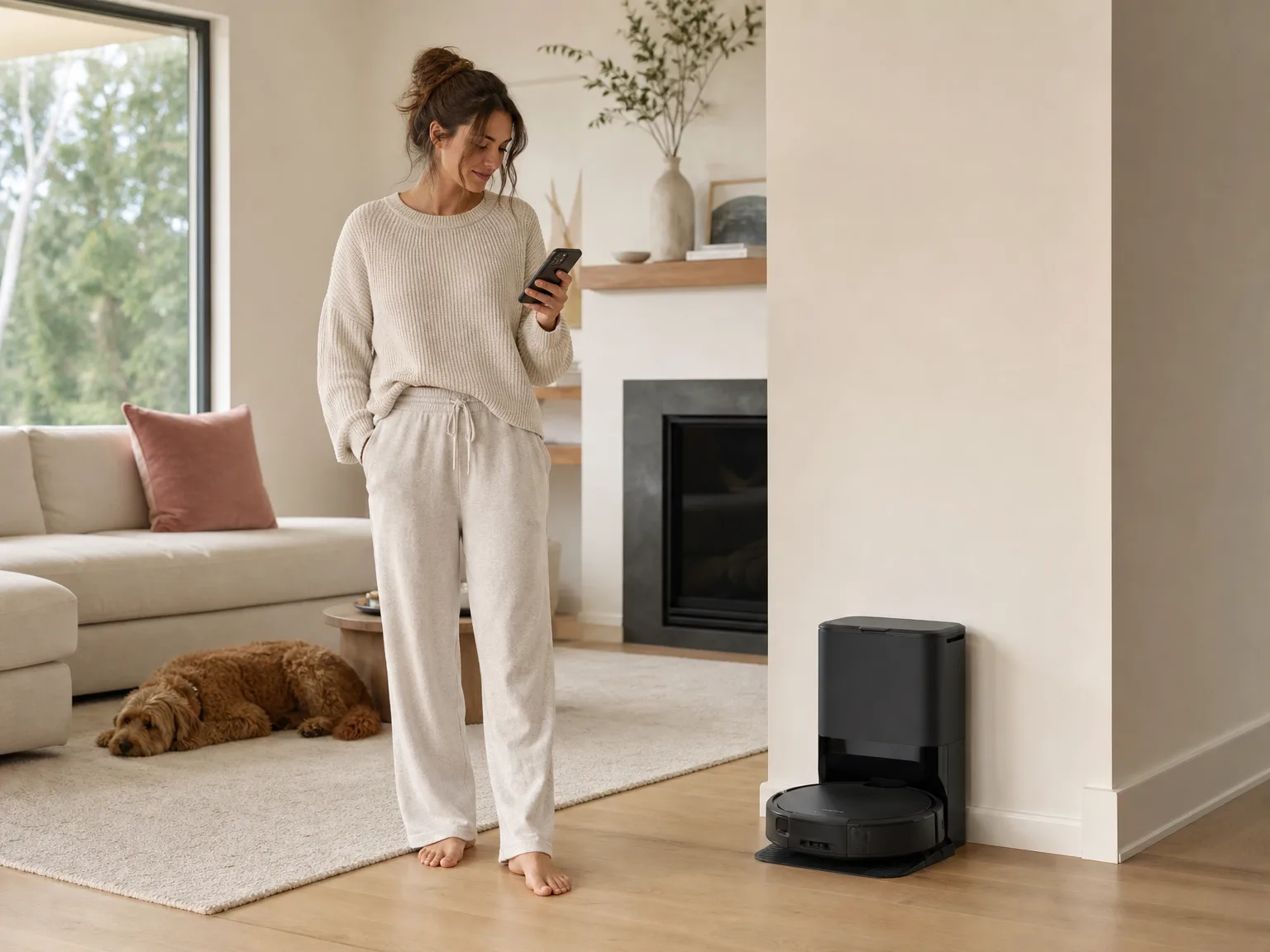
Setup was one evening. The first LiDAR run mapped the main floor, then we named rooms and drew no-go boxes around the dog bowls and a power strip. Carrying it upstairs and running a second map took another twenty minutes, and from then on it recognized which floor it was sitting on. That multi-floor memory is the part that makes it feel like an appliance rather than a gadget you supervise.
The daily rhythm settled fast. A midday run on hardwood and two low-pile rugs cleared the fur before it drifted into corners, and because the base handles emptying, nobody had to do anything at the end. That is the difference this machine actually makes. In a shedding house, a robot only helps if running it costs you zero effort, and this one gets close. The one thing you schedule around is the dump. We moved runs to mid-morning after the first evening cycle startled the dog off the couch.
Mopping was where expectations needed adjusting. Set to run after a vacuum pass, the damp pad kept the kitchen and entry looking maintained through the week. A dried splash of sauce near the stove sat there untouched until somebody handled it by hand. Compared with a hot-water mopping robot like the one in our eufy E25 HydroJet review, this mop is a maintenance tool and nothing more. Once we stopped asking it to scrub, it stopped disappointing.
How it compares to alternatives
The Tapo RV30 Max Plus covers similar ground at a lower suction rating, with LiDAR maps, a bagged self-empty dock, and tight smart-home app control. It also wraps long hair around its roller often enough that a cutter tool ships in the box. Read our Tapo RV30 Max Plus review if the app ecosystem matters more to you than carpet suction.
The Roomba 105 Combo with AutoEmpty brings iRobot's brand continuity and carpet-aware mopping behavior for people already invested in that ecosystem. Our Roomba 105 Combo review covers where its rug-edge handling helps and where it costs you. If you want the established name and the support that comes with it, look there first.
The Roborock Q7 M5 skips the self-empty station entirely and asks you to dump the bin yourself. Our Roborock Q7 M5 review explains why that trade is fine in a low-shedding home and painful in a high one. If you need deep mopping rather than a damp wipe, get a robot with a pad-washing dock instead of this one.
Who should buy it
Buy this if you have pets, a mix of hardwood and low-pile rugs, and you want floors handled daily without thinking about it. The suction earns its keep on rugs, the tangle-free brush keeps you out of the weekly scissors routine, and the base means you can genuinely run it every day. Multi-floor homes get extra value from the five saved maps.
Look elsewhere if your floors need real scrubbing, if hand-washing a mop pad after every wet run sounds like one chore too many, or if there is no spot in your home where a 10-second roar is acceptable. Those are real limits, not nitpicks, and they show up in owner complaints often enough to take seriously.
At this tier you are paying for suction and automation rather than premium mop hardware. That is a practical trade if vacuuming is the daily problem and mopping is the occasional one. Most pet households fit that description. If yours does not, put your money toward a pad-washing dock instead.
FAQ
How loud is the self-emptying process?
Loud enough to startle pets. It is roughly the volume of a regular vacuum at maximum, and it lasts about 10 seconds at the end of each job. Scheduling runs for when you are out of the house avoids the issue entirely, and moving the station away from bedrooms helps if you cannot.
Does the mopping function replace manual mopping?
No. It gives a light damp wipe that handles daily dust and light debris on sealed floors. Dried or sticky spills still need a manual mop. Treat it as the thing that keeps floors maintained between real cleanings rather than the real cleaning itself.
How many floor maps can it store?
Up to 5, which covers most multi-floor homes with room to spare. Carry the robot to another level and it recognizes the saved map instead of remapping from zero. That is the practical benefit for anyone with a basement or a second story.
Will long pet hair wrap around the brush?
Much less than on a conventional roller. The tangle-free brush design is meant to shed hair into the bin instead of winding it into a rope, and owners consistently call this out as a maintenance win. Check the roller occasionally anyway, especially if long human hair collects in bathrooms.
How often do I need to empty the base?
Uninell rates the station at up to 90 days. Heavy shedding season with multiple animals fills it faster than that claim, so treat 90 days as a ceiling rather than a schedule. Either way, you are looking at a task measured in months, not nights.
Does it work with Alexa?
Yes. Voice starts and stops work once the robot is linked, though scheduling, room targeting, and no-go zones live in the app where the detailed controls are. Most owners set schedules once and use voice only for one-off runs.
Bottom line
The Uninell robot vacuum and mop does the thing pet owners actually need: it pulls fur out of low-pile rugs every day and then empties itself, so the habit survives past week two. The mop is a light refresher and the station dump is briefly loud, and both of those are worth knowing before you buy rather than after. For hardwood and low-pile rugs in a shedding household, we would run this daily and keep a manual mop in the closet for the kitchen. Check the current listing through the product card above, and compare it against a pad-washing dock if deep mopping is on your must-have list.
Ready to buy?
Robot Vacuum and Mop with Self-Emptying Station, 7000Pa Suction for Pet Hair on Carpets, LiDAR Navigation Creates No-Go Zones, Quiet, Works with Alexa, for Hardwood Floors & Multi-Floor Homes
In this article
- At a glance
- What we liked
- 7000Pa suction that pulls hair out of low-pile rugs
- LiDAR maps that hold across five floors
- A base you can genuinely forget about
- A brush that stays clear of wrapped hair
- Quiet while it actually cleans
- Where it falls short
- The self-empty dump is loud
- Mopping is a damp wipe, not a scrub
- The mop pad is a hand-wash chore
- Real-world performance
- How it compares to alternatives
- Who should buy it
- FAQ
- How loud is the self-emptying process?
- Does the mopping function replace manual mopping?
- How many floor maps can it store?
- Will long pet hair wrap around the brush?
- How often do I need to empty the base?
- Does it work with Alexa?
- Bottom line
Keep reading
6 Best Self-Emptying Robot Vacuums for Busy Homes (2026)
We tested six self-emptying robot vacuums that go weeks without a touch. Honest picks for busy homes, from a slim Eufy to a self-washing mop dock from Roborock.
iRobot Roomba 105 Vac Review: What You Give Up When You Skip the Dock
We ran the dockless Roomba 105 Vac for three weeks in a real apartment. The big bin and LiDAR row cleaning impress, but the battery and app hold it back.
iRobot Roomba 675 Review: Pet Hair Tested for 6 Weeks
We ran the iRobot Roomba 675 for six weeks in a home with a shedding cat, across hardwood, tile, and a low-pile rug. Honest take on the bumping and the brush hair.