Roborock Q8 Max+ Review: Pet Hair Tested for 6 Weeks
In this article
- At a glance
- What we liked
- The DuoRoller brush does not wrap
- Carpet is where the suction shows up
- The dock keeps you out of the dust
- The map is accurate enough to be useful
- Where it falls short
- The mop is a damp cloth on a string
- The dock is loud while it empties
- Flat clutter still confuses it
- Real-world performance
- How it compares to alternatives
- Who should buy it
- Frequently asked questions
- Does the mopping pad vibrate or scrub?
- How long does a dust bag in the dock last?
- How noisy is the auto-empty dock?
- Is the robot itself loud while cleaning?
- Does it handle long pet hair without tangling?
- Do I need to tidy the floor before it runs?
- Can you stop it from entering certain rooms?
- Bottom line
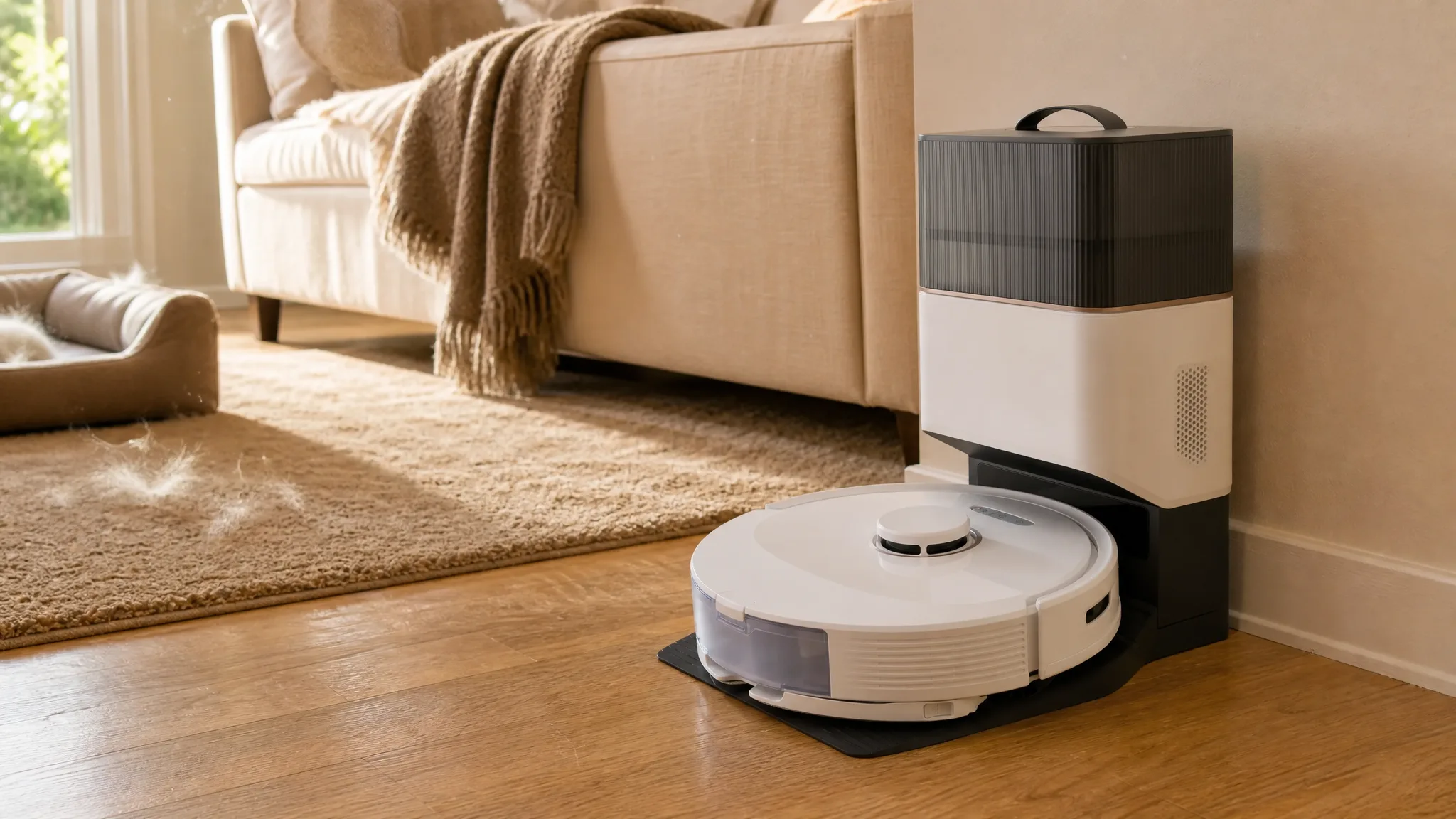
Most people buy a robot vacuum for one reason. A dog or a cat keeps putting hair back on the floor, and nobody wants to push a vacuum around every single day to take it off again. The Roborock Q8 Max+ answers that with twin rubber rollers and a dock that empties the robot for you. We ran it through our standard testing process for six weeks on hardwood, tile, and a medium-pile rug in a house with a shedding dog.
Verdict: One of the more convincing robot vacuums for carpet and pet hair, held back by a mop that only wipes. 8.4/10.
Best for: Pet owners who want carpets handled daily and the dust bin emptied without touching it.
Skip if: You expect the mopping pass to replace scrubbing a kitchen floor by hand.

Roborock
roborock Q8 Max+ Robot Vacuum Cleaner with Suction Station, DuoRoller Brush, 5500Pa Suction Power, 2.5 L Dust Bag, 350 ml Water Tank, Mop Robot PreciSense LiDAR Navigation (White)
Best for
Pet owners who want strong carpet cleaning and automatic bin emptying will love it, but skip it if you expect thorough mopping.
Most owners find this robot vacuum delivers excellent suction on carpets and handles pet hair with ease, thanks to the DuoRoller brush. The main trade-off is that the mopping function is very basic, merely dragging a damp pad over floors, so it won’t replace a proper mop.
Loved by buyers
- •The DuoRoller brush picks up long pet hair without tangling, even on high-pile carpets.
- •The auto-empty station empties the robot’s bin after cleaning, keeping the filter clean and reducing how often you need to touch the dirt.
- •LiDAR navigation maps rooms precisely and lets you set no-go zones or adjust suction per room via the app.
Buyer concerns
- •The mopping pad is passive, just a damp cloth pulled behind the robot, so it leaves behind stuck-on dirt.
- •The auto-empty dock is as loud as a regular vacuum during the brief emptying cycle.
- •Flat obstacles like scales or loose cables can confuse the robot, so you need to clear the floor first.
At a glance
| Specification | Detail |
|---|---|
| Type | Robot vacuum and mop with an auto-empty dock |
| Suction (rated) | 5,500Pa, a manufacturer figure we did not independently verify |
| Brush | DuoRoller, two rubber rollers instead of a bristle bar |
| Navigation | PreciSense LiDAR mapping |
| Dock | Suction Station, empties the robot bin after a run |
| Dock bag capacity | 2.5 liters |
| Water tank | 350 ml |
| Mopping | Fixed pad dragged behind the robot, no vibration or scrubbing |
| App control | Room maps, no-go zones, per-room suction, schedules |
| Best floors | Low and medium-pile carpet, hardwood, tile |
| Finish | White |
| Owner rating | 4.5 out of 5 |
What we liked
The DuoRoller brush does not wrap
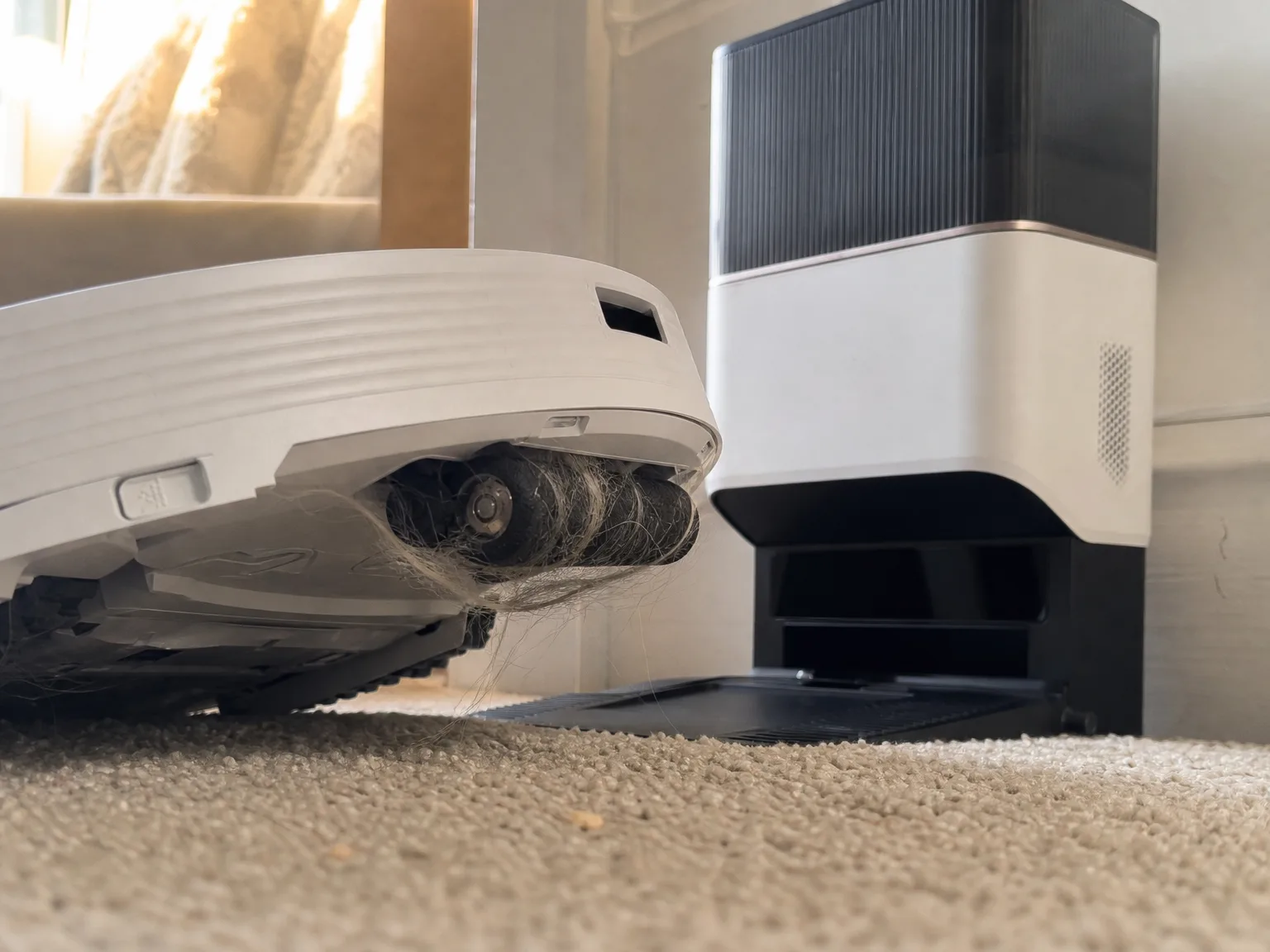
Hair wrap is the reason most robot vacuums end up in a closet. You flip the machine over after two weeks, find a grey rope of fur choking the brush bar, and start cutting it out with scissors. The Q8 Max+ uses two rubber rollers rather than a bristle bar, and long hair goes through them and into the bin instead of winding around them.
Over six weeks we turned it over expecting the usual mess and kept not finding one. Long dog hair, human hair from a bathroom doorway, the fine undercoat that gathers along a baseboard: all of it ended up in the dock bag. That is the difference between a robot that runs daily and one you stop scheduling because maintenance annoys you.
Carpet is where the suction shows up
Plenty of budget robots clean hard floors well and then skate over a rug pushing pet hair around. This one digs in. On a medium-pile rug in the living room, a single pass pulled up embedded fur that our previous robot had been driving over for months, and the bin showed it.
The rated 5,500Pa figure is a manufacturer number, and numbers like it get thrown around freely. What we can say is that the rug looked different after one run, the carpet boost kicked in on its own when the robot crossed from tile onto pile, and we stopped doing a follow-up pass with a stick vacuum. For a house with a shedder, that is the whole job.
The dock keeps you out of the dust
A self-emptying dock sounds like a luxury until you own one. Every robot without one asks you to pop a small bin over a trash can several times a week, which means a puff of dust in your face and a filter that clogs faster than it should. The Suction Station takes care of it after each run into a 2.5 liter bag.
Weeks passed without us touching the dirt. The robot's own bin stays close to empty, so it never chokes mid-run, and the filter stays clean enough to keep suction where it was on day one. Emptying the bag is a once-in-a-while job rather than a routine one, which is exactly the trade most people want.
The map is accurate enough to be useful
The LiDAR navigation builds a room map on the first run, and it is precise rather than approximate. Rooms come out as rooms, furniture shows up where furniture is, and the app lets you draw no-go zones around the places a robot always gets into trouble.
We used that more than expected. A no-go box around the dog's water bowl solved a problem no amount of suction would have. Per-room suction settings let the rug get full power while the hardwood runs quieter, and scheduling by room means the office gets cleaned at 10am and the bedroom never gets cleaned during a nap. Those are the smart control settings we actually used every week.
Where it falls short
The mop is a damp cloth on a string
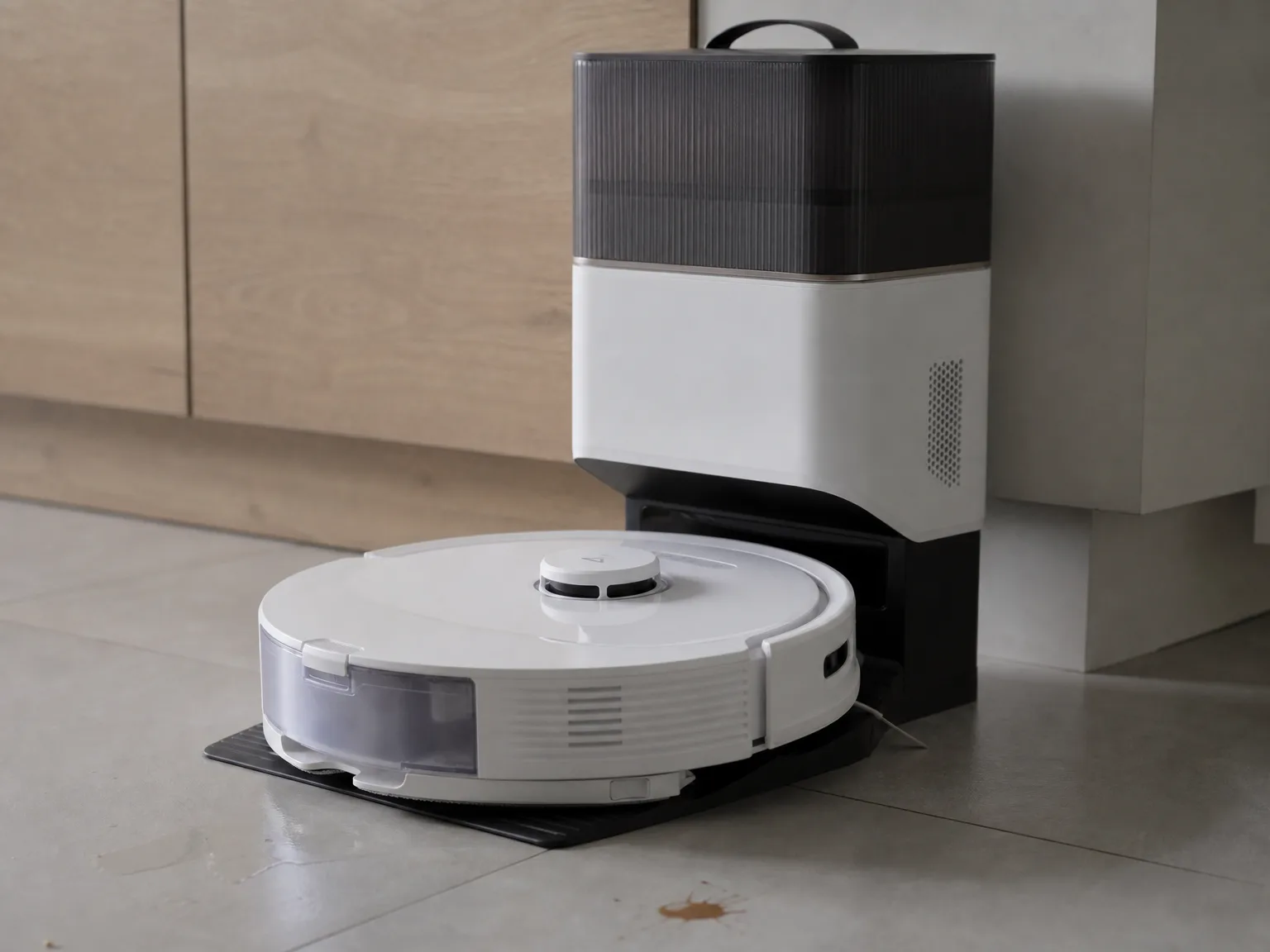
This is the honest limitation, and it deserves to be stated plainly. The pad does not vibrate, spin, or press down. It is a flat cloth clipped to the back of the robot, pulled across the floor by the robot's own movement. Fresh dust and a light film of grime come up fine. Dried jam under a high chair does not.
Think of it as a way to keep clean floors clean between real mops, not a replacement for one. If you have a kitchen that gets genuinely dirty, or a toddler who paints the tile with yogurt, you will still be on your feet with a bucket. Buyers who want a robot to handle actual mopping should be looking at machines with spinning or vibrating pads and a dock that washes them.
The dock is loud while it empties
The robot itself is quiet. The dock is not. When the auto-empty cycle fires it sounds like a regular vacuum running in the hallway, and there is no way to make it whisper. The saving grace is duration: it lasts under ten seconds and then the house goes quiet again.
It still needs planning around. A dock in a hallway outside a nursery will wake a sleeping baby, and it will interrupt a phone call if it happens to finish mid-sentence. We moved ours to a laundry room and scheduled cleaning for the middle of the morning, and the complaint disappeared entirely.
Flat clutter still confuses it
LiDAR is good at walls and furniture. It is much less good at things lying flat on the floor. A bathroom scale, a loose phone cable, a thin doormat with a curled corner: these are the objects that end up dragged into a corner or wrapped somewhere they should not be.
The fix is the same ten-second habit every robot owner develops. Lift the cables, move the scale, and pick up whatever the kids left. It is a small tax, but it is a real one, and anyone imagining a machine that cleans a genuinely messy floor should adjust that picture before buying.
Real-world performance
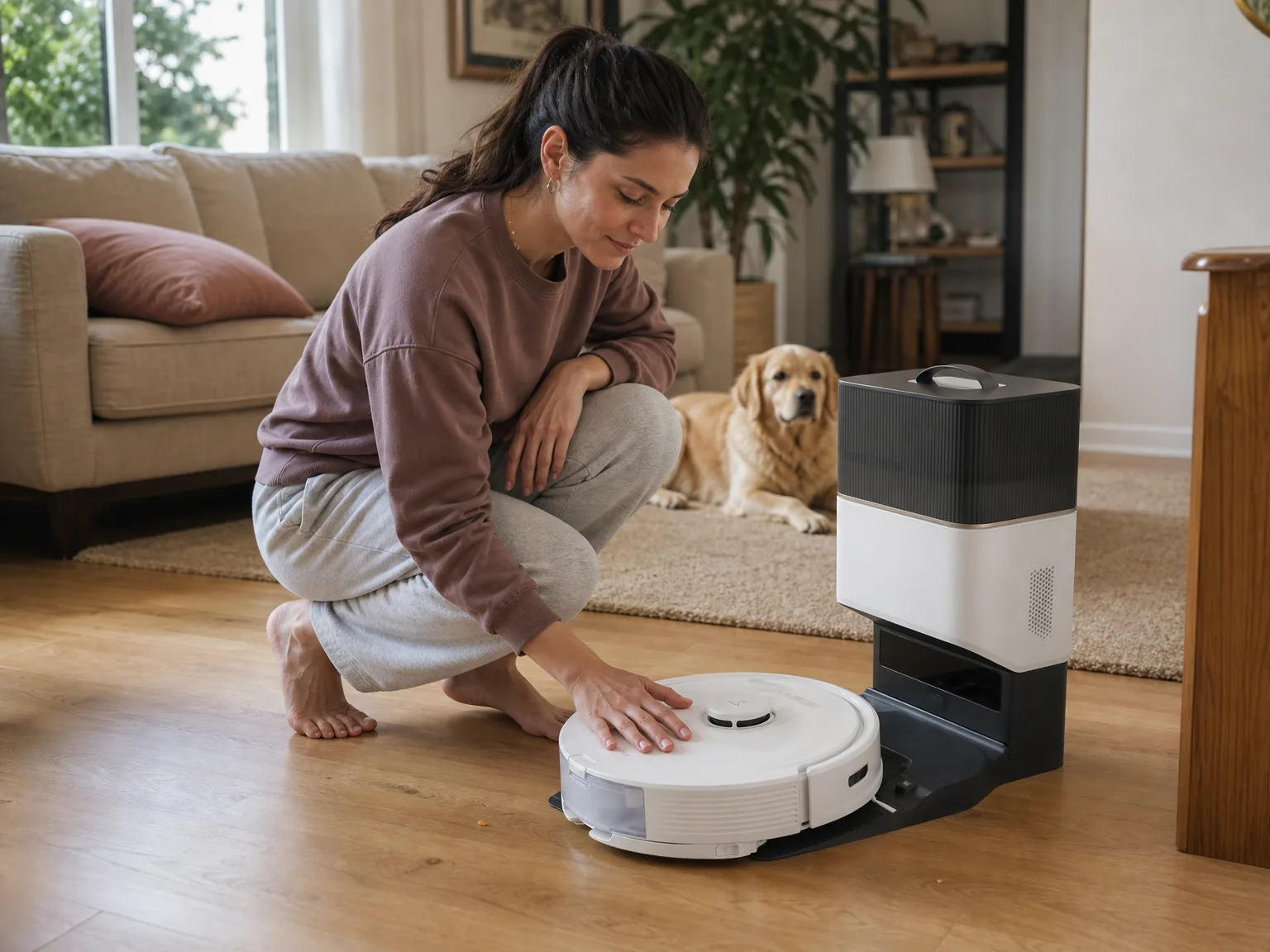
Daily pet hair on hardwood and tile. A scheduled morning run cleared overnight fur, tracked-in grit, and kitchen crumbs without a second pass. We stopped noticing the floors, which is the highest compliment a robot vacuum can earn. The bin never filled mid-run because the dock had emptied it the day before.
The medium-pile rug. This is where the machine justifies itself. Fur that had worked down between the fibers came up over the first two runs, and after that a daily pass held the rug at a level our old robot never reached. On a thick shag it would still lose, as any robot does, but medium pile is well within range.
A kitchen mop pass. We filled the 350 ml tank and let it run on the tile. Dust and a light film lifted, and the floor looked better afterward. A dried splash of coffee near the fridge survived untouched, and no number of repeat passes changed that. The pad wipes, and wiping is not scrubbing.
Living with the dock. Six weeks of near daily runs did not fill the 2.5 liter bag, which matches what owners report. The routine is not weekly emptying, it is checking now and then and forgetting about it in between. That is what makes the difference for anyone with dust allergies who would rather not open a bin at all.
Noise around the house. On balanced and quiet modes you can hold a conversation in the same room while it works. Turbo is audible but no worse than a normal vacuum, and it only gets used on carpet. The dock is the only genuinely loud event in the whole cycle, and it is over almost as soon as it starts.
Maintenance. Beyond swapping the dock bag, the jobs are checking the side brush for a stray hair, rinsing the filter on a schedule, and washing the mop pad after use. Let both dry completely before they go back on. A damp filter costs suction, and a pad that sits wet in a dark room starts to smell within a day.
How it compares to alternatives
The obvious comparison in our library is the cheaper Roborock lidar robot vacuum and mop. It maps just as sensibly, but it is rated at 2,000Pa, it has no auto-empty dock, and its small bin needs attention often. On tile and hardwood the gap is modest. On carpet with a pet in the house, the Q8 Max+ is a different class of machine.
The MONSGA robot vacuum and mop is the budget route to a self-emptying dock, with a bag its maker rates for 90 days. It costs less and cleans acceptably, though its mapping is less consistent and its mop is just as basic. If a dock matters more to you than carpet performance, it is worth a look.
If most of your home is thick carpet with a heavy shedder living on it, get a corded upright instead. Our Shark LA702 Rotator Pet Lift-Away review covers a machine with the agitation to reach the base of deep pile, which no robot in this class has.
Who should buy it
Buy the Q8 Max+ if you have pets, carpet or rugs in the rooms you use most, and a real preference for not handling dust. The rubber rollers keep hair from wrapping, the suction reaches into pile rather than gliding over it, and the dock removes the one chore that makes people give up on robot vacuums. Set a schedule, empty the bag when it fills, and the floors stay done.
Look at other options if wet cleaning is your priority. A passive pad cannot scrub, and a robot with vibrating or spinning mop heads and a self-washing dock is a different product built for a different problem. Homes with wall-to-wall deep pile should also plan on a corded upright as the primary machine.
What you get here is strong everyday carpet cleaning, sane mapping, and weeks of hands-off operation. What you give up is real mopping and a little floor tidying before each run.
Frequently asked questions
Does the mopping pad vibrate or scrub?
No. It is a fixed pad that drags a damp cloth across the floor as the robot drives. Light dust and fresh spills come up, and anything dried on stays where it is. Treat it as maintenance between proper mops rather than a substitute for one.
How long does a dust bag in the dock last?
Weeks to months, depending on how often the robot runs and how much your pets shed. The dock holds 2.5 liters, and six weeks of near daily cleaning in a home with one shedding dog did not fill ours. Checking it once a month is enough.
How noisy is the auto-empty dock?
It is about as loud as a regular vacuum cleaner during the cycle. The cycle lasts under ten seconds, so it registers as a short burst rather than sustained noise. Put the dock somewhere other than next to a bedroom door and schedule cleaning for when the house is awake.
Is the robot itself loud while cleaning?
On balanced and quiet modes it runs softly enough for normal conversation in the same room. Turbo is louder, though still in the range of an ordinary vacuum, and the app lets you keep turbo for carpet only so the rest of the house stays calm.
Does it handle long pet hair without tangling?
That is the strongest part of this machine. The DuoRoller design uses two rubber rollers rather than bristles, and long hair passes through into the bin instead of winding around the brush. Even on higher pile carpet we did not need to cut hair off the roller.
Do I need to tidy the floor before it runs?
A quick pass helps. LiDAR handles walls and furniture well, but flat objects like a bathroom scale, loose cables, or a thin mat with a curled corner can still trip it up. Ten seconds of picking things up prevents nearly every stuck-robot notification.
Can you stop it from entering certain rooms?
Yes. Once the map is built you can draw no-go zones in the app, so a pet's water bowl, a cluster of cables, or a room full of toys stays off limits. You can also set suction levels per room and run individual rooms on their own schedules.
Bottom line
The Q8 Max+ is a strong pick for a pet household with carpet, and the dock plus the non-tangling rollers remove the two chores that usually kill enthusiasm for robot vacuums. Buy it as a vacuum first and treat the mop as a small bonus, because a passive pad will never scrub. Schedule it for mid-morning, keep the dock out of the hallway, and check the bag once a month. If your rooms are mostly deep pile with a heavy shedder, read the Shark LA702 review before you commit.
Ready to buy?
roborock Q8 Max+ Robot Vacuum Cleaner with Suction Station, DuoRoller Brush, 5500Pa Suction Power, 2.5 L Dust Bag, 350 ml Water Tank, Mop Robot PreciSense LiDAR Navigation (White)
In this article
- At a glance
- What we liked
- The DuoRoller brush does not wrap
- Carpet is where the suction shows up
- The dock keeps you out of the dust
- The map is accurate enough to be useful
- Where it falls short
- The mop is a damp cloth on a string
- The dock is loud while it empties
- Flat clutter still confuses it
- Real-world performance
- How it compares to alternatives
- Who should buy it
- Frequently asked questions
- Does the mopping pad vibrate or scrub?
- How long does a dust bag in the dock last?
- How noisy is the auto-empty dock?
- Is the robot itself loud while cleaning?
- Does it handle long pet hair without tangling?
- Do I need to tidy the floor before it runs?
- Can you stop it from entering certain rooms?
- Bottom line
Keep reading
Roomba Combo i5+ Review: Clean-by-Room Mop After Home Tests
We tested the iRobot Roomba Combo i5+ Clean-by-Room vac and mop. Honest take on damp-pad mopping, mapping fails, self-empty quirks, and who should buy.
Roborock Qrevo S5V Review: FlexiArm Edge Mopping After Weeks
We tested the Roborock Qrevo S5V FlexiArm edge mopping along baseboards and cabinet edges. Honest take on pet hair, dock size, and who should buy.
eufy RoboVac 11S Review: Quiet Cleaning Tested for 6 Weeks
We ran the eufy BoostIQ RoboVac 11S for six weeks in a small home with hardwood, a low-pile rug, and a shedding cat. Honest take on the quiet run and the random path.