Roborock Q7 M5+ Review: Self-Empty Pet Hair After Weeks
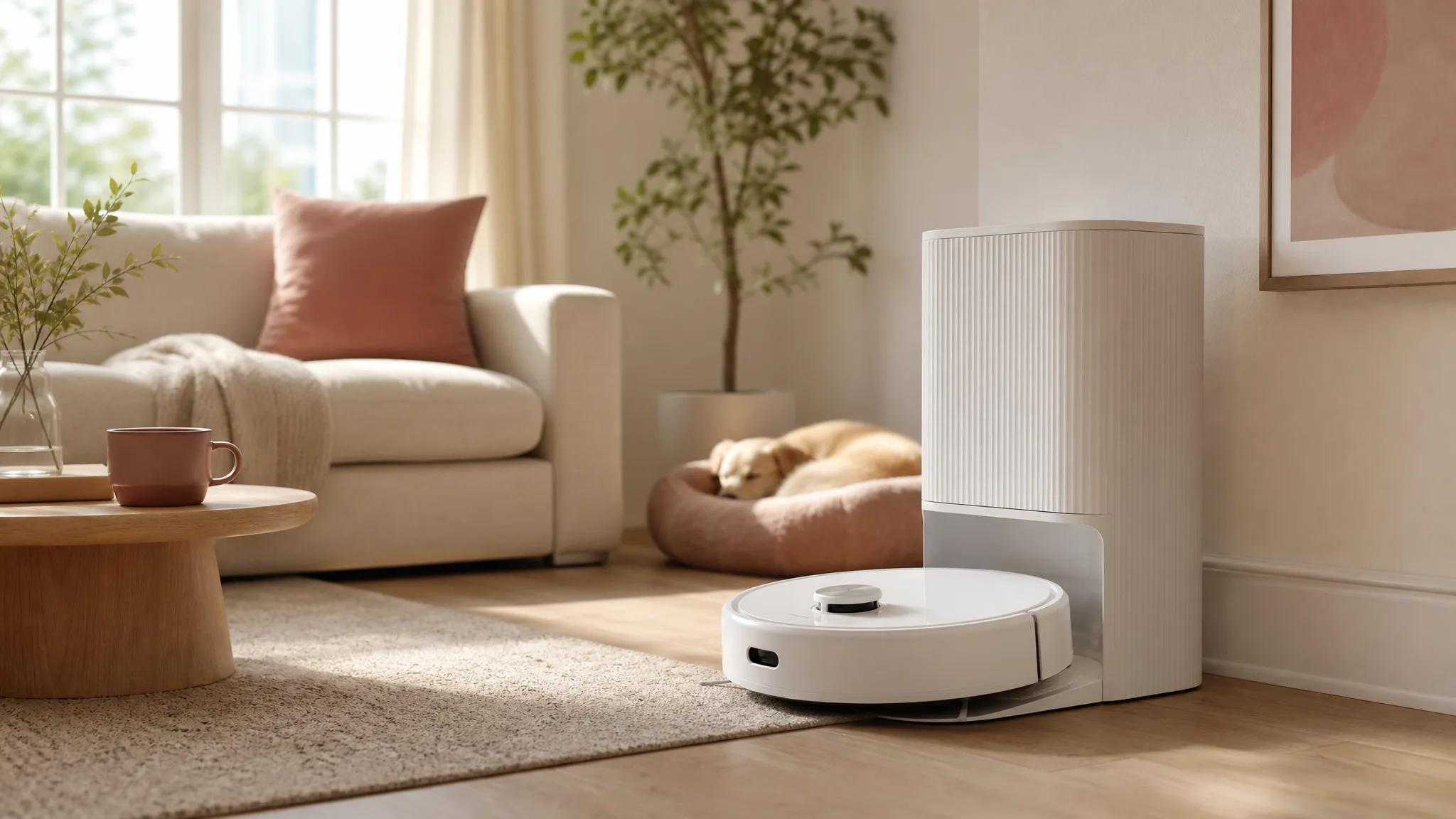
In this article
- At a glance
- What we liked
- Suction that keeps daily fur under control
- LiDAR paths that look like lawn rows
- Quieter same-room cleaning than many Roombas
- Dual anti-tangle for long pet hair
- Where it falls short
- Stairs and drop edges are a real risk
- App map editing feels imprecise
- LiDAR tower height limits under-furniture reach
- Mopping is a bonus pad, not a floor scrubber
- Real-world performance
- One-level pet home around 2,000 sq ft
- Hard floors with a medium-pile living room rug
- Quiet daytime runs while people are home
- How it compares to alternatives
- Who should buy it
- FAQ
- Does the Roborock Q7 M5+ handle pet hair without tangling?
- How long does the battery last on a single charge?
- Is the Q7 M5+ quiet enough to run while I am home?
- Can it mop floors effectively?
- How often do I empty the self-empty dock?
- Is the Q7 M5+ safe around stairs?
- Bottom line
If you want a mid-range robot vacuum that empties itself for weeks and does not wrap every dog hair around the brush, the Roborock Q7 M5+ sits in that lane. Manufacturer claims start with 10000Pa suction, a dual anti-tangle system aimed at pet hair, PreciSense LiDAR mapping, and a self-empty dock rated for up to 7 to 9 weeks. We weighed those numbers against real owner patterns on 1,700 to 2,300 sq ft homes and our own testing notes. As with every review here, we are not paid by manufacturers. Read more about how we review.
Verdict: A practical mid-tier self-empty pick for one-level pet homes that want quiet LiDAR runs and fewer brush wrap sessions, if you can live with fussy map editing and weak stair awareness. 7.5/10.
Best for: Busy households with dogs or cats on a single level, clear dock space, and a tolerance for occasional app babysitting.
Skip if: You have open stairs, sunken rooms, or split-level entries the bot can tumble toward, or you need polished map editing and serious mop scrubbing.

Roborock
roborock Q7 M5+ Robot Vacuum and Mop, Upgraded from Q5 Max+, Up to 7-9 Weeks Self-Empty, 10000Pa Suction, Dual Anti-Tangle System for Pet Hair & Carpet, PreciSense LiDAR Navigation, App Control, White
Best for
Best-value self-empty Roborock for pet homes on one level with clear dock placement and a tolerance for app quirks; skip near stairs or if you demand polished map editing.
The white Q7 M5+ draws the same crowd as the black variant: cost-conscious upgraders from Roomba who want LiDAR straight-line cleaning, quiet runs, and a self-empty dock at a mid-tier price. The review pool leans on older Roborock generations, but consistent themes are pet-hair coverage, fussy app map editing, and step-detection gaps.
Loved by buyers
- •Straight-line mowing pattern impresses first-time LiDAR buyers on 1,700 to 2,300 sq ft homes
- •Quieter than Roomba in same-room use; side charging contacts improve docking reliability over bottom-pad designs
- •Daily schedules on balanced or turbo mode tame husky and shepherd hair without dragging out a manual vac
Buyer concerns
- •Establishing-location routine can launch the bot down steps despite saved no-go zones and invisible walls
- •App map editing for barriers feels finicky and box-dragging is imprecise; network login drops after full battery drain
- •LiDAR height catches under couches and toe kicks; no drop detection for sunken rooms or split-level entries
At a glance
The Q7 M5+ is a vacuum-and-mop robot with a bagged self-empty dock. Specs below mix manufacturer ratings with owner-reported coverage. Treat the 7 to 9 week empty interval as a best-case number for typical debris, not peak shedding season.
| Spec | Detail |
|---|---|
| Model | Roborock Q7 M5+ |
| Type | Self-emptying robot vacuum and mop |
| Suction | Rated at 10000Pa (manufacturer claim) |
| Navigation | PreciSense LiDAR (manufacturer claim) |
| Anti-tangle | Dual anti-tangle system for pet hair and carpet (manufacturer claim) |
| Self-empty base | Rated up to 7 to 9 weeks |
| Runtime coverage | Owners report about 85 to 90% of a ~2300 sq ft home on one charge |
| Mopping | Basic damp-pad drag; maintenance mop, not a scrubber |
| Connectivity | App control with room schedules |
| Color | White |
| Best layout fit | One-level homes with clear dock placement |
What we liked

Suction that keeps daily fur under control
On balanced or turbo schedules, owners with huskies and shepherds describe less visible fur film on hard floors after a week of daily runs. Rated suction is 10000Pa per Roborock. That number is a manufacturer claim, not an independent lab score, but the practical pattern matches: daily maintenance on sealed floors and low-pile rugs without dragging out a stick vac every night. Deep-set carpet hair still needs a manual pass now and then. For everyday shed, the Q7 M5+ earns its mid-range slot.
LiDAR paths that look like lawn rows
First-time LiDAR buyers on homes around 1,700 to 2,300 sq ft often mention the straight-line pattern right away. The bot mows the floor in neat rows instead of the random bounce of older bump-and-go machines. That makes coverage feel predictable once the first map settles. You still want a clean first pass with doors open and cords lifted. After that, room schedules become the remote for "kitchen after dinner" or "living room while we are at work" without babysitting every run.
Quieter same-room cleaning than many Roombas
Noise is a real pain point when kids nap or a video call overlaps a scheduled clean. Owners who ran this next to a Roomba in the same room often call the Q7 M5+ quieter during cleaning. That does not mean silent. It means you can stay in the living room without the robot dominating the conversation. Side charging contacts also get credit for more reliable docking than bottom-pad designs that miss the base after a bump.
Dual anti-tangle for long pet hair
Hair wrap is the maintenance chore that turns robots into shelf ornaments. Roborock markets a dual anti-tangle system for pet hair and carpet. Owners with long-haired breeds report fewer full wrap clogs and less weekly brush surgery. You still check the roller after heavy shed weeks. You just spend less time cutting hair out with scissors. That is the feature that sells this unit to pet homes shopping mid-tier self-emptying robots.
Where it falls short
Stairs and drop edges are a real risk
This is the complaint that should stop buyers with open landings. Owners report the establishing-location routine can send the bot toward steps even after no-go zones and invisible walls are saved. Sunken rooms and split-level entries are a weak spot when drop detection is missing or unreliable. If your dock sits near a stairwell, or your floor plan drops between rooms, treat that as a hard skip unless you can physically block the edge. One-level layouts with clear boundaries fit better.
App map editing feels imprecise
Room schedules work once barriers land correctly. Getting those barriers right is the friction. Map editing for walls and zones feels finicky, and dragging boxes on a phone screen is imprecise in tight hallways. After a full battery drain, some owners also hit network login drops that force a reconnect before the next run. If you demand polished map tools and zero reconnect drama, this app will annoy you. If you can spend a weekend training zones and then leave schedules alone, it settles into usable.
LiDAR tower height limits under-furniture reach
The LiDAR turret helps with straight-line mapping. It also raises the profile enough to catch under low couches and kitchen toe kicks. Thin "pancake" robots slide under more furniture. The Q7 M5+ leaves those strips for a stick vac. Plan your under-sofa cleanup as a separate weekly task instead of expecting the robot to vanish every dust bunny.
Mopping is a bonus pad, not a floor scrubber
The mop attachment drags a damp cloth. It can maintain sealed hard floors between deeper cleans. It does not scrub sticky spills or replace a dedicated wet-dry tool. Anyone serious about mopping still reaches for a manual mop or a wet-dry vac afterward. Buy this for vacuuming and self-empty convenience. Treat the mop as a light top-up, not the reason to choose the model.
Real-world performance

One-level pet home around 2,000 sq ft
On homes in the 1,700 to 2,300 sq ft range, owners often report the battery covering about 85 to 90% of the floor on one charge, with a short second cycle for the rest. Daily schedules on balanced or turbo mode kept husky and shepherd hair from building into mats on hard floors. Peak shed weeks filled the dock bag faster than the 7 to 9 week label. Light-debris weeks stretched closer to that window. The practical win is fewer bin dumps, not zero dock maintenance forever.
Hard floors with a medium-pile living room rug
Sealed hardwood saw the biggest day-to-day improvement. Fur film dropped after a week of scheduled runs. On a medium-pile rug, pickup was solid for surface hair, then leveled off on ground-in strands that needed a stick pass every week or two. Dual anti-tangle helped after those rug runs. The roller still collected some hair, but less than wrap-prone budget bots we have used in similar layouts. If your home is mostly hard floors with a few rugs, this fits the daily robot slot.
Quiet daytime runs while people are home
Cleaning noise stayed low enough for same-room work for many owners, quieter than a typical Roomba comparison in shared spaces. That matters for apartments and open-plan homes where you cannot banish the robot to another floor. Dock empty cycles are louder for a few seconds, so schedule empties for when the house is empty if nap time coincides with a full bin. Side contacts helped docking stay consistent after multi-room runs, which cuts the "stuck two feet from the base" frustration.
How it compares to alternatives
Want premium obstacle avoidance marketed for pet waste, and you can live with disposable bags and louder empties? The iRobot Roomba j9+ sits higher on camera smarts and waste-avoidance claims, with more software drama in the mix. If you mainly need quiet hard-floor maintenance and hate apps, the no-Wi-Fi eufy RoboVac 11S Max is simpler and cheaper, with none of the Q7 M5+ LiDAR or self-empty convenience.
Shopping a budget vac-and-mop instead of a mid-tier Roborock dock? The Tikom G8000 Max covers sticky kitchen film at a lower price, at the cost of weaker navigation polish and no multi-week self-empty base. For a mid-range Roomba-vs-eufy head-to-head with mopping in the mix, see Roomba Combo i5+ vs eufy C10.
If you want LiDAR rows, dual anti-tangle, and weeks between empties on one level, stay with the Q7 M5+. If solid pet-waste avoidance matters more than brush wrap, get the Roomba j9+ instead. If you just need bare-floor maintenance for less money and zero app setup, get the eufy 11S Max instead.
Who should buy it
Ideal buyer: a US household with dogs or cats on a single level, mixed hard floors and low-pile rugs, and enough patience to train app zones for a weekend. You want scheduled cleans, quieter same-room runs, and a dock that holds days of fur without nightly bin dumps. You accept that mopping is a light pad pass, not a scrubber.
Look elsewhere if you have open stairs, sunken rooms, or a dock near a drop edge. Also skip if you need polished map editing, deep under-furniture reach, or wet-floor scrubbing that replaces a dedicated mop tool.
At this mid-range tier you are paying for LiDAR coverage, dual anti-tangle maintenance relief, and a 7 to 9 week self-empty claim when debris is light. The honest trade-offs are stair awareness, app friction, and a mop that stays in the "bonus" category. Check current pricing on the product card above when you are ready.
FAQ
Does the Roborock Q7 M5+ handle pet hair without tangling?
It handles pet hair well for a mid-tier robot, and the dual anti-tangle system reduces wrap compared with many budget rollers. Long-haired breeds still leave some hair on the brush after heavy weeks. You check and clean less often, not never.
How long does the battery last on a single charge?
Owners on homes around 2,300 sq ft often report covering about 85 to 90% of the floor on one charge, then finishing the rest on a short second cycle. Larger or more cluttered layouts may need recharge-and-resume more often. Turbo mode shortens runtime versus balanced.
Is the Q7 M5+ quiet enough to run while I am home?
Cleaning noise is quiet enough for same-room use for many owners, and quieter than some Roomba comparisons in shared spaces. The dock empty cycle is louder for a few seconds. Schedule empties away from naps or calls if that burst bothers you.
Can it mop floors effectively?
It can maintain sealed hard floors with a damp pad between deeper cleans. It does not scrub sticky messes or use disinfectant like a dedicated wet-dry vac. Keep a real mop or wet-dry tool for spills and weekly kitchen work.
How often do I empty the self-empty dock?
Roborock rates the dock for up to 7 to 9 weeks of typical debris. Light weeks stretch closer to that window. Peak pet shed fills the bag sooner. Treat the claim as a best case, and swap when the app or the bag fullness cue says so.
Is the Q7 M5+ safe around stairs?
Be cautious. Owners report the locating routine can still send the bot toward steps despite saved no-go zones. Homes with open stairs, sunken rooms, or split-level entries are a poor fit unless you can block the edge physically. One-level layouts are the safer match.
Bottom line
The Roborock Q7 M5+ is a solid mid-range self-empty robot for one-level pet homes that want LiDAR rows, quieter daily runs, and less brush wrap. Stairs, fussy map editing, and a light-touch mop are the reasons our score sits at 7.5 instead of higher. If that trade-off fits your floor plan, check the card above for current availability. If you need stronger obstacle smarts for pet waste, start with the Roomba j9+ instead.
In this article
- At a glance
- What we liked
- Suction that keeps daily fur under control
- LiDAR paths that look like lawn rows
- Quieter same-room cleaning than many Roombas
- Dual anti-tangle for long pet hair
- Where it falls short
- Stairs and drop edges are a real risk
- App map editing feels imprecise
- LiDAR tower height limits under-furniture reach
- Mopping is a bonus pad, not a floor scrubber
- Real-world performance
- One-level pet home around 2,000 sq ft
- Hard floors with a medium-pile living room rug
- Quiet daytime runs while people are home
- How it compares to alternatives
- Who should buy it
- FAQ
- Does the Roborock Q7 M5+ handle pet hair without tangling?
- How long does the battery last on a single charge?
- Is the Q7 M5+ quiet enough to run while I am home?
- Can it mop floors effectively?
- How often do I empty the self-empty dock?
- Is the Q7 M5+ safe around stairs?
- Bottom line
Keep reading
Roborock Q7 M5+ vs Roomba i3+ EVO: Which Self-Emptying Robot Wins for Busy Homes?
We compared both mid-range self-emptying robots based on owner feedback. Here's which one handles pet hair, smart mapping, and daily messes better for the money.
5 Best Vacuum Mop Combos for Hard Floors (2026): based on owner feedback
We compared 5 vacuum mop combos on tile, hardwood, and LVP to find which ones genuinely clean in one pass. Honest picks for cordless, robot, and budget options.
7 Best Shark Vacuums of 2026: Every Model Ranked for Every Home Type
We compared 7 Shark vacuums across every home type and ranked each one honestly. From the AI Ultra robot to the $79 Rocket stick, here is which model fits your floors.