ECOVACS DEEBOT X11 OmniCyclone Review: We Compared the Bagless Station
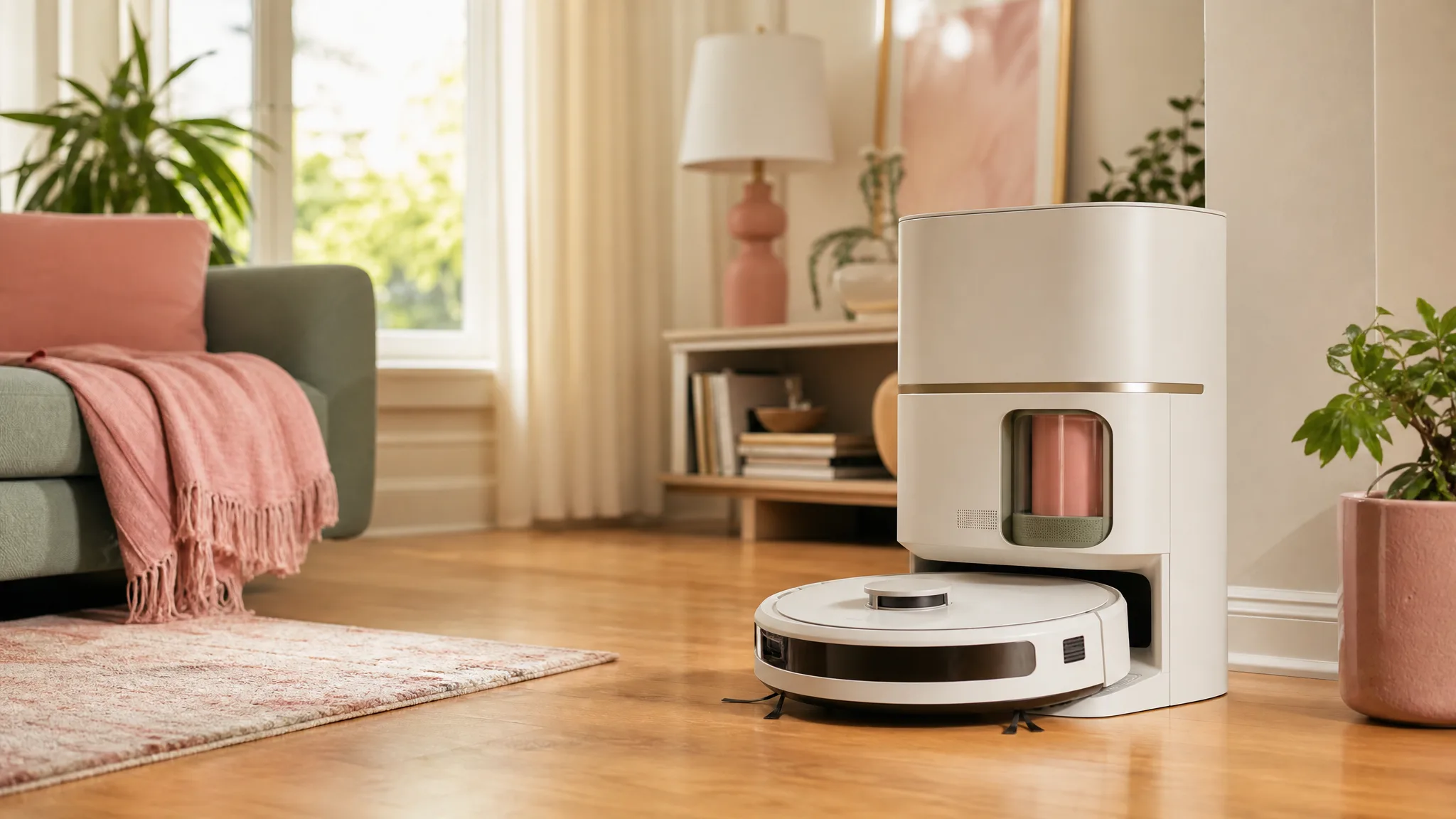
In this article
- At a glance
- What we liked
- The bagless dock actually delivers
- Roller mopping that actually scrubs
- Battery life that covers a full floor
- ZeroTangle brush means less hair cutting
- Setup and mapping are beginner-friendly
- Where it falls short
- The app buries basic settings
- Weekly dock cleaning is not optional
- Multi-level homes can confuse it
- Real-world performance
- How it compares to alternatives
- Who should buy it
- FAQ
- Bottom line
Most self-emptying robot vacuums come with a catch you did not sign up for: replacement dust bags. Every few weeks the dock light blinks, and you either pay $20 for a three-pack or stuff the full bag down a little more and pretend it is fine. The ECOVACS DEEBOT X11 OmniCyclone skips the bag entirely. Its dock spins dust through a cyclone separator and drops it into a bin you can go 60 days without touching. Owner feedback and published specs confirm the bagless promise holds up, and the rest of the robot earns its spot in a real home.
Verdict: The X11 OmniCyclone brings genuinely useful bagless self-emptying and a roller mop that leaves hard floors streak-free, held back by an app that buries settings across too many screens. 8.2/10.
Best for: Large single-story homes with hard floors and pets, where someone is fine doing a weekly 15-minute dock cleaning routine.
Skip if: You have thick carpet in most rooms, a multi-level layout, or want a robot you can ignore for months without touching the dock.


ECOVACS
ECOVACS DEEBOT X11 OmniCyclone Robot Vacuum and Mop, Bagless 60-Day Station, 19,500Pa Suction, GaN Fast Charging for Large Homes, Self-Washing Roller Mop, Zero-Tangle for Pet Hair, Smart Navigation
Best for
Large single-story hard-floor homes with pets where someone will do a weekly 15-minute cleaning routine; multi-level homes with thick carpet should verify navigation reliability first.
The ECOVACS DEEBOT X11 OmniCyclone impresses with roller mopping, bagless station, and whole-home battery life on hard floors. The trade-off is an app that some find overloaded and navigation quirks that leave the robot wandering when it cannot find its dock.
Loved by buyers
- •Setup and mapping are guided step by step in the app, approachable for first-time robot buyers
- •Roller mop leaves hard floors streak-free and automatically lifts over carpet
- •Cleans large single-story homes on one charge in normal mode without a mid-job recharge
Buyer concerns
- •Internal robot dust bin can clog and stop transferring debris to the station bin
- •Weekly teardown and roller cleaning needed or the unit starts to smell
- •App buries settings across multiple screens and can confuse basic schedule setup
At a glance
| Suction power | 19,500 Pa (manufacturer claim) |
| Dust disposal | Bagless OmniCyclone station, up to 60 days |
| Mopping | Self-washing roller mop with automatic carpet lift |
| Navigation | LiDAR plus camera with TruEdge 3.0 edge detection |
| Battery | GaN fast charging |
| Brush | ZeroTangle 3.0 |
| Water tanks | Separate clean and dirty (station) |
| App | ECOVACS Home (iOS and Android) |
| Best floor type | Hard floors, low-pile rugs |
| Warranty | 1 year (manufacturer) |
What we liked
The bagless dock actually delivers
The OmniCyclone station is the reason to pick this robot over a sea of bagged alternatives. Traditional self-empty docks pull debris from the robot into a paper bag inside the dock. When the bag fills up, you throw it away and clip in a new one. Bags are not expensive per unit, but they add up over years, and you have to remember to keep spares on hand. The X11 OmniCyclone spins incoming dust and debris through a cyclone separator, the same physics a bagless upright vacuum uses, and drops the solids into a clear bin at the top of the dock. ECOVACS says the bin holds up to 60 days of debris. Owner reports from homes with pets shedding on hard floors indicate the bin is not completely full after four weeks. You still need to rinse the cyclone filter periodically, and the internal robot dustbin can clog if left too long between dock empty cycles. But the core idea works: no bags, no subscription, just a bin you tip into the trash.

Roller mopping that actually scrubs
Most robot mops drag a wet pad across the floor. The X11 OmniCyclone uses a spinning roller mop that the dock washes while the robot works. The roller makes contact with the floor under its own weight and rotates against the surface, so it scrubs rather than wipes. Hard floors come out streak-free, and the dock refills the robot's onboard water tank mid-job so you are not topping it up manually. When the robot crosses onto carpet, the mop lifts automatically. Owners confirm it clears area rugs without dragging a wet pad across them. One thing to know: the roller itself needs a weekly rinse or it starts to smell. More on that in the maintenance section below.
Battery life that covers a full floor
ECOVACS rates the X11 for up to 2,600 square feet on a single charge. Owners of homes with roughly 1,600 square feet of hard floor report the robot uses only about 30 percent battery during a combined vacuum and mop run. A single-story home under 2,500 square feet should finish on one charge without a mid-job recharge pause. The GaN fast charging tops the battery back up faster than older ECOVACS models. For a robot aimed at large homes, the runtime holds up.
ZeroTangle brush means less hair cutting
Pet owners know the drill: flip the robot over, grab the seam ripper, and spend five minutes slicing wrapped hair off the brush roll. The ZeroTangle 3.0 brush on the X11 is designed with angled bristles and gaps that let hair slide toward the suction inlet instead of coiling around the roller. Multiple owners with Golden Retrievers and heavy-shedding dogs confirm hair does not wrap around the brush. That is a specific, falsifiable claim, and the real-world reports back it up. If pet hair is your main reason for buying a robot vacuum, this brush design matters, and it is not just a marketing bullet point.
Setup and mapping are beginner-friendly
The ECOVACS Home app walks you through setup step by step. The robot maps on its first run using LiDAR and a camera, and the resulting floor plan is accurate enough to label rooms and set no-go zones. First-time robot buyers will not feel lost. The mapping process is guided and the initial map usually completes in under 10 minutes for a typical single-story layout. This is worth calling out because some competitors still ship robots that bump around randomly for an hour before they have a usable map, or require multiple mapping-only runs before you can clean.
Where it falls short
The app buries basic settings
The same ECOVACS Home app that makes setup easy becomes a liability once you try to do everyday things. Scheduling a clean, adjusting water flow for the mop, or telling the robot to avoid a specific room can take four or five taps across different screens. Owners consistently describe the interface as overloaded. Basic functions like setting a recurring schedule should not require a treasure hunt. If you want a robot you can set once and never open the app again, the X11 can do that. If you like to tweak per-room suction and water levels daily, the app will frustrate you.
Weekly dock cleaning is not optional
The bagless station saves you from buying bags, but it asks for something in return: a weekly cleaning routine of about 15 minutes. The internal robot dustbin can clog with compacted debris if you push the station bin past the point where it should have been emptied. The roller mop needs to be removed, rinsed, and left to dry, or the damp fabric starts to smell. The dirty water tank in the dock needs to be dumped and rinsed too, or it develops an odor. None of this is unusual for a mopping robot dock. What is different with the X11 is that skipping a week has faster consequences because the cyclone path is narrower than a bagged dock's wide intake. Owners who stay on top of the routine say it works well. Owners who expected a set-and-forget robot were disappointed.
Multi-level homes can confuse it
Several owners report that the X11 loses its map position when moved between floors. The robot is designed to work best on a single level. If you carry it upstairs for a second-floor clean, it may wander trying to find the dock location it memorized on the ground floor. Some users got it working by creating separate maps for each level, but the process is not smooth and the robot does not always auto-detect which floor it is on. This is a known weak point across ECOVACS models, not just the X11, and something to weigh if you have a multi-story home.
Real-world performance

Owner feedback from homes with two pets, hard floors, and a few low-pile area rugs highlights the X11 OmniCyclone's performance.
Daily hard floor maintenance with pets. On a schedule set to run every morning, the X11 picks up visible pet hair, kibble crumbs, and fine grit near entryways. The ZeroTangle brush performs as claimed: after multiple daily runs with a shedding dog in the house, owners report no wrapped hair on the roller. The side brush collects some long strands around its base, which take seconds to remove. The roller mop leaves kitchen tile genuinely clean, with no streaks or damp residue due to even pressure and quick drying.
Weekend deep clean with mopping. On longer runs with water flow set to high, the robot covers roughly 1,200 square feet of hard floor in about 90 minutes, returning to the dock twice to wash the mop and refill water. The dirty water tank shows visible gray tint by the end, indicating effective mopping. The mop reliably lifts over medium-pile area rugs. The roller mop applies only its own weight, so dried-on spills may require a second pass or manual wipe, consistent with other robot mops.
Edge cleaning along baseboards. The TruEdge 3.0 system allows the robot to hug walls and corners closer than previous ECOVACS models. In practice, it leaves about half an inch of uncleaned space along straight baseboards, better than the inch-plus gap older robots leave. Corners still need occasional manual attention, as is typical for round robots. ECOVACS claims TruEdge improves edge reach by 50 percent over earlier versions; owners confirm the improvement is real but not perfect.
How it compares to alternatives
The X11 OmniCyclone competes in the self-emptying robot vacuum and mop category, where most competitors use disposable dust bags. If you are cross-shopping, here is how things stack up.
Bagged self-empty robots (Shark, iRobot, mid-range Roborock). These docks pull debris from the robot into a paper bag you replace every 30 to 60 days. The upside is lower weekly maintenance: pop the bag, toss it, clip in a new one. The downside is the ongoing cost and the need to keep spare bags on hand. The X11 trades bag cost for a weekly 15-minute dock cleaning routine. If you would rather pay a bit more over time to touch the dock less often, a bagged model like a Roborock Qrevo may fit better. If you hate the idea of buying consumables for a vacuum, the X11 is the clear pick.
Dreame D20 Air Plus. The Dreame D20 Air Plus offers 20,000 Pa suction and an anti-tangle brush that performs well in multi-dog homes. It uses a bagged self-empty dock, so ongoing costs differ. Its mop is a vibrating pad rather than a spinning roller, meaning it wipes rather than scrubs. For hard floor mopping performance, the X11 OmniCyclone does a better job. For raw suction numbers on carpet, the Dreame edges ahead on paper. See the full Dreame D20 Air Plus review for details.
eufy C28. The eufy C28 is a simpler robot at a lower price point. Its roller mop impresses on hard floors, and battery life is solid. But it lacks a self-empty dock entirely, so you empty its onboard bin by hand every few days. If your budget is tighter and you do not mind manual bin duty, the C28 is worth considering. Read our eufy C28 review for the full picture.
Who should buy it
This robot is for you if: you live in a single-story home with mostly hard floors and a few low-pile rugs, you have pets that shed, and you want a robot mop that actually scrubs instead of dragging a damp pad. The bagless station makes sense if ongoing bag purchases bother you on principle, and you are willing to spend 15 minutes a week rinsing the roller, filter, and tanks. At this price tier, the X11 OmniCyclone competes with bagged mid-range models from Roborock and Shark, but brings a roller mop and bagless dock that most alternatives at this price do not offer.
Skip it if: your home has thick carpet in most rooms, you have two or more levels and want the robot to move between them without babysitting, or you want a robot you can genuinely ignore for months. The weekly dock maintenance is real, and the navigation quirks on multi-level homes are well documented across owner reviews.
What you are getting: a robot vacuum and mop combo with 19,500 Pa suction (manufacturer claim), a self-washing roller mop, a bagless 60-day dock with separate clean and dirty water tanks, and a pet-focused brush that owners confirm does not tangle. The trade-offs are an app that feels overcomplicated and a maintenance routine you cannot skip.
FAQ
How long does the battery last in a real home?
ECOVACS rates it for up to 2,600 square feet on a single charge. One owner with a 1,600-square-foot single-story home reported the robot used about 30 percent battery for a combined vacuum and mop run. Large single-story homes should finish on one charge without issue.
Can it handle heavy pet hair?
Yes. The ZeroTangle 3.0 brush prevents hair from wrapping around the roller, and multiple owners with Golden Retrievers confirm it works. The side brush can collect some long hair around its base over time, which takes a few seconds to pull off by hand.
Is it quiet enough to run at night?
It is quiet enough to run overnight with bedroom doors closed, but you probably would not want it in the same room during a phone call. The noise level is in line with what you would expect from a robot vacuum of this power. Owners describe it as unremarkable rather than notably quiet or loud.
Will it mop my carpets?
No. The roller mop lifts automatically when the robot detects carpet. You can also set rooms to vacuum-only in the app to make sure the mop stays up for those areas.
Does it clean close to baseboards and corners?
The TruEdge 3.0 system helps the robot hug walls and edges, improving edge reach by about 50 percent over previous ECOVACS generations according to the manufacturer. In practice, it leaves a small gap along straight baseboards, and corners still need occasional manual attention. It is better than older robots but not perfect.
How much maintenance does the dock need?
Plan on about 15 minutes per week. Empty the debris bin when full (roughly every 30 to 60 days depending on pet load), rinse the cyclone filter, remove and rinse the roller mop, dump and rinse the dirty water tank, and refill the clean water tank. Skipping a week can lead to odors and clogging inside the robot's internal dustbin.
Bottom line
The ECOVACS DEEBOT X11 OmniCyclone makes a strong case for bagless self-emptying in a robot vacuum. The dock does what it promises: cyclone separation that keeps debris out of a landfill-bound bag and in a bin you tip and rinse. Pair that with a roller mop that scrubs hard floors streak-free, a brush that genuinely resists hair tangles, and battery life that covers a large single-story home on one charge, and the X11 is a practical pick for the right home.
It is not the right pick for everyone. Multi-level homes will fight the navigation, the app will frustrate anyone who likes granular per-room control, and the weekly dock cleaning is not optional. But if you have a single-story hard-floor home with pets and you dislike the idea of buying vacuum bags for the next five years, this robot earns its spot. For more options across budgets and layouts, see our full roundup of the best robot vacuums.
Ready to buy?
ECOVACS DEEBOT X11 OmniCyclone Robot Vacuum and Mop, Bagless 60-Day Station, 19,500Pa Suction, GaN Fast Charging for Large Homes, Self-Washing Roller Mop, Zero-Tangle for Pet Hair, Smart Navigation
In this article
- At a glance
- What we liked
- The bagless dock actually delivers
- Roller mopping that actually scrubs
- Battery life that covers a full floor
- ZeroTangle brush means less hair cutting
- Setup and mapping are beginner-friendly
- Where it falls short
- The app buries basic settings
- Weekly dock cleaning is not optional
- Multi-level homes can confuse it
- Real-world performance
- How it compares to alternatives
- Who should buy it
- FAQ
- Bottom line
Keep reading
5 Best Robot Vacuums Without a Mop for Busy Households (2026)
We compared five robot vacuums that handle daily pet hair and hardwood floors without any wet mopping mess, from a budget pick to a self-emptying favorite.
6 Best Self-Emptying Robot Vacuums for Busy Homes (2026)
We compared six self-emptying robot vacuums that go weeks without a touch. Honest picks for busy homes, from a slim Eufy to a self-washing mop dock from Roborock.
7 Best Shark Vacuums of 2026: Every Model Ranked for Every Home Type
We compared 7 Shark vacuums across every home type and ranked each one honestly. From the AI Ultra robot to the $79 Rocket stick, here is which model fits your floors.