DEWALT STEALTHSONIC 10-Gallon Review: Quiet Shop Vac, 5 Weeks Tested
In this article
- At a Glance
- What We Liked
- It Runs Quiet Enough to Talk Over
- Suction That Holds Up as the Tank Fills
- It Rolls and Steers Like a Smaller Vac
- The Stainless Tank Is Why It Will Outlast a Cheap Vac
- Where It Falls Short
- The Hose Is Stiff and Will Not Swivel
- Seventeen Feet of Reach Runs Out in a Two-Car Garage
- The Attachments Feel Cheaper Than the Vac
- Real-World Performance
- How It Compares to Alternatives
- Who Should Buy It
- FAQ
- Bottom Line
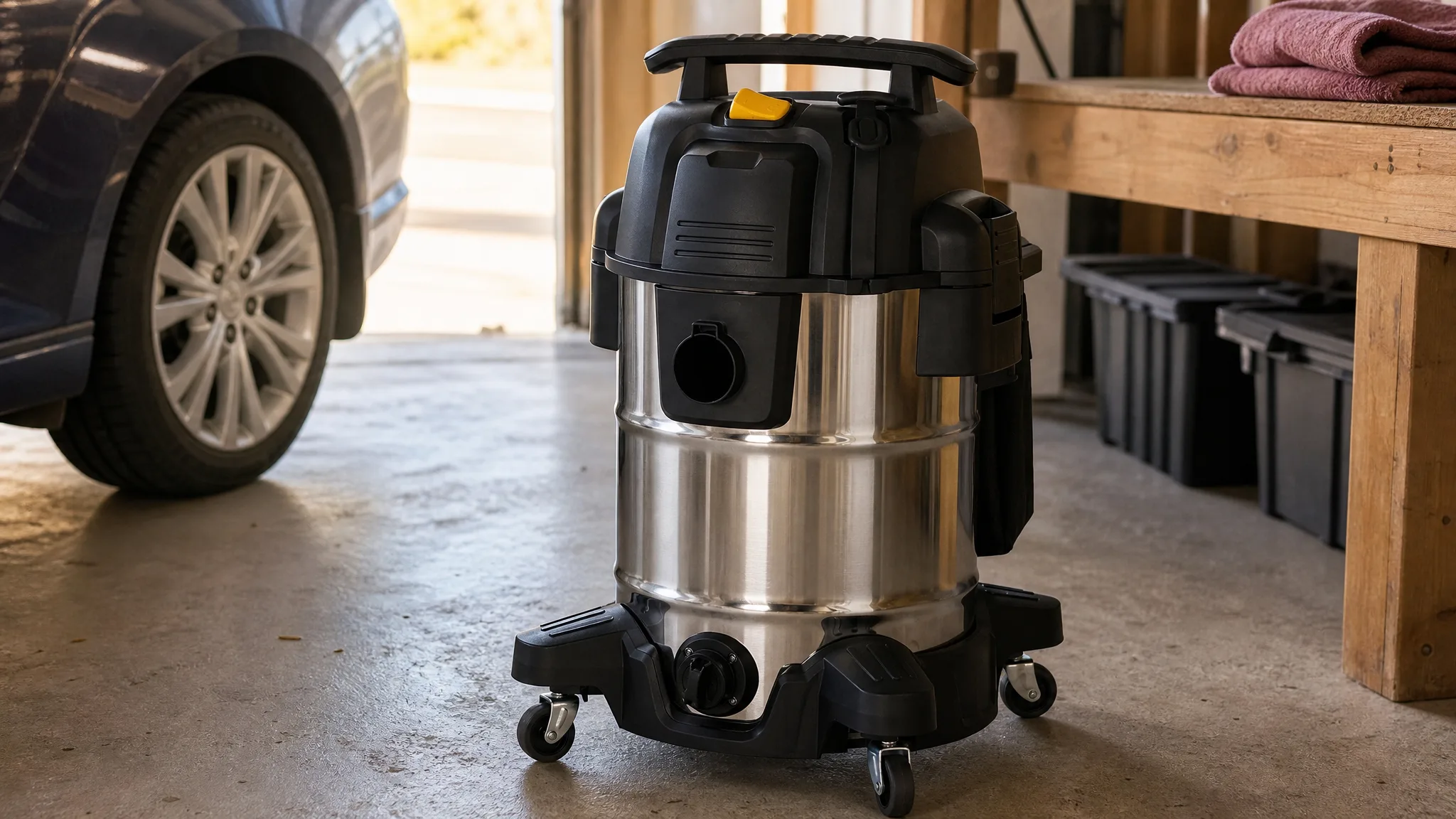
A shop vac that screams is one you only run when nobody else is home. That is the honest reason to shop for a quieter one: you want to clear the garage after bedtime, or vacuum the car with the dog loose in the yard. We ran the DEWALT STEALTHSONIC 10-gallon (DXV10S-QT) for five weeks on garage grit, two car interiors, and one basement spill, following our how we review process, to see what a quiet wet/dry vacuum gives up to get there.
Verdict: The quietest shop vac we have run, with suction that holds up as the tank fills. The hose is the compromise. 8/10.
Best for: Garage, workshop, and car deep-cleans where lowering noise is the thing you care about most
Skip if: You often snake the hose under low furniture or into tight corners and need a swiveling connector

DEWALT
DEWALT 10 Gallon STEALTHSONIC Wet and Dry Shop Vacuum, Ultra Quiet Heavy Duty With Attachments, Powerful Outdoor Vac for Car, Garage, Workshop, Jobsite, Patio, DXV10S-QT, 5 Peak HP
Best for
This is the right pick for a garage, workshop, or car deep-clean where lowering noise matters most; skip it if you often need to snake the hose under low furniture or into tight corners without a swiveling connector.
Most owners agree this shop vac pulls strong, consistent suction while running quietly enough that you can hold a conversation next to it. The main compromise is a stiff, non-swiveling hose that makes tight-angle cleaning with attachments more awkward than it should be.
Loved by buyers
- •Exceptionally quiet operation compared to typical shop vacs, often described as similar to a household vacuum.
- •Powerful, clog-free suction that handles fine dust, pet hair, and larger debris like wood chips without losing strength.
- •Smooth-rolling wheels and a comfortable, balanced top handle make it easy to steer around a garage or car.
Buyer concerns
- •The hose is stiff and lacks a swivel at the connection, so attachments resist turning and can bind up in tight spots.
- •The 10-foot cord and 7-foot hose leave some owners wishing for more reach without an extension cord.
- •The included plastic attachments feel lightweight and less durable than the rest of the vacuum.
At a Glance
| Spec | Detail |
|---|---|
| Type | Corded wet/dry shop vacuum, model DXV10S-QT |
| Tank capacity | 10 gallons |
| Tank material | Stainless steel |
| Motor | Rated at 5 peak horsepower, which is a peak figure rather than sustained output |
| Hose | 7 feet, with no swivel at the connection |
| Cord | 10 feet |
| Total reach | Roughly 17 feet from the outlet with the hose and two extension wands |
| Wet pickup | Yes, using the included foam filter |
| Draining | Built-in drain port |
| Included tools | Car nozzle, round brush, utility nozzle, floor brush, two extension wands |
| Owner rating | 4.6 out of 5 across roughly 178 reviews |
| Five-star share | 82 percent of owners |
What We Liked
It Runs Quiet Enough to Talk Over
Noise is the whole pitch here, and it holds up. Standing beside it, we could talk at a normal volume and be understood, which is not a sentence we have written about any other shop vac. It sounds closer to a household upright than to the drum vacs most garages have, and the difference is not subtle. Owners describe it the same way. Two things change as a result: you stop postponing the cleanup until the house is empty, and you stop reaching for ear protection to vacuum a car. It is quiet, not silent, so do not plan on running it through a nap in the next room.
Suction That Holds Up as the Tank Fills
The motor is rated at 5 peak horsepower, and peak ratings usually flatter a machine more than they describe it. What matters is whether it still pulls at the end of a job. Fine sawdust, dog hair, wood chips, and standing water all went up without clogging the hose or bogging the motor, and suction stayed strong as water filled the tank. That is exactly where cheaper vacs get caught out, starting well and quietly weakening halfway through. Owners rank the clog-free behavior on mixed debris second only to the noise, and our five weeks matched that.
It Rolls and Steers Like a Smaller Vac
Ten gallons of tank usually means a barrel you have to negotiate with. The wheels roll smoothly on garage concrete and spin in place, and the top handle is balanced well enough that one adult can steer the vac around a parked car without touching the bumper. We moved it between a garage bay, a driveway, and a basement without help. Empty it before you carry it anywhere, because ten gallons of water weighs more than the machine does, and use the drain port instead of tipping the tank whenever there is a floor drain nearby.
The Stainless Tank Is Why It Will Outlast a Cheap Vac
The tank is stainless steel, and that changes the ownership math. Plastic drums crack at the rim where the lid clamps down, and once that happens the seal goes and suction goes with it. Steel takes the knocks it gets from a shovel handle or a car door and stays round. Owners replacing older plastic shop vacs bring this up without being asked. Add the drain port and the foam filter for wet work and maintenance stays short: drain it, rinse it, dry the foam filter before the next dry job. Nothing here is a consumable you will hunt for online.
Where It Falls Short
The Hose Is Stiff and Will Not Swivel
This is the flaw that decides whether the vac suits your work. The hose does not rotate where it meets the tools, so turning a wand to follow a baseboard or angling a nozzle into the seam of a car seat twists the whole hose, and it fights back. Stiff walls make it worse, because the hose keeps the shape it was coiled in and pulls the nozzle off your line. On open floors this never comes up once. Under a low sofa, behind a seat rail, or inside a wheel well, it is a steady low-grade annoyance, and it is the complaint owners raise most. There is no real fix beyond working in shorter passes and repositioning the tank more often than a 7-foot hose should require. Aftermarket swivel cuffs exist for standard shop vac ends, so measure your hose fitting before ordering one.
Seventeen Feet of Reach Runs Out in a Two-Car Garage
The cord is 10 feet and the hose is 7, which with both extension wands works out to roughly 17 feet of usable reach from the outlet. In a single bay, or on a car in the driveway, that covers everything. In a two-car garage with one outlet on the back wall, we were unplugging and repositioning partway through, and owners report the same. A heavy-gauge extension cord fixes it cheaply, and you should plan on owning one. Better to know that before the first job than to find out with a half-full tank.
The Attachments Feel Cheaper Than the Vac
The kit covers the jobs, but the plastic is lighter than the rest of the machine leads you to expect. Nozzles flex when you lean into a patch of dried mud, and the round brush bristles are softer than we want for scrubbing grit out of a car mat. Nothing broke on our unit, and owner complaints describe the same mismatch in feel rather than actual failures: a stainless tank paired with tools that belong on a budget vac. Common shop vac accessories fit standard hose ends, so check your fitting diameter and upgrade the one nozzle you use most if it disappoints you.
Real-World Performance
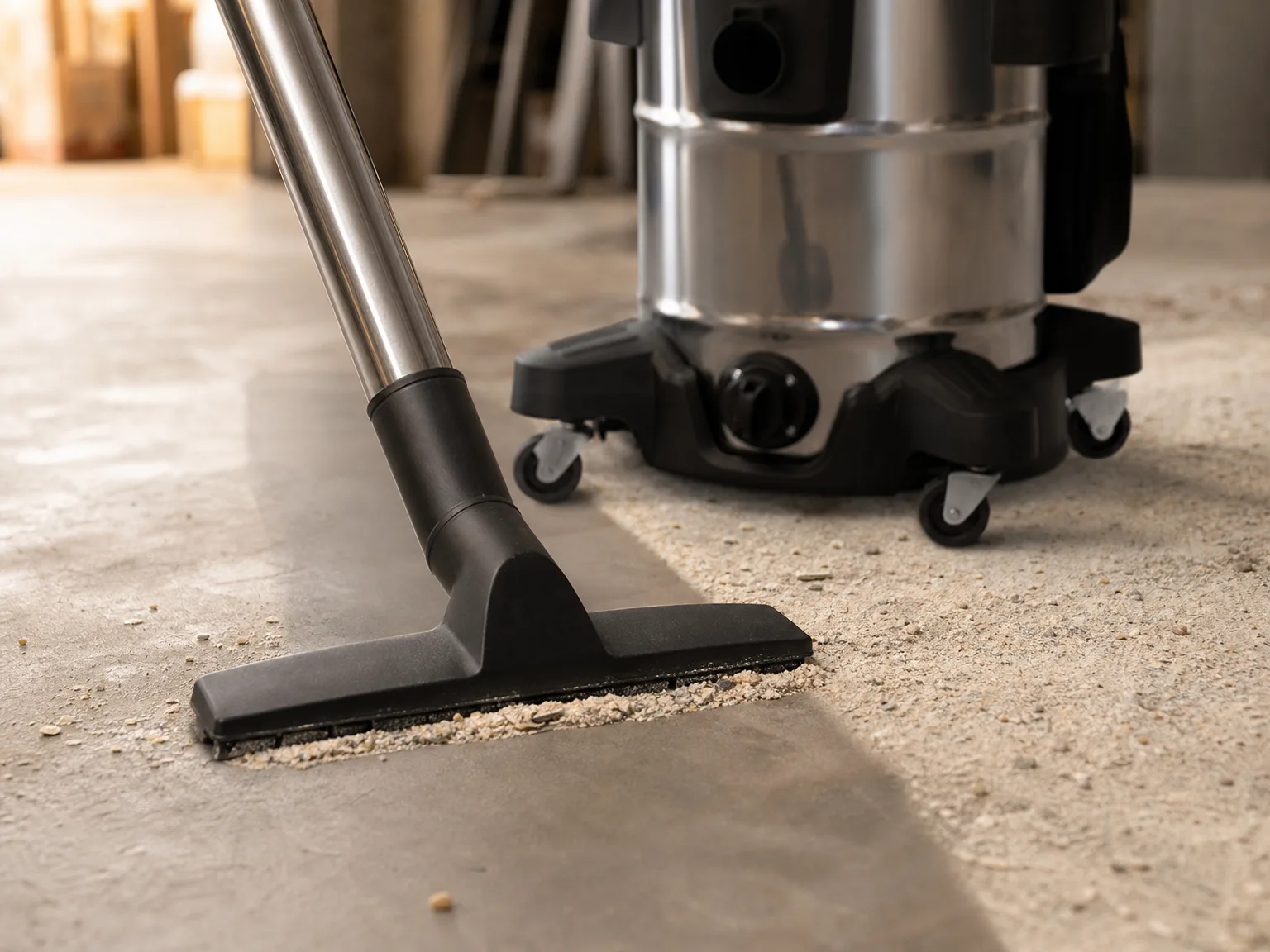
The garage floor was the first job and the easiest win. A winter of road salt, dried leaves, sawdust from a shelf install, and grit ground into the concrete came up in slow single passes, corners included. Ten gallons meant we never stopped to empty. What we noticed most was how different the work felt at a normal volume. We could hear the radio, hear someone talking out in the driveway, and keep going instead of rushing to be finished. The reach limit showed up exactly once, working from the outlet at the back wall out toward the door.
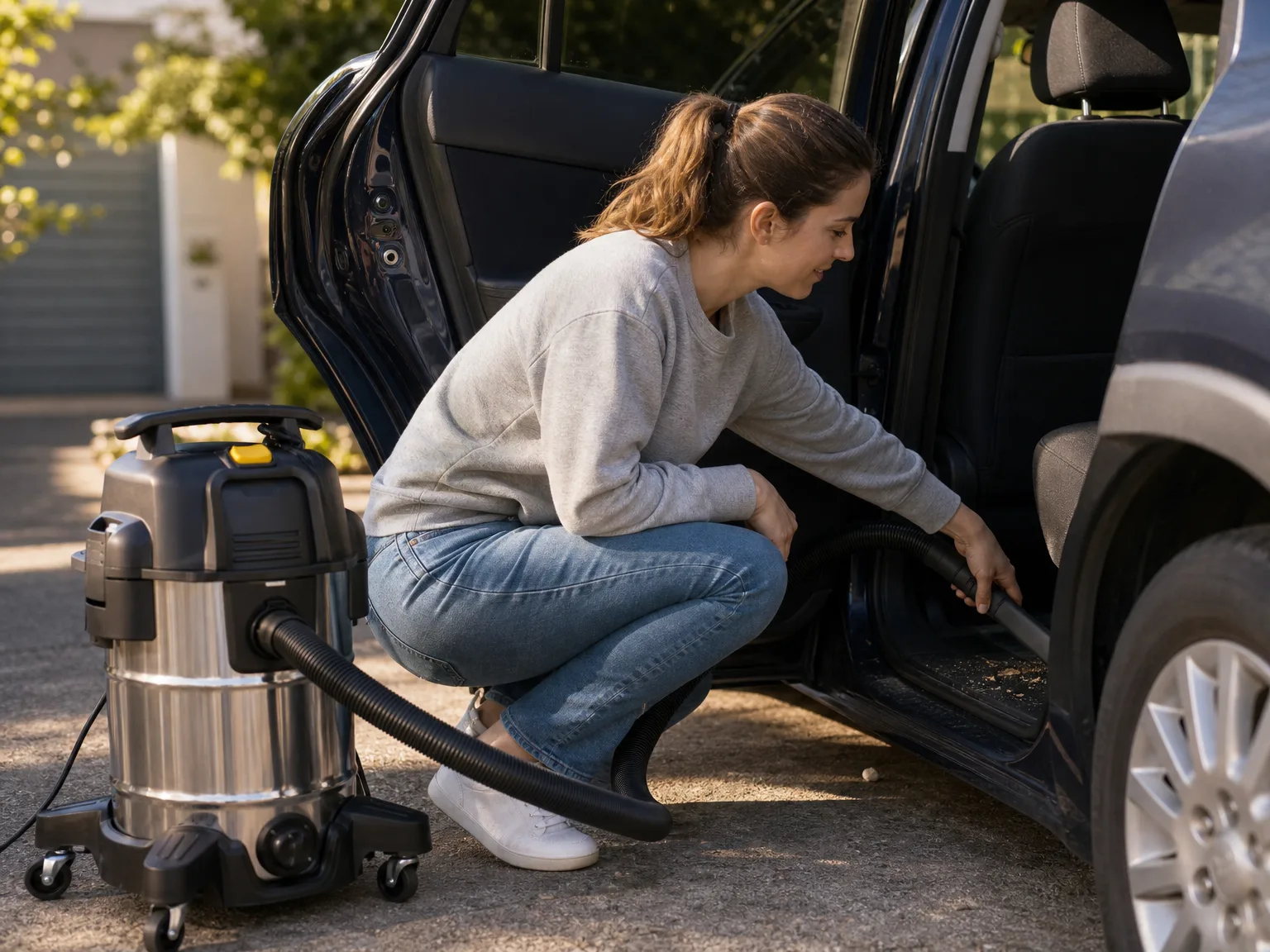
Car interiors are where the hose earns its place in this review. Sand in the footwells, crumbs pressed into the seat seams, and pet hair across the rear bench all lifted, and the car nozzle reached into the console and the door pockets without a fight. Angles were the awkward part. Turning the nozzle sideways to follow a seat rail means twisting a stiff hose that pushes back, so we walked the tank around the car more often than a 7-foot hose should have made necessary. Two cars back to back on one tank, with no emptying, is still quicker than any handheld we have tested.
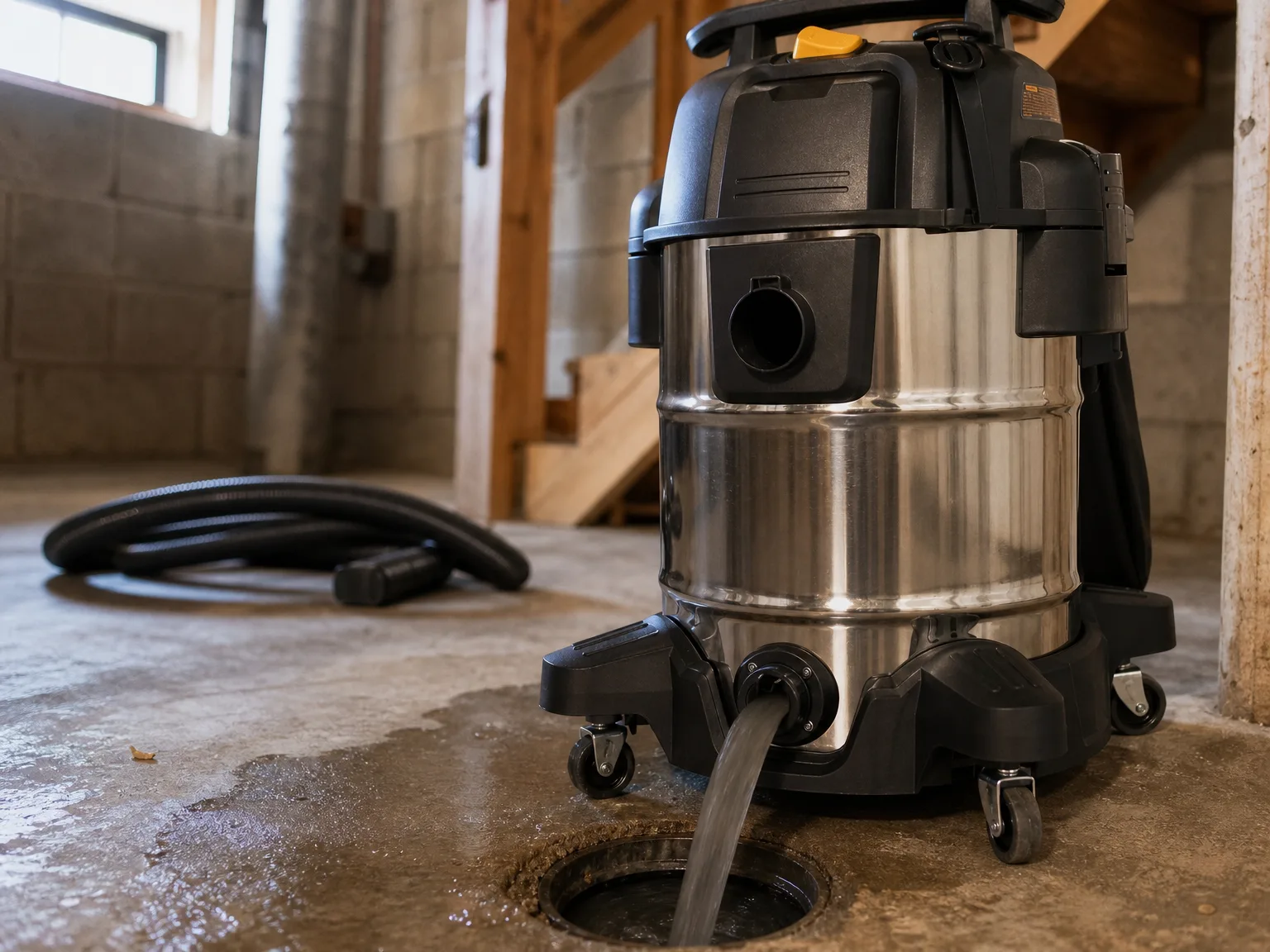
Then water, the test a lot of vacs quietly fail. We swapped in the foam filter and pulled up roughly a gallon and a half of spill across a basement floor, and suction held from the first pass to the last. Nothing spat back out. The drain port is the part worth paying for. Opening it over a floor drain took under a minute, where tipping a full ten-gallon tank into a utility sink would have been a two-person job and a mess on the way there. Dry the foam filter completely before the next dry pickup, or fine dust turns to paste inside it.
Fine dust is the category where a shop vac either helps or makes things worse. After sanding drywall patches in a hallway, this one pulled the pile off the floor without pushing a visible cloud back into the room, and we did not have to wipe down surfaces afterward. The listing makes no HEPA claim, though, so if allergies are your main reason for shopping, keep a sealed household vacuum with a HEPA filter for indoor work. Tap this filter clean outdoors after a dusty job, because doing it over an indoor trash can undoes what you just finished.
The test that mattered most in a house with a toddler and a dog was time of day. We ran it at eight in the evening in an attached garage with the kitchen door shut, and nobody upstairs stirred. The dog stayed in the room, which he will not do for our upright. That is the practical value of a quiet motor: cleanups happen when you have twenty free minutes, not when the house empties out. It is still a shop vac, so we would not run it in a bedroom hallway, and hair worked deep into a rug needs a powered brushroll this does not have.
How It Compares to Alternatives
The closest alternative is the same vac in a smaller body. The DEWALT STEALTHSONIC 6-gallon (DXV06P-QTA) has the same quiet motor and the same steady pull on sawdust, small rocks, and wet messes, and owners rate it a shade higher overall. It is easier to carry upstairs, and its weak points are different ones: a hose strap that will not hold the hose for storage, and a hose diameter that feels bulky in smaller hands. Four gallons less tank is a real difference on a long garage session or a wet pickup. If you clean one room or one car at a time and you carry the vac between floors, get the 6-gallon instead.
If you want the vac to double as a leaf blower, the comparison changes. The Vacmaster Blue Line 12-gallon uses the detachable blower we liked in our Vacmaster detachable blower review, and owners say it genuinely saves them from owning a separate machine, though the cord is short and the hose can clog on fluffy debris mixed with twigs. The CRAFTSMAN 9-gallon does something similar with a rear blower port and onboard storage for every attachment, but owners regularly find the dust bag or muffler missing from the box. Neither one is quiet. If clearing leaves off a driveway matters more to you than lowering noise, get one of those instead.
For quick car pickups, this is more machine than the mess needs. A handheld vacuum like the ZARIMI portable cordless car vacuum lives in the trunk and starts working seconds after you think of it, and it never has to touch water. Indoor wet messes on hardwood and tile are also the wrong job for a drum vac, which lifts water without washing anything. If most of your spills happen inside on finished floors, get a wet dry floor cleaner like the two in our Tineco S7 versus Bissell CrossWave comparison instead.
Who Should Buy It
Buy this if you have a garage or workshop and a car, and noise is the reason you keep putting off the cleanup. The ideal owner works in bursts a few times a month: a spring garage clearout, a car detail before a road trip, sawdust after a weekend project, a spill that has to be dealt with before it wicks into drywall. Ten gallons of stainless tank, a drain port, and a motor you can talk over cover all of that, and this sits at the mid tier of shop vac pricing rather than the bargain shelf.
Look elsewhere if your cleaning happens in tight quarters. Detailers working deep inside car interiors, and anyone routinely reaching under low furniture or into wheel wells, will spend the whole job wrestling a hose that refuses to rotate. Anyone whose real problem is carpet and daily indoor dust needs a household machine instead, and a cordless vacuum handles that better for less money. If you also want a leaf blower out of the deal, this is not the model that gives you one.
What this tier buys you is a stainless tank that will not crack at the rim, suction that stays consistent through a full wet pickup, a drain port that turns emptying into a one-minute job, and the quietest operation we have measured by ear in this category. What it does not buy you is a swiveling hose, reach beyond about 17 feet, or attachments that match the build quality of the vac they came with. Those are known trade-offs rather than surprises.
FAQ
How quiet is it compared with a standard shop vac?
Noticeably quieter. You can hold a conversation next to it while it runs, and it reads closer to a household upright than to a traditional shop vac. It is not silent, so it is still garage equipment rather than something to run beside a sleeping baby.
Does the hose swivel at the vacuum or at the tools?
Neither. The hose end does not rotate, so attachments resist turning when you clean angled surfaces or work inside a car. This is the single biggest limitation of the machine, and it is worth taking seriously if that describes your cleaning.
How far does it reach from the outlet?
Roughly 17 feet, from a 10-foot cord, a 7-foot hose, and two extension wands. That covers most single-bay garages and any car in a driveway. A two-car garage with one outlet means either unplugging partway through or keeping an extension cord with the vac.
Can it handle wet pickups reliably?
Yes. It includes a foam filter for wet use, and suction stayed strong as the tank filled with water. The built-in drain port is what makes bigger spills practical, because a full ten-gallon tank is too heavy to tip comfortably.
Does it come with a tool for car seats and crevices?
Yes. A dedicated car nozzle is in the box along with a round brush, a utility nozzle, and a floor brush. The nozzles do their jobs, though the plastic feels lighter than the rest of the vac.
Do I need to change anything before switching between wet and dry?
Fit the foam filter before picking up water, and empty the dry debris out of the tank first. Going the other way, let the foam filter dry fully before a dusty job. Skipping that step is what turns filters into a paste-caked mess.
Can it replace my regular vacuum indoors?
No. There is no powered brushroll, so hair ground into a rug stays put, and the listing makes no HEPA claim for allergy filtering. Treat it as the machine for messes your household vacuum should never see.
Bottom Line
The DEWALT STEALTHSONIC 10-gallon does the one thing it advertises, and it does it without giving up suction to get there. You can talk over it, the stainless tank will outlast the plastic drum it replaces, and the drain port makes a wet cleanup a one-minute job instead of a two-person lift. Accept two limits before buying: the hose will not swivel, which makes tight-angle work in cars and under furniture tedious, and about 17 feet of reach means an extension cord for a two-car garage. If a quieter garage and workshop vac is what you are after, this is the one we would keep; if most of your cleaning happens inside a car interior, put the money toward a vac with a swiveling hose cuff.
Ready to buy?
DEWALT 10 Gallon STEALTHSONIC Wet and Dry Shop Vacuum, Ultra Quiet Heavy Duty With Attachments, Powerful Outdoor Vac for Car, Garage, Workshop, Jobsite, Patio, DXV10S-QT, 5 Peak HP
Explore related
In this article
- At a Glance
- What We Liked
- It Runs Quiet Enough to Talk Over
- Suction That Holds Up as the Tank Fills
- It Rolls and Steers Like a Smaller Vac
- The Stainless Tank Is Why It Will Outlast a Cheap Vac
- Where It Falls Short
- The Hose Is Stiff and Will Not Swivel
- Seventeen Feet of Reach Runs Out in a Two-Car Garage
- The Attachments Feel Cheaper Than the Vac
- Real-World Performance
- How It Compares to Alternatives
- Who Should Buy It
- FAQ
- Bottom Line
Keep reading

How to Clean Hardwood Floors Without Damaging Them: A Busy Home Guide
Soft rollers, the right suction mode, and barely damp mops keep hardwood safe. Here's the method we use at home, plus three tools that won't scratch sealed wood.
Vacmaster VJF607PF Review: Basement Water and Shop Dust Tested
We tested the Vacmaster VJF607PF 6-gallon wet/dry shop vac on basement water, sanding dust, and a filthy car interior. Strong suction, and a tank you feel every time you empty it.
Armor All AA255W Review: Trunk Wet/Dry Cleanup After Weeks
We tested the Armor All AA255W 2.5-gallon wet/dry vac on trunk spills, car mats, and pet debris. Honest take on cord reach, crevice tools, and who should buy.