Milwaukee 0880-20 Wet/Dry Vac Review: 4 Weeks in Cars and Campers
In this article
- At a glance
- What we liked
- Suction that does not feel apologetic
- Wet and dry in the same trip
- Everything stays with the vac
- Blower mode earns its place
- Where it falls short
- The battery goes fast, and this shapes everything
- Getting the battery out takes real force
- Two gallons and a bare tool price
- Real-world performance
- How it compares to alternatives
- Who should buy it
- Frequently asked questions
- How long does the battery last on a full charge?
- Can it handle both wet spills and fine dust?
- Is the blower mode actually useful?
- Does it work with all Milwaukee M18 batteries?
- Does it come with a battery and charger?
- Will it replace a full-size shop vac?
- Bottom line
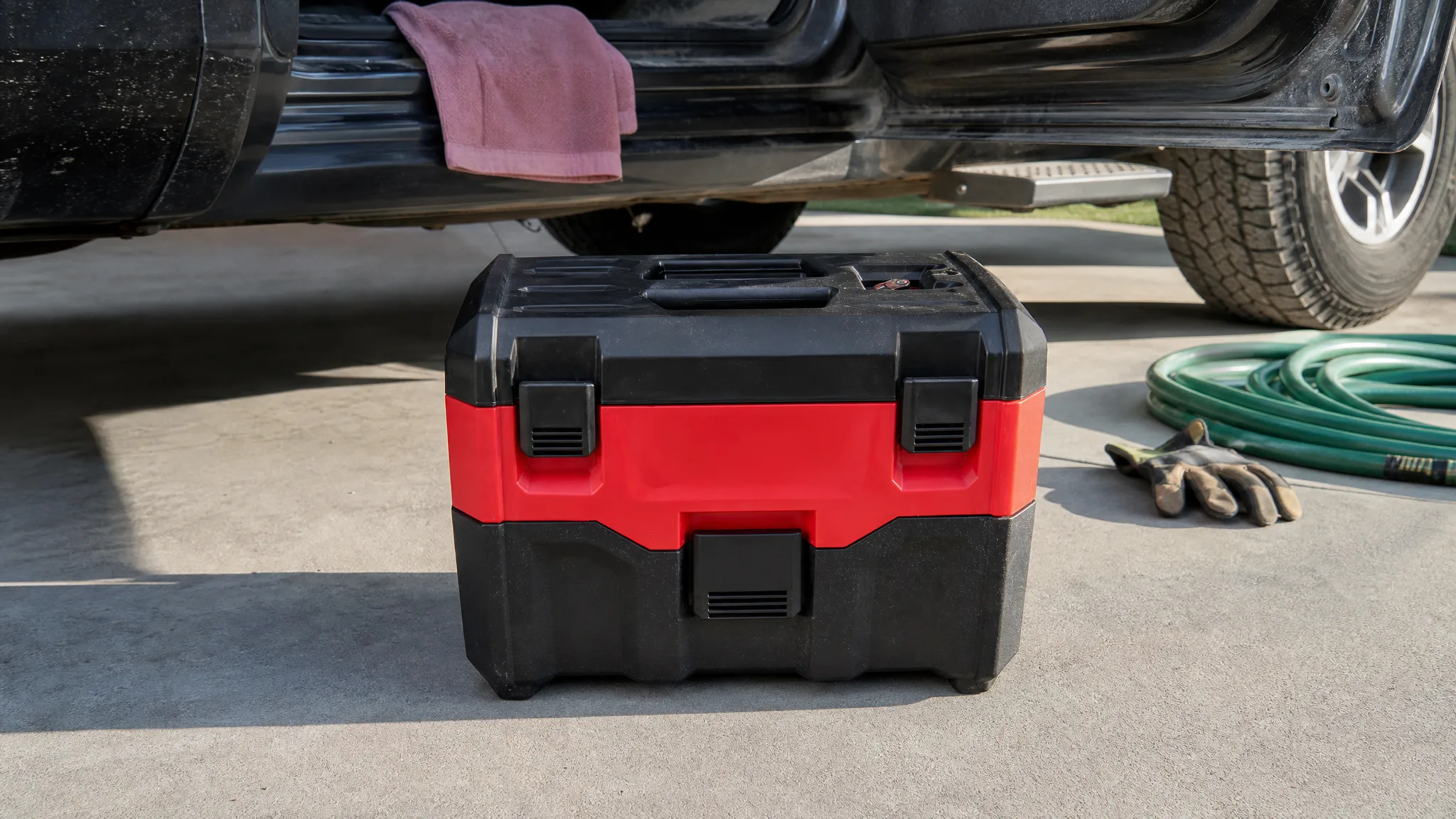
Sand tracked across a camper step. A truck cab floor after a lumber run. A water bottle knocked over in the garage while your hands are full of something else. Every one of those is a five minute job that waits three weeks, because dragging out a corded vac and hunting for an outlet costs more effort than the mess deserves. The Milwaukee 0880-20 is built for that gap, and we ran it for four weeks under our standard testing process.
Verdict: Suction is genuinely strong for a vac this small, and battery life is the price you pay for it. 8/10.
Best for: Quick cleanups in cars, campers, and small workshops where cordless freedom matters more than endurance, especially if M18 packs already sit on your shelf.
Skip if: You need to vacuum large areas or work through heavy, sustained messes.

Milwaukee
Milwaukee 0880-20 18V Cordless Lithium-Ion 2 Gallon Wet/Dry Vacuum (Bare Tool)
Best for
We recommend this for quick cleanups in cars, campers, and small workshops where cordless freedom is key, but skip it if you need to vacuum large areas or tackle heavy, sustained messes.
We see a clear consensus: this compact vacuum punches above its size with strong suction for quick wet and dry messes. The main trade-off? Battery life is short, so it's best for fast jobs with a spare battery on hand.
Loved by buyers
- •Strong suction relative to its size handles both dry debris and liquid spills without skipping a beat.
- •Compact, stackable design with onboard storage keeps the hose and attachments neatly contained and ready to go.
- •Light enough to maneuver in tight spaces like vehicle cabs, campers, or around the house.
Buyer concerns
- •Battery drains quickly, making it impractical for tasks longer than a few minutes unless you have spares.
- •Removing the battery can be awkward and requires more force than expected.
At a glance
| Specification | Detail |
|---|---|
| Model | 0880-20 |
| Platform | Milwaukee M18 18V lithium-ion |
| Tank | 2 gallons, rated for wet and dry pickup |
| Battery and charger | Not included, sold as a bare tool |
| Cordless runtime | Short. Owners commonly report a few minutes of continuous hard use per pack |
| Filters | One filter for dry debris, a separate one for wet pickup |
| Blower mode | Yes, the airflow reverses out of a port |
| Onboard storage | Hose and attachments clip to the body |
| Shape | Flat top, stacks with tool cases and boxes |
| Corded option | None, battery only |
| Owner rating | 4.5 out of 5 across more than 1,300 ratings |
What we liked
Suction that does not feel apologetic
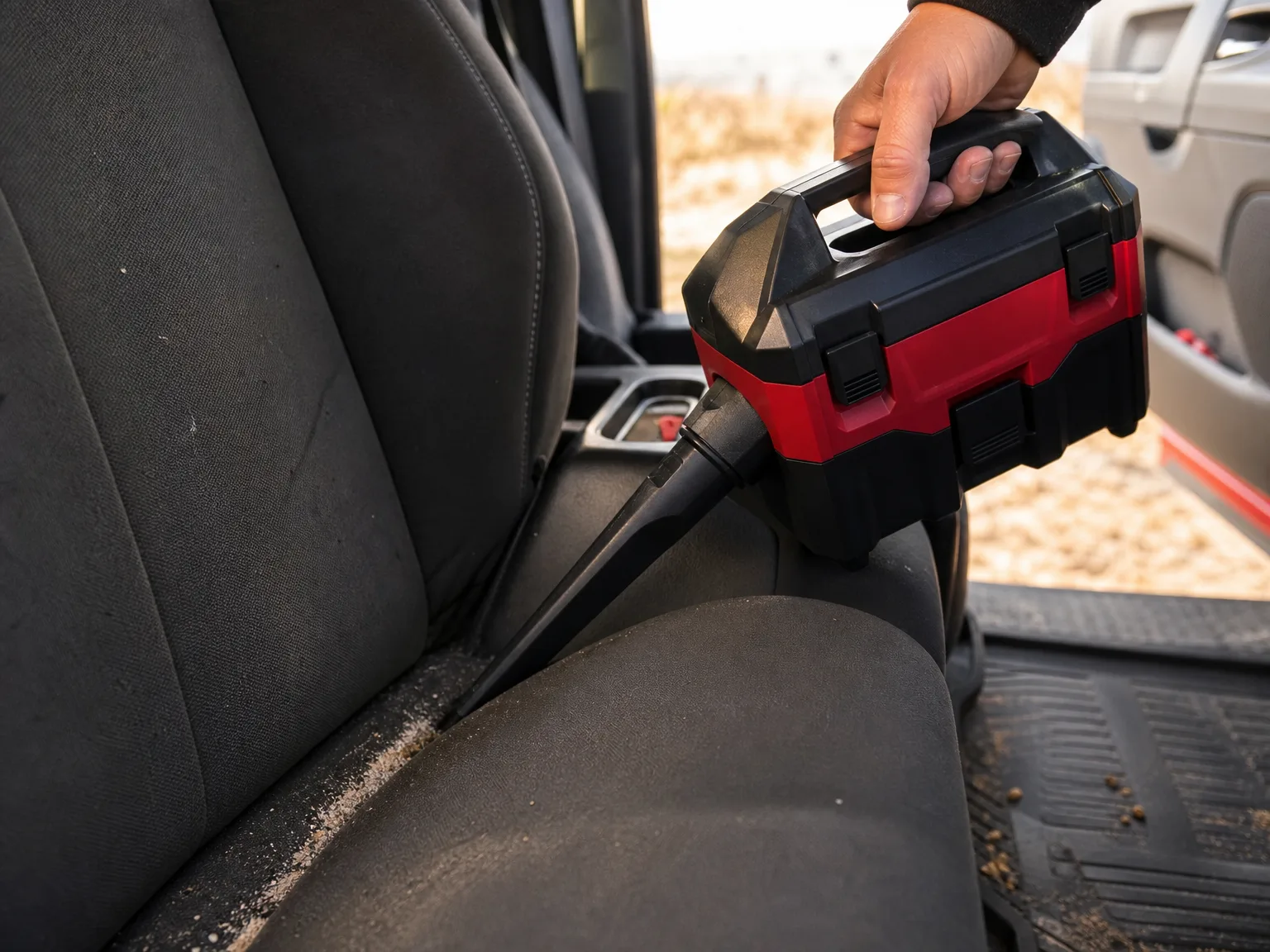
Small battery vacs usually ask you to lower your expectations. This one does not. It pulled sand out of rubber floor mats on the first pass and lifted sawdust off a bench without us pressing the nozzle flat against the surface to help it along.
Owner reports line up with what we saw, and they are unusually consistent about it. Strong pickup on dry debris, strong pickup on liquid, no obvious drop-off between the two. The comparison that matters is not against a full-size shop vac, which will always win, but against the other things you might grab for a car interior. Against a handheld car vac or a stick vacuum head, this is a different level of pull.
Wet and dry in the same trip
A spilled drink and the grit it landed in are one job here. Swap to the wet filter, vacuum the liquid, and the tank handles both without you carrying a second machine out to the driveway. We used it on a puddle at the base of a utility sink and on a juice box emptied into a back seat, and neither needed any special technique.
The filter swap is the part to remember. You want the dry filter in for dust and the wet filter in for liquid, and mixing those up is how people end up with a soggy pleated cartridge that smells and loses suction. It takes maybe thirty seconds, so build it into the job rather than treating it as a chore.
Everything stays with the vac
The hose and the attachments clip onto the body, which sounds like a small thing until you have spent ten minutes looking for a crevice tool in a garage. Nothing rattles loose in the back of a truck. Nothing gets left behind at a job site.
The flat top matters too. It stacks under a tool box or on a shelf instead of taking a floor footprint the way a round canister vac does, and for anyone dealing with a crowded garage or a small apartment storage closet, that is often the deciding factor. Storage anxiety is a real reason vacuums get returned, and this shape sidesteps it.
Blower mode earns its place
We expected this to be a spec sheet feature and it turned out to be the thing we reached for most after vacuuming. Reversing the airflow clears a workbench faster than any nozzle, and it gets into gaps too tight for the hose, like the seam between a truck seat and the center console.
It also dries surfaces. After wet pickup on a camper floor, a minute of blowing moved the remaining damp along faster than towels did. Owners describe the same uses: clearing debris off benches, blowing out tight spaces, drying things off. For a feature that costs nothing extra, it does real work.
Where it falls short
The battery goes fast, and this shapes everything
This is the limitation that defines the tool. Under continuous load the pack drains quickly, and owners frequently describe getting only a few minutes of hard running before the vac slows. Higher capacity packs stretch that, but nothing turns this into a machine you can run for half an hour.
So the practical model is short bursts with a spare pack in reach, not one long session. A car interior is a realistic target if you keep moving and do not linger. A whole camper, a garage floor, or a room of carpet is not, and no amount of technique changes that. If you own one M18 battery and no others, buy a second before you buy this vac.
Getting the battery out takes real force
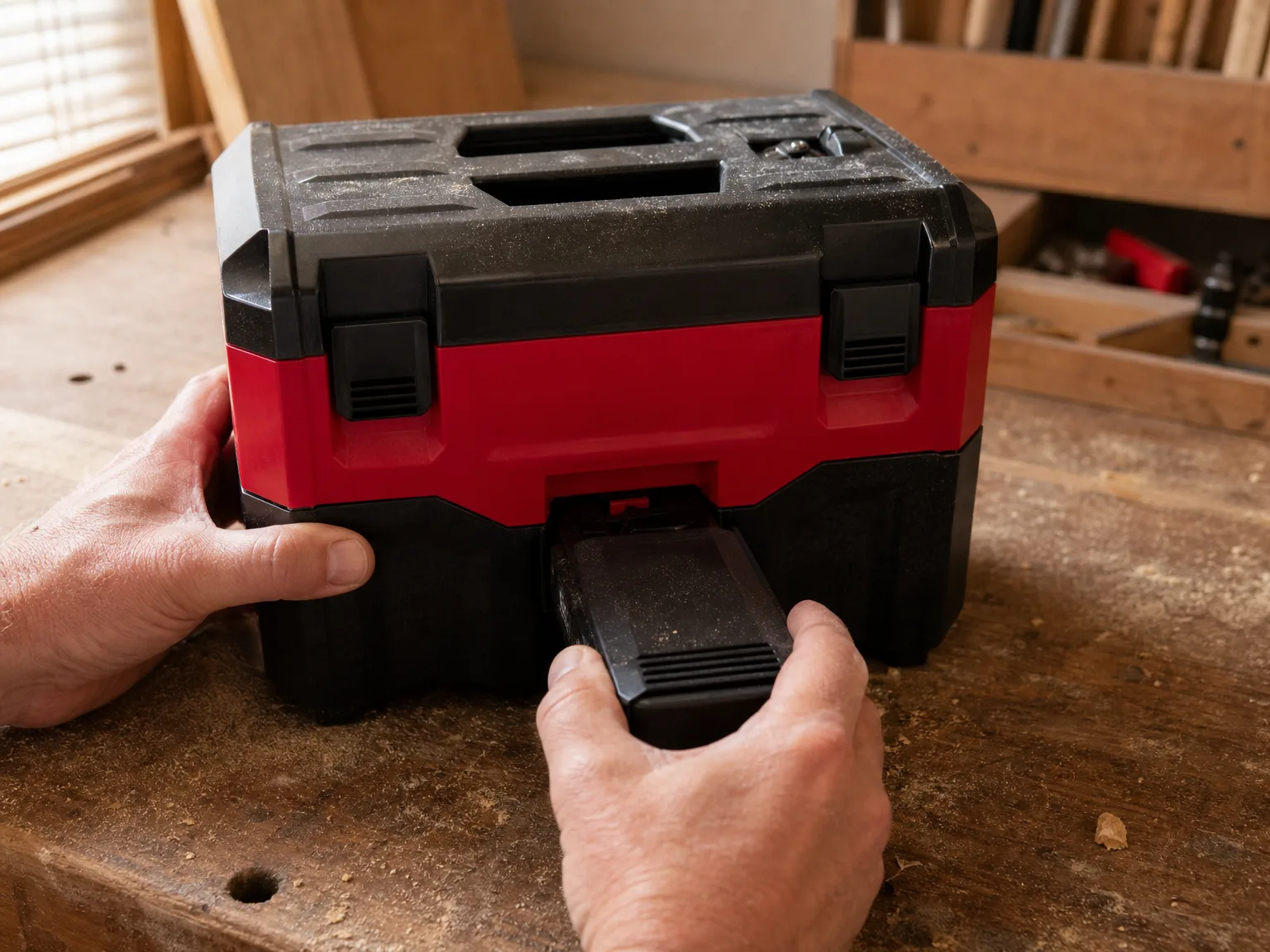
Owners raise this repeatedly and we ran into it too. The release does not slide the way it does on a drill. It wants a firm grip and more pull than you would expect, which is awkward when the vac is on a bench at chest height or when your hands are wet from emptying the tank.
Nothing breaks and it does loosen slightly with use, but it never becomes a casual one-handed motion. Since the short runtime means you will be swapping packs often, a stiff release is more annoying here than it would be on a tool you charge once a week.
Two gallons and a bare tool price
The 2-gallon tank suits the jobs this vac is meant for and stops well short of anything bigger. Vacuum up one decent spill or the floor of a truck cab and you are already thinking about emptying it. That is the right trade for portability, but it is worth naming before you buy.
The bare tool part deserves the same honesty. There is no battery and no charger in the box. If you already run M18 tools, this is the cheapest way to add a vac to that platform. If you do not, the pack and charger change the arithmetic enough that a corded wet/dry vacuum comes back into the conversation with far more tank and no runtime worry.
Real-world performance
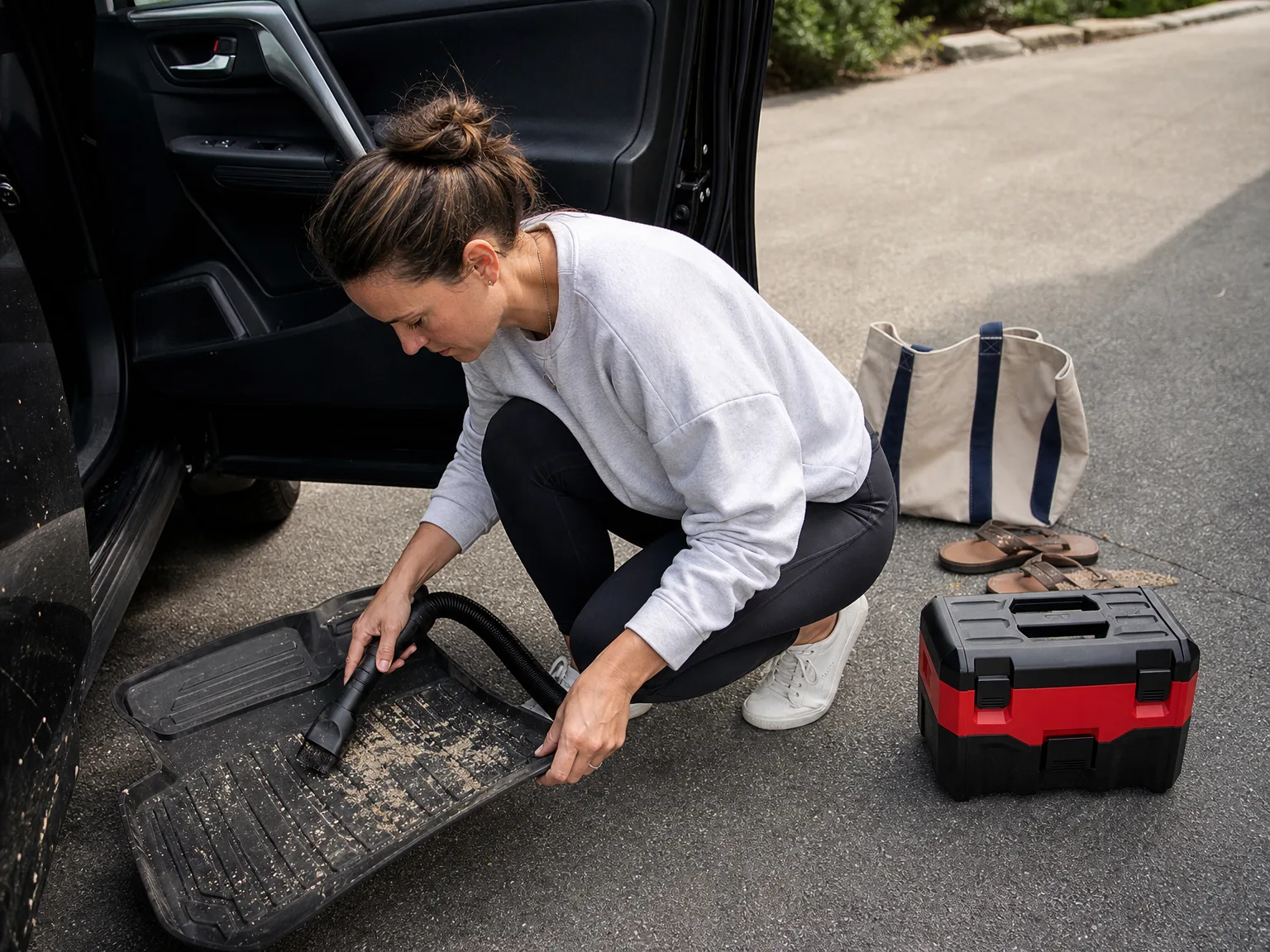
A car after a beach weekend. Sand in the mats, sand in the seat seams, and a layer of it in the trunk. The vac cleared the mats fast, and the narrow tool got into the seams where a stick vacuum head simply cannot reach. The pull was strong enough that we were not making second and third passes.
What we did not finish on one pack was everything. Two rows plus the trunk needed a battery swap, and that is with a mess that vacuums easily. Plan on a spare if the car has been lived in for a week rather than a day.
A camper after a long weekend. Pine needles on the step, crumbs in the dinette cushions, and a damp patch by the door. The compact body was the whole reason this worked, since it sits on a bench seat or the floor without wedging itself into a doorway the way a larger canister does.
This job also showed the ceiling. We got through the entry and the dinette on the first pack and swapped to finish the sleeping area. If a camper cleanout is your recurring chore rather than an occasional one, you are buying batteries as much as you are buying a vacuum.
Sawdust and a spill in a one-car workshop. Two boards cut on a miter saw leave a manageable pile, and the vac handled it with the dry filter in place. Then we knocked over a cup of water on the bench, swapped filters, and picked that up too, which is exactly the versatility that makes a wet/dry vac worth owning in a garage.
Blower mode finished the job. Rather than chasing the last dust off the bench with a nozzle, we reversed the airflow and cleared the surface in about fifteen seconds. For a workshop that produces dust every weekend, though, a bagged corded machine is still the right primary tool and this is the quick one you actually pick up.
Indoor spot cleaning with the house occupied. Loud vacuums waking a napping toddler or sending a dog under the bed is a genuine reason cleaning gets postponed, so we treated noise as a test. This is a shop vac and it sounds like one. It is not harsh, but it is louder than a good cordless stick vacuum and it is not a machine for the room next to a nursery.
Used the way it is designed, that barely matters. Short bursts in a garage, a driveway, or a car mean the noise lasts a couple of minutes rather than filling an afternoon, and that is a very different experience from running a full-size vac through a whole house.
How it compares to alternatives
The closest rival is the DEWALT DCV581H, another 2-gallon wet/dry vac in the same size class. Its trick is dual power: it runs on a 20V MAX pack or plugs into a wall outlet, so a dead battery costs you a walk to an extension cord instead of ending the job. If short runtime is the thing that worries you most about the Milwaukee, that switch is the direct answer, and it is the reason to buy DEWALT here if you are not already committed to either platform.
If capacity is your actual problem, a corded vac is a different class of tool entirely. Our Vacmaster 6-gallon wet/dry review covers a machine with triple the tank and a detachable blower, which suits garages and car detailing at the cost of an outlet and a hose you have to manage. You give up the grab-and-go quality that makes the Milwaukee get used in the first place.
For a vac that lives in the car and never sees sawdust, smaller is easier to justify. The ZARIMI portable car vacuum stows in a door pocket with no battery platform behind it, and the Voice-tank 4-in-1 car vacuum covers similar ground with more attachments. If your messes are crumbs and dust in a single vehicle rather than sand, spills, and workshop debris, get one of those instead and skip the M18 investment.
Who should buy it
Buy it if you already own M18 packs and your recurring messes are truck cabs, camper floors, workbenches, and spills that need cleaning before they set. Adding a bare tool to a platform you have paid for once is the cheapest route to a vac with this much pull in a body you can carry in one hand, and the onboard storage means it is ready the moment you pick it up rather than after a hunt for the crevice tool.
Look elsewhere if you are starting with no Milwaukee batteries, since a pack and a charger shift the math enough that corded vacs with three times the tank become the sensible buy. Look elsewhere too if your jobs run long: whole rooms of carpet, a full garage floor, or the sustained cleanup after a real renovation. This vac is built for bursts, and a few minutes at a time is genuinely what you get.
What you are buying is a strong cordless vacuum, light enough to carry to wherever the mess is with no cord to plan around, that handles wet and dry without a second machine and blows debris out of places no nozzle reaches. What you give up is endurance and tank volume, plus a battery release that never stops needing a firm hand.
Frequently asked questions
How long does the battery last on a full charge?
Runtime depends on the pack, but expect short. Owners commonly report the vac working through a charge in just a few minutes of continuous use. The practical fix is a second battery, and most people who like this vac are working with at least two.
Can it handle both wet spills and fine dust?
Yes to both. Owners confirm strong suction on sawdust, dirt, and liquid alike. The catch is filters: you need the dry filter in place for dust and the separate wet filter for liquid, and the swap takes seconds once you know to do it.
Is the blower mode actually useful?
More than we expected. It clears debris off a workbench faster than vacuuming does, gets into gaps too tight for the hose, and dries surfaces after wet pickup. Treat it as a real second function rather than a bonus line on the box.
Does it work with all Milwaukee M18 batteries?
Any M18 pack fits. Larger high-capacity packs give you more runtime but sit awkwardly on a body this compact and add noticeable weight, so most owners settle on standard or compact packs for balance and keep a spare charged.
Does it come with a battery and charger?
No. It ships as a bare tool, which is why it looks inexpensive next to corded vacs. Add a pack and a charger to the total before you compare it against anything else, unless that hardware is already in your garage.
Will it replace a full-size shop vac?
Not for heavy work. Two gallons and a short runtime put a hard ceiling on what it can finish in one go. Think of it as the vac that handles the quick jobs your big one never gets pulled out for, which in most garages is the majority of them.
Bottom line
The 0880-20 punches well above its size on suction and gives up almost nothing switching between wet and dry, which is a rare combination in something you can carry with one hand. Four weeks of cars, a camper, and a workshop bench confirmed both halves of its reputation: it is genuinely strong and genuinely thirsty, so the battery, not the tank, is what ends most jobs. Buy it if you run M18 tools and your messes are fast and frequent, and buy a spare pack in the same order. If your cleanups take longer than a few minutes at a stretch, put the money toward a corded wet/dry vac and accept the outlet as the price of finishing in one pass.
Explore related
In this article
- At a glance
- What we liked
- Suction that does not feel apologetic
- Wet and dry in the same trip
- Everything stays with the vac
- Blower mode earns its place
- Where it falls short
- The battery goes fast, and this shapes everything
- Getting the battery out takes real force
- Two gallons and a bare tool price
- Real-world performance
- How it compares to alternatives
- Who should buy it
- Frequently asked questions
- How long does the battery last on a full charge?
- Can it handle both wet spills and fine dust?
- Is the blower mode actually useful?
- Does it work with all Milwaukee M18 batteries?
- Does it come with a battery and charger?
- Will it replace a full-size shop vac?
- Bottom line
Keep reading

How to Clean Hardwood Floors Without Damaging Them: A Busy Home Guide
Soft rollers, the right suction mode, and barely damp mops keep hardwood safe. Here's the method we use at home, plus three tools that won't scratch sealed wood.
Vacmaster VJF607PF Review: Basement Water and Shop Dust Tested
We tested the Vacmaster VJF607PF 6-gallon wet/dry shop vac on basement water, sanding dust, and a filthy car interior. Strong suction, and a tank you feel every time you empty it.
Armor All AA255W Review: Trunk Wet/Dry Cleanup After Weeks
We tested the Armor All AA255W 2.5-gallon wet/dry vac on trunk spills, car mats, and pet debris. Honest take on cord reach, crevice tools, and who should buy.