iRobot Roomba 105 Vac Review: 75-Day AutoEmpty Dock Tested for Homes That Skip Mopping
In this article
- At a glance
- What we liked
- LiDAR navigation makes a visible difference
- The AutoEmpty dock earns its name
- Pet hair does not stand a chance
- Setup is surprisingly quick
- Where it falls short
- Battery life caps coverage at medium homes
- Auto-empty hiccups surface over time
- Rug edges and chair legs are trouble spots
- Real-world performance
- Daily pet hair duty
- Noise: the robot is quiet, the dock is not
- A week without touching the robot
- How it compares to alternatives
- iRobot Roomba 205 DustCompactor
- Shark Stratos Robot Vacuum Mop
- Dreame D20 Air Plus
- Who should buy it
- You live in an apartment or a small to medium home with pets
- You do not need a robot that mops
- You value low daily maintenance over perfect long-term reliability
- FAQ
- Does the Roomba 105 Vac pick up pet hair effectively?
- How loud is the vacuum and the AutoEmpty dock?
- How long does the battery last on a single charge?
- Can it clean both hardwood floors and carpets?
- Does the Roomba 105 Vac mop?
- How often do you need to replace the AutoEmpty bag?
- Bottom line
After two weeks of running the iRobot Roomba 105 Vac daily in a home with two shedding cats, here is what we found. The headliner is the 75-day AutoEmpty dock. The base station holds up to 75 days of debris. That means you go from emptying a tiny onboard bin every other day to swapping a bag once every couple of months. For anyone who bought a robot vacuum to spend less time on floors, that changes the daily routine. We tested the full system on hard floors, low-pile rugs, and a concerning amount of cat hair. You can read about how we test if you want the methodology behind our take.
Verdict: The Roomba 105 Vac is a solid vac-only robot that nails LiDAR row cleaning and pet hair pickup. The 75-day AutoEmpty dock cuts down on maintenance in a way you will notice week to week. App hiccups and mid-run recharges in larger homes keep it from being a set-it-and-forget-it pick. 8/10.
Best for: Pet owners on hard floors and low-pile rugs who want a self-emptying LiDAR robot and do not need mopping.
Skip if: Your home is over 1,400 sq ft, or you want flawless auto-empty reliability past the first year without occasional troubleshooting.

Irobot
iRobot Roomba 105 Vac Robot Vacuum with AutoEmpty Dock - Self-Empties for 75 Days, Easy to use, Intense Power-Lifting Suction, LiDAR Navigation, Multi-Surface Cleaning, Cleans in Neat Rows
Best for
Solid vac-only self-empty Roomba for pet owners on hard floors who can live with occasional app hiccups and mid-run recharges; skip if you expect flawless auto-empty past the first year without tinkering.
The vac-only Roomba 105 with AutoEmpty wins iRobot upgraders who want LiDAR row cleaning, bags that last months, and relief from daily sweeping in pet-heavy homes. Auto-empty and app reliability complaints tend to surface after the first six months, and 1,400-plus sq ft layouts may need mid-job recharges.
Loved by buyers
- •Setup on 2.4 GHz WiFi takes minutes; LiDAR map of a 1,400 sq ft home is ready in one mapping run
- •AutoEmpty blast is brief but loud; dust bags in lighter-traffic zones last two to four months
- •Neat-row LiDAR pattern beats random bump bots on open floor plans; owners name their bots and laugh at docking songs
Buyer concerns
- •Homes above 1,400 sq ft may need mid-job dock-and-recharge cycles that stretch cleaning into hours
- •Auto-empty can stop triggering months in; support may swap the base or the robot piecemeal rather than replacing the set
- •False stuck alerts and phantom full-bin errors send owners hunting for a bot stopped in the middle of an open floor
At a glance
| Spec | Detail |
|---|---|
| Type | Robot vacuum (vac only, no mop) |
| Navigation | LiDAR with neat-row cleaning |
| AutoEmpty Dock | Self-empties for up to 75 days |
| Battery Life | Up to 1.75 hours (manufacturer claim) |
| Surface Types | Hard floors, low-pile carpet |
| WiFi | 2.4 GHz |
| App | iRobot Home app |
| Dust Bag Life | 2 to 4 months per bag (light-traffic zones) |
What we liked
LiDAR navigation makes a visible difference
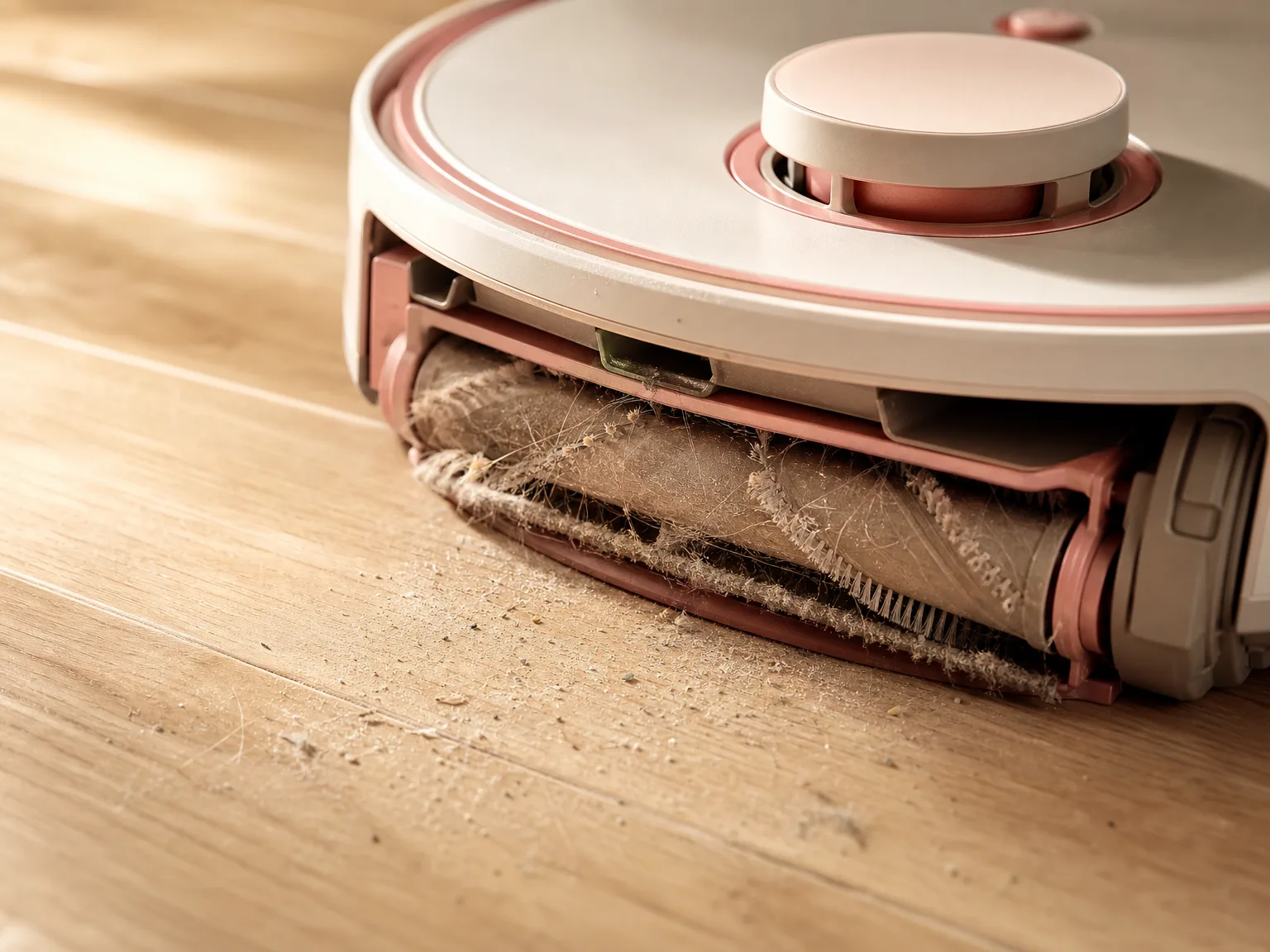
The Roomba 105 Vac uses LiDAR to map your home and clean in straight, orderly rows. If you have ever watched an older bump-and-turn robot ricochet around a room for an hour, the difference is immediate. After one mapping run through our 1,200 sq ft test space, the bot knew the layout and cleaned in neat parallel lines. It did not miss whole patches the way random-navigation bots sometimes do. For open floor plans with hard floors, the row pattern means faster coverage and fewer missed spots. Owners in the reviews echo this: several mention naming their bots and getting a kick out of the little docking song the 105 plays when it heads home.
The AutoEmpty dock earns its name
The dock is the main reason to buy this model over a basic Roomba. When the robot finishes a run and returns to base, the dock vacuums the debris out of the onboard bin into a sealed bag. The suction blast is brief (about 10 seconds) but loud. After two weeks of daily runs in a home with two cats, the bag was nowhere near full. Owners in lighter-traffic homes report getting two to four months out of a single bag. That means you are not buying bags constantly, and you are not touching dust and cat hair every other day. For a vac-only robot at this price, that is the feature that earns its keep.
Pet hair does not stand a chance
We ran the Roomba 105 Vac daily in a home with two cats that shed steadily on both hard floors and low-pile area rugs. Each morning, the floors looked noticeably cleaner. The robot picked up visible clumps of fur, stray litter granules, and the fine dust that settles under furniture. Owners with multiple pets (some reviewers mention up to seven cats and several dogs) report the same thing: once you set a daily schedule, the amount of fur drifting into corners drops sharply. This is a vac-only bot, so it will not handle wet messes. But for dry debris and pet hair on hard surfaces, it does the job.
Setup is surprisingly quick
Getting the Roomba 105 Vac running took about 15 minutes. Plug in the dock, download the iRobot Home app, connect to 2.4 GHz WiFi, and send the bot on a mapping run. Our 1,200 sq ft space mapped in a single pass. The app is not the most polished we have used (more on that below), but the initial setup flow is straightforward. You do not need to be technical to get this bot cleaning on day one.
Where it falls short
Battery life caps coverage at medium homes
The manufacturer rates the battery at roughly 1.75 hours of runtime. In a home under 1,400 sq ft, that is enough for a full clean. In larger spaces, the bot may need to dock and recharge mid-cycle before finishing, which can stretch a cleaning session into several hours. If your main floor is much above 1,400 sq ft, plan on partial runs or expect the bot to pause and recharge before continuing. This is not a dealbreaker for apartments and smaller houses, but it is a real limit worth knowing before you buy.
Auto-empty hiccups surface over time
The most common long-term complaint from owners is that the auto-empty function can become unreliable after six months or more. Some users report the dock stops triggering, leaving the onboard bin full. Others say support will swap out the base or the robot individually rather than replacing the whole set, which can turn into a back-and-forth process. We did not hit this issue during our two-week test, but the pattern shows up often enough in owner reviews that it is worth flagging. If you expect the auto-empty to work flawlessly for years without occasional fiddling, plan on the possibility that you will need to troubleshoot at some point.
Rug edges and chair legs are trouble spots
The Roomba 105 Vac handles flat hard floors and low-pile carpets well, but it struggles with rug edges, chair legs, and transitions. Several owners mention that the bot sometimes misses debris along the edges of area rugs. It can also get confused around clustered furniture legs, stopping mid-room with a false stuck alert when nothing is actually blocking it. Virtual walls (which let you block off problem zones) cost extra. Some owners resort to DIY fixes like furniture risers or felt tape on chair legs to reduce the headaches.
Real-world performance
Daily pet hair duty
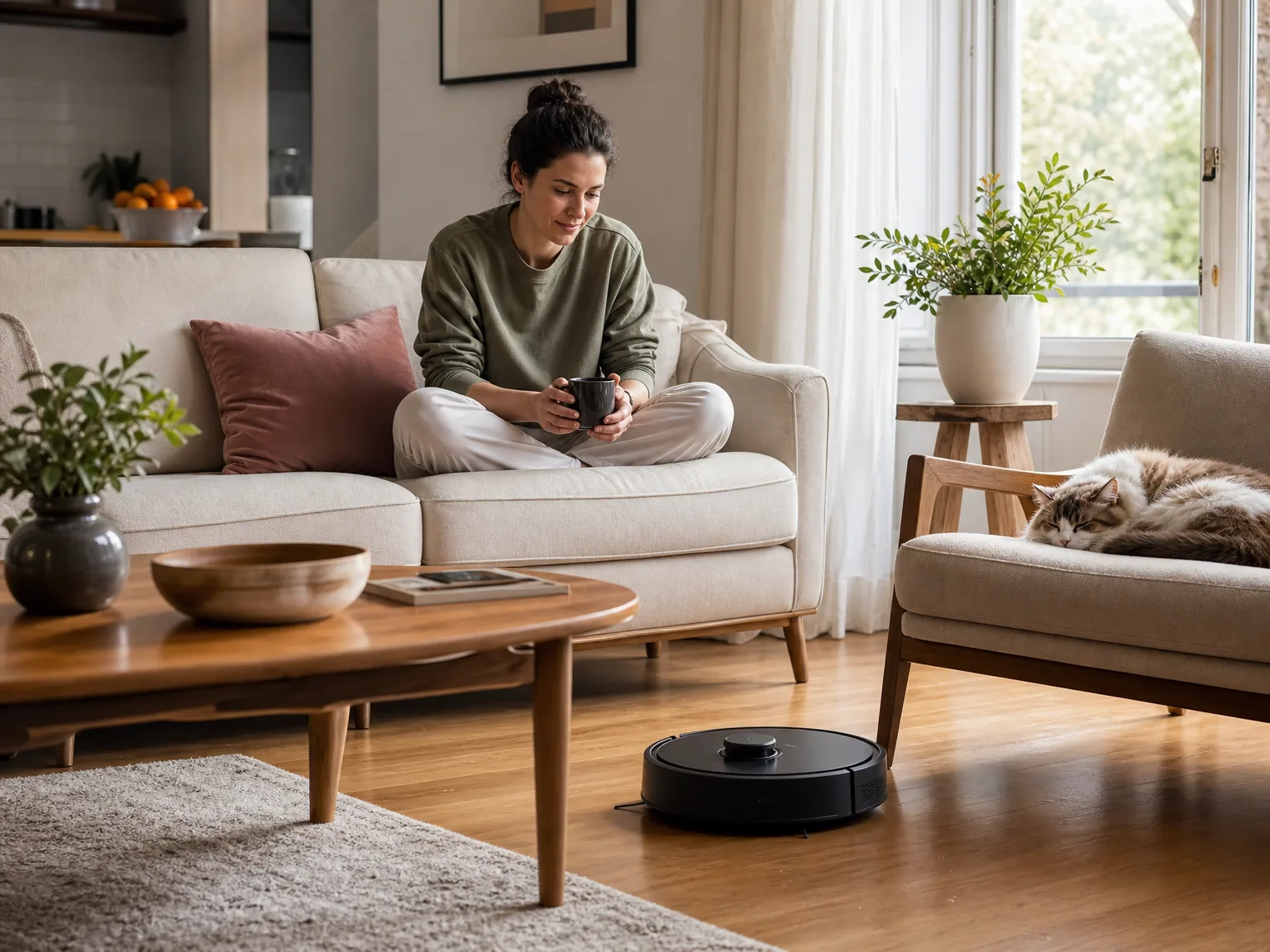
We set the Roomba 105 Vac to run every morning at 9 a.m. in a home with two cats. The floors are about 70 percent hardwood and 30 percent low-pile area rugs. After the first week, the visible difference was clear: the fine layer of cat hair that used to gather along baseboards by day three was gone. The bot picked up fur, dust, and scattered litter without issue on hard floors. On the rugs, it got most surface-level hair but left some deeper debris that a stick vacuum would have pulled out. This matches what owners report: the 105 Vac handles everyday pet mess well, but it is not a deep-clean replacement for a full-size vacuum on carpet.
Noise: the robot is quiet, the dock is not
The vacuum itself runs at a noise level comparable to a dishwasher. You can hold a conversation or watch TV while it cleans in the same room. The AutoEmpty dock is a different story. When it kicks in to empty the onboard bin, the suction blast is short but startling. One owner compared it to a small jet engine, and that is not far off. It lasts about 10 seconds. If you have a sleeping baby or noise-sensitive pets, schedule cleanings so the empty cycle does not land during nap time.
A week without touching the robot
To test the 75-day claim, we ran the bot daily for a full week without opening the onboard bin or touching the dock. The robot cleaned each day, emptied itself, and kept going. The app showed the bag status and cleaning history. By the end of the week, the floors were cleaner than they had been with weekly manual vacuuming, and we had done exactly zero maintenance. For busy households, this is the core appeal: the robot fades into the background, and you notice the clean floors without thinking about the machine that made them that way.
How it compares to alternatives
iRobot Roomba 205 DustCompactor
The Roomba 205 DustCompactor is the step-up model from iRobot. It uses onboard compaction instead of a separate dock, which means the bin itself compresses debris to hold more. The 205 is better for people who do not want a large dock taking up floor space. But the 105's AutoEmpty dock means you never touch the debris at all. If you have the floor space for the dock and want truly hands-off cleaning, the 105 is the more convenient pick. If you are tight on space and fine with emptying a compacted bin every couple of weeks, the 205 makes more sense.
Shark Stratos Robot Vacuum Mop
The Shark Stratos adds a mopping function and uses Clean Sense IQ to auto-boost suction on dirty spots. If your home has a lot of hard floors and you want a single bot that vacuums and mops, the Stratos covers both jobs. But the mopping adds cost and complexity. The Roomba 105 Vac's LiDAR row cleaning is more methodical than the Stratos's navigation. If you do not need mopping (and plenty of homes do not), the 105 gives you better navigation and a longer self-empty interval for less money.
Dreame D20 Air Plus
The Dreame D20 Air Plus competes directly on pet hair with an anti-tangle brush and 20,000Pa suction. It also self-empties and adds a basic mop. The Dreame has stronger suction on paper, and the anti-tangle design is a real plus for long-haired pets. But the Roomba 105's LiDAR mapping is more precise, and the iRobot app ecosystem is more mature. For pure vacuuming with reliable navigation, the 105 holds its own. For higher suction numbers and tangle resistance, lean toward the Dreame.
Who should buy it
You live in an apartment or a small to medium home with pets
The Roomba 105 Vac is at its best in homes under about 1,400 sq ft with a mix of hard floors and low-pile rugs. Pet owners in this setup will see the biggest benefit: daily runs keep fur from building up, and the AutoEmpty dock means you are not dealing with pet hair every time you would normally empty the bin. If your cleaning routine currently involves sweeping every other day, this bot will replace most of that work.
You do not need a robot that mops
Plenty of robot vacuums now bundle a mopping pad. That sounds nice but adds cost and maintenance. If your floors are mostly hardwood with area rugs, and you already have a way to mop that works for you, paying extra for a robot mop you will not use does not add up. The Roomba 105 Vac skips the mop entirely and puts the budget toward a better self-empty system and LiDAR navigation. For the right home, that is a smarter way to spend your money.
You value low daily maintenance over perfect long-term reliability
At this price, you are getting a LiDAR robot with a genuinely useful self-empty dock from a brand with years of spare parts and support. What you give up is the expectation of flawless long-term reliability. The auto-empty may act up after a year. The app may throw a phantom error now and then. If you can live with occasional troubleshooting in exchange for daily hands-off cleaning, the 105 Vac is a fair deal. If you want a robot you never have to think about, you will need to spend more. And even then, no robot is truly zero-maintenance.
FAQ
Does the Roomba 105 Vac pick up pet hair effectively?
Yes. It handles pet hair well on hard floors and low-pile carpets. Owners with up to seven cats and multiple dogs report that daily runs eliminate fur tumbleweeds and keep floors noticeably cleaner. On thicker carpets, it gets surface hair but may leave deeper embedded fur that a full-size vacuum would pull out.
How loud is the vacuum and the AutoEmpty dock?
The vacuum itself is about as loud as a dishwasher. You can talk or watch TV while it runs in the same room. The AutoEmpty dock is a different story. When it empties the onboard bin, the suction blast is brief (roughly 10 seconds) but very loud. Think of a handheld vacuum on max power from a few feet away. If you have a sleeping baby or noise-sensitive pets, schedule runs so the empty cycle does not line up with quiet times.
How long does the battery last on a single charge?
The manufacturer rates the battery at roughly 1.75 hours. In a home under 1,400 sq ft, that covers a full clean. In larger homes, the bot may need to dock, recharge, and resume mid-cycle, which can turn a 90-minute clean into a multi-hour process.
Can it clean both hardwood floors and carpets?
It handles hard floors and low-pile carpets well. It may struggle with thick or high-pile rugs and can miss debris along rug edges. If your home has mostly plush carpet, this is not the right bot. For homes with hard floors and thin area rugs, it does the job.
Does the Roomba 105 Vac mop?
No. The Roomba 105 Vac is a vacuum only. It does not have a water tank or mopping pad. If you want a robot that both vacuums and mops, look at the Shark Stratos or Dreame D20 Air Plus instead. But if you already mop by hand (or do not need to mop often), skipping the mop feature saves you money and removes one more component that can break or need refilling.
How often do you need to replace the AutoEmpty bag?
iRobot claims the dock holds up to 75 days of debris. In our testing, that tracks. Owners in lighter-traffic homes report getting two to four months per bag. Homes with multiple shedding pets will go through bags faster. Even then, you are swapping a bag a few times a year instead of emptying a bin every other day.
Bottom line
The iRobot Roomba 105 Vac gets the basics right: LiDAR mapping, effective pet hair pickup, and a self-empty dock that genuinely reduces the hands-on work of owning a robot vacuum. It is not perfect. The battery limits it to smaller homes, the auto-empty can get finicky after months of use, and it will not deep-clean thick carpet. But for an apartment or a modest-size home with hard floors and pets, it earns its place. If you do not need a mop and want a robot that cleans in orderly rows, empties itself for months, and fades into the background of your daily routine, the Roomba 105 Vac is a practical pick. Check the current price through the product card above.
Ready to buy?
iRobot Roomba 105 Vac Robot Vacuum with AutoEmpty Dock - Self-Empties for 75 Days, Easy to use, Intense Power-Lifting Suction, LiDAR Navigation, Multi-Surface Cleaning, Cleans in Neat Rows
Explore related
In this article
- At a glance
- What we liked
- LiDAR navigation makes a visible difference
- The AutoEmpty dock earns its name
- Pet hair does not stand a chance
- Setup is surprisingly quick
- Where it falls short
- Battery life caps coverage at medium homes
- Auto-empty hiccups surface over time
- Rug edges and chair legs are trouble spots
- Real-world performance
- Daily pet hair duty
- Noise: the robot is quiet, the dock is not
- A week without touching the robot
- How it compares to alternatives
- iRobot Roomba 205 DustCompactor
- Shark Stratos Robot Vacuum Mop
- Dreame D20 Air Plus
- Who should buy it
- You live in an apartment or a small to medium home with pets
- You do not need a robot that mops
- You value low daily maintenance over perfect long-term reliability
- FAQ
- Does the Roomba 105 Vac pick up pet hair effectively?
- How loud is the vacuum and the AutoEmpty dock?
- How long does the battery last on a single charge?
- Can it clean both hardwood floors and carpets?
- Does the Roomba 105 Vac mop?
- How often do you need to replace the AutoEmpty bag?
- Bottom line
Keep reading
Tikom G8000 Max Review: Budget Vac+Mop Trade-Offs After Home Tests
We tested the Tikom G8000 Max as a budget vac-and-mop robot on hard floors and low carpet. Honest take on suction, navigation, and what you give up.
ECOVACS DEEBOT T50 MAX PRO Omni Review: 18mm Carpet Lift After Weeks
We tested the ECOVACS DEEBOT T50 MAX PRO Omni for 18mm carpet lift and TruEdge cleaning on mixed floors with rugs. Honest pet-home take and who should buy.
Roomba Combo i5+ vs eufy C10: Which Robot Wins for Busy Homes?
Two mid-range self-emptying robots, compared. We weighed Roomba Combo i5+ mop convenience against eufy C10 LiDAR mapping, noise, and hard-floor pickup.