Shark Stratos Robot Vacuum Mop Review: Clean Sense IQ Reviewed
In this article
- At a glance
- What we liked
- Suction that reads the room
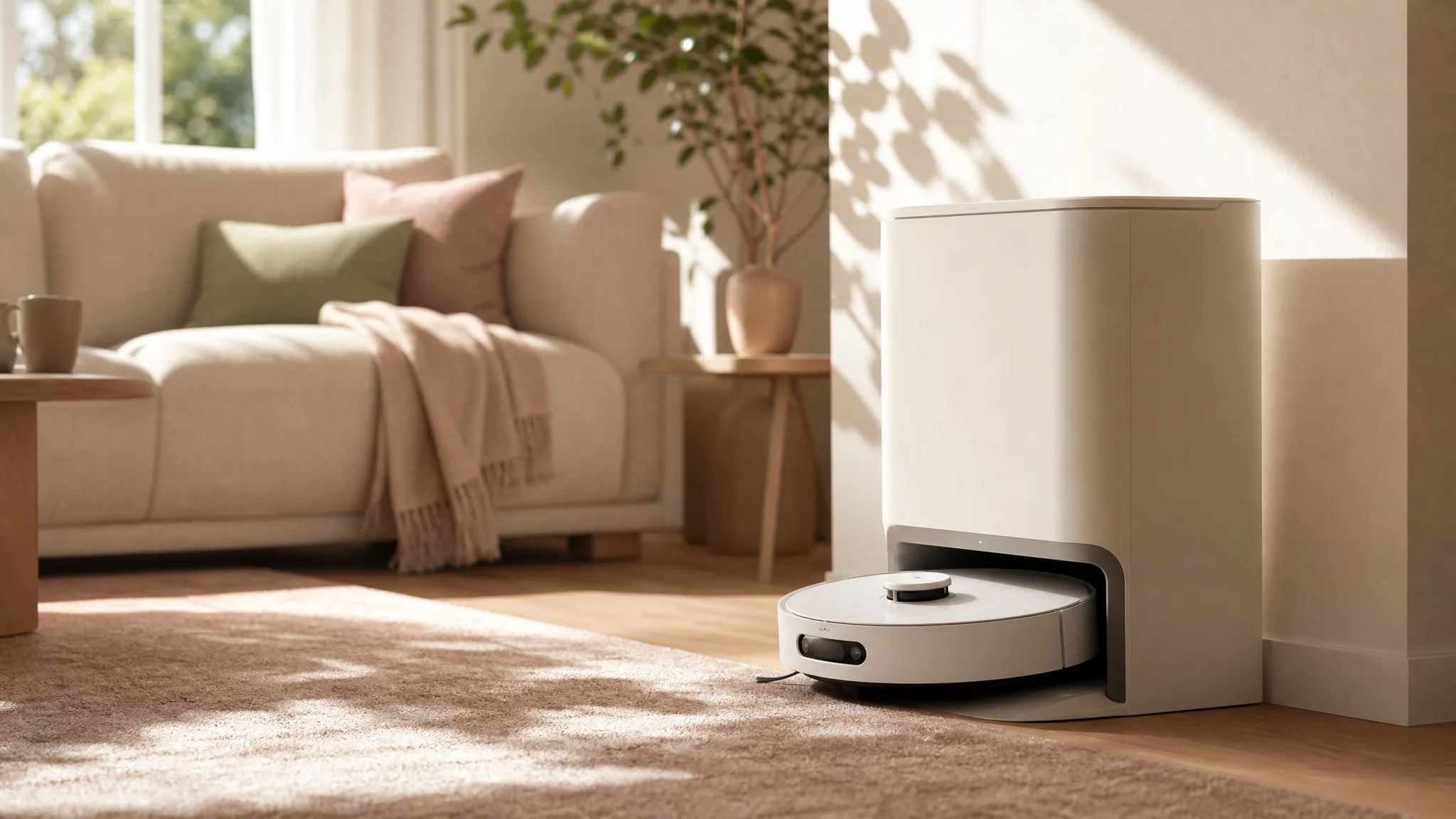
- A dock that does the dirty work
- LiDAR mapping that works on the first try
- Sonic mopping that actually scrubs
- Where it falls short
- Plastic that does not age well
- Hair tangles that need a monthly deep clean
- An app that second-guesses you
- Circular shape, corner-shaped gaps
- Real-world performance
- Medium-pile carpet with two dogs
- Hardwood and tile with daily dust
- Dried kitchen spills on textured tile
- How it compares to alternatives
- Who should buy it
- FAQ
- Does the Clean Sense IQ actually make a difference?
- How often do I need to refill the water tanks?
- Will it fall down stairs?
- How loud is it compared to a regular vacuum?
- What happens when the self-emptying bag is full?
- Can I schedule it to clean specific rooms on specific days?
- Bottom line
The Shark Stratos features Clean Sense IQ, a sensor that detects dirt levels and adjusts suction power automatically. This capability is particularly important in a robot vacuum, as it must clean effectively on the first pass without direct supervision. The Stratos combines strong carpet suction with useful self-maintenance features, though some long-term durability concerns have been reported by owners.
Verdict: The Shark Stratos pairs strong carpet suction with genuinely useful self-maintenance, but the plastic tanks and app quirks mean you will trade some long-term durability for the convenience. 8.0/10.
Best for: Pet owners with mixed flooring who want vacuuming and mopping on autopilot and can handle monthly maintenance.
Skip if: You expect a robot that runs for years without replacing parts or you want full edge-to-edge coverage along baseboards.


Shark
Shark Stratos | 2-in-1 Robot Vacuum & Mop for Carpets & Hard Floors | Powerful Suction & Mopping for Pet Hair | Self-Empty & Self-Clean NeverTouch Base | 60-Day Capacity | HEPA | White | AV2700ZE
Best for
Pet owners with mixed flooring who want vacuuming and mopping on autopilot and can commit to monthly maintenance; skip if you expect fully hands-off durability without part replacements.
The Shark Stratos robot vacuum and mop combo handles husky hair, daily dust, and sonic mopping with a base that self-empties and washes the pad. Long-term owners report that the clear plastic water tanks develop cracks and the app locks you into cleaning sequences you cannot cancel mid-run.
Loved by buyers
- •Pulls pet hair and fine dust out of carpet so thoroughly that owners stop using their upright
- •LiDAR mapping builds accurate room zones quickly after initial setup
- •Self-emptying base and self-washing mop pad cut hands-on maintenance to once a week
Buyer concerns
- •Clear mop reservoirs and robot water tank crack at screw mounts after a few months of normal use
- •Hair wraps around the side wheel spindle and needs monthly disassembly to remove
- •App locks you into a cleaning sequence once started; no cancel or override mid-job
At a glance
| Feature | Detail |
|---|---|
| Navigation | LiDAR with room-by-room mapping |
| Suction | Clean Sense IQ auto-adjusting (Shark does not publish a Pa rating) |
| Dust disposal | Self-emptying base, up to 60-day capacity (manufacturer claim) |
| Mopping | Sonic scrubbing pad with self-washing dock |
| Filtration | HEPA |
| Battery | Rated up to 90 minutes (manufacturer claim) |
| App | SharkClean (iOS and Android) |
| Dimensions | 13.4 in diameter, 3.5 in height |
| Weight | 6.6 lb (robot only) |
| Warranty | 1 year limited |
What we liked

Suction that reads the room
Clean Sense IQ effectively adjusts suction power based on floor type and dirt levels. On medium-pile carpet, the vacuum increases motor speed and brush engagement when encountering embedded pet hair, providing deeper cleaning. On hard floors, it operates at a lower power level for quieter performance. Owner feedback indicates that this feature reduces the need for additional deep cleaning with upright vacuums, a significant advantage for a robot vacuum.
A dock that does the dirty work
The NeverTouch base automates two key maintenance tasks: emptying the dustbin and washing the mop pad. The dust bag can hold up to 60 days of debris according to the manufacturer, with owners typically experiencing around 45 days between bag changes in homes with two dogs. The mop pad is cleaned automatically by the dock, which rinses it with clean water and collects dirty water in a separate reservoir. Weekly refilling of the clean water tank, emptying of the dirty water tank, and wiping of the base tray are necessary but significantly reduce manual maintenance compared to hand-washing mop pads.
LiDAR mapping that works on the first try
The Stratos uses top-mounted LiDAR for room mapping, creating accurate room boundaries that can be labeled in the app without redrawing. It cleans in straight rows, improving coverage and battery efficiency compared to random bounce patterns. Obstacle avoidance is competent, able to navigate around chair legs and shoes, though it may gently bump some objects before rerouting.
Sonic mopping that actually scrubs
The mopping pad vibrates at a rate of 100 times per second, providing more effective cleaning than a simple damp cloth. It can remove dried coffee drips and paw prints from sealed hardwood floors in one pass and handle light kitchen grease on textured tile with a second pass. While not a replacement for heavy-duty mopping, it performs well for daily maintenance between deeper cleans.
Where it falls short
Plastic that does not age well
Some owners report that the clear plastic water tanks and onboard reservoirs develop hairline cracks around screw mounts and seams after six months or more of use. These cracks cause slow leaks that require tank replacements. Replacement parts are available from Shark, but the need for spares at this price point is a notable downside.
Hair tangles that need a monthly deep clean
Pet hair tends to wrap around the side wheel spindle as well as the brush roll. Owners have found it necessary to remove the wheel assembly monthly to clear hair tangles, preventing wheel drag and floor scuffing. The main brush roll is easier to clean but still collects hair at the ends. Households with long-haired pets or multiple shedders should budget about 10 minutes per month for this maintenance.
An app that second-guesses you
The SharkClean app does not allow cancellation of cleaning jobs mid-run; users can only pause the robot, which will resume automatically. To stop a cycle completely, the robot must be manually returned to the dock and the home button held. The app also does not permit overriding the cleaning sequence, as the robot determines the order of room cleaning. This level of app rigidity is behind current standards for LiDAR-equipped robots.
Circular shape, corner-shaped gaps
Like all round robots, the Stratos leaves a few inches of floor along baseboards and in tight corners uncleaned. It lacks an extending side brush or D-shaped design to address this, so users should expect to clean edges manually with a stick vacuum or broom weekly, especially in rooms with many furniture legs and floor vents.
Real-world performance

Medium-pile carpet with two dogs
Owner reports indicate that the Stratos effectively removes fine grit and embedded pet hair from medium-pile carpets, particularly in high-traffic pet areas. The Clean Sense IQ sensor increases suction power on soiled sections, resulting in clean and even carpet lines. Embedded hair near rug edges may require a second pass using spot-clean mode, a common challenge for robot vacuums.
Hardwood and tile with daily dust
On sealed hardwood and ceramic tile, the Stratos operates quietly at lower suction levels, effectively removing fine dust, crumbs, and pet food in a single pass. The side brush sweeps debris from grout lines into the main cleaning path without scattering. The mopping pad may leave faint streaks on glossy tile if not rinsed between runs, but streaks are not visible on matte-finish hardwood. A routine of vacuum-only runs on weekdays and vacuum-and-mop on weekends is recommended.
Dried kitchen spills on textured tile
The sonic mopping function can remove dried coffee stains after one pass and light ketchup stains after two passes, with minor residue removable by a quick wipe. This performance aligns with expectations for robot mops in this price range, which are not designed to replace manual mopping for heavy messes.
How it compares to alternatives
The Dreame D20 Air Plus offers higher rated suction and a better anti-tangle brush at a similar price but lacks a self-washing mop dock. It is preferable if carpet suction is the primary concern. The eufy C28 is less expensive and features a roller mop that cleans hard floors more thoroughly but does not have a self-emptying bin and has weaker carpet suction. It suits hard-floor-only homes on a budget. The best robot vacuums roundup provides additional options across price tiers, including self-emptying-only and premium all-in-one docks. A dedicated guide to the best Shark vacuums for pet hair is also available.
Who should buy it
The Shark Stratos is ideal for homes with mixed carpet and hard floors and shedding pets, offering automated vacuuming and mopping with a dock that manages dirt disposal and mop cleaning. Maintenance involves weekly tank checks and bag replacements every 45 to 60 days, providing a near set-it-and-forget-it experience at this price point.
Homes primarily with hard floors and light debris may benefit more from simpler robots with better mopping systems and no carpet suction demands, such as the eufy C28. Replacement tanks for the Stratos are available from Shark, and many owners report over a year of use without cracking, though tank durability issues are a known concern.
The trade-off between long-term build quality and daily convenience should be considered, especially in busy households with pets.
FAQ
Does the Clean Sense IQ actually make a difference?
Yes. The suction motor audibly changes speed when transitioning between floor types or encountering dirtier areas, increasing power on carpets with embedded hair and reducing it on clean hard floors. This results in better dirt pickup per pass and more efficient battery use.
How often do I need to refill the water tanks?
The clean water tank in the dock typically lasts about a week of daily mopping in a 900-square-foot area, with the dirty water tank filling at a similar rate. Both require weekly attention, along with wiping the base tray, which is less maintenance than hand-washing mop pads after every run.
Will it fall down stairs?
The Stratos is equipped with cliff sensors that detect drops and prevent falls. However, reflective or dark flooring near edges may cause sensor misreads, so supervised testing is recommended initially.
How loud is it compared to a regular vacuum?
On hard floors at low suction, the Stratos is quiet enough for conversation or watching TV with subtitles. At maximum suction on carpet, it is about as loud as a microwave, noticeable but not disruptive. The self-emptying dock produces a brief, loud noise during debris transfer, which users typically acclimate to.
What happens when the self-emptying bag is full?
The app notifies users when the bag is full, and the base stops self-emptying until the bag is replaced. Replacement bags are sold in multi-packs, with typical replacement intervals of 45 to 60 days in pet households.
Can I schedule it to clean specific rooms on specific days?
Yes. After mapping and labeling rooms in the app, users can schedule cleaning for specific rooms or zones on chosen days and times, and assign different suction and water levels per room for optimized cleaning.
Bottom line
The Shark Stratos is a strong choice for pet owners with mixed flooring seeking a robot that vacuums and mops with minimal daily maintenance. Its Clean Sense IQ suction adjustment is effective and reliable. While plastic tank durability and app limitations are drawbacks, they are manageable for many users. The convenience of the self-emptying and self-washing dock offsets the need for monthly wheel cleaning and bag swaps every six weeks. Overall, the Stratos offers a compelling balance of features and performance in its price range.
Ready to buy?
Shark Stratos | 2-in-1 Robot Vacuum & Mop for Carpets & Hard Floors | Powerful Suction & Mopping for Pet Hair | Self-Empty & Self-Clean NeverTouch Base | 60-Day Capacity | HEPA | White | AV2700ZE
In this article
- At a glance
- What we liked
- Suction that reads the room
- A dock that does the dirty work
- LiDAR mapping that works on the first try
- Sonic mopping that actually scrubs
- Where it falls short
- Plastic that does not age well
- Hair tangles that need a monthly deep clean
- An app that second-guesses you
- Circular shape, corner-shaped gaps
- Real-world performance
- Medium-pile carpet with two dogs
- Hardwood and tile with daily dust
- Dried kitchen spills on textured tile
- How it compares to alternatives
- Who should buy it
- FAQ
- Does the Clean Sense IQ actually make a difference?
- How often do I need to refill the water tanks?
- Will it fall down stairs?
- How loud is it compared to a regular vacuum?
- What happens when the self-emptying bag is full?
- Can I schedule it to clean specific rooms on specific days?
- Bottom line
Keep reading
5 Best Robot Vacuums Without a Mop for Busy Households (2026)
We compared five robot vacuums that handle daily pet hair and hardwood floors without any wet mopping mess, from a budget pick to a self-emptying favorite.
6 Best Self-Emptying Robot Vacuums for Busy Homes (2026)
We compared six self-emptying robot vacuums that go weeks without a touch. Honest picks for busy homes, from a slim Eufy to a self-washing mop dock from Roborock.
7 Best Shark Vacuums of 2026: Every Model Ranked for Every Home Type
We compared 7 Shark vacuums across every home type and ranked each one honestly. From the AI Ultra robot to the $79 Rocket stick, here is which model fits your floors.