Fein Turbo I Review: Quiet Dust Extraction Tested for 6 Weeks
In this article
- At a Glance
- What We Liked
- You Can Hold a Conversation Over It
- Sanding Dust Stops Being a Cleanup Job
- The Autostart Outlet Removes a Step You Do a Hundred Times a Day
- 13 Feet of Hose Plus 19 Feet of Cord Covers the Whole Bench
- Where It Falls Short
- Wet Pickup Stops at About Two Gallons
- Fleece Bags Are an Ongoing Expense
- It Does Not Enjoy Being Hauled Around
- Real-World Performance
- How It Compares to Alternatives
- Who Should Buy It
- FAQ
- Bottom Line
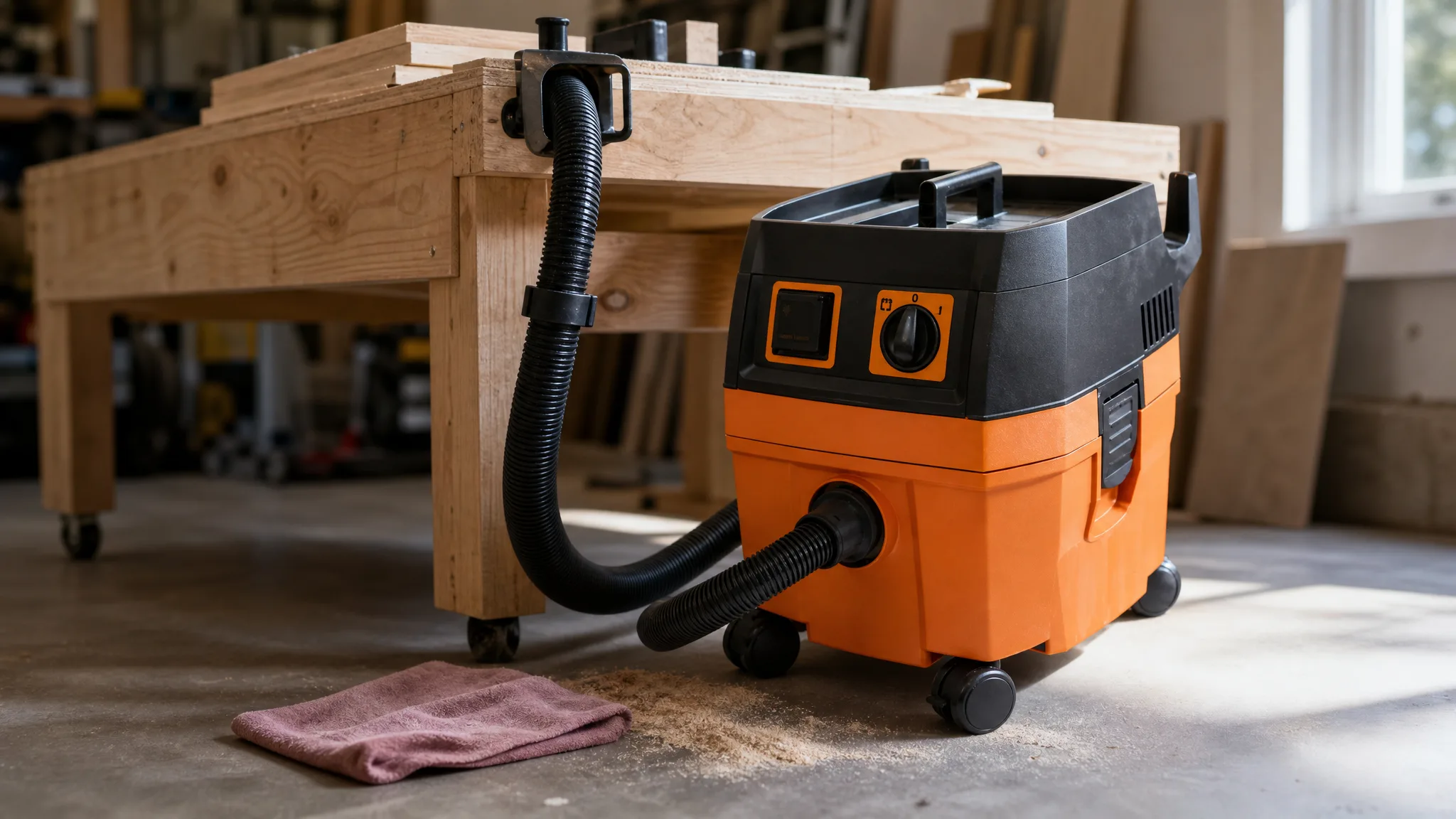
The sander ran for twenty minutes straight, the garage door stayed down, and the baby monitor on the workbench never made a sound. That is the narrow, specific job the Fein Turbo I is built for. We ran this 5.8-gallon wet/dry extractor for six weeks in a fixed home shop, hooked to a random orbit sander, a track saw, and once to a tipped mop bucket, using the same routine described in how we review vacuums.
Verdict: Quiet enough to run beside a sleeping house, with the airflow to hold sanding dust near zero. Park it and it shines. Haul it around and it wears. 9.2/10.
Best for: A fixed woodworking shop where quiet, powerful extraction for sanders and saws matters more than portability
Skip if: You need one rugged machine for heavy liquid cleanup or daily job-site travel

Fein
Fein Turbo I Wet/Dry Dust Extractor, Ultra-Quiet Vacuum - 5.8-Gallon Capacity, 151 CFM Suction, Anti-Static System, 13 ft Hose, 19 ft Cord, Includes Hose and Filter - 92035236090
Best for
Ideal for a fixed woodworking shop where quiet, powerful dust extraction for sanders and saws matters more than portability; not for those needing a rugged wet/dry vac for heavy liquid cleanup or job-site travel.
This extractor runs far quieter than typical shop vacs and delivers strong suction that keeps sanding dust near zero. Expect wet pickup to be limited to small spills and budget for pricey fleece bags as an ongoing expense.
Loved by buyers
- •Runs at 66 dB, quiet enough that you can often skip ear protection.
- •The 13-ft hose and 19-ft cord give a wide working radius without moving the vac.
- •Autostart outlet turns the vac on with your tool and off a few seconds after stopping.
Buyer concerns
- •Wet pickup cuts off after about two gallons, so it handles only small spills.
- •Fleece bags are pricey, though a cyclone separator extends their life considerably.
- •Frequent job-site transport can wear down the hose and tool-trigger outlet over time.
At a Glance
| Spec | Detail |
|---|---|
| Model | 92035236090 |
| Type | Corded wet/dry dust extractor for power tools |
| Tank capacity | 5.8 gallons |
| Airflow | 151 CFM (manufacturer rated) |
| Noise | Rated at 66 dB, quiet enough to talk over |
| Hose | 13 ft, included |
| Power cord | 19 ft |
| Working radius | Roughly 16 ft from the outlet |
| Tool outlet | Autostart, powers the vac with your tool |
| Anti-static | Yes, anti-static system |
| Wet pickup | Auto shutoff at about 2 gallons of liquid |
| Dust collection | Fleece bag plus filter (filter included) |
| Owner rating | 4.6 out of 5 across 487 reviews |
What We Liked
You Can Hold a Conversation Over It
Shop vacs are usually the loudest thing in a garage by a wide margin. This one is rated at 66 dB, and that number translates into something you feel rather than read. We ran it through an afternoon of sanding without ear protection, took a phone call with it running behind us, and never once got the look from the other end of the house. If you have ever put off a project because a kid was napping or a dog hides in the back bedroom the second a vacuum starts, this is the whole reason the Turbo I costs what it does.
Sanding Dust Stops Being a Cleanup Job
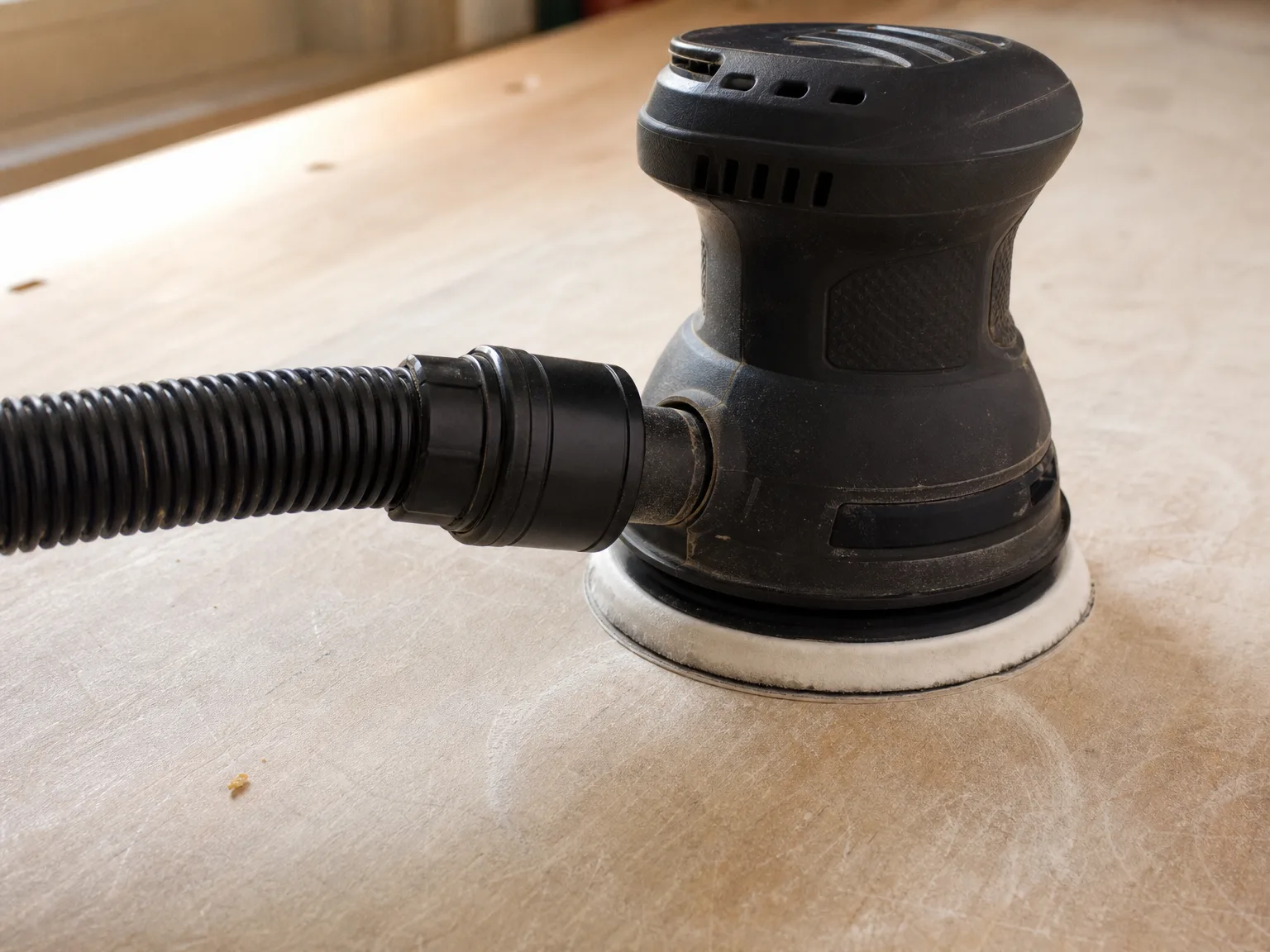
The 151 CFM rating is a manufacturer number, but the effect on the bench is easy to see. Hooked to a random orbit sander on a maple tabletop, the visible dust cloud simply never formed. Nothing settled on the bench beside the workpiece, nothing drifted onto the tool wall, and the only cleanup afterward was a light wipe. A track saw ripping plywood is a harder test because the shroud leaks, and even there the pile of chips at the end of the cut was a fraction of what the same cut makes without extraction. Fine dust is also the part that matters if allergy symptoms are why you are upgrading in the first place.
The Autostart Outlet Removes a Step You Do a Hundred Times a Day
Plug the tool into the outlet on the extractor and the vac wakes up with the trigger, then keeps running for a few seconds after you let go to clear the hose. It sounds small. In practice it changes how the shop feels. You stop walking back to the machine to switch it on, you stop leaving it running because switching it on is annoying, and the noise only happens while you are actually cutting. Six weeks in, this was the feature we noticed most when we used a plain shop vac again.
13 Feet of Hose Plus 19 Feet of Cord Covers the Whole Bench
Combined, that gives roughly a 16-foot working radius from a single outlet. We parked the extractor under one end of an 8-foot bench and reached the miter saw, the assembly table, and the far corner of the shop without moving it. The practical benefit is that the machine stops being something you drag. It also plays nicely with other brands: the hose fits Festool sanders and track saws without adapters, which spares you the drawer of mismatched cuffs that dust collection usually turns into.
Where It Falls Short
Wet Pickup Stops at About Two Gallons
Read the name and you expect a wet/dry vac. What you get is dry extraction plus small-spill insurance. The float shuts the machine off after roughly two gallons of liquid, so a knocked-over bucket is fine and a flooded basement floor is not. We hit the cutoff once and had to empty the tank mid-job, which is exactly the interruption you do not want when water is spreading. For routine indoor liquid messes, a dedicated wet floor cleaner like the machines in our Tineco S7 and Bissell CrossWave comparison is the honest answer.
Fleece Bags Are an Ongoing Expense
The bags are not cheap, and fine sanding dust fills them faster than chips do. The fix owners land on, and the one we would plan for from day one, is a cyclone separator ahead of the extractor. With one in line, a single bag outlasted several buckets of sawdust, because the heavy material drops out before it ever reaches the tank. Without one, budget for bags as a running cost rather than a one-time accessory. That changes the real price of ownership enough to matter when you are already nervous about a purchase in this range.
It Does Not Enjoy Being Hauled Around
This machine is happiest bolted to one spot. Owners who throw it in a truck every morning report the hose and the tool-trigger outlet wearing out over time, and those are the two parts you cannot easily work around. The outlet is half the reason to buy it. If your work moves between houses and job sites, a heavy-duty shop vac you do not mind bruising is the smarter tool, and something like the Vacmaster 6-gallon wet/dry vac with a detachable blower takes that abuse for a fraction of the money.
Real-World Performance

Sanding a tabletop during nap time was the test that sold us. Two hours of random orbit work on maple, garage door closed, house quiet. We checked the monitor twice out of habit. Nothing. The dust that would normally coat the bench and drift under the door stayed in the tank, and the noise never crossed from the garage into the kitchen. This is a real scenario for anyone who does shop work in the gaps of a family schedule, and it is the one thing a bargain shop vac cannot fake.
Breaking down plywood with a track saw is where the airflow gets stretched. A track saw shroud is a leaky connection by design, so some chips escape no matter what you attach. Even so, the cut line stayed visible through the whole rip, which is the practical test, and the sweep-up afterward took a minute instead of ten. We ran the saw and the extractor off the autostart outlet together with no stumbling on startup.
A tipped mop bucket in the laundry room told us where the ceiling is. It picked up the water quickly and then shut itself off partway through, right around the two gallon mark noted above. We emptied the tank and finished the job. As small-spill insurance it works, and we would not call it a wet vac.
Six weeks of general shop cleanup filled in the rest. Sawdust off the floor, chips out of a dado stack, drywall dust from patching one wall. The anti-static system earned quiet points here: no snapping shocks off the hose on a dry winter day, which is the sort of thing you only notice by its absence. The 5.8-gallon tank is modest for a shop machine, so plan on emptying it more often than a 10-gallon drum. With a separator in front, that becomes a non-issue.
How It Compares to Alternatives
The DEWALT STEALTHSONIC 5-gallon (DXV05S-QT) is the closest thing to a direct competitor on the quiet front, and it is a genuine shop vac rather than a tool-triggered extractor. Owners rate it 4.7 out of 5, it moves more air on paper with a 4 peak HP motor, and it costs meaningfully less. What you give up is the autostart outlet behavior, the anti-static hose, and the fit with Festool ports. If you mostly want a quieter shop vac and you switch the machine on by hand anyway, get the DEWALT instead.
The CRAFTSMAN CMXEVBE17595 goes the other direction: 16 gallons, 6.5 peak HP, and a drain, all for less money than the Fein. It is the machine for flooded floors, gutter slurry, and a full weekend of demolition debris. It is also loud, and it takes a permanent corner of the garage. If heavy liquid cleanup is on your list at all, get the CRAFTSMAN and treat the Fein as a separate tool for fine dust.
The Milwaukee 0960-20 M12 FUEL is the answer to portability. At 1.6 gallons and cordless, it goes up a ladder and into a crawlspace where a corded extractor cannot follow, and it runs off batteries you probably already own. Capacity and airflow are both a step down, so it is a companion rather than a replacement. If your work travels, buy the Milwaukee first.
Who Should Buy It
Buy it if you have a shop that stays put and you make fine dust in it every week. A garage woodworker with a sander, a track saw, and a bench that lives against the same wall gets everything this machine offers: quiet operation you can use at odd hours, airflow that keeps dust out of the air rather than moving it around, and an outlet that syncs the vac to the tool. If your household includes people who nap, study, or work from home, the noise difference alone justifies the look.
Look elsewhere if you want one machine for everything. Heavy water pickup, job-site abuse, and hauling between locations are all outside what the Turbo I does well, and each of those is where a cheaper shop vac wins outright. Anyone whose main problem is household cleaning rather than tool dust should stay in the cordless vacuums aisle entirely.
What you get at this tier is 66 dB of noise instead of the usual roar, a 151 CFM rating, a 13-foot anti-static hose, a 19-foot cord, an autostart outlet, and a filter in the box. What you do not get is real wet capability, a large tank, or cheap consumables. Budget for fleece bags and a cyclone separator, keep it parked, and it is the most livable dust extractor we have tested for a home shop.
FAQ
Does it connect directly to Festool sanders and track saws?
Yes. The hose fits Festool tools without adapters, and owners across several tool combinations confirm it. That saves you the usual pile of stepped cuffs and tape. We ran it on a sander and a track saw from different brands during testing with no fitting problems.
Can it handle wet pickup for a flooded floor?
No. The auto shutoff activates after about two gallons of liquid, so it is limited to small spills. A tipped bucket or a puddle under a sink is fine. For standing water across a basement or a garage bay, use a full-size wet/dry vac with a drain.
How far can I move around without relocating the vac?
The 13-foot hose and 19-foot cord give roughly a 16-foot working radius from an outlet, which covered a full bench plus a miter saw station in our shop. That is enough for most fixed setups. Large shops with tools spread across a two-car footprint will still need to reposition it.
How long do the fleece bags last?
With a cyclone separator in line, one bag outlasted several buckets of sawdust for us. Without a separator, fine sanding dust fills a bag noticeably faster, though it still fills gradually rather than all at once. Either way, bags are the ongoing cost of owning this machine.
Is 66 dB actually quiet enough to run indoors?
For a shop machine, yes. We held a conversation over it and often skipped ear protection, which is not something we would do with any other extractor in this tank size. It is not silent. Think of it as a range hood on high rather than a jet engine.
Does the autostart outlet work with any tool?
It worked with every corded sander and saw we plugged into it, switching the vac on with the trigger and shutting down a few seconds after. Check your tool's amp draw against the outlet rating before relying on it with something large. Cordless tools obviously cannot trigger it, so you run the vac manually with those.
Bottom Line
The Fein Turbo I is the first extractor we tested that made quiet a real feature rather than a marketing line, and the airflow behind it keeps sanding dust from ever reaching the air. The compromises are specific and easy to check against your own shop: about two gallons of wet capacity, fleece bags as a running cost, and hardware that resents being hauled around. If your bench stays in one place and fine dust is your problem, this is the machine. If water and travel are on the list, buy a heavy-duty shop vac for those jobs and keep this one on tool duty.
Ready to buy?
Fein Turbo I Wet/Dry Dust Extractor, Ultra-Quiet Vacuum - 5.8-Gallon Capacity, 151 CFM Suction, Anti-Static System, 13 ft Hose, 19 ft Cord, Includes Hose and Filter - 92035236090
Explore related
In this article
- At a Glance
- What We Liked
- You Can Hold a Conversation Over It
- Sanding Dust Stops Being a Cleanup Job
- The Autostart Outlet Removes a Step You Do a Hundred Times a Day
- 13 Feet of Hose Plus 19 Feet of Cord Covers the Whole Bench
- Where It Falls Short
- Wet Pickup Stops at About Two Gallons
- Fleece Bags Are an Ongoing Expense
- It Does Not Enjoy Being Hauled Around
- Real-World Performance
- How It Compares to Alternatives
- Who Should Buy It
- FAQ
- Bottom Line
Keep reading

How to Clean Hardwood Floors Without Damaging Them: A Busy Home Guide
Soft rollers, the right suction mode, and barely damp mops keep hardwood safe. Here's the method we use at home, plus three tools that won't scratch sealed wood.
Vacmaster VJF607PF Review: Basement Water and Shop Dust Tested
We tested the Vacmaster VJF607PF 6-gallon wet/dry shop vac on basement water, sanding dust, and a filthy car interior. Strong suction, and a tank you feel every time you empty it.
Armor All AA255W Review: Trunk Wet/Dry Cleanup After Weeks
We tested the Armor All AA255W 2.5-gallon wet/dry vac on trunk spills, car mats, and pet debris. Honest take on cord reach, crevice tools, and who should buy.