EyeVac Air Review: Touchless Cleanup Tested for 6 Weeks
In this article
- At a glance
- What we liked
- The sensors make sweeping a five-second job
- Suction that keeps up with a shedding dog
- A HEPA purifier you forget is running
- Maintenance it tells you about
- Where it falls short
- The vacuum is loud, and it will startle you
- The sensor fires when nobody asked it to
- Hard floors only, and fine debris tests the seal
- Real-world performance
- How it compares to alternatives
- Who should buy it
- Frequently asked questions
- Can the air purifier run without the vacuum?
- How loud is the air purifier?
- Does it work on carpets?
- How do I know when to empty the bin or change filters?
- Does it replace a regular vacuum?
- Where should I put it?
- Bottom line
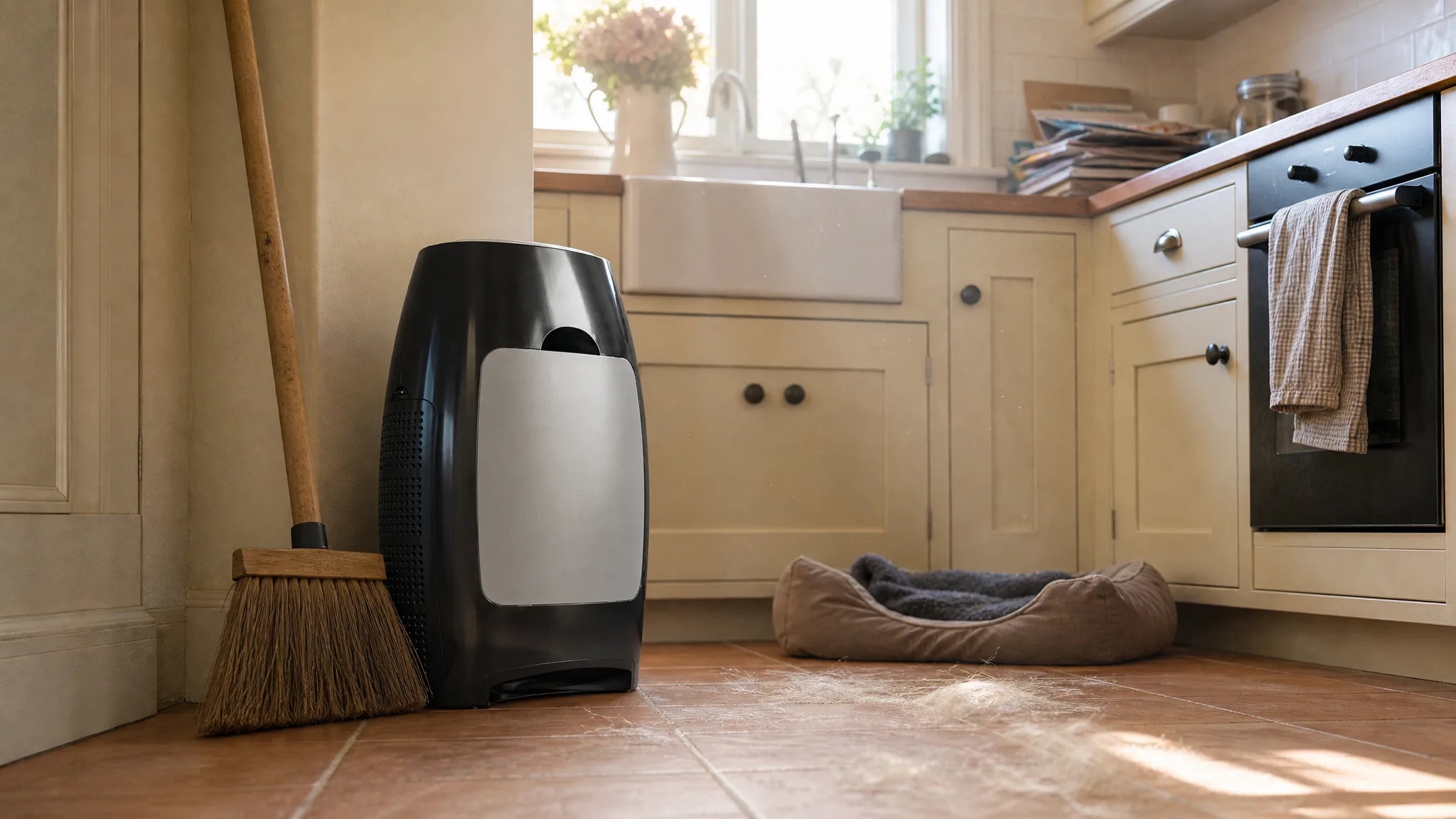
Sweeping is the easy part. The annoying part is the bend at the end, the thin gray line the dustpan always leaves behind, and doing the whole thing again four hours later because a dog lives here. The EYE-VAC EyeVac Air answers that with a bin that sits on the floor and switches itself on when you push dirt toward it. We ran it through our standard testing process for six weeks across kitchen tile, oak floors, and a linoleum mudroom.
Verdict: A touchless dustpan and a near-silent HEPA purifier in one cabinet-sized unit, genuinely useful on hard floors, and loud enough when it fires that placement matters. 8.4/10.
Best for: Pet owners with hard floors who want a quick, no-bend cleanup station in the kitchen or mudroom.
Skip if: You need a quiet vacuum, or you mostly clean carpet.

EYE-VAC
EyeVac Air 2-in-1 HEPA Air Purifier & Touchless Vacuum Automatic Dustpan - Ultra Fast & Powerful - Covers 600 Sq ft - Corded Canister Vacuum, Bagless, Automatic Sensors, 1000 Watt (Black/Silver)
Best for
Best for pet owners with hard floors who want a quick, no-bend cleanup station in the kitchen or mudroom; skip it if you need a quiet vacuum or primarily clean carpets.
Buyers almost universally praise this combination vacuum and air purifier for making daily hard-floor cleanups fast and effortless, especially in homes with shedding pets or heavy foot traffic. The trade-off is that the vacuum runs quite loudly when activated, so it's best placed in an area where brief noise isn't a disruption.
Loved by buyers
- •Touchless auto activation turns on the vacuum the instant you sweep debris toward it, so daily tidying takes seconds.
- •The built-in HEPA air purifier runs nearly silent, catching pet dander, dust, and odors without extra effort or floor space.
- •Strong suction handles everything from dog hair to dry kitchen spills on wood, tile, and linoleum.
Buyer concerns
- •The vacuum is noticeably loud when it kicks on, which can be jarring if you're not expecting it.
- •The auto sensor sometimes triggers during normal foot traffic, starting the vacuum unexpectedly.
- •A few owners report the front door doesn't seal tightly, reducing suction for very fine debris like glitter.
At a glance
| Specification | Detail |
|---|---|
| Type | Corded canister vacuum and HEPA air purifier in one unit |
| Motor (rated) | 1000 watts, as the manufacturer states |
| Activation | Automatic sensors at the intake, plus a manual switch |
| Purifier coverage | Rated for 600 square feet |
| Purifier modes | 4 hour, 8 hour, and continuous, all independent of the vacuum |
| Filtration | HEPA, with a panel light for filter replacement |
| Dust collection | Bagless canister with a full-bin indicator light |
| Best floors | Hardwood, tile, and linoleum |
| Not suitable for | Carpet and rugs |
| Power | Corded, so it stays plugged in where you park it |
| Finish | Black and silver |
| Owner rating | 4.5 out of 5 |
What we liked
The sensors make sweeping a five-second job
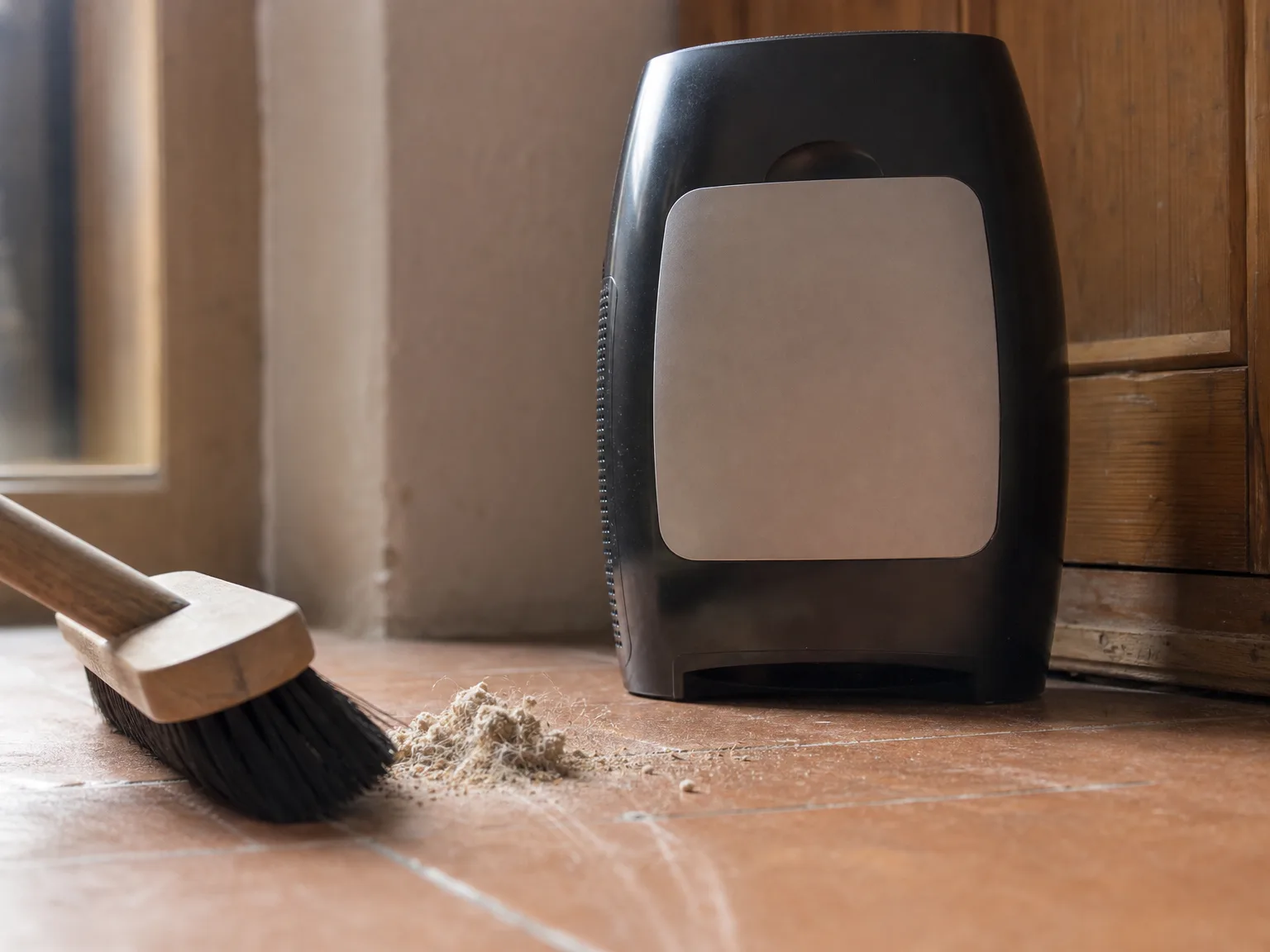
Push a pile toward the intake and the motor starts before the broom gets there. No pedal, no bending, no chasing that last gray line across the tile with the dustpan edge. The debris goes in and the unit shuts off again a moment later.
What this changes is not the quality of the clean, it is how often the clean happens. A dustpan lives in a closet and asks you to fetch it, crouch, sweep, dump, and put it back. This asks for a broom and about five seconds, so the kitchen floor gets dealt with after dinner instead of tomorrow. Six weeks in, that was the whole argument for owning it.
Suction that keeps up with a shedding dog
The intake pulls hard. Dog hair, tracked-in grit, dry cereal, coffee grounds, and the crumbs under a toddler's chair all disappeared on the first pass on wood, tile, and linoleum. We never had to sweep a pile twice, which is the failure mode that would have killed the whole idea.
It also handles the kind of mess that makes you reach for a real vacuum. A spilled bag of dry pet hair clippings from a grooming session went in without a fight, and so did the fine dust that collects along a baseboard. This is a corded 1000 watt machine sitting still on the floor, and the power draw shows.
A HEPA purifier you forget is running
The purifier is the half of this product nobody buys it for and everybody ends up liking. It runs on its own schedule, independent of the vacuum, on a 4 hour timer, an 8 hour timer, or continuously. Owners describe it as a low hum, and that matches what we heard. You stop noticing it by the second day.
For a home with a shedding pet, that quiet background pull on dander and dust does real work between sweeps. It also solves a small-apartment problem: a separate air purifier is another appliance taking another square foot of floor and another outlet. Here the HEPA filter lives inside a thing you were already going to put in the corner.
Maintenance it tells you about
Two indicator lights on the panel handle the parts people forget. One tells you the canister is full, the other tells you the filters need replacing. That sounds minor until you remember how many bagless vacuums quietly lose half their suction over a year because nobody checked.
The canister itself pulls out and empties over a trash can, no bags to buy and none to run out of on a Sunday. We emptied ours roughly once a week with a dog in the house and moderate foot traffic, and the whole job takes under a minute.
Where it falls short
The vacuum is loud, and it will startle you
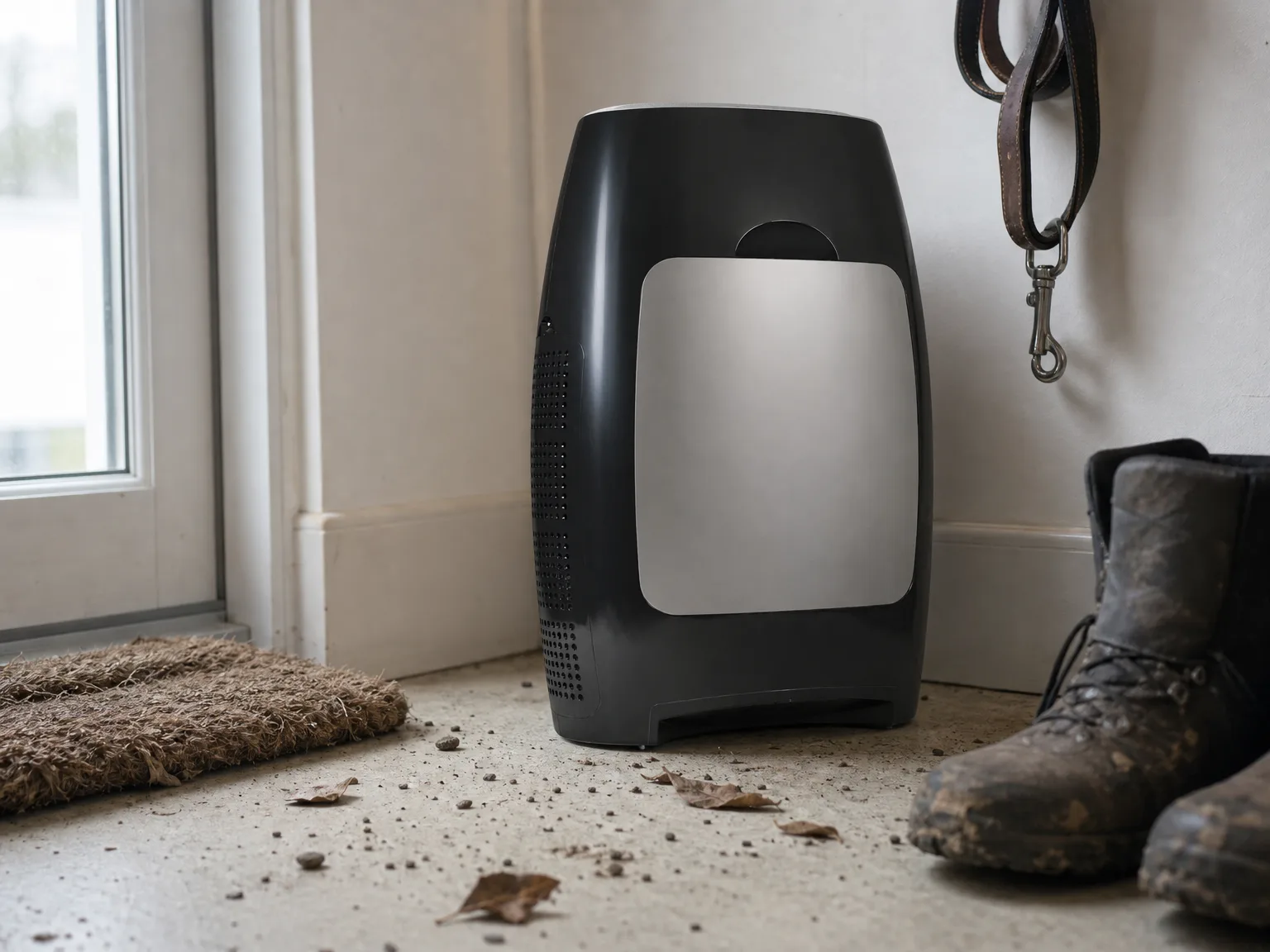
This is the real trade-off, and the listing does not lead with it. The purifier is nearly silent. The vacuum is not. When those sensors fire, a 1000 watt motor comes on at full power with no ramp-up, and if you were not expecting it, you jump.
It runs for only a few seconds at a time, so this is nothing like living with a loud upright. But placement matters more than it would otherwise. A kitchen, a mudroom, or an entryway is fine. Directly outside a nursery door during nap time is a mistake you make once. Anyone whose main complaint about canister vacuums is noise should weigh this hard before buying.
The sensor fires when nobody asked it to
Walk past it in the wrong line and the vacuum can trigger on its own. In a kitchen doorway or a hallway pinch point where everyone cuts the same corner, that happens often enough to notice, and it turns the noise problem into a recurring one rather than a chosen one.
The fix is placement again, not settings. Tuck it into a corner slightly out of the traffic line and the false triggers mostly stop. You can also run the unit in manual mode and use the switch, though that gives up the feature you paid for.
Hard floors only, and fine debris tests the seal
There is no floor head, no brush roll, and no way for this to clean a rug. It is a stationary intake, so it works on what you can sweep to it. Wood, tile, and linoleum are its whole world. If most of your rooms are carpet, this is not a vacuum, it is an air purifier with a party trick.
The other limit is the front door on the canister. Some owners report it does not seal tightly, and very fine debris shows the gap. Glitter is the example that comes up repeatedly. Flour and fine sanding dust behave the same way: most of it goes in, a faint halo stays on the floor, and you finish with a damp cloth.
Real-world performance
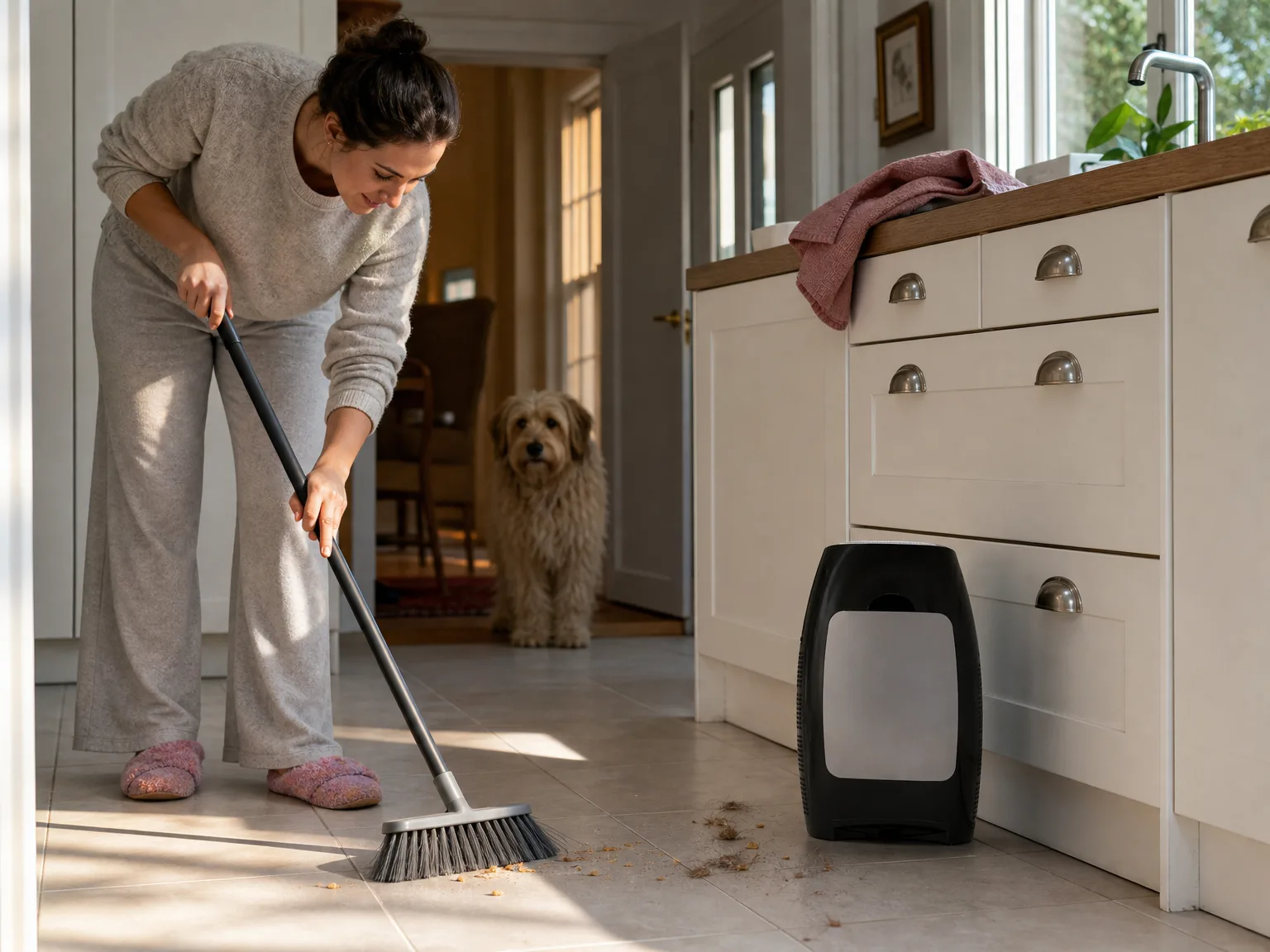
The after-dinner kitchen. This is the scenario the product was built for. Crumbs, a dropped handful of rice, and the grit that comes off shoes went in with one push of the broom. The whole cleanup finished before the dishwasher was loaded, and it happened every night, which a dustpan never managed in the same house.
Daily dog hair in the mudroom. Hair collects in drifts near the door, and drifts are exactly what a stationary intake handles best. A quick sweep along the baseboard and toward the unit cleared the day's shedding in well under a minute. No bending, no hair clinging to the dustpan lip and blowing back out.
Uneven floors where a robot gives up. Our test house has a threshold strip and a slightly cupped board near the back door, the sort of terrain that beaches a robot vacuum. It makes no difference here. You are the navigation system, so transitions, thresholds, and the gap under a radiator are all just places you sweep from.
Air between sweeps. We ran the purifier on the 8 hour timer overnight and continuously on high-shed days. The visible result is indirect: less dust settling on the counter edge and the top of the fridge over a week. The audible result is nothing, which is the point.
Fine powders. Flour from a baking spill and a craft glitter mess were the two jobs that exposed the door seal. Most of both went in. A thin residual film stayed on the tile and needed a wipe. For allergy households chasing very fine dust, treat this as a first pass rather than the finish.
Emptying and upkeep. The full-bin light came on about weekly. Pull the canister, tip it, slide it back. The filter light is slower to appear and the replacement is the only running cost. Keep up with both and suction stayed where it was in week one.
How it compares to alternatives
The obvious rival for daily hard-floor tidying is a robot. Our Roborock lidar robot vacuum and mop review covers the trade-off: the robot cleans without you in the room and adds mopping, but it needs a floor plan it can navigate, it has a small bin, and thresholds and clutter still stop it. The EyeVac Air needs you and a broom, and in exchange it never gets stuck and never needs remapping.
If your problem is carpet and heavy shedding rather than hard-floor crumbs, this is the wrong machine entirely. Read the Shark LA702 Rotator Pet Lift-Away ADV review instead, where the powered brush roll does the agitation work that no stationary intake can do.
And if quiet is your top requirement, look at the Soniclean WhisperJet C2, which is built around a quiet motor and heavy filtration. If a sudden burst of full-power noise in your kitchen would bother you or wake a child, get the Soniclean instead.
Who should buy it
Buy the EyeVac Air if your floors are hard, a pet sheds on them, and the thing stopping you from cleaning daily is the effort rather than the time. It suits a busy kitchen, a mudroom by the back door, a hair salon corner, or an entryway that collects grit. The purifier running quietly in the background is a real second benefit rather than a spec-sheet extra.
Look elsewhere if your home is mostly carpet, if you need one machine that also does stairs, upholstery, and the car, or if noise is the thing you care about most. This unit does one job on one surface type, and it is honest about that once you know the limits.
What you get at this price is a permanent cleanup station that turns sweeping into a habit, plus a HEPA purifier you do not have to find separate floor space for. What you give up is carpet cleaning, portability, and a few seconds of genuine noise every time it fires.
Frequently asked questions
Can the air purifier run without the vacuum?
Yes. The purifier has independent 4 hour, 8 hour, and continuous modes. The vacuum only runs when the sensors are triggered in auto mode or when you switch it on by hand, so you can leave the air side working all day without the motor ever coming on.
How loud is the air purifier?
Close to silent. Owners describe it as a low hum, and it is easy to forget it is running. Only the vacuum side is loud, and it runs for a few seconds at a time.
Does it work on carpets?
No. The unit is designed for hard floors only, so wood, tile, and linoleum. It has no brush roll and no floor head, so there is nothing to agitate carpet fibers and no way to get suction down into a pile. Keep a conventional vacuum for rugs.
How do I know when to empty the bin or change filters?
Indicator lights on the front panel handle both. One signals a full canister, the other signals that the filters need replacing. That takes the guesswork out of the maintenance schedule, which is where most bagless machines quietly lose suction.
Does it replace a regular vacuum?
For most homes, no. Think of it as a replacement for the dustpan rather than for your vacuum. It cannot do stairs, upholstery, the car, or anything above floor level, and it needs you to sweep debris to it. In a hard-floor apartment with no rugs, it can carry most of the daily load on its own.
Where should I put it?
Somewhere with an outlet, out of the direct walking line, and away from rooms where a sudden burst of noise causes problems. A kitchen corner, a mudroom, or the end of an entry hall works well. Keeping it slightly off the main traffic path also cuts down on the sensor triggering when you just walk by.
Bottom line
The EyeVac Air earns its corner if you have hard floors and a pet, because it turns daily sweeping from a chore into a five-second reflex, and the quiet HEPA purifier is a genuine bonus rather than filler. The noise when it fires is real, so put it where a brief loud burst does not matter, and keep the door seal in mind if you deal with very fine powders. Check the current listing through the product card above. If your rooms are mostly carpet, or a quiet motor is non-negotiable, read the Shark LA702 or Soniclean reviews before you decide.
Ready to buy?
EyeVac Air 2-in-1 HEPA Air Purifier & Touchless Vacuum Automatic Dustpan - Ultra Fast & Powerful - Covers 600 Sq ft - Corded Canister Vacuum, Bagless, Automatic Sensors, 1000 Watt (Black/Silver)
Explore related
In this article
- At a glance
- What we liked
- The sensors make sweeping a five-second job
- Suction that keeps up with a shedding dog
- A HEPA purifier you forget is running
- Maintenance it tells you about
- Where it falls short
- The vacuum is loud, and it will startle you
- The sensor fires when nobody asked it to
- Hard floors only, and fine debris tests the seal
- Real-world performance
- How it compares to alternatives
- Who should buy it
- Frequently asked questions
- Can the air purifier run without the vacuum?
- How loud is the air purifier?
- Does it work on carpets?
- How do I know when to empty the bin or change filters?
- Does it replace a regular vacuum?
- Where should I put it?
- Bottom line
Keep reading
Aspiron Canister Vacuum Review: Lightweight Hard-Floor Cleaning
We tested the Aspiron canister vacuum on hard floors and stairs in real homes. Lightweight build, strong suction, and honest trade-offs for pet owners and everyday cleaning.
7 Best Canister Vacuums for Hard Floors and Stairs (2026)
We tested seven bagged and bagless canister vacuums on hard floors and stairs, from a quiet Miele built to last to featherweight commercial picks you can carry in one hand.
Oreck XL Pro 5 Review: Five-Pound Canister After Weeks
We tested the Oreck Commercial XL Pro 5 five-pound bagged canister for daily carry, floors, and car seats. Honest take on suction, strap flaws, and who should buy.