CRAFTSMAN CMXEVBE17250 Review: Small Shop Vac Tested for 5 Weeks
In this article
- At a Glance
- What We Liked
- Suction That Does Not Flinch at Water or Coins
- Light Enough to Carry With One Hand
- It Actually Stores Away
- The Blower Port Earns Its Place
- Where It Falls Short
- The 10-Foot Cord Is the Main Limit
- Attachments Slip Off When You Pull
- 2.5 Gallons Fills Fast on Heavy Debris
- Real-World Performance
- How It Compares to Alternatives
- Who Should Buy It
- FAQ
- Bottom Line
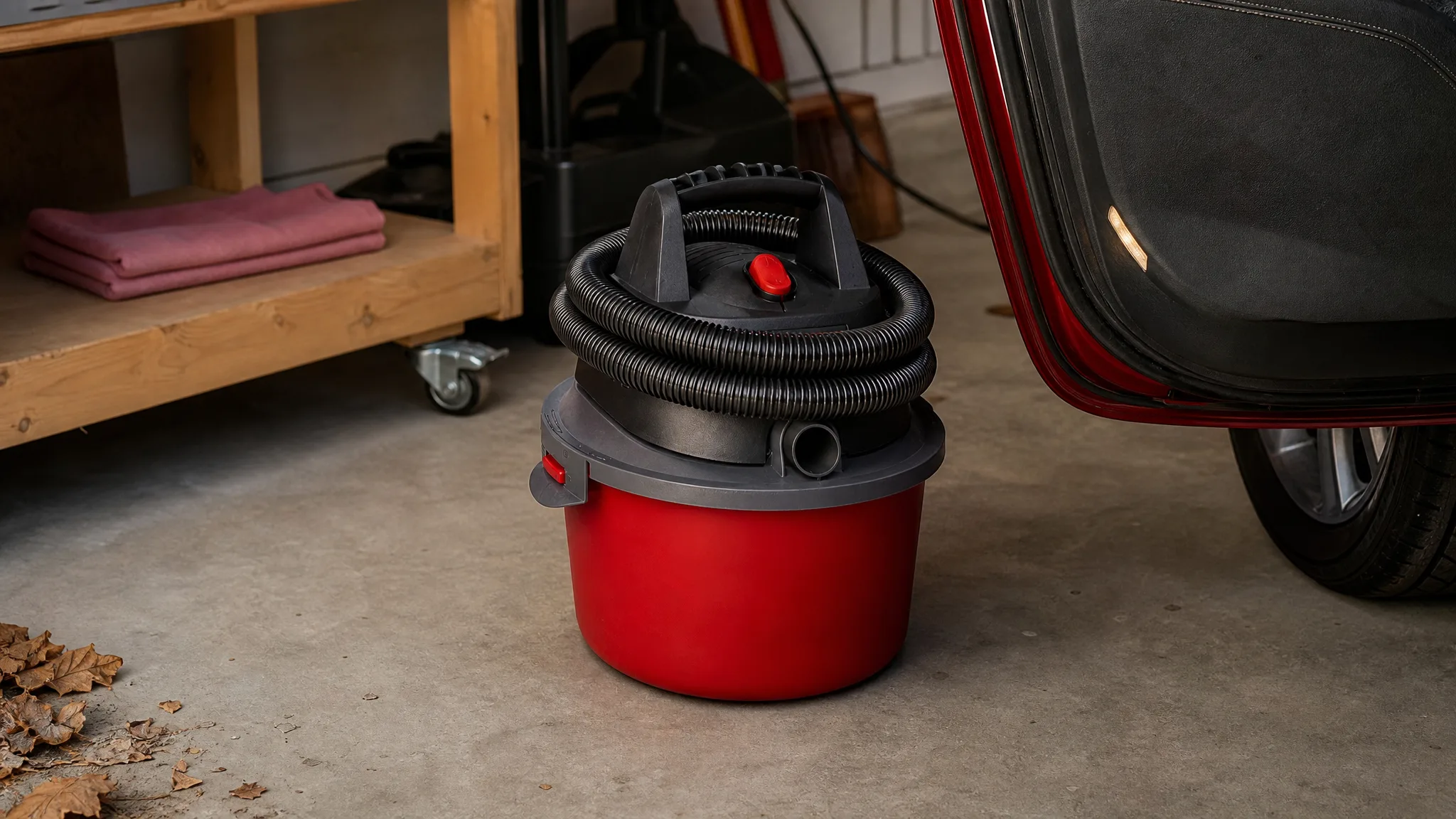
Crumbs ground into the car footwells, sawdust across a workbench, and the small puddle under the utility sink that nobody wants to mop. Those are the jobs a little shop vac exists for. We spent five weeks running the CRAFTSMAN CMXEVBE17250 through all three, following our how we review process, to find out whether 2.5 gallons is enough machine to be useful or just a hose with a bucket attached.
Verdict: More suction than a vac this small has any business having, limited mostly by a 10-foot cord. 7.5/10.
Best for: Spot cleaning cars, workshops, and small wet spills, especially if storage space is tight
Skip if: You need to cover a larger area without an extension cord, or you want a vac for daily heavy-duty work

CRAFTSMAN
CRAFTSMAN CMXEVBE17250 2.5 Gallon 2.5 Peak HP Wet Dry Shop Vacuum
Best for
Best for spot cleaning cars, workshops, and small wet spills, especially if storage space is tight; skip if you need to cover larger areas without an extension cord or want a vac for daily heavy-duty use.
Most owners agree this compact vac punches above its weight with strong suction and easy portability, making it a go-to for quick car and garage cleanups. The trade-off is a short cord and attachments that don't lock on, so you'll likely need an extension cord and a light touch.
Loved by buyers
- •Light enough to carry from garage to car without a second thought.
- •Suction that handles small debris, water, and even coins without bogging down.
- •Compact body and cord wrap mean it tucks away in a closet or on a shelf, not hogging floor space.
Buyer concerns
- •The 10-foot cord is frustratingly short for cleaning an entire vehicle; an extension cord is almost a must.
- •Attachments can pop off the hose if tugged, which interrupts the flow of cleaning.
At a Glance
| Spec | Detail |
|---|---|
| Type | Corded wet/dry shop vacuum with a blower port |
| Tank capacity | 2.5 gallons |
| Motor | Rated at 2.5 peak horsepower, which is a peak figure rather than sustained output |
| Cord length | 10 feet |
| Wet pickup | Yes, water and dry debris in the same tank |
| Blower function | Yes, move the hose to the blower port |
| Storage | Onboard cord wrap, small enough for a closet shelf |
| Carrying | Top handle, one hand, no strain between garage and driveway |
| Attachments | Hose and tools that friction fit rather than lock |
| Suits | Cars, workshops, stairs, spills, short cleanups |
| Owner rating | 4.5 out of 5 across roughly 9,900 reviews |
| Five-star share | 74 percent of owners |
What We Liked
Suction That Does Not Flinch at Water or Coins
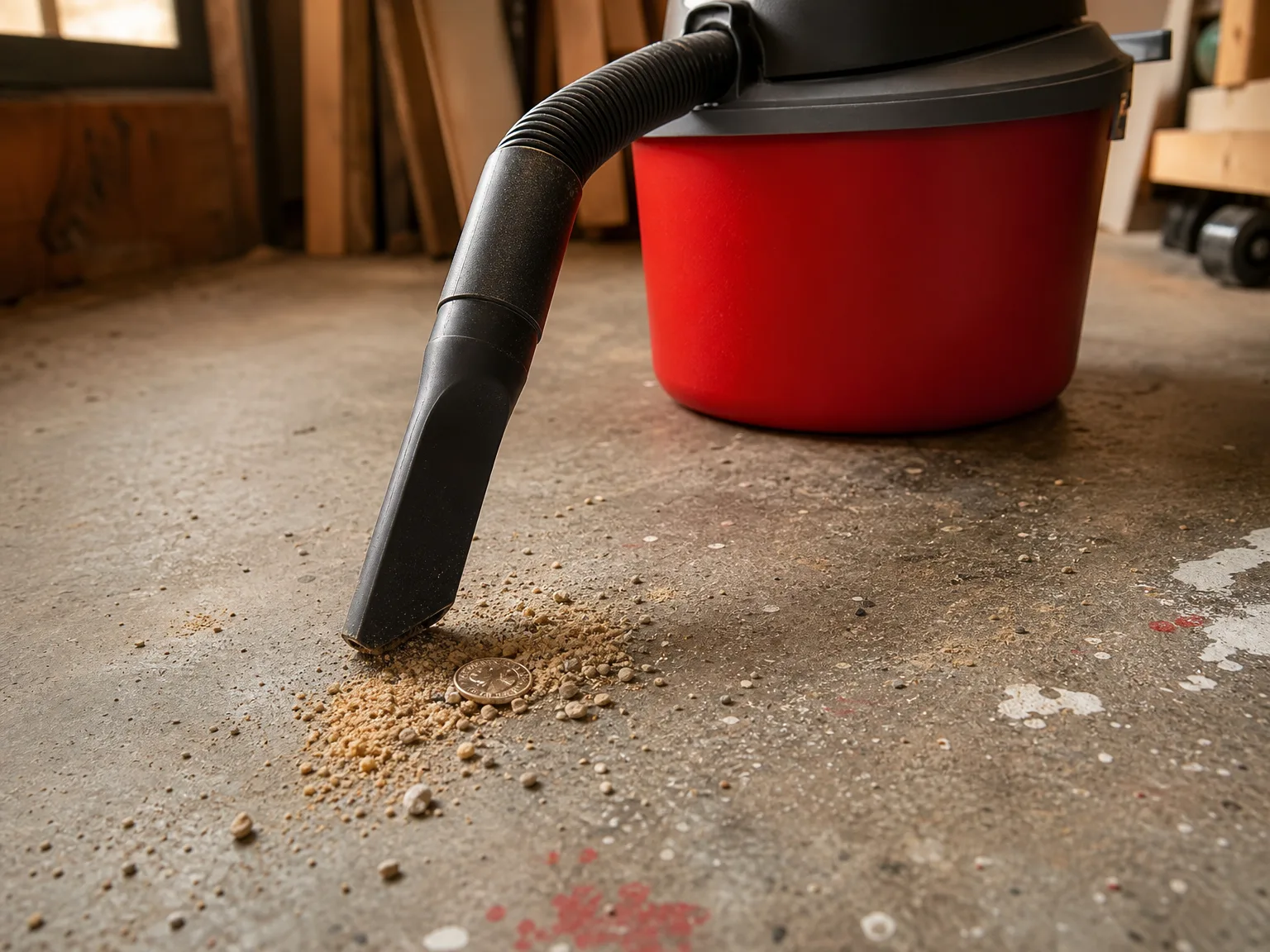
Small vacs usually announce their size the first time you point them at something heavy. This one does not. It pulled fine dust, gravel, dried mud, a spilled cup of water, and loose change out of a car console without stalling or spitting anything back out. Switching from dry debris to water needs no second machine and no adapter, which is the entire argument for owning a wet/dry vacuum in the first place. Owners describe the same experience, and it is consistent enough that the 2.5 peak horsepower rating stops feeling like box copy. Suction is the part of this vac we would not change.
Light Enough to Carry With One Hand
Weight decides how often a vac gets used. This one comes off the shelf, goes out to the driveway, and comes back with one hand, no wrestling and no second trip. That matters more than it sounds: a heavy drum vac stays parked in the garage and the mess in the car waits another week. We moved it between a workbench, a car, a set of stairs, and a laundry room in a single afternoon. Owners bring up the portability more than any other strength, usually in the context of car cleanups they now do without dreading the setup.
It Actually Stores Away
The body is compact and the cord wraps onto the unit rather than trailing behind it in a tangle. Ours lived on a closet shelf between jobs instead of taking a corner of floor. If you have a garage the size of a parking space, or an apartment with one utility closet and no room to spare, this is the difference between owning a shop vac and having somewhere to put a shop vac. Small storage footprint is also why the 2.5-gallon tank is a fair trade rather than a flaw, and we would rather empty a small bin twice than trip over a big one daily.
The Blower Port Earns Its Place
Move the hose to the blower port and the vac pushes air instead of pulling it. We used it to clear grass clippings off a walkway, blow sawdust out of a bench vise, and push leaf litter out of the gap between the garage door track and the wall. It is not a substitute for a gas leaf blower, and wet matted leaves will ignore it. For clearing debris out of tight spaces you cannot reach with a nozzle, or off gravel where vacuuming just picks up the gravel, it saves real time and costs nothing extra.
Where It Falls Short
The 10-Foot Cord Is the Main Limit
Ten feet reaches the front seats. It does not reach the trunk. This is the complaint owners raise more than any other, and after five weeks we agree with all of them. Cleaning a full vehicle from a garage outlet meant unplugging halfway through and finding a second outlet, and in a driveway it meant an extension cord every single time. Budget for one and keep it with the vac. That fixes the problem completely, and the vac is still worth owning, but a machine sold for car and workshop cleanups should not need an accessory to finish a car.
Attachments Slip Off When You Pull
The tools push onto the hose by friction, and there is no locking collar. Tug the hose to drag the vac closer and the nozzle can stay behind under the seat while the hose comes to you. Nothing breaks, and it takes two seconds to push the tool back on, but it interrupts the rhythm of a job. Two habits mostly solve it: move the vac by its handle rather than by pulling the hose, and give the attachment a firm twisting push when you fit it. Owners report the same fix, though it is fair to want a tool that stays put on its own.
2.5 Gallons Fills Fast on Heavy Debris
Fine dust and crumbs take a long time to fill this tank. Wet leaves, wood shavings, and standing water do not. On anything bulky or wet, plan on emptying partway through, and remember that a small tank full of dirty water still needs somewhere to go. For a car interior or a spill under a sink, the capacity is fine. For a whole garage clearout or a basement leak, you will be walking to the drain repeatedly and wishing for a bigger drum.
Real-World Performance
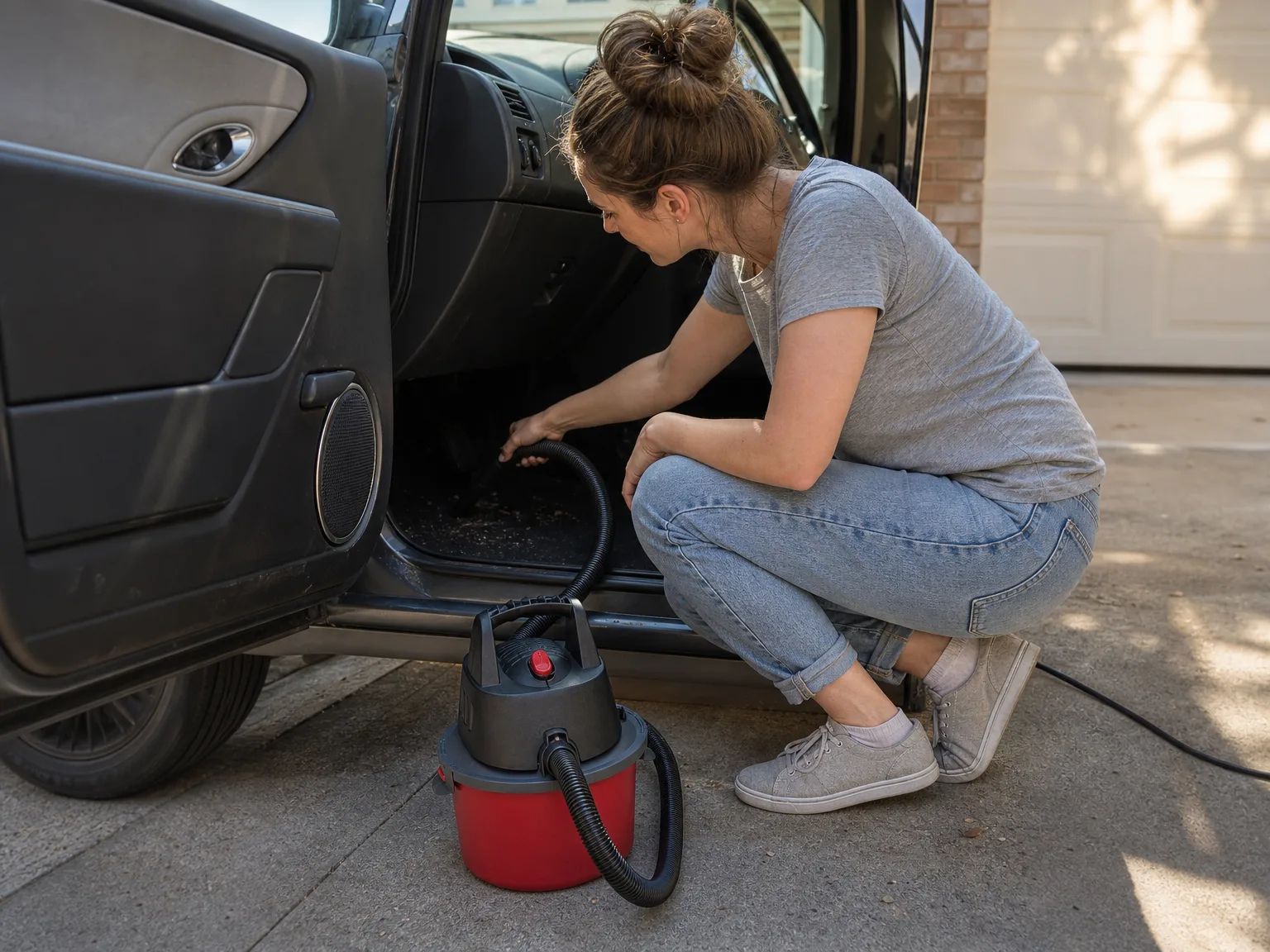
Car interiors are the job this vac was built for, and it handles them well right up until the cord runs out. Sand in the seat rails, crumbs down the side of the console, and dried mud on the driver's mat all lifted with the crevice tool, and the mats needed a few slow passes rather than one confident sweep. We finished two front footwells and a console on one tank with room left. Then the cord stopped us at the rear doors. Working from a driveway outlet, an extension cord turned a two-part job into one continuous one.
The workshop test went better because everything happens within a few feet of the bench. Sawdust after cutting shelves, metal shavings around a drill press, and the dust that settles on every flat surface came up quickly, and the vac sat on the bench rather than on the floor while we worked. The blower port earned its keep here, pushing dust out of the vise jaws and the tool tray before we vacuumed it off the floor. This is where the small body is a genuine advantage rather than a compromise.
Then the wet test. A leaking supply line left about a gallon of water spread under a utility sink, which is exactly the kind of mess that ruins an afternoon. The vac cleared it in under a minute with no stalling. Emptying it took longer than the pickup did, which is true of every wet/dry vac and worth knowing before you buy one. For a spill, an overflowing washer, or water tracked in off boots, this is the right tool. For a flooded room, it is too small and you will spend the day carrying it to a drain.
Household messes were the least convincing use, and we want to be clear about that. Cat litter scattered around a box, tracked-in grit by the back door, and dry cereal under a high chair all came up fast on hard floors. Carpet is another story. There is no powered brushroll, so pet hair worked deep into a rug stays in the rug. This does not replace a cordless vacuum for daily indoor floors, and buying it as a household vacuum will disappoint you within a week.
How It Compares to Alternatives
The closest step up is a bigger tank with the same idea. Our Vacmaster 6-gallon wet/dry review covers a machine with more than twice the capacity and a blower that detaches into a separate tool. You empty it far less often, and it is the better pick for a garage clearout or a real basement leak. It also stops being something you carry casually or store on a shelf. If your cleanups are short and your storage is tight, the CRAFTSMAN wins on the thing you will feel every week.
Going the other direction, a handheld gives up water pickup for pure convenience. The ZARIMI portable cordless car vacuum lives in a glovebox and starts working seconds after you think of it, and the Voice-tank 4-in-1 covers similar ground with more attachments. Neither one touches liquid, neither blows, and both run down before a whole interior is finished. For dry crumbs in one car, a handheld vacuum is quicker to reach for and needs no outlet at all.
For wet messes on finished floors inside the house, a shop vac is the wrong shape of tool. It picks the water up but washes nothing, and hauling a tank into a kitchen for a spilled bowl of soup is more effort than the mess deserves. If most of your wet cleanup happens on hardwood and tile indoors, a wet dry floor cleaner like the ones in our Tineco S7 versus Bissell CrossWave comparison is the better buy.
Who Should Buy It
Buy this if your messes are small, frequent, and scattered across places a regular vacuum should never go. The ideal owner cleans a car every few weeks, keeps a workbench, and wants something on hand for spills before they soak into anything. Apartment dwellers with one utility closet fit here too, because this is one of the few wet/dry vacs that stores like a piece of luggage rather than a piece of equipment. Keep an extension cord with it and it will handle all of that comfortably.
Look elsewhere if the work is bigger than the vac. Contractors, workshops that fill a bin a day, and anyone dealing with a flooded basement need a larger drum with a drain port, because emptying 2.5 gallons repeatedly is slower than the cleaning itself. Anyone whose main problem is carpet or embedded pet hair inside the house needs a proper household vacuum, not this one. And if you refuse to own an extension cord, the 10-foot reach will annoy you permanently.
What this tier buys you is real suction on wet and dry messes, a body one hand can carry, a blower port thrown in, and a footprint that fits on a shelf. What it does not buy you is cord reach, tank capacity, or attachments that lock. Those are honest trade-offs for the size rather than manufacturing surprises, and for spot cleaning they are the right ones to make.
FAQ
Does it handle wet and dry messes equally well?
Yes. It picks up water smoothly and still handles dry debris like dust, gravel, and coins without bogging down. Check the manual for filter guidance before your first wet job, since most wet/dry vacs want the dry filter removed for water.
How long is the power cord?
Ten feet, which many owners find too short for cleaning a whole car. An extension cord solves it, and we would treat one as part of the purchase rather than an optional extra.
Do the attachments stay on securely?
They can slip off when you pull hard on the hose, so go slow and move the vac by its handle instead of dragging it. A firm twisting push when you fit a tool helps it hold.
How often will I need to empty the bin?
The 2.5-gallon tank fills quickly with heavy or wet debris, so it suits short tasks where a quick dump is no bother. Fine dust and crumbs stretch much further.
Can I use the blower for yard work?
For dry clippings, sawdust, and light debris in tight spots, yes, and it saves buying a separate tool for those jobs. Wet leaves matted to the ground need a dedicated blower.
Will it fit in an apartment closet?
That is one of its strongest points. The body is compact and the cord wraps onto the unit, so it sits on a shelf instead of claiming floor space.
Can it replace my regular vacuum?
No. There is no powered brushroll, so carpet and embedded pet hair are beyond it, and the small tank is not built for whole-house cleaning. Think of it as the vac for messes your household vacuum should never touch.
Bottom Line
The CRAFTSMAN CMXEVBE17250 does the small jobs properly. Suction holds up on water, grit, and everything a car console collects, the body goes anywhere with one hand, and the blower port covers work a vacuum cannot. Accept two limits before buying: the 10-foot cord will need an extension for a full vehicle, and the attachments need a careful hand. If you want a capable vac for cars, a workbench, and the occasional spill, and you need it to disappear onto a shelf afterward, this is a genuinely practical pick. If you are clearing a whole garage or facing standing water in a basement, buy a bigger tank instead.
Explore related
In this article
- At a Glance
- What We Liked
- Suction That Does Not Flinch at Water or Coins
- Light Enough to Carry With One Hand
- It Actually Stores Away
- The Blower Port Earns Its Place
- Where It Falls Short
- The 10-Foot Cord Is the Main Limit
- Attachments Slip Off When You Pull
- 2.5 Gallons Fills Fast on Heavy Debris
- Real-World Performance
- How It Compares to Alternatives
- Who Should Buy It
- FAQ
- Bottom Line
Keep reading

How to Clean Hardwood Floors Without Damaging Them: A Busy Home Guide
Soft rollers, the right suction mode, and barely damp mops keep hardwood safe. Here's the method we use at home, plus three tools that won't scratch sealed wood.
Vacmaster VJF607PF Review: Basement Water and Shop Dust Tested
We tested the Vacmaster VJF607PF 6-gallon wet/dry shop vac on basement water, sanding dust, and a filthy car interior. Strong suction, and a tank you feel every time you empty it.
Armor All AA255W Review: Trunk Wet/Dry Cleanup After Weeks
We tested the Armor All AA255W 2.5-gallon wet/dry vac on trunk spills, car mats, and pet debris. Honest take on cord reach, crevice tools, and who should buy.