CRAFTSMAN CMCV002B Review: Cordless 2-Gallon Wet/Dry Vac Tested
In this article
- At a Glance
- What We Liked
- Quiet Enough for a 9pm Garage Session
- No Cord Changes Where You Clean
- The Hose and Tools Ride on the Machine
- Wet Messes Go In and Come Out Cleanly
- A Washable Filter Instead of a Consumable
- Where It Falls Short
- Suction Hits a Ceiling on Embedded Pet Hair
- The Bare Tool Price Is Not the Price
- Two Gallons and One Battery Set the Job Size
- Real-World Performance
- How It Compares to Alternatives
- Who Should Buy It
- FAQ
- Bottom Line
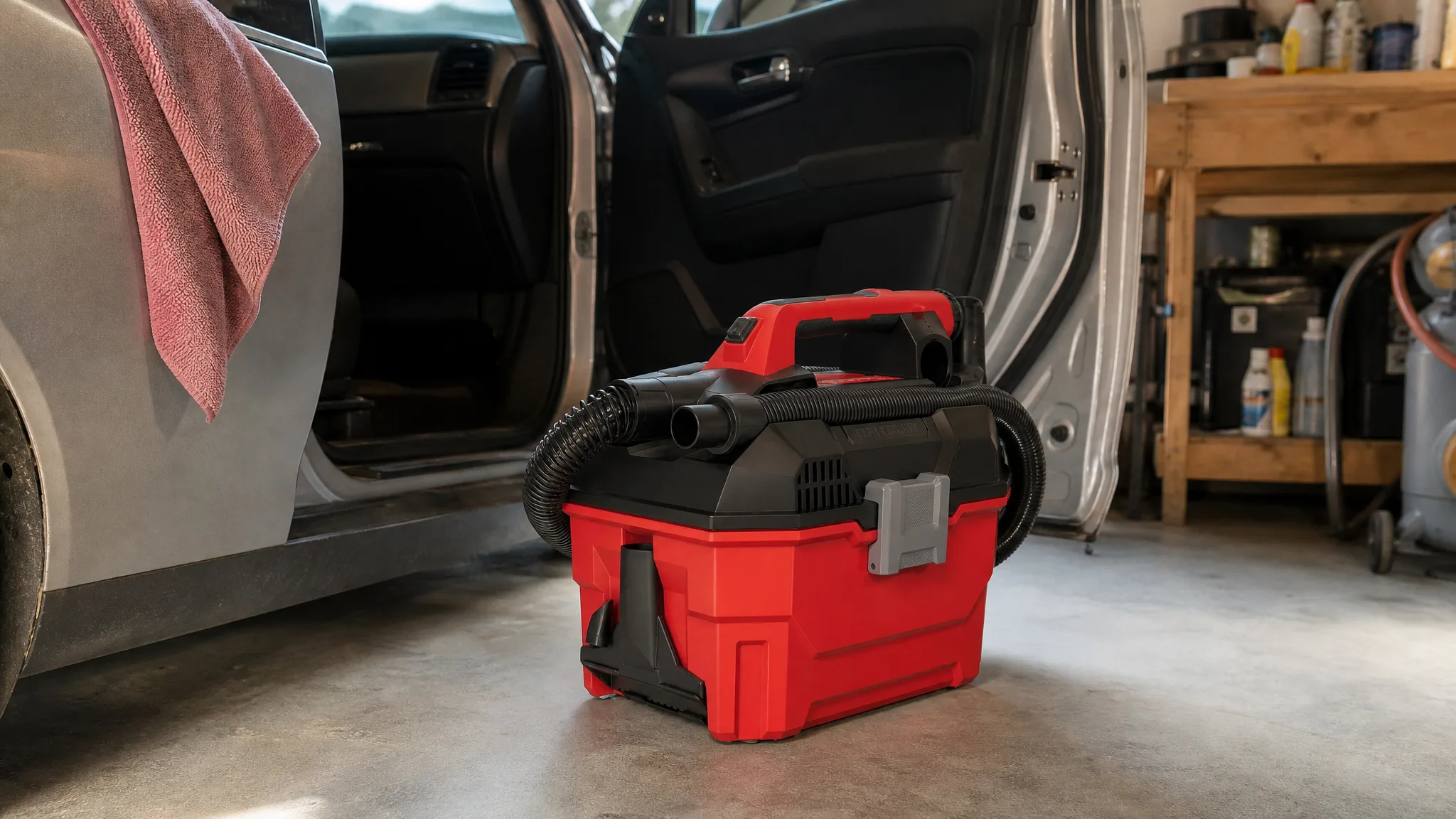
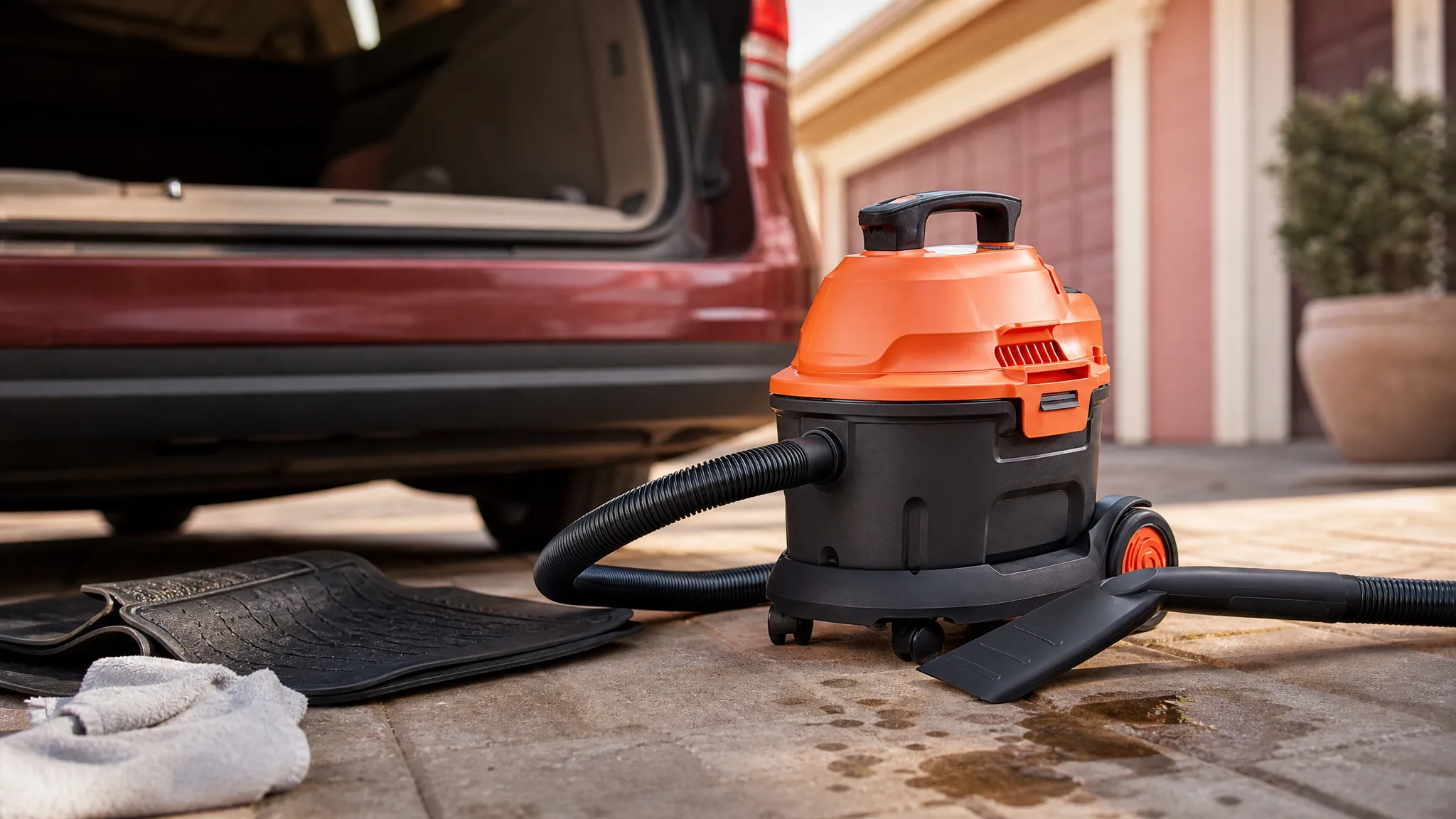
A car cleanout exposes what a household vacuum cannot do. Sand in the footwell, a soaked floor mat, and no outlet within thirty feet of the driveway. The CRAFTSMAN CMCV002B is a 2-gallon cordless wet/dry vac that runs on the same V20 batteries as the rest of the Craftsman tool lineup, and it ships as a bare tool. We put it through our how we review process in a driveway and a one-car workshop.
Verdict: Real grab-and-go convenience with a real suction ceiling, and the bare-tool price is not the price you pay. 8/10.
Best for: Anyone already on Craftsman V20 batteries who wants a portable vac for quick car cleanouts and small workshop spills
Skip if: You need to pull embedded pet hair, or this would be your only shop vac

CRAFTSMAN
CRAFTSMAN CMCV002B 20V Max 2 gallon Wet Dry Vac (Tool Only) - Amazon Vine
Best for
Best for someone already using Craftsman V20 batteries who needs a portable vac for quick car cleanouts and small workshop spills; skip it if you need high suction for stubborn pet hair or plan to use it as your only shop vac.
Owners consistently praise this cordless wet/dry vac for its grab-and-go convenience, solid suction for its size, and low noise. The trade-off is that it can't match the power of a corded shop vac, so it struggles with deep-cleaning pet hair or heavy debris.
Loved by buyers
- •Its low noise output sets it apart from typical shop vacs, so you can work late in the garage without waking the family.
- •Onboard storage keeps the hose and attachments on the machine, so they're always ready and never lost.
- •The well-sealed canister handles wet messes without dripping and empties cleanly with simple side clips.
Buyer concerns
- •Suction power is weaker than a corded vac's, leaving behind embedded pet hair on car seats and heavy dirt on mats.
- •It's a bare tool, so the total cost jumps if you need to buy batteries and a charger.
At a Glance
| Spec | Detail |
|---|---|
| Type | Cordless wet/dry vac |
| Model | CMCV002B |
| Tank capacity | 2 gallons |
| Battery platform | CRAFTSMAN V20, 20V Max |
| In the box | Bare tool, no battery and no charger |
| Filter | Washable HEPA filter |
| Wet pickup | Supported, filter comes out first |
| Hose and attachment storage | Onboard, clipped to the machine |
| Emptying | Side clips release the lid |
| Noise | Quieter than typical shop vacs, according to owners |
| Runtime | Enough for a full car interior on a 4.0Ah pack, per owner reports |
| Owner rating | 4.6 out of 5 |
What We Liked
Quiet Enough for a 9pm Garage Session
Shop vacs are usually the loudest thing you own. This one is not. Owners single out the low noise, and it held up for us: we ran it in an attached garage after bedtime and nobody upstairs came down to complain. The dog stayed in the room too, which is more than we can say about a corded drum vac. Set your expectations correctly, though. It is quieter than a shop vac, not quiet like a stick vacuum, and bare concrete walls throw whatever noise is left back at you. Being tolerable is what gets a vac switched on at 9pm instead of parked until Saturday.
No Cord Changes Where You Clean
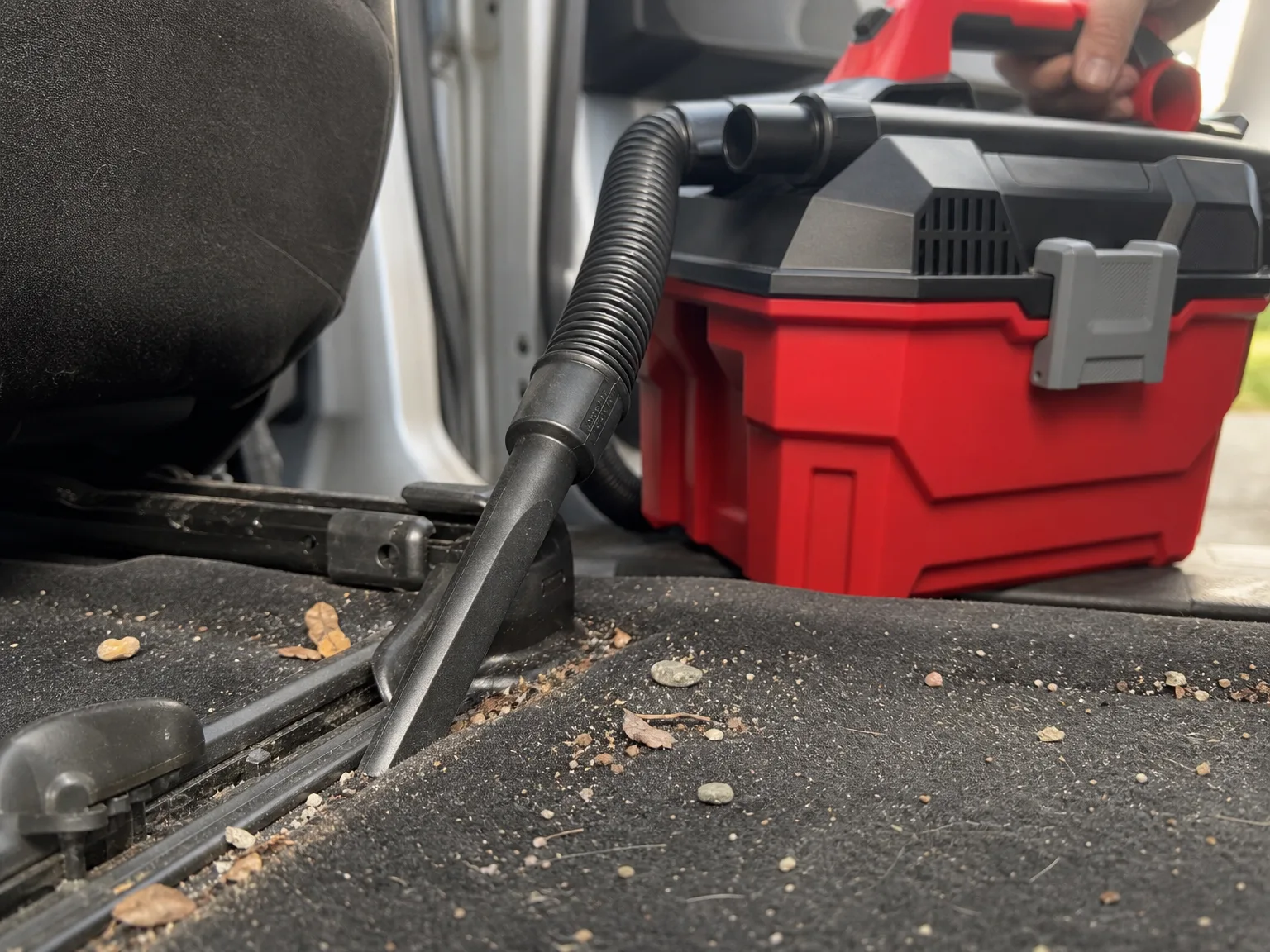
Every corded shop vac decides for you where a cleanup can happen. A driveway job means an extension cord, and a job at the far end of the yard often means no job at all. Going cordless removes that whole negotiation. We walked around a parked car twice without repositioning anything, cleaned a truck bed with the vac sitting on the tailgate, and did a quick pass through a camper without hunting for an outlet. At 2 gallons the body is small enough to carry in one hand, so you set it down where the mess is rather than dragging it there. That is the difference between a mess handled now and a mess added to the weekend list.
The Hose and Tools Ride on the Machine
Owners keep mentioning the onboard storage, and it earns the attention. The hose wraps onto the body and the attachments clip on, so the crevice tool is on the vac you are already holding. Anyone who has dug through a garage shelf mid-job knows the alternative. It also means the tools travel automatically when you carry the vac to the driveway, and nothing gets left on the workbench. For a small apartment garage or a closet shelf, the tidy footprint matters as much as the tank size. Nothing spills off it when you pick it up.
Wet Messes Go In and Come Out Cleanly
The canister seals well. Owners report carrying it with water inside and no dripping, and our wet tests matched: a soaked floor mat and a puddle on the workshop floor both went in without leaking around the lid. Emptying is the part that usually goes badly on small vacs, where you fight a lid that fastens with friction and end up pouring dirty water down your arm. Here the side clips release and the lid comes off in one motion, so you tip the canister into a drain and rinse it. Pull the filter out before any wet pickup. That step protects the motor and it applies to every wet/dry vac, not just this one.
A Washable Filter Instead of a Consumable
The included HEPA filter captures fine dust and rinses clean, so there is no bag or cartridge to reorder. That is a genuine long-run saving compared with shop vacs that run on proprietary bags you can only buy direct from the manufacturer. It also matters for the kind of dust that actually shows up in a small workshop: sanding dust and drywall powder pass straight through a cheap foam filter and blow back into the room. Rinse it and let it dry fully before the next dry job, because a damp filter loses airflow and this vac has no airflow to spare.
Where It Falls Short
Suction Hits a Ceiling on Embedded Pet Hair
This is the honest limit, and owners are consistent about it. Suction is weaker than a corded vac's, and the gap shows up exactly where you would not want it to. Pet hair worked into car seat upholstery stays put after a pass, and heavy dirt ground into rubber floor mats needs several tries or a brush to loosen it first. Loose fur on a hard surface comes up fine. Fur that has been sat on for a month does not. No wet/dry vac has a powered brushroll, so there is nothing to agitate the fibers, and a cordless motor has less to give than a corded one. If your main problem is fur in upholstery, a handheld with a motorized brush like the one in our RELIDOL 20000Pa handheld review will do more for you than this will.
The Bare Tool Price Is Not the Price
The CMCV002B arrives with no battery and no charger. If you already own Craftsman V20 packs, that is the whole appeal and the number on the listing is what you spend. If you do not, add a battery and a charger, and the total lands in a different bracket than the sticker suggests. Owners flag this as the main disappointment, usually after the box arrives. Third-party adapters that fit DEWALT packs exist, but a proper V20 battery is the safer route for fit and reliability. Do the full arithmetic before you buy, because a bare tool plus a starter battery kit can cost more than a capable corded vac.
Two Gallons and One Battery Set the Job Size
A 2-gallon canister is right for a car interior and wrong for a renovation. Fine dust fills it slower than you expect, but wet pickup does not, and two gallons of water is a full tank plus a trip to the drain before you have finished the floor. Runtime works the same way. A 4.0Ah pack covers a car, and a smaller pack will not, so plan around the battery you own rather than the one in the marketing photos. Treat this as a spot cleaner with a tank, not a shop vac replacement. That framing is what separates the happy owners from the disappointed ones.
Real-World Performance
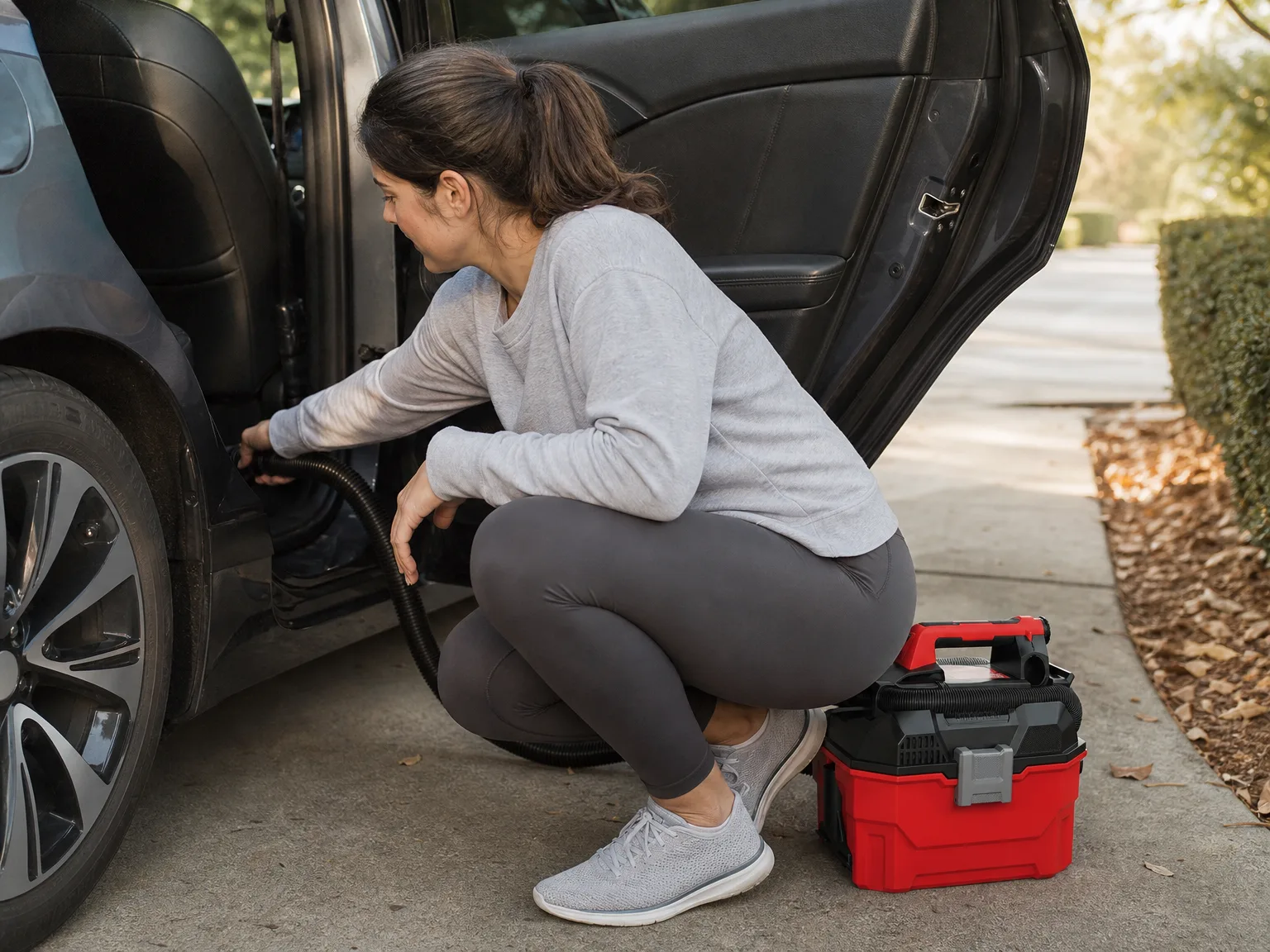
The quick car cleanout is the job this vac was built for, and it is the one we ran most. Sand along the seat rails, gravel in the footwell, crumbs in the cupholders, and dried leaves under the mats all came up in one pass with the crevice tool. Working around the car without a cord or an extension reel is the part that keeps you going: no unplugging, no coiling, no repositioning halfway through the back seat. A 4.0Ah pack got us through both rows and the cargo area with margin left. The one place it stalled was cat hair pressed into the fabric of the rear bench, which took a rubber brush first and still needed two passes.
Small workshop spills went as well. We knocked over a container of screws and washers, and the vac took the lot without clogging or stalling, which is a fair test for a small motor. Sawdust off a bench top and sanding dust along the baseboard cleared cleanly, and the washable HEPA filter kept the fine stuff in the canister rather than venting it back into the room. Carrying the vac up onto the bench instead of stretching a hose is the practical win here. Emptying between jobs takes seconds because of the side clips, and that matters more than it sounds when the tank only holds two gallons.
Wet pickup was the test we were most curious about, since small cordless vacs often handle liquid badly. We pulled the filter, ran a spilled water bottle out of a footwell, then took on a puddle on the workshop floor from a leaking cooler. Both went in without fuss and, more importantly, without dripping out of the canister while we carried it to the drain. The lid seal is doing real work. Rinse the canister the same day so nothing dries onto the walls, and let the filter dry completely before you switch back to dust.
The late-evening test is where this vac quietly wins. A corded shop vac in an attached garage after 8pm is a household event. We ran this one on a weeknight with a kid asleep upstairs and got through a footwell cleanup and a bench sweep without anyone noticing. That is a practical reason to own it rather than a spec, and it explains a lot of the owner enthusiasm. Storage fits the same pattern: it lives on a closet shelf with the hose and tools attached, which suits a small garage or an apartment parking space better than a drum vac ever will.
How It Compares to Alternatives
The corded CRAFTSMAN CMXEVBE17250 2.5-gallon bundle is the obvious comparison inside the same brand. You get more suction for the money and a blower function that clears a garage floor faster than a broom, and you never think about batteries. You also get a cord, and a hose that owners say clogs on larger chips and wet leaves. Its 2.5-gallon bucket needs emptying just as often as this one. Pick the corded model if your cleanups happen in one place near an outlet.
The Armor All DAA202W 2.5-gallon 20V cordless vac is the closest cordless rival, and it comes with a large accessory set for tight spaces at a lower price than most cordless shop vacs. The catch is runtime: owners report roughly ten minutes per charge, which is not a car interior. Suction is noticeably weaker than a corded vac's, same as here. If you are not already committed to a battery platform and you want the cheapest cordless entry, it is worth a look. If you own V20 packs, the Craftsman is the better use of them.
The Milwaukee M12 FUEL 1.6-gallon tool-only vac is the same idea on a different battery system, and it has strong water lift for a 12V machine plus a compact, stackable body. Owners like the quiet low setting and the onboard accessory clip. They also complain about a short hose that forces you to keep moving the unit, brief runtimes even on 5.0Ah packs, and a separate fuzzy filter you have to buy for wet pickup. If you already run Milwaukee M12 tools, get that one instead. Battery platform, not performance, is the real deciding factor between these two. For a bigger corded machine with a blower that lifts off the drum, our Vacmaster 6-gallon wet/dry review covers that end of the range.
Who Should Buy It
Buy this if you already own Craftsman V20 batteries and your messes are small, frequent, and away from outlets. Someone who cleans their own car every couple of weeks, keeps a one-car workshop, and wants a vac that can also take a spilled drink or a puddle gets full value here, especially at bare-tool cost. The quiet motor, the onboard hose and tools, and the clean-emptying canister add up to a machine you grab without thinking about it.
Look elsewhere if this would be your only shop vac, or if embedded pet hair is the problem you are trying to solve. A renovation, a flooded basement, or a workshop that generates debris by the wheelbarrow needs a corded drum vac with real capacity. Fur in upholstery needs a powered brush, not more suction. For daily crumb patrol in the car, a small handheld vacuum is faster to pick up, and our ZARIMI portable car vacuum review covers that route.
What you get at this tier is a genuinely portable 2-gallon wet/dry vac, a washable HEPA filter with nothing to reorder, a well-sealed canister that handles liquid without dripping, tool storage on the body, and noise you can work beside at night. What you do not get is a battery, a charger, or corded suction. Add the first two to your mental price and accept the third, and this is an easy machine to live with.
FAQ
Does this vacuum use a HEPA filter?
Yes, it comes with a washable HEPA filter that captures fine dust. Remove the filter before wet pickup to protect the motor.
How long does the battery last on a single charge?
With a 4.0Ah battery, you get ample runtime to vacuum a car interior or handle multiple small messes. Smaller batteries will naturally run for less time.
Can I use this with other brand batteries, like DeWalt?
Third-party adapters let you run DeWalt or other packs, but for a secure fit and worry-free operation, original Craftsman V20 batteries are the smarter pick.
Does a battery and charger come in the box?
No. This is a bare tool, so budget for a V20 battery and charger if you do not own them already. That extra cost is the most common complaint from owners.
Can it pick up water?
Yes, wet pickup is part of what it does. Take the filter out first, and remember that two gallons is not much liquid, so a larger spill means a trip to the drain partway through. The canister seals well enough to carry without dripping.
Will it get pet hair off car seats?
Loose hair on hard surfaces and mats, yes. Hair worked deep into seat fabric, no. Suction is weaker than a corded vac's and there is no powered brushroll, so loosen embedded fur with a rubber brush first or use a handheld with a motorized head.
Is it loud enough to bother the house?
Owners consistently call out the low noise for a shop vac, and we ran it in an attached garage on a weeknight without waking anyone. It is quieter than a shop vac rather than quiet in absolute terms.
Bottom Line
The CMCV002B is worth owning for one specific reason: it is the wet/dry vac you actually carry to the mess, quiet enough for a weeknight and small enough to store with the hose still attached. The trade is suction, so embedded pet hair and heavy ground-in dirt stay beyond it, and the bare-tool listing hides the cost of a battery and charger if you are not already on the V20 platform. If you own the batteries and want a portable second vac for cars and small spills, this is a straightforward yes. If you need one machine for everything, buy a corded drum vac and keep a handheld for the car.
Explore related
In this article
- At a Glance
- What We Liked
- Quiet Enough for a 9pm Garage Session
- No Cord Changes Where You Clean
- The Hose and Tools Ride on the Machine
- Wet Messes Go In and Come Out Cleanly
- A Washable Filter Instead of a Consumable
- Where It Falls Short
- Suction Hits a Ceiling on Embedded Pet Hair
- The Bare Tool Price Is Not the Price
- Two Gallons and One Battery Set the Job Size
- Real-World Performance
- How It Compares to Alternatives
- Who Should Buy It
- FAQ
- Bottom Line
Keep reading

How to Clean Hardwood Floors Without Damaging Them: A Busy Home Guide
Soft rollers, the right suction mode, and barely damp mops keep hardwood safe. Here's the method we use at home, plus three tools that won't scratch sealed wood.
Vacmaster VJF607PF Review: Basement Water and Shop Dust Tested
We tested the Vacmaster VJF607PF 6-gallon wet/dry shop vac on basement water, sanding dust, and a filthy car interior. Strong suction, and a tank you feel every time you empty it.
Armor All AA255W Review: Trunk Wet/Dry Cleanup After Weeks
We tested the Armor All AA255W 2.5-gallon wet/dry vac on trunk spills, car mats, and pet debris. Honest take on cord reach, crevice tools, and who should buy.