5 Best Small Wet Dry Shop Vacs for Garage Cleanup (2026)
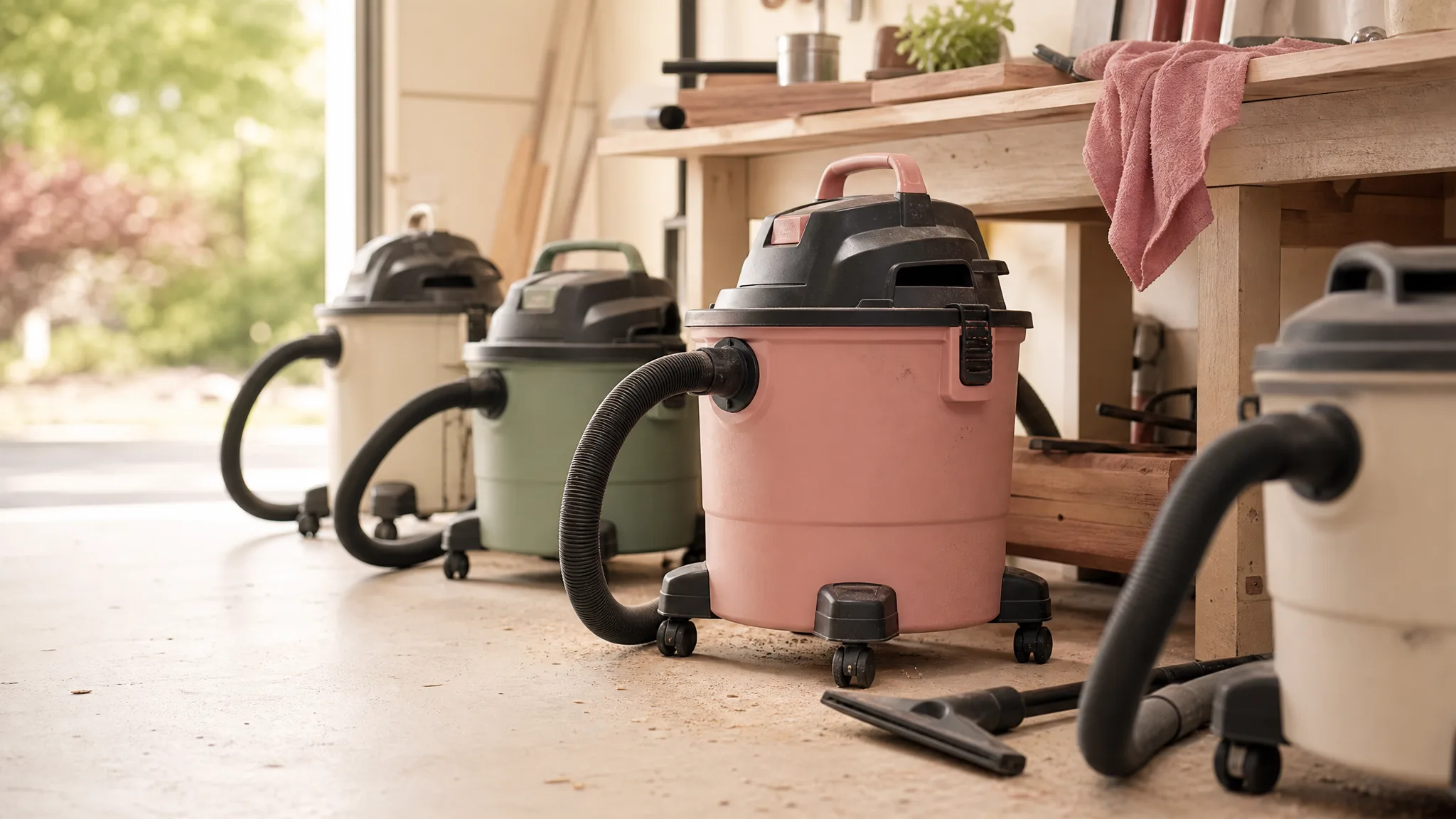
In this article
- Our Top Picks at a Glance
- Comparison Table
- 1. Stanley SL18116P 6-Gallon: The Garage Sweet Spot
- What we liked
- Where it falls short
- Real-world performance
- Who should buy it
- 2. Armor All AA255W 2.5-Gallon: The Compact Utility Pick
- What we liked
- Where it falls short
- Real-world performance
- Who should buy it
- 3. Vacmaster Beast Series 5-Gallon: Portable Suction That Punches Up
- What we liked
- Where it falls short
- Real-world performance
- Who should buy it
- 4. CRAFTSMAN CMXEVBE17595 16-Gallon: Heavy-Duty Capacity Without Leaving Home
- What we liked
- Where it falls short
- Real-world performance
- Who should buy it
- 5. DEWALT 20V Handheld DCV501HB: Cordless Spot Cleaning for Tool Owners
- What we liked
- Where it falls short
- Real-world performance
- Who should buy it
- How to Choose: Buying Guide
- Suction and tank size
- Wet vs dry (and filter swaps)
- Noise and shared spaces
- Maneuverability and storage
- Power source and filtration
- FAQ
- What size wet dry shop vac is best for a home garage?
- Can a small wet dry vac replace my household vacuum?
- Do I need different filters for wet and dry pickup?
- Are peak horsepower ratings trustworthy?
- Is a cordless handheld enough for car detailing?
- How loud are small shop vacs?
- Final Verdict
A household stick vacuum stalls on the first puddle under a washing machine, the pile of drywall dust after a weekend project, or the muddy floor mats after a rainy dog walk. That is when a small wet dry shop vac earns its floor space. You need something stronger than a car vac, smaller than a contractor drum that eats half the garage, and honest about what it can and cannot do.
This roundup sticks to compact and mid-size wet/dry vacuums for garage and workshop use. If you are detailing a car and need a looser-then-lift method for fur, pair any of these with our guide on how to vacuum pet hair out of a car.

Our Top Picks at a Glance
Best overall: Stanley SL18116P 6-Gallon, the sweet spot for car mud, garage dust, and basement water without a dedicated bay.
Best compact: Armor All AA255W 2.5-Gallon, apartment-garage friendly and quieter than a full shop vac.
Best portable power: Vacmaster Beast Series 5-Gallon, 5.5 peak HP suction you can carry one-handed up a ladder.
Best capacity: CRAFTSMAN CMXEVBE17595 16-Gallon, renovation dust and flood cleanup without constant emptying.
Best cordless spot cleaner: DEWALT 20V Handheld (DCV501HB), dry-only grab-and-go if you already own 20V MAX batteries.
Comparison Table
| Product | Best for | Tank | Power class | Wet pickup | Rating |
|---|---|---|---|---|---|
| Stanley SL18116P | Everyday garage | 6 gal | 4 HP corded | Yes | 4.6 |
| Armor All AA255W | Tight storage | 2.5 gal | Corded utility | Yes | 4.5 |
| Vacmaster Beast | Portable suction | 5 gal | 5.5 peak HP | Yes | 4.4 |
| CRAFTSMAN 16-Gallon | Renovations | 16 gal | 6.5 peak HP | Yes | 4.7 |
| DEWALT 20V Handheld | Cordless spots | Handheld | 20V MAX dry | No | 4.7 |
1. Stanley SL18116P 6-Gallon: The Garage Sweet Spot

STANLEY
Stanley - SL18116P Wet/Dry Vacuum, 6 Gallon, 4 Horsepower Black
Best for
homeowners and light DIYers who need one affordable machine for car interiors, garage dust, seasonal flood cleanup, and light remodel debris; skip if you need contractor-grade daily abuse or hose reach beyond about sixteen feet.
Stanley's six-gallon shop vac draws praise because it clears car mud, caked dog hair, broken patio glass, and basement flood water at a price well below comparable models at hardware stores, while still fitting in a closet. The rear blower port, swivel casters, and bagless-or-bagged flexibility cover most homeowner and light garage jobs. Weak points are a hose that some renovation users report tearing early and a total reach of about sixteen feet that requires frequent tank repositioning on larger areas.
Loved by buyers
- •suction pulls dog hair, caked mud, gum, and glass shards without pre-sweeping
- •six-gallon tank rolls on casters and stores in a closet, not a dedicated garage bay
- •rear blower port converts the same unit to leaf and dust blower without extra attachments
Buyer concerns
- •hose cuff has torn within weeks on active renovation jobs for some owners
- •sixteen feet of combined hose and cord means frequent tank repositioning across larger garage or basement areas
- •standard shop-vac noise level, ear protection helps on sessions over fifteen minutes
Best for: Homeowners who want one affordable wet dry shop vac for cars, garage dust, and occasional flood water without parking a barrel in the driveway.
What we liked
- Suction pulls dog hair, caked mud, gum, and glass shards without a pre-sweep.
- The six-gallon tank rolls on swivel casters and still fits in a closet or shelf bay.
- A rear blower port turns the same machine into a leaf and dust blower.
- Wet and dry pickup has handled repeated basement water for long-term owners without swapping machines.
Where it falls short
- Some renovation users report the hose cuff tearing within weeks of heavy use.
- About sixteen feet of combined hose and cord means you reposition the tank a lot on larger floors.
- Noise is typical shop-vac loud. Ear protection helps past the fifteen-minute mark.
Real-world performance
The Stanley SL18116P is frequently chosen by owners who need a versatile wet dry vacuum that balances suction, size, and price. It effectively handles car interiors with muddy mats and pet hair, as well as garage dust and occasional water spills. The 10-foot cord combined with a 6-foot hose and extension wands provide sufficient reach for typical sedan cleaning without frequent outlet changes. Swivel casters and manageable weight make it convenient to move and store in a household setting.
However, users note that the hose cuff may wear quickly under heavy renovation use, and the combined hose and cord length requires repositioning on larger floors. Noise levels are typical for shop vacs, so ear protection is advisable for extended use.
Who should buy it
Anyone who wants a compact 6-gallon corded shop vac for cars, light remodel debris, and seasonal water without a dedicated storage bay.
2. Armor All AA255W 2.5-Gallon: The Compact Utility Pick

Armor All
Armor All AA255W Wet/Dry Utility Vac 2.5 Gallon, 2.5-Gallon,120 Volts (AC), Orange/Black
Best for
Best for apartment garages, cars, small spills, and pet debris on hard floors, while whole-house carpet cleaning or detailed seat-rail work calls for something larger or more specialized.
Owners mostly agree the Armor All 2.5-gallon wet-dry vac hits a useful middle ground, stronger than tiny car vacs and easier to store than a full shop vacuum. The trade-off is limited reach for vehicle detailing, since the cord and narrow tools often need help around seat rails and larger garages.
Loved by buyers
- •Handles sand, glass bits, pet hair, and wet carpet cleanup without dragging out a large shop vac
- •Compact tank and handle make it easy to store in an apartment garage or utility closet
- •Included nozzles and blower port cover cars, porches, vents, and small household messes
Buyer concerns
- •Cord often needs an extension cord to clean all sides of a vehicle
- •Crevice tools are too short or wide for some gaps between car seats
- •A small share of reports mention loose lids or units that stop powering on early
Best for: Apartment garages, porches, and car interiors where a full shop vac will not fit or feels like overkill.
What we liked
- Handles sand, glass bits, pet hair, and wet carpet cleanup without dragging out a large shop vac.
- The compact tank and handle store easily in a utility closet or apartment garage.
- Included nozzles and a blower port cover cars, vents, porches, and small household messes.
- Quieter than most uprights and full-size shop vacs, which matters if pets or kids are nearby.
Where it falls short
- The cord often needs an extension to clean every side of a vehicle.
- Crevice tools can feel short or wide for tight seat-rail gaps.
- A small share of owners report loose lids or units that stop powering on early.
Real-world performance
The Armor All AA255W is favored in tight spaces such as apartment garages and porches where a larger shop vac would be cumbersome. It effectively cleans sand, pet hair, and wet carpet spills, making it a practical choice for small vehicles and light household messes. Its quieter operation is appreciated in environments with pets or children. However, the cord length may require extension cords for full vehicle coverage, and some users find the included crevice tools less effective for narrow gaps. A few owners have reported issues with lid fit and early power failures.
Who should buy it
Drivers and apartment owners who want a quiet, storable 2.5-gallon wet dry utility vac for cars and small spills.
3. Vacmaster Beast Series 5-Gallon: Portable Suction That Punches Up

Vacmaster
Vacmaster Professional Beast Series VFB511H 0201 5-Gallon 5.5 Peak HP Wet/Dry Vac, Black
Best for
Garage, workshop, and car detailing where compact portability matters more than tank capacity; skip if you need screw-lock attachments or responsive warranty service.
The Vacmaster Beast Series surprises garage and car owners with 5.5 peak HP suction from a compact 5-gallon tank light enough to carry up stairs and into vehicles. Its muffler keeps noise below what most expect from a shop vac at this wattage, and the long cord plus kink-resistant hose cover wide areas without hunting for outlets. Attachments slip off the hose end under strong suction since they push on rather than screw lock. Wet pickup means tipping the entire tank to empty because there is no drain plug, and warranty replacement parts took months in one documented case while another buyer got zero response from support after a broken inlet.
Loved by buyers
- •Strong suction pulls sawdust, car sand, and pet hair from car upholstery better than coin-op vacuums
- •Compact and light enough to carry one-handed while on a step ladder
- •Muffler keeps noise below typical shop-vac levels; casters roll smoothly over garage floors
Buyer concerns
- •Crevice and car tools push onto the hose and pull off when suction spikes
- •No drain plug anywhere on the tank; you tip the whole canister to empty water
- •Dust bags are oversized for the 5-gallon tank and require finesse to seat properly
Best for: Garage, workshop, and car detailing where you want strong suction in a tank light enough to carry up stairs.
What we liked
- Strong suction pulls sawdust, car sand, and pet hair from upholstery better than coin-op lot vacuums.
- Compact and light enough to carry one-handed while on a step ladder.
- The muffler keeps noise below what we expect from this peak HP class, and casters roll smoothly.
- Wet and dry pickup in one machine without swapping tanks mid-job.
Where it falls short
- Crevice and car tools push onto the hose and can pull off when suction spikes.
- No drain plug. You tip the whole canister to empty water.
- Dust bags can feel oversized for the 5-gallon tank and need care to seat.
- Warranty support has gone quiet for some buyers who needed parts.
Real-world performance
The Vacmaster Beast Series 5-Gallon is recognized for its strong suction power, suitable for removing sawdust, sand, and pet hair from upholstery and workshop floors. Its compact and lightweight design allows for easy one-handed carrying, including up stairs or ladders. The muffler reduces noise compared to other vacuums in its power class, and the casters facilitate smooth movement. Wet and dry pickup capabilities make it versatile for various cleaning tasks.
Some users report that the push-on crevice and car tools may detach during use, and the absence of a drain plug requires tipping the entire tank to empty liquids, which can be messy. Dust bags need careful installation to fit properly. Additionally, some buyers have experienced limited warranty support.
Who should buy it
DIYers who carry a shop vac upstairs or into a vehicle and care more about suction than drain convenience.
4. CRAFTSMAN CMXEVBE17595 16-Gallon: Heavy-Duty Capacity Without Leaving Home

CRAFTSMAN
CRAFTSMAN CMXEVBE17595 16 Gallon 6.5 Peak HP Wet Dry Shop Vacuum | Heavy-Duty Shop Vacuum Wet and Dry with Filter, Dust Bag, Hose and Attachments for Home Projects & Renovations
Best for
Garage owners and DIYers who tackle renovations, car detailing, and water cleanup and need a shop vac that stays in one place, not something to carry through the house daily.
An 84% five-star rate from 8,500 reviews signals that this Craftsman delivers on garage and workshop expectations in a way smaller shop vacs do not. Buyers run it through renovation dust, flood cleanup, and car detailing with 6.5 HP that pulls grime from wall gaps a household vac cannot reach. The bulk and short casters are the tradeoff for that power.
Loved by buyers
- •6.5 HP motor pulls fine dust and large debris alike, including from under wall edges where standard vacuums lose suction
- •16-gallon tank goes through a full garage cleanout or renovation without constant emptying
- •Blower port reverses the airflow to push leaf litter off a deck or dry a wet surface after liquid pickup
Buyer concerns
- •Hose kinks despite the Dual-Flex marketing; wide-floor nozzle needs a separate 12-inch accessory for large sweeping passes
- •No dedicated cord keeper; the power cable drapes over the accessory holders instead
- •Bag-and-cone-filter combination confuses first-time shop-vac buyers; neither the box nor ads explain when to use each
Best for: Garage renovations, flood cleanup, and car detailing when you refuse to empty a tank every ten minutes.
What we liked
- The 6.5 peak HP motor pulls fine dust and large debris, including grit from under wall edges.
- A 16-gallon tank survives a full garage cleanout or renovation pass without constant emptying.
- The blower port reverses airflow for leaf litter or drying a wet surface after liquid pickup.
- A long cord reaches around a whole car without unplugging mid-detail.
Where it falls short
- The hose can kink, and the wide-floor nozzle still needs a separate accessory for big sweeping passes.
- No dedicated cord keeper. The cable drapes over accessory holders.
- Bag-and-cone-filter pairing confuses first-time shop-vac buyers who are not told when to use each.
- Bulk and short casters make it a stay-in-the-garage machine, not a daily house companion.
Real-world performance
The CRAFTSMAN 16-Gallon is the largest model in this roundup and is suited for heavy-duty tasks such as garage renovations and flood cleanup. Its 6.5 peak HP motor provides strong suction for fine dust and large debris. The large tank capacity reduces the frequency of emptying during extensive cleaning sessions. The blower port adds versatility for leaf and dust blowing or drying surfaces. The long power cord allows for extended reach around vehicles.
Users note that the hose may kink during use, and the wide-floor nozzle requires additional accessories for large sweeping tasks. The lack of a cord keeper can make storage less tidy. The dual bag and cone filter system may confuse new users about proper filter use. Due to its size and short casters, it is best kept stationary in a garage rather than moved frequently.
Who should buy it
DIY renovators and garage owners who want heavy-duty wet dry capacity and will keep the vac in one place.
5. DEWALT 20V Handheld DCV501HB: Cordless Spot Cleaning for Tool Owners

DEWALT
DEWALT 20V Handheld Vacuum Cordless, Car Vacuum with HEPA Filter, 6 Attachments and LED Light, High Performance Dry Only Small Shop Vac, Battery Not Included (DCV501HB)
Best for
DeWalt battery owners who want a grab-and-go vac for cars, workshops, and fur corners around the house; skip if you need a full-size home vacuum or do not already have 20V MAX packs and a charger.
If you already own DeWalt 20V MAX batteries, this handheld is an easy pick for drywall dust, dog hair tumbleweeds, and car interiors, with suction that punches above its size. It is not a carpet vacuum or a whole-house solution, and the total cost stings if you need to buy a battery and charger from scratch.
Loved by buyers
- •suction rivals a small corded shop vac for debris, dust, and pet hair
- •runs on DeWalt 20V MAX batteries you may already own for drills and saws
- •HEPA filter captures fine dust without blowing it back into the room
Buyer concerns
- •battery and charger sold separately, adding $50 to $100 for newcomers
- •canister is small and fills quickly on anything beyond spot cleaning
- •hose and tube connections pull apart when you grab the unit upside down
Best for: People who already own DEWALT 20V MAX batteries and need dry-only cleanup in cars, workshops, and fur corners.
What we liked
- Suction rivals a small corded shop vac on debris, dust, and pet hair for its size.
- Runs on 20V MAX packs you may already own for drills and saws.
- A large HEPA filter traps fine dust instead of blowing it back into the room.
- Six attachments cover floors, crevices, overhead spots, and car interiors.
Where it falls short
- Battery and charger are sold separately, which adds cost if you are new to the platform.
- The canister fills fast on anything beyond spot cleaning.
- Hose and tube connections can pull apart if you grab the unit upside down.
- No variable speed switch to stretch battery life on light dust.
Real-world performance
The DEWALT 20V Handheld DCV501HB is a dry-only cordless vacuum designed for spot cleaning tasks in cars, workshops, and other small areas. It offers suction comparable to small corded shop vacs for debris, dust, and pet hair. Its compatibility with existing DEWALT 20V MAX batteries makes it convenient for users already invested in the platform. The large HEPA filter effectively traps fine dust, improving air quality during use. The included six attachments provide versatility for various cleaning needs.
Limitations include the need to purchase batteries and chargers separately if not already owned, a small canister that fills quickly beyond spot cleaning, and hose and tube connections that may disconnect if handled improperly. The lack of a variable speed control limits battery runtime optimization.
Who should buy it
DEWALT battery owners who want a HEPA handheld for dry spots and cars, and who already own a wet dry tank for spills.
How to Choose: Buying Guide

Suction and tank size
Match the tank to the mess you actually make. A 2.5-gallon utility vac is fine for sand in the entry and a weekly car floor. A 5 to 6-gallon tank covers most garage weekends. Jump to 16 gallons when renovation dust or flood water would fill a small tank before lunch. Peak HP on the label is not a lab suction score. Use it only to compare within this category, then trust what the hose does on carpet and sawdust.
Wet vs dry (and filter swaps)
True wet dry shop vacs need the right filter setup before you pull water. Many kits ship with a foam sleeve for wet and a cartridge or bag for dry. Mix those up and you risk a ruined filter or a motor that gulps moisture. The DEWALT handheld in this list is dry only. If floods are your main fear, buy a corded tank with a clear emptying path, ideally a bottom drain on larger models.
Noise and shared spaces
Shop vacs are louder than living-room sticks. If your garage shares a wall with a nursery or you clean while someone works from home, prioritize quieter utility models like the Armor All or muffler-equipped tanks like the Vacmaster Beast. Ear protection is still smart past fifteen minutes on any of the louder corded units.
Maneuverability and storage
Casters and a carry handle matter more than brochure photos. A 6-gallon unit you will actually roll out of a closet beats a 16-gallon drum you leave buried behind boxes. Measure shelf height and doorway width before you buy. Apartment owners should start at 2.5 to 6 gallons. Dedicated workshops can absorb bulk.
Power source and filtration
Corded tanks win for long wet jobs and continuous suction. Cordless handholds win for cars parked away from outlets, as long as you own the battery platform. HEPA-style filtration helps with fine dust and allergies. Coarser shop filters need more frequent cleaning after drywall or sanding sessions. Value is the last filter: count the batteries, spare hoses, and filters you will buy in year one, not just the sticker price of the tank.
FAQ
What size wet dry shop vac is best for a home garage?
Most home garages do well with 5 to 6 gallons. That size holds a car cleanout or a weekend of sawdust without constant emptying, and it still stores against a wall. Drop to 2.5 gallons if space is tight. Step up to 16 gallons if you renovate often or pull standing water.
Can a small wet dry vac replace my household vacuum?
No. Shop vacs shine on debris, spills, and rough surfaces. They are louder, clumsier on stairs, and worse on everyday living-room carpet than a stick or upright. Keep a household vacuum for floors you live on and a wet dry vac for the garage, basement, and car.
Do I need different filters for wet and dry pickup?
Usually yes. Dry debris wants a cartridge or bag. Wet pickup wants a foam sleeve or the filter removed per the manual. Always check the guide for your model before the first water job. Using the wrong setup can ruin filtration and stress the motor.
Are peak horsepower ratings trustworthy?
Treat peak HP as a rough class label, not a lab measurement. Manufacturers measure it differently, and it does not equal sealed suction at the hose tip. Compare tanks in the same size band, then judge by real debris pickup and owner reports.
Is a cordless handheld enough for car detailing?
For dry crumbs, sand, and pet hair, a strong cordless handheld like the DEWALT 20V can finish a car on a good battery. For soaked mats, mud clumps, or deep carpet extraction, you still want a corded wet dry tank with a longer hose and larger capacity.
How loud are small shop vacs?
Expect conversation-drowning noise on most corded tanks. Compact utility models can run quieter. The DEWALT handheld we compared sat near 79 dB. Use hearing protection for long sessions, and avoid early-morning runs if bedrooms sit next to the garage.
Final Verdict
For most garages, start with the Stanley SL18116P 6-gallon. It is the size and suction mix we kept reaching for on cars, dust, and occasional water. If storage is the bottleneck, buy the Armor All 2.5-gallon. If you renovate or flood-clean often, park the CRAFTSMAN 16-gallon in a corner and leave it there. Add the DEWALT 20V handheld only when you already own the batteries and need dry spot cleanup between bigger jobs.
Want a quieter corded shop vac deep dive next? Read our DEWALT STEALTHSONIC shop vac review, or browse more wet dry options in our wet/dry vacuums category.
In this article
- Our Top Picks at a Glance
- Comparison Table
- 1. Stanley SL18116P 6-Gallon: The Garage Sweet Spot
- What we liked
- Where it falls short
- Real-world performance
- Who should buy it
- 2. Armor All AA255W 2.5-Gallon: The Compact Utility Pick
- What we liked
- Where it falls short
- Real-world performance
- Who should buy it
- 3. Vacmaster Beast Series 5-Gallon: Portable Suction That Punches Up
- What we liked
- Where it falls short
- Real-world performance
- Who should buy it
- 4. CRAFTSMAN CMXEVBE17595 16-Gallon: Heavy-Duty Capacity Without Leaving Home
- What we liked
- Where it falls short
- Real-world performance
- Who should buy it
- 5. DEWALT 20V Handheld DCV501HB: Cordless Spot Cleaning for Tool Owners
- What we liked
- Where it falls short
- Real-world performance
- Who should buy it
- How to Choose: Buying Guide
- Suction and tank size
- Wet vs dry (and filter swaps)
- Noise and shared spaces
- Maneuverability and storage
- Power source and filtration
- FAQ
- What size wet dry shop vac is best for a home garage?
- Can a small wet dry vac replace my household vacuum?
- Do I need different filters for wet and dry pickup?
- Are peak horsepower ratings trustworthy?
- Is a cordless handheld enough for car detailing?
- How loud are small shop vacs?
- Final Verdict
Keep reading
Tineco S7 vs Bissell CrossWave: Best Wet Dry Vacuum for Pet Owners?
We compared the Tineco Floor ONE S7 and Bissell CrossWave Pet Pro head-to-head in a real home with pets. Here is which wet dry vacuum actually cleans better and fits your life.
How to Clean Hardwood Floors Without Damaging Them: A Busy Home Guide
Soft rollers, the right suction mode, and barely damp mops keep hardwood safe. Here's the method we use at home, plus three tools that won't scratch sealed wood.

How to Get Pet Hair Out of Carpet (A Pet Parent's Guide)
Pet hair that has worked down into carpet fibers will not budge with one fast pass. Here is the working order of dry and wet methods that actually clears it.