Bissell 2252 CleanView Swivel Pet Review: Matted Carpet After 5 Weeks
In this article
- At a glance
- What we liked
- Suction that revives matted carpet
- The hose attachment has a real brush roll
- Swivel steering on a body you can lift
- Corded means no run-time arithmetic
- Where it falls short
- The attachment hose is too short
- The boxy head will not go under low furniture
- The drive belt is a consumable
- Real-world performance
- Five weeks on matted carpet with two pets
- Hard floors, thin rugs, and the height dial
- Couch cushions, stairs, and where the cord runs out
- How it compares to alternatives
- Who should buy it
- FAQ
- How long is the cord, and will I need to switch outlets often?
- Is it lightweight enough to carry up and down stairs?
- Does it pick up all pet hair from carpets and upholstery?
- Can it clean both hard floors and carpet without changing settings?
- How often will I need to empty the dirt tank?
- What wears out first, and can I fix it myself?
- Bottom line
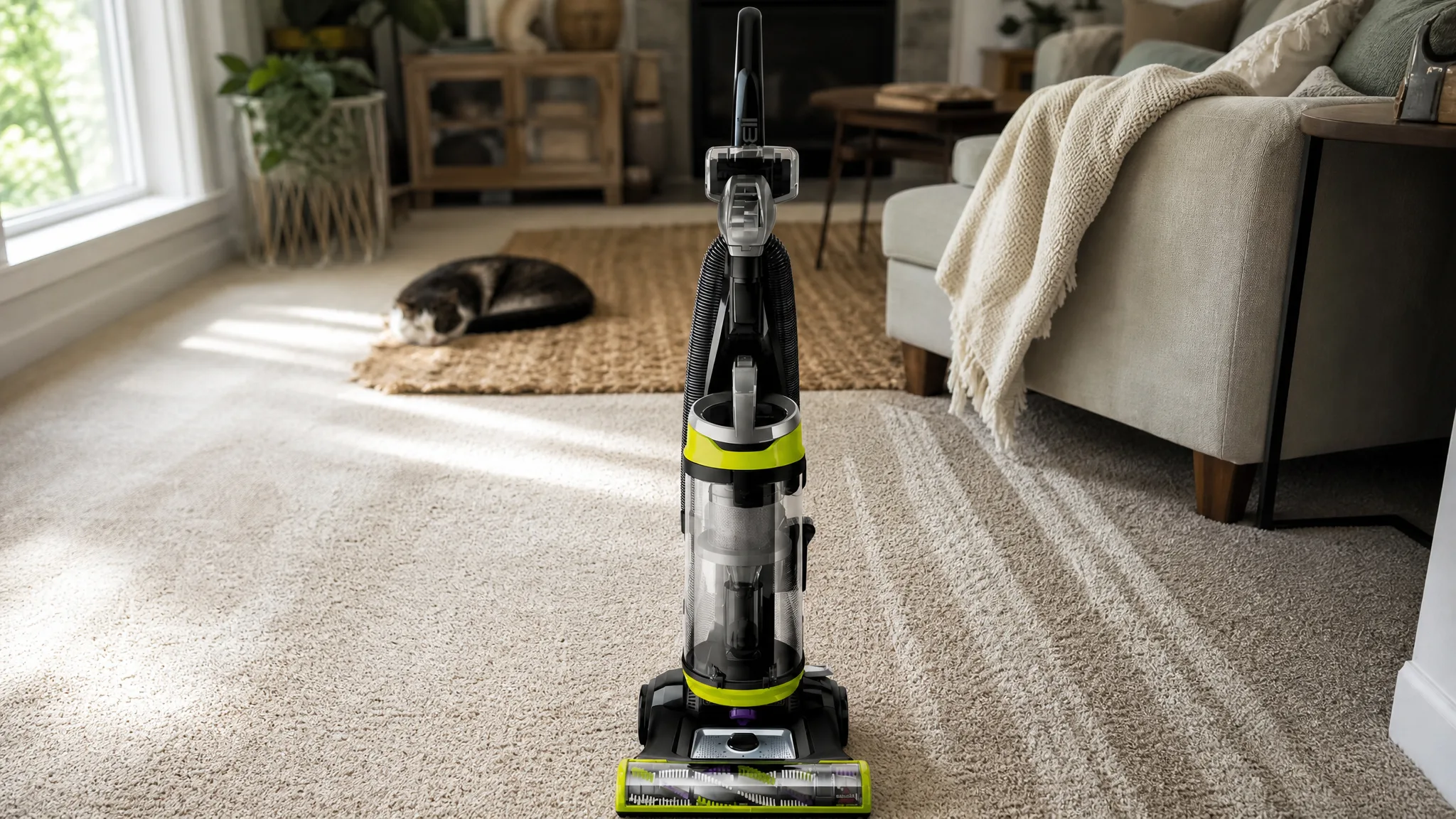
The traffic lane between our couch and the back door had gone flat and gray, the kind of matted carpet that looks identical after you vacuum it. That is the job the Bissell 2252 CleanView Swivel Pet upright is built around. We ran it for five weeks across wall-to-wall carpet, tile, and two animals that shed year round, following our usual how we review routine instead of one afternoon of impressions.
Verdict: The triple action brush roll lifts fur out of carpet that lighter machines skim right over, and you pay for that with a short attachment hose and a drive belt that wears. 8.7/10.
Best for: Multi-pet homes on mixed carpet and hard floors that want one budget corded upright capable of reviving matted carpet.
Skip if: You need a slim head for tight spaces and low furniture, or long hose reach for stairs and couch backs.

Bissell
Bissell CleanView Swivel Pet Upright Vacuum, Swivel Steering for Maneuverability, Triple Action Brush Roll for Pet Hair, Large Capacity Dirt Tank & Scatter-Free Tech, 2252
Best for
Multi-pet homes on mixed carpet and hard floors who want a single corded upright under $150 that can genuinely revive matted carpet, not households needing a compact head for tight spaces or furniture with low clearance.
More than 100,000 reviews at a 4.5 average for a $140 upright is unusual, and the snippets explain why: buyers consistently report it outperforming Dyson and Shark on embedded pet hair, often on carpets no other vacuum had revived. The short attachment hose and a drive belt that eventually wears are the practical limits to plan around.
Loved by buyers
- •Triple-action brush pulls years of matted dog and cat hair from carpet on the first pass, leaving visible vacuum lines in carpets that looked permanent
- •Motorized attachment on the hose has its own spinning brush roll, not just a nozzle, so it works on couch cushions the way the main head works on carpet
- •Scatter-free head picks up fine debris at baseboards and hard-floor edges rather than pushing it aside
Buyer concerns
- •Attachment hose is short enough that reaching couch backs requires lifting the whole vacuum
- •Drive belt wears after regular use; owners with multiple pets keep a spare bag on hand by year one
- •Boxy head does not slide under low coffee tables; furniture has to move
At a glance
| Spec | Detail |
|---|---|
| Type | Corded upright, bagless |
| Model | 2252 CleanView Swivel Pet |
| Steering | Swivel head |
| Brush roll | Triple Action Brush Roll, tuned for pet hair |
| Hard floors | Scatter-Free Tech plus a height dial |
| Dirt tank | Bissell calls it large capacity; expect one or two dumps per whole-house pass |
| Hose tool | Motorized attachment with its own spinning brush roll |
| Cord | Shorter than premium uprights, so larger homes mean outlet changes |
| Weight | Light enough to carry up a staircase a step at a time |
| Wear part | Drive belt is the piece that eventually needs replacing |
| Best surfaces | Medium-pile carpet, with hard floors handled at the right height setting |
| Weak spots | Low furniture clearance, short attachment hose |
What we liked
Suction that revives matted carpet
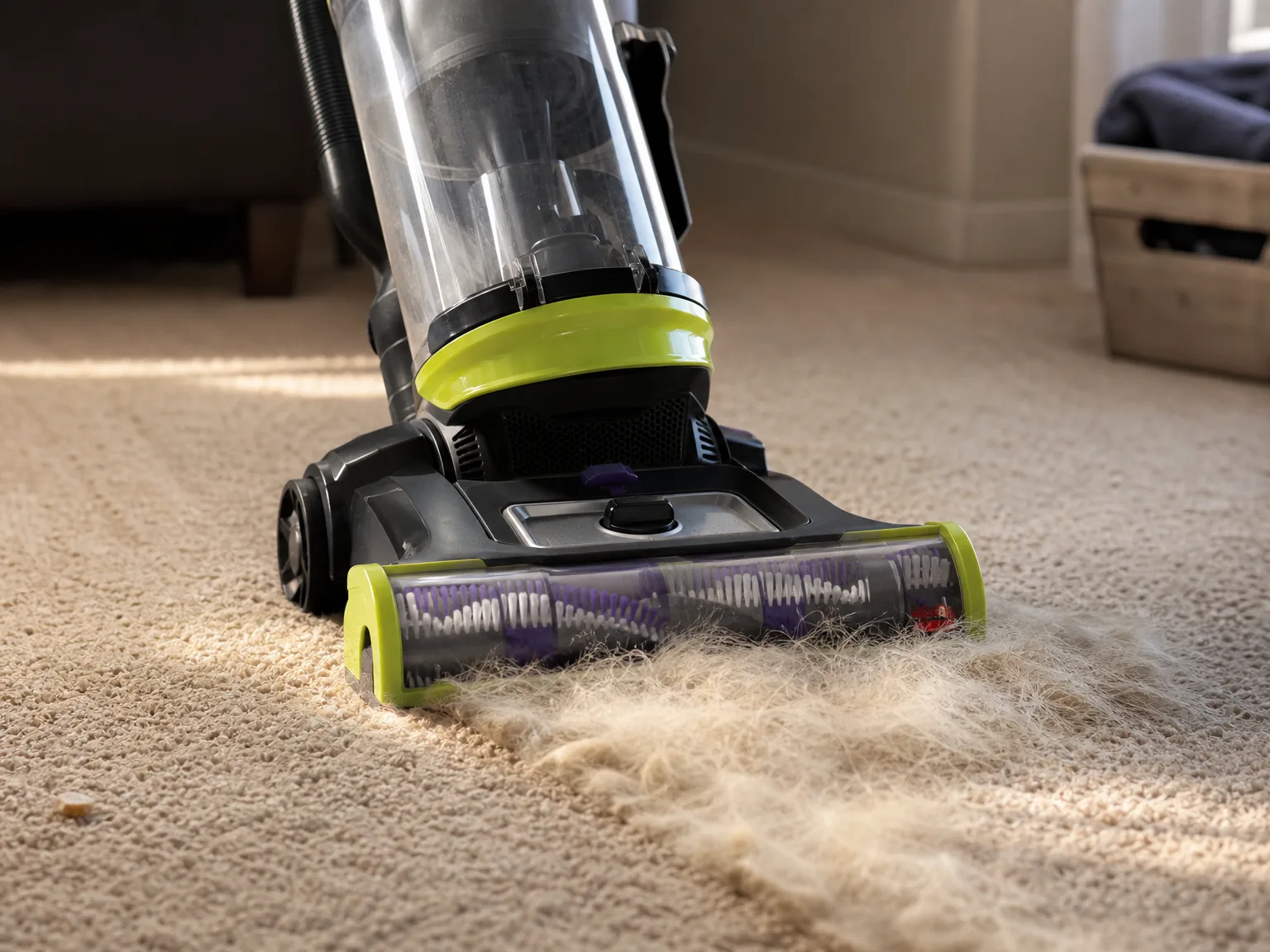
This is the whole reason to buy it. On the flattened lane by our back door, one pass left visible tracks in pile we had written off as permanently crushed. The bin filled faster than felt reasonable for carpet that had been vacuumed two days earlier with a cordless stick. That pattern repeated in the hallway and under the dining table through all five weeks. The triple action roll is aggressive enough to grab fur that has worked its way down to the backing, which is a different job from picking up what sits on top. Fine, short hairs can still survive a fast pass, so slow down on medium pile.
The hose attachment has a real brush roll
Most uprights in this class hand you a plastic nozzle and call it an upholstery tool. This one includes a motorized attachment with its own spinning brush, so couch cushions get worked the same way the main head works carpet. The difference is obvious the first time you use it: fur comes up out of the weave instead of being rolled around on the surface. Cat hair on a woven sofa seat took two strokes rather than the ten minutes of lint-roller penance we expected. For a corded upright at this price, a powered hand tool is the feature that actually earns its keep.
Swivel steering on a body you can lift
The swivel head turns around a chair leg with a wrist flick, which matters more than it sounds like it should. Vacuuming a furnished room is mostly steering, not straight lines. The machine is also lightweight enough to carry one-handed between rooms and up stairs one tread at a time, so there is no dread attached to getting it out. The steering does wander if you shove it fast, and a slower push tracks straighter. Anyone who has fought a heavy upright around furniture will notice the difference within one room.
Corded means no run-time arithmetic
There is no battery to watch, no fade in the last room, and nothing to degrade in two years. Suction on the final bedroom felt the same as the first hallway, every session. That consistency is the quiet advantage corded uprights still hold over cordless sticks, and it is the reason we keep recommending one as the deep-clean machine in a pet household. The bagless tank adds nothing to the ongoing cost either, so the only consumable is the belt.
Where it falls short
The attachment hose is too short
The hose reaches a couch seat when the vacuum is parked right beside the sofa, and not much further. Cleaning the back cushions or the top of a sectional means picking the whole machine up and setting it down closer, then doing it again. The powered hand tool is good enough that this limitation stings. It is a physical fact about the design rather than a setting, so plan around it: work one sofa section at a time and accept that you will be relocating the body of the vacuum as you go.
The boxy head will not go under low furniture
The cleaner head is wide and tall, and it stops dead at a low coffee table or a sofa with a short skirt. In our living room that meant sliding the table aside every session and using the crevice tool along a bookcase base. If your house is full of small rooms with furniture that does not move easily, this geometry works against you all day. Open carpet is where the wide path pays off, and the trade runs in the other direction in a tight floor plan.
The drive belt is a consumable
With regular use in a multi-pet home, the belt is the part that gives out. Owners with several animals tend to keep a spare on hand by the end of the first year, and after five weeks of heavy carpet work we understand why: the roll is doing hard labor on every pass. The upside is that a belt is cheap and the swap is a screwdriver job rather than a service call. It is worth knowing about before you buy, though, because a vacuum that needs a part in year one reads differently if nobody warned you.
Real-world performance
Five weeks on matted carpet with two pets
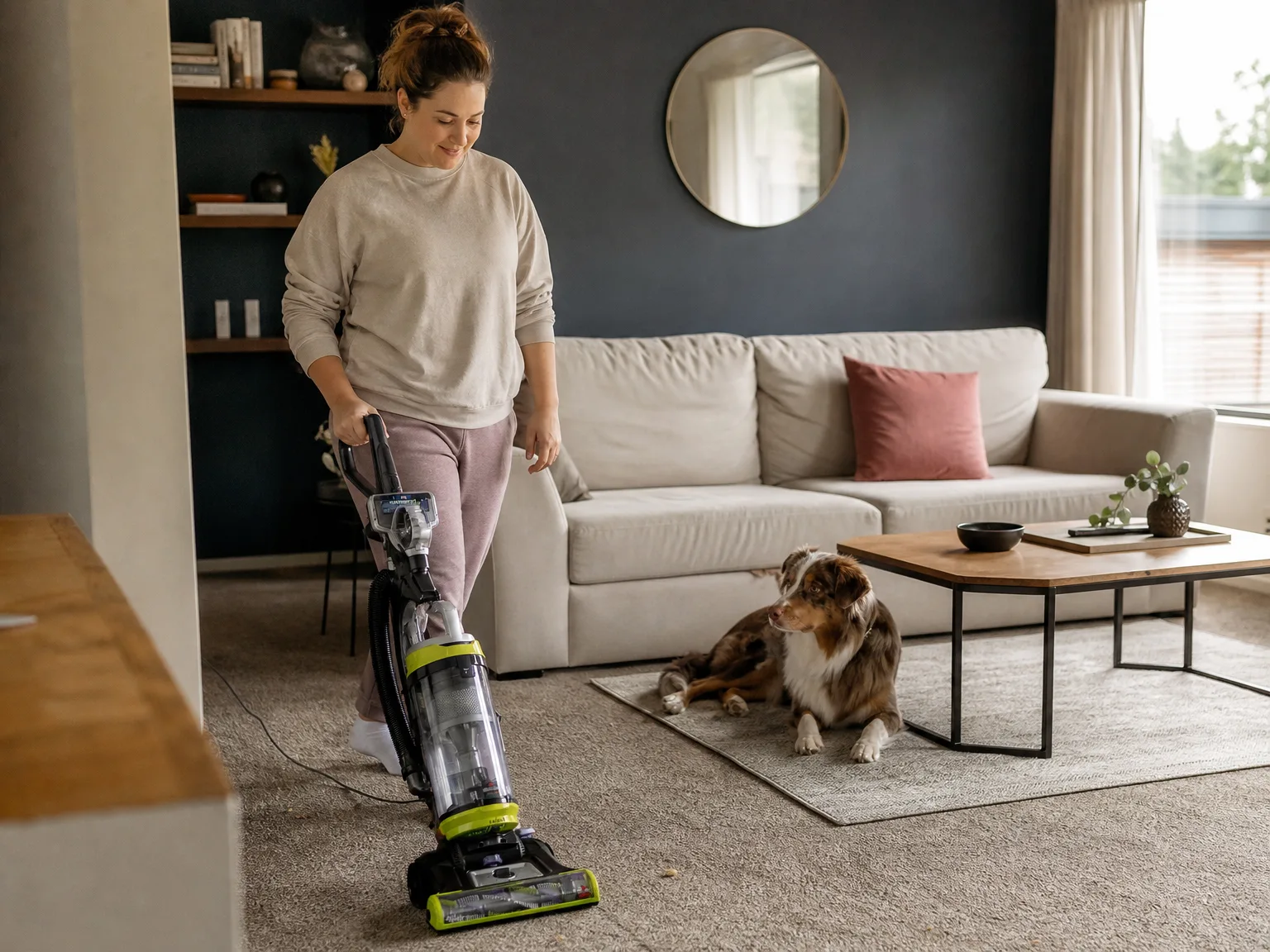
Our routine settled into two long passes a week through the living room, hallway, and two bedrooms. The first week was the memorable one. Carpet that had looked uniformly flat came up with distinct tracks, and the tank needed emptying before we finished the second bedroom. Week two produced almost as much, which is the slightly deflating lesson every deep-cleaning upright teaches: carpet holds far more than it shows, and lighter machines had been leaving it there. By week four the volume finally dropped off, and we took that as the actual baseline. Push speed turned out to be the variable that mattered most. A quick single direction pass left pet hair behind on medium pile, while a slow pass in two directions did not. The tank is the other thing to plan for. Bissell markets it as large capacity, and it is genuinely bigger than what most cordless sticks carry, but a whole-house session with two shedding animals still means one or two trips to the trash can. Emptying is at least painless, since the bin opens and dumps without reaching a hand inside.
Hard floors, thin rugs, and the height dial
The scatter-free head does what the name promises on tile and hardwood. Crumbs and kibble along the baseboards went into the tank rather than skittering across the room ahead of the machine, which is the failure that makes many carpet-first upright vacuums annoying on bare floors. Edges were the pleasant surprise. Debris sitting in the gap where the floor meets the trim got picked up instead of pushed into a line. One caveat came up quickly. On the bare floor setting, lightweight throw rugs get grabbed and pulled toward the head, and the small runner in our kitchen went up twice before we learned. Owners land on the same workaround we did: leave the dial at a middle setting and stop switching modes for every surface change. Performance on both floor types stays good at that compromise, and mixed-flooring homes save the constant fiddling. Do raise the height a click before crossing anything thin and unbacked.
Couch cushions, stairs, and where the cord runs out
Five weeks gave us a firm answer on above-floor work rather than a hedge. Cushion faces and the flat top of a dog bed cover cleaned up well with the motorized hand tool. Cushion backs and the top edge of the sectional meant lifting and repositioning the whole vacuum, because the hose simply does not reach. Stairs were better than expected for a full-size upright, mostly because the machine is light. You carry it up two or three treads, park it, work the powered tool on the carpet in front of you, then move again. It is workable and it is not fun. The cord is the last thing to plan for. It is meaningfully shorter than what premium uprights ship with, close to ten feet shorter than a comparable Dyson upright, and in a house with rooms strung along one level that translates to unplugging and moving outlets mid-session. In a compact apartment you will barely notice. In a sprawling single-story layout you will notice every time.
How it compares to alternatives
The cleanest fix for the hose problem is a lift-away design. Our Shark NV501 Rotator review covers an upright whose canister pod detaches, so a staircase means carrying a small pod and hose up the steps instead of balancing a full body on a tread. You pay more for it, and the swivel handling of the Bissell is nicer on open carpet. If stairs are a weekly chore rather than an occasional one, get the Shark NV501 instead.
The other approach is to stop asking one machine to do everything. A dedicated handheld covers stair treads, car seats, and couch backs better than any upright hose, and our RELIDOL 20000Pa handheld review looks at a motorized-brush model built for exactly that fur-on-fabric work. Pairing the two costs less than a premium upright and removes the 2252's biggest weakness outright.
If deep carpet revival is not really your problem and you mostly want to grab something for daily crumbs on hard floors, a corded upright is the wrong shape of tool. Our JELLYPIG cordless vacuum review covers a budget stick that handles that routine with less setup. It will not pull matted fur out of pile the way this Bissell does, so choose based on which job you actually repeat.
Who should buy it
Best for: Multi-pet homes on mixed carpet and hard floors that want a single corded upright, at the budget end of the price ladder, to bring matted carpet back. If your weekly job is long passes over carpet that shedding animals have flattened, this machine is built around that routine, and the powered hand tool covers the sofa without a second purchase.
Skip if: You need a compact head for tight spaces or furniture with low clearance, or you want hose reach for stairs and high spots. The boxy head and short hose are dimensions, not settings, and no amount of suction changes them. Households with a staircase as a main cleaning surface should look at a lift-away upright or add a handheld.
What you get: Carpet pickup that outperforms machines costing several times more, a motorized upholstery tool with an actual brush roll, swivel steering on a body you can carry one-handed, and no batteries or bags to buy. You give up furniture clearance, hose reach, and a belt in the first year or two. On carpet with pets, that trade is a good one.
FAQ
How long is the cord, and will I need to switch outlets often?
The cord is shorter than what high-end uprights come with, roughly ten feet shorter than a comparable Dyson upright. In an apartment or a compact house you can usually clean a room from one outlet. In a larger single-story layout with rooms spread along a hallway, expect to unplug and move at least once per session.
Is it lightweight enough to carry up and down stairs?
Yes. It is light enough to lift with one hand and carry a step at a time, which is not true of every full-size upright. Once you are on the stairs, the powered hand tool does the cleaning while the body sits on a tread. The hose reaches a couch seat if the vacuum is parked right beside it, so keep it close to whatever you are cleaning.
Does it pick up all pet hair from carpets and upholstery?
It removes both loose and embedded hair effectively, often filling the bin faster than you expect on the first few sessions. Some very fine hairs survive a quick pass, so slow down and go over medium pile in two directions. On upholstery the motorized attachment does the real work, and a bare nozzle would not come close.
Can it clean both hard floors and carpet without changing settings?
Mostly, yes. Many owners leave the height dial at a middle setting and stop switching, which keeps performance solid on both surfaces. The reason to do this is that the bare floor setting can suck up lightweight throw rugs. If you have thin unbacked rugs, raise the height a click before crossing them.
How often will I need to empty the dirt tank?
Bissell calls the tank large capacity, and it holds more than a cordless stick, but a whole-house clean in a multi-pet home usually needs one or two dumps. The bin opens and empties without putting your hand inside, so it is a fast interruption rather than a messy one. The first two weeks will be the heaviest if the carpet has been under-cleaned.
What wears out first, and can I fix it myself?
The drive belt is the part to plan for. With multiple pets and regular carpet passes, owners often keep a spare by the end of the first year. Replacing it is a screwdriver job at home, not a repair shop visit. Clearing wrapped hair off the brush roll with scissors every couple of weeks reduces the strain on it.
Bottom line
The Bissell 2252 CleanView Swivel Pet does one thing better than its price suggests, and that thing is pulling embedded fur out of carpet that other vacuums have already been over. The short hose, the boxy head, and the belt are real limits rather than nitpicks, and they decide whether it belongs in your house. If you have carpet, pets, and furniture that can move, check current availability through the product card above. If your main cleaning surface is a staircase, read our Shark NV501 Rotator review first, because a detachable pod solves the one problem this machine cannot.
Ready to buy?
Bissell CleanView Swivel Pet Upright Vacuum, Swivel Steering for Maneuverability, Triple Action Brush Roll for Pet Hair, Large Capacity Dirt Tank & Scatter-Free Tech, 2252
Explore related
In this article
- At a glance
- What we liked
- Suction that revives matted carpet
- The hose attachment has a real brush roll
- Swivel steering on a body you can lift
- Corded means no run-time arithmetic
- Where it falls short
- The attachment hose is too short
- The boxy head will not go under low furniture
- The drive belt is a consumable
- Real-world performance
- Five weeks on matted carpet with two pets
- Hard floors, thin rugs, and the height dial
- Couch cushions, stairs, and where the cord runs out
- How it compares to alternatives
- Who should buy it
- FAQ
- How long is the cord, and will I need to switch outlets often?
- Is it lightweight enough to carry up and down stairs?
- Does it pick up all pet hair from carpets and upholstery?
- Can it clean both hard floors and carpet without changing settings?
- How often will I need to empty the dirt tank?
- What wears out first, and can I fix it myself?
- Bottom line
Keep reading
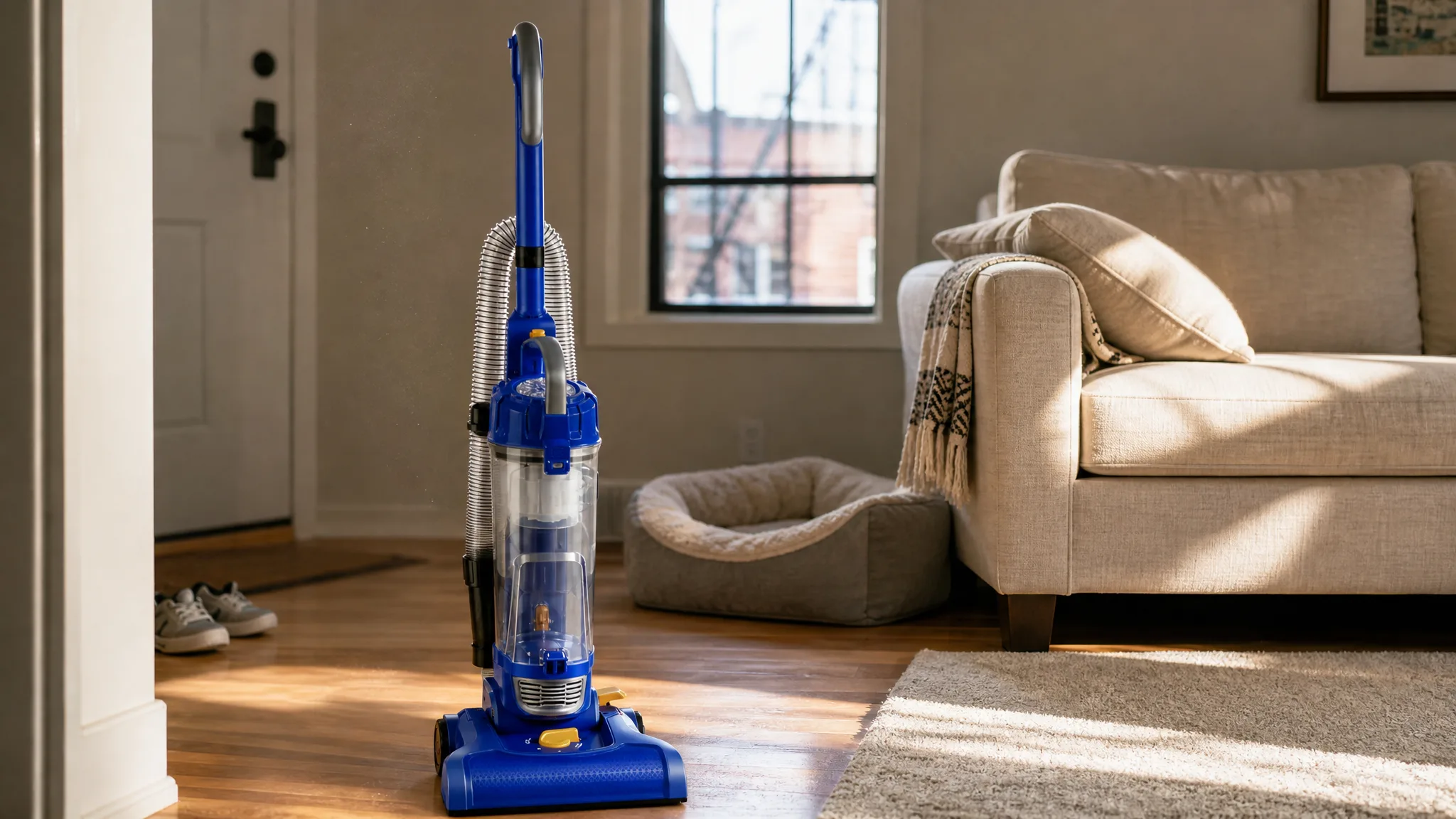
Eureka NEU182A PowerSpeed Review: Budget Pet Hair Upright Tested
Six weeks with the Eureka NEU182A PowerSpeed upright in a home with a shedding dog. The light frame and big dust cup work; the cord and thick carpet do not.
5 Best Bissell Vacuums for Hard Floors (2026)
We ranked five Bissell vacuums on hardwood and tile, from a CrossWave that vacuums and mops in one pass to featherweight sticks built for daily crumb sweeps.
6 Best Vacuums for Long Hair (2026): Tangle-Free Picks Tested
We tested six vacuums against long human hair and pet fur in real homes to find which brush rolls truly resist tangling, from sticks to robots.