Bissell 2033 Featherweight Review: 4 Weeks in a Studio
In this article
- At a glance
- What we liked
- Under four pounds, and you notice it every single time
- On hard floors, suction beats sweeping
- It converts to a handheld in one motion
- A cord instead of a battery, and a cup that empties clean
- Where it falls short
- Fifteen feet of cord is not much cord
- No brush roll means carpet stays dirty
- It feels exactly as light as it is
- Real-world performance
- How it compares to alternatives
- Who should buy it
- Frequently asked questions
- How long is the power cord?
- Does it work on carpet?
- Can you use it on stairs?
- How do you empty the dirt cup?
- Is it loud?
- Does it need bags or filters you have to buy?
- Bottom line
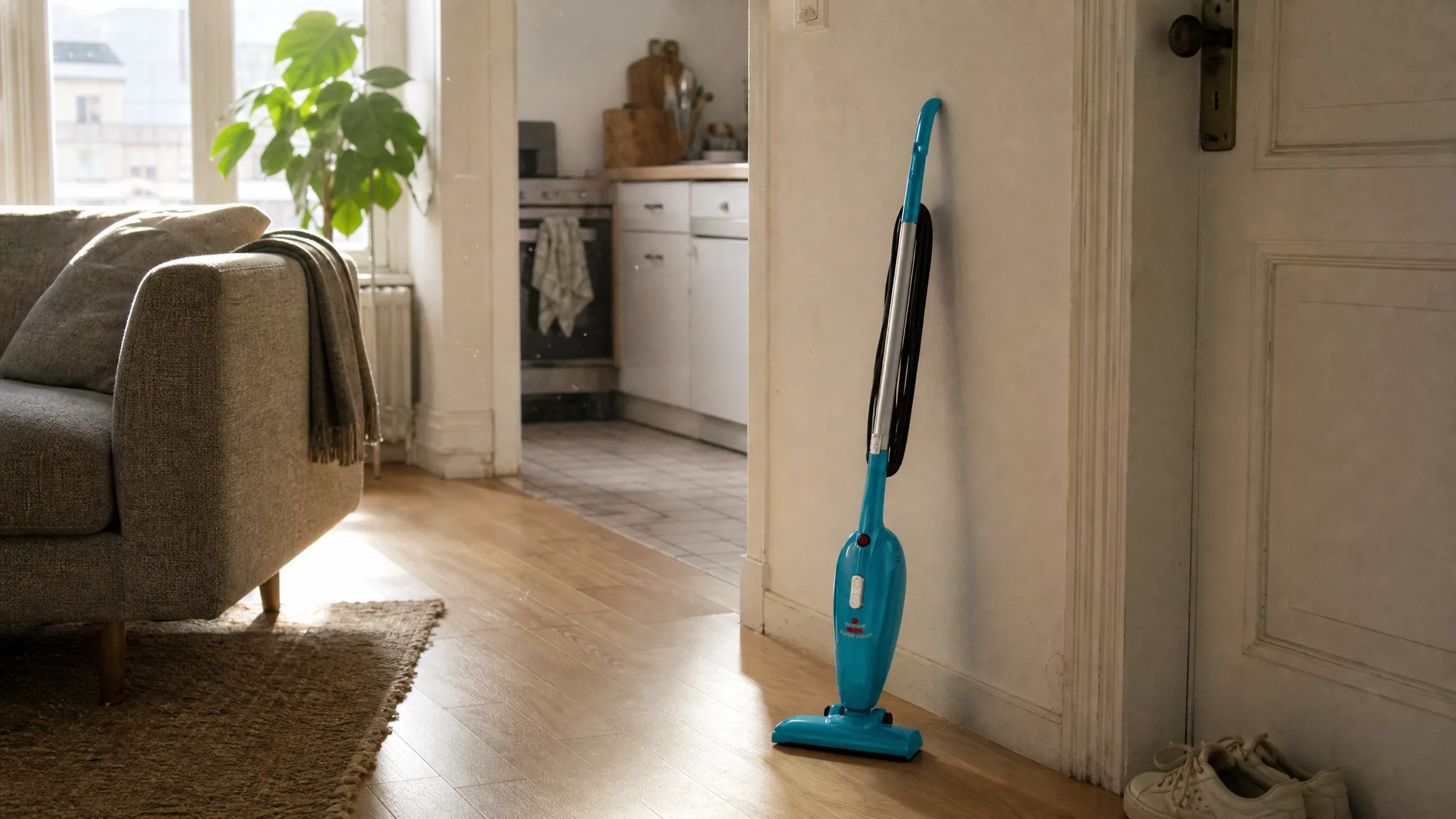
Most vacuums live in a closet and come out on a schedule. This one lives behind a door and comes out because there is cereal on the kitchen floor. The Bissell 2033 Featherweight is a corded stick vacuum that weighs less than a gallon of milk, and we put it through our standard testing process for four weeks in a one-bedroom apartment with oak floors, kitchen tile, and one flat-weave rug.
Verdict: A genuinely light corded stick that clears daily crumbs and hair off hard floors, as long as you accept no brush roll and a short cord. 7.8/10.
Best for: Small apartments, studios, and quick daily pickups on hard floors and low-pile rugs.
Skip if: You have wall to wall carpet, or you want one vacuum that does everything.

Bissell
Bissell 2033 Featherweight Stick Lightweight Bagless Vacuum and Electric Broom with Crevice Tool for Hard Floors and Carpets, Blue
Best for
Best for small apartments, studios, or quick daily pickups on hard floors and low-pile rugs. Skip it if you have wall-to-wall carpet or need a vacuum for heavy-duty cleaning.
In real homes, this stick vacuum proves itself a lightweight, budget pick that handles quick, everyday messes on hard floors and low-pile rugs. The trade-off: it lacks the power and brush roll to deep-clean carpets, so larger homes or thicker rugs call for a full-size vacuum.
Loved by buyers
- •Weighs under 4 pounds, making it easy for anyone to carry around the house or use on stairs.
- •Strong suction on wood, tile, and laminate, often picking up more dirt and pet hair than a broom would.
- •Converts quickly to a handheld vacuum for cleaning furniture, crevices, and car interiors.
Buyer concerns
- •The 15-foot cord often feels short, requiring multiple outlet changes to cover a room.
- •It lacks a motorized brush roll, so it struggles to lift debris from medium-pile or deep carpet.
- •Build quality feels lightweight to the point of seeming flimsy, with some units failing after a few months.
At a glance
| Specification | Detail |
|---|---|
| Type | Corded stick vacuum that converts to a handheld |
| Weight | Under 4 pounds |
| Power source | Mains power, so there is no battery to degrade |
| Cord length | 15 feet |
| Dust cup | 0.67 liters, bagless |
| Emptying | One button release, tips straight into the trash |
| Brush roll | None, suction only |
| Included tool | Crevice tool |
| Best floors | Hardwood, tile, laminate, low-pile rugs |
| Weakest on | Medium-pile and deep carpet |
| Noise | A normal vacuum hum, not unusually loud for a stick |
| Owner rating | 4.4 out of 5 |
What we liked
Under four pounds, and you notice it every single time
The number on the box is the number that matters here. This vacuum weighs less than four pounds, which is lighter than most cordless sticks and light enough that carrying it upstairs is not a decision you have to make first. It is a properly lightweight machine rather than a marketing claim about one.
Weight decides frequency. Something you can lift with two fingers gets used on a Tuesday morning for ninety seconds because there is grit by the front door. Something you have to haul out gets used on Saturday, and only if Saturday cooperates. Four weeks in, we were running this one most days without ever thinking of it as cleaning.
On hard floors, suction beats sweeping
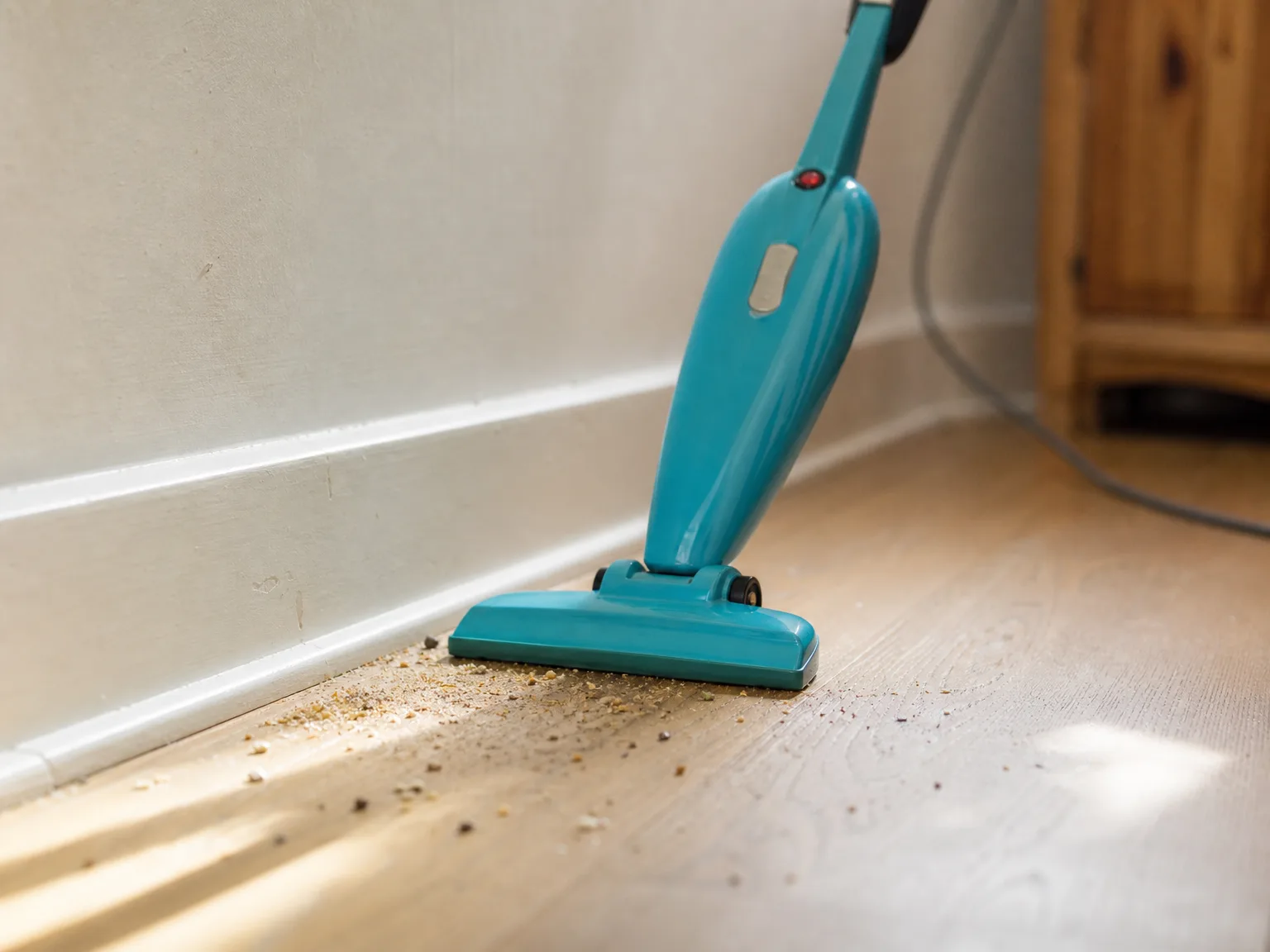
On oak, tile, and laminate it picks up more than a broom does, and it does it without pushing a cloud of dust ahead of it. Fine grit by the entryway, coffee grounds under the counter, dry crumbs along the baseboard. One pass, no chasing. A broom moves the visible half of that mess and smears the rest into the finish.
No brush roll is doing the work, so what you get is straight airflow through a wide floor head. On hard surfaces that is the right tool for the job. Nothing flings debris sideways, nothing scatters the little pile you just gathered, and nothing tangles with long hair the way a spinning roller does.
It converts to a handheld in one motion
Pull the floor wand off and you have a handheld vacuum with a crevice tool on the end. That covers stair treads, the seam where crumbs disappear into the sofa, the strip behind the toilet, and the footwell of a car. A full size upright makes you carry the entire machine up the stairs at an awkward angle. This one you hold in one hand while the other hand holds the railing.
In a small apartment the conversion earns its keep in a second way. It means one vacuum instead of a stick plus a separate dust buster, both fighting for the same shelf. Storage is the resource that runs out first in a studio, and this takes up roughly the space of a broom.
A cord instead of a battery, and a cup that empties clean
Cordless sticks fail in a predictable arc. Runtime shortens month by month, then one winter the thing barely finishes the kitchen, and a replacement pack costs a real fraction of a new vacuum. A corded machine skips all of that. Plug it in during year three and it runs exactly as long as it did on day one, which is to say as long as you want.
The bagless cup holds 0.67 liters and releases with one button press. Hold it over the trash, press, done. No bags to reorder and no reaching in with your fingers to pull out a wad of hair. On a cup this small you will empty it often, so a clean release matters more than it would on a big upright.
Where it falls short
Fifteen feet of cord is not much cord
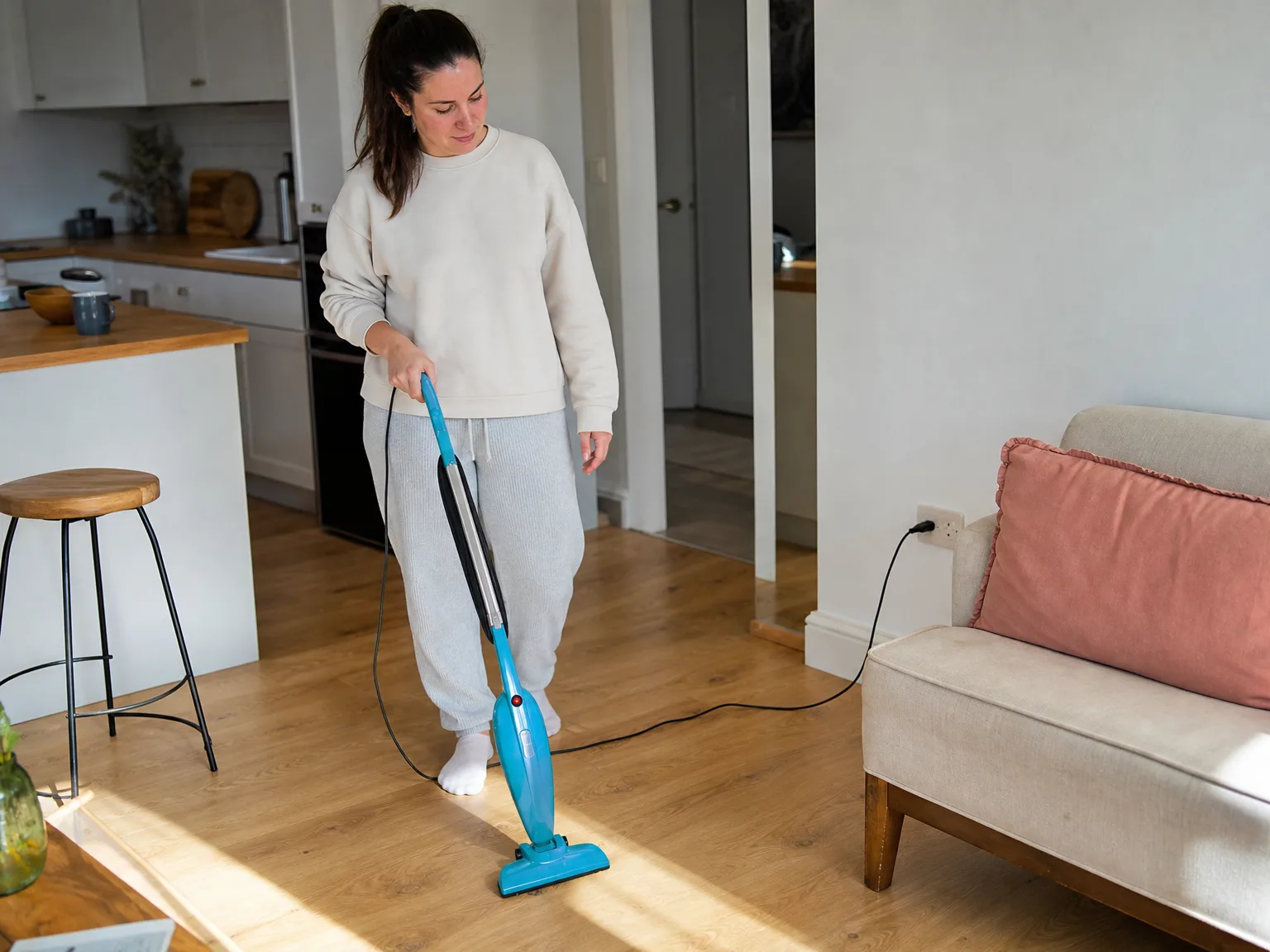
The cord measures fifteen feet. In a galley kitchen you will never think about it. In a living room you will unplug and replug at least once, sometimes twice, and if the only free outlet sits behind the sofa you will do it while moving the sofa.
This is the complaint owners raise most, and it is fair. Fifteen feet covers a studio from a central outlet and covers a staircase from the landing. It does not cover a whole room from a corner, and it is well short of the 25 or 30 feet a full size upright gives you. Plan on the vacuum being tethered to whichever wall you started at, and plan your route around the outlets rather than the dirt.
No brush roll means carpet stays dirty
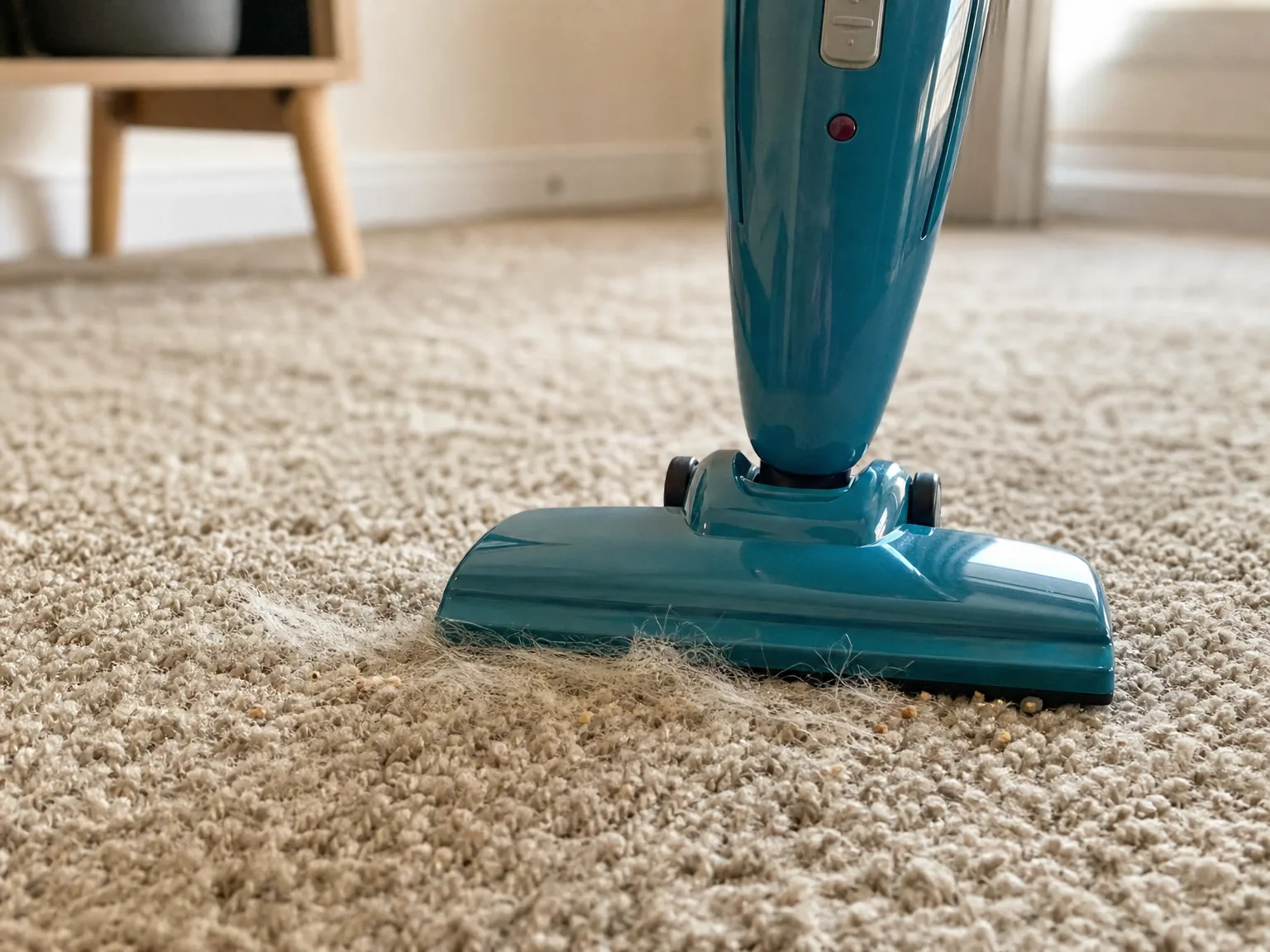
The product name says hard floors and carpets. The honest version is hard floors and thin rugs. Nothing agitates the fibers, and suction on its own cannot lift what has been walked down into medium or deep pile.
On our low-pile flat-weave rug it collected surface debris and loose hair without complaint. On a thicker rug it skimmed the top layer and left the rest, and extra passes did not change the result. If most of your floor is carpet, this is the wrong machine, and no amount of technique fixes it. Anyone dealing with pet hair in plush carpet will hit that wall in the first week.
It feels exactly as light as it is
Low weight has a cost, and here it shows up in the plastics. There is flex in the body, the wand joint does not feel especially solid, and a slice of owners report units quitting after a few months. Most do not. Enough do that it belongs in this review rather than in a footnote.
Treat it as what it is, an inexpensive daily runabout rather than a machine you hand down to anyone. Do not lean your weight on the handle, do not pull the plug out by yanking the cord, and do not expect it to shrug off a fall down the stairs. Buy it somewhere with a clear return window and give it real work in the first few weeks, while sending it back is still simple.
Real-world performance
The daily kitchen lap. This is the job the vacuum was built for and the reason it stayed out of the closet. Two minutes covers the kitchen tile, the strip of oak by the fridge, and the entryway where shoes drop sand. Crumbs, dry spills, and tracked-in grit all went in the first pass. Nothing about it felt like a chore worth putting off until the weekend, which is the whole argument for owning a vacuum this small.
Pet hair on hard floors. Loose fur on oak and tile came up cleanly and consistently. This is where suction alone works in your favor: there is no roller for hair to wrap around, so you never stop mid-clean to cut a tangle off a brush bar with scissors. The tumbleweeds that gather under a dining table and in the corner behind a door disappear in a single pass.
The low-pile rug. Our flat-weave rug came out fine, with the caveat that fine means surface clean. Loose hair, crumbs, and lint lifted. Anything ground into the weave over months stayed put. Going slowly helped a little. Going over it four times helped no more than going over it twice, which is usually the sign that the machine has given you everything it has.
Stairs and the car. Detached as a handheld with the crevice tool, it did stair treads and the corners where the tread meets the riser, then went out to the car for the seat seams and the door tracks. Holding it at an angle for ten minutes never became uncomfortable, which is the entire difference between a four pound machine and a fourteen pound one. Carpeted stairs got a surface clean only, for the reasons above.
A one-bedroom apartment, end to end. A full pass through a small apartment took two outlet changes. That is the rhythm you settle into: clean everything the cord reaches, unplug, move, repeat. It is mildly irritating on day one and automatic by week two. In anything larger than a two-bedroom apartment, the irritation would not fade.
Noise. It produces an ordinary vacuum hum, no worse than other sticks in its class and considerably quieter than a shop vac. You can hold a conversation over it if you raise your voice slightly. It is not the vacuum to run during a nap upstairs, but nothing in this category is.
Maintenance. Empty the cup roughly every other clean, more if you have a shedder. The cup is small, so letting it fill up costs you suction quickly. Rinse the filter on a schedule and let it dry completely before it goes back in. A damp filter loses you power and starts smelling within a day.
How it compares to alternatives
If your rooms are carpeted, the honest recommendation is a different category of machine. The Shark ZU561 Navigator Lift-Away costs more and weighs several times as much, and in exchange it brings a powered brush roll that actually agitates pile and stays clear of wrapped hair. It also has a lift-away pod for stairs, so you are not giving up the above-floor cleaning that makes the Bissell useful. The trade-off is storage space and the willingness to drag something heavy around.
If carpet is not the issue and the cord is, look at a budget cordless stick. The mohomo 650W cordless stick sits in similar price territory with a motorized roller and around seventy minutes of runtime, though its roller has its own limits on thicker rugs. The VIPSUN self-standing cordless is worth a look if you want the machine to park itself where you stop instead of leaning against a wall. Both bring back the battery decline that a corded vacuum does not have, which is the calculation you are making.
Against a broom and dustpan, which is the real competition in a studio, this wins outright. It picks up the fine dust a broom pushes around, it reaches under the sofa without you getting on the floor, and it stores in the same footprint.
Who should buy it
Buy the Bissell 2033 Featherweight if you live in a studio, a one-bedroom, or a dorm with mostly hard floors, and you want something you grab for two minutes rather than schedule for an hour. It suits renters, first apartments, people who want a second vacuum for the upstairs floor, and anyone whose current answer to a crumby kitchen is a broom. At this price it is closer to an upgrade over sweeping than a downgrade from a real vacuum.
Look elsewhere if your floors are mostly carpet, if a heavy shedder lives on that carpet, or if you have a house rather than an apartment and fifteen feet of cord means replugging in every room. Those situations run straight into the two limits above, and neither improves with patience. A corded upright with a brush roll is the right machine for that house.
What you get for the money is a light, simple, plug-in vacuum that handles daily hard-floor mess and converts to a handheld for stairs and the car. What you give up is carpet cleaning, cord reach, and the reassurance of solid build quality. For a small space with hard floors, that is a reasonable set of trade-offs. For anything bigger, it is not.
Frequently asked questions
How long is the power cord?
Fifteen feet. That reaches comfortably across a small kitchen or a studio from a central outlet, and it falls short in larger rooms. Expect to switch outlets once or twice to cover a full living room, and expect to plan your cleaning route around where the sockets are.
Does it work on carpet?
On low-pile rugs, yes, for surface debris and loose hair. On medium or deep pile, not really. There is no motorized brush roll to agitate the fibers, so suction alone cannot lift what has been walked down into the pile. Homes with wall to wall carpet should treat this as a supplementary vacuum at best.
Can you use it on stairs?
Yes, and this is one of its stronger cases. It converts to a handheld and includes a crevice tool, so you can work a staircase one-handed instead of balancing a full size upright on a tread. Carpeted stairs get a surface clean, since the same no-brush-roll limitation applies.
How do you empty the dirt cup?
Press the release button and the 0.67 liter cup detaches, then tip it directly into the trash. Your hands stay out of it, and there are no bags to buy or replace. The cup is small, so plan on emptying it every other clean if you want suction to stay consistent.
Is it loud?
It makes a typical vacuum hum, no louder than most stick vacs. One owner described it as noisy but not unusually so, which matches what we heard. You can talk over it if you raise your voice, and it is far quieter than any wet or dry shop vac.
Does it need bags or filters you have to buy?
No bags. It is bagless, so the only ongoing task is rinsing the filter and letting it dry fully before it goes back in. Skip that and suction drops off noticeably within a few weeks, which is behind a fair number of complaints that a vacuum has lost power.
Bottom line
The Bissell 2033 Featherweight is a good vacuum for a specific home: small, hard-floored, and cleaned in short bursts rather than long sessions. Use it daily on tile and wood, pull the wand off for stairs and the car, rinse the filter on a schedule, and it will keep up with everyday mess without asking much of you. Check the current listing through the product card above. If your rooms are carpeted or you are cleaning a whole house, read the Shark ZU561 review before you spend anything here.
Ready to buy?
Bissell 2033 Featherweight Stick Lightweight Bagless Vacuum and Electric Broom with Crevice Tool for Hard Floors and Carpets, Blue
In this article
- At a glance
- What we liked
- Under four pounds, and you notice it every single time
- On hard floors, suction beats sweeping
- It converts to a handheld in one motion
- A cord instead of a battery, and a cup that empties clean
- Where it falls short
- Fifteen feet of cord is not much cord
- No brush roll means carpet stays dirty
- It feels exactly as light as it is
- Real-world performance
- How it compares to alternatives
- Who should buy it
- Frequently asked questions
- How long is the power cord?
- Does it work on carpet?
- Can you use it on stairs?
- How do you empty the dirt cup?
- Is it loud?
- Does it need bags or filters you have to buy?
- Bottom line
Keep reading
Shark LA702 Rotator Pet Lift-Away ADV Review: 6 Weeks of Pet Hair
Six weeks with the Shark LA702 Rotator Pet Lift-Away ADV in a two-dog house. The DuoClean PowerFins roller stayed clear of hair, and the 25-foot cord is the catch.
7 Best Shark Vacuums of 2026: Every Model Ranked for Every Home Type
We tested 7 Shark vacuums across every home type and ranked each one honestly. From the AI Ultra robot to the $79 Rocket stick, here is which model fits your floors.
CKIKH Handheld Vacuum Review: Daily Messes After 4 Weeks
We spent four weeks with the CKIKH handheld vacuum on kitchen crumbs, car seats, stairs, and pet hair on furniture. Honest take on suction and battery.